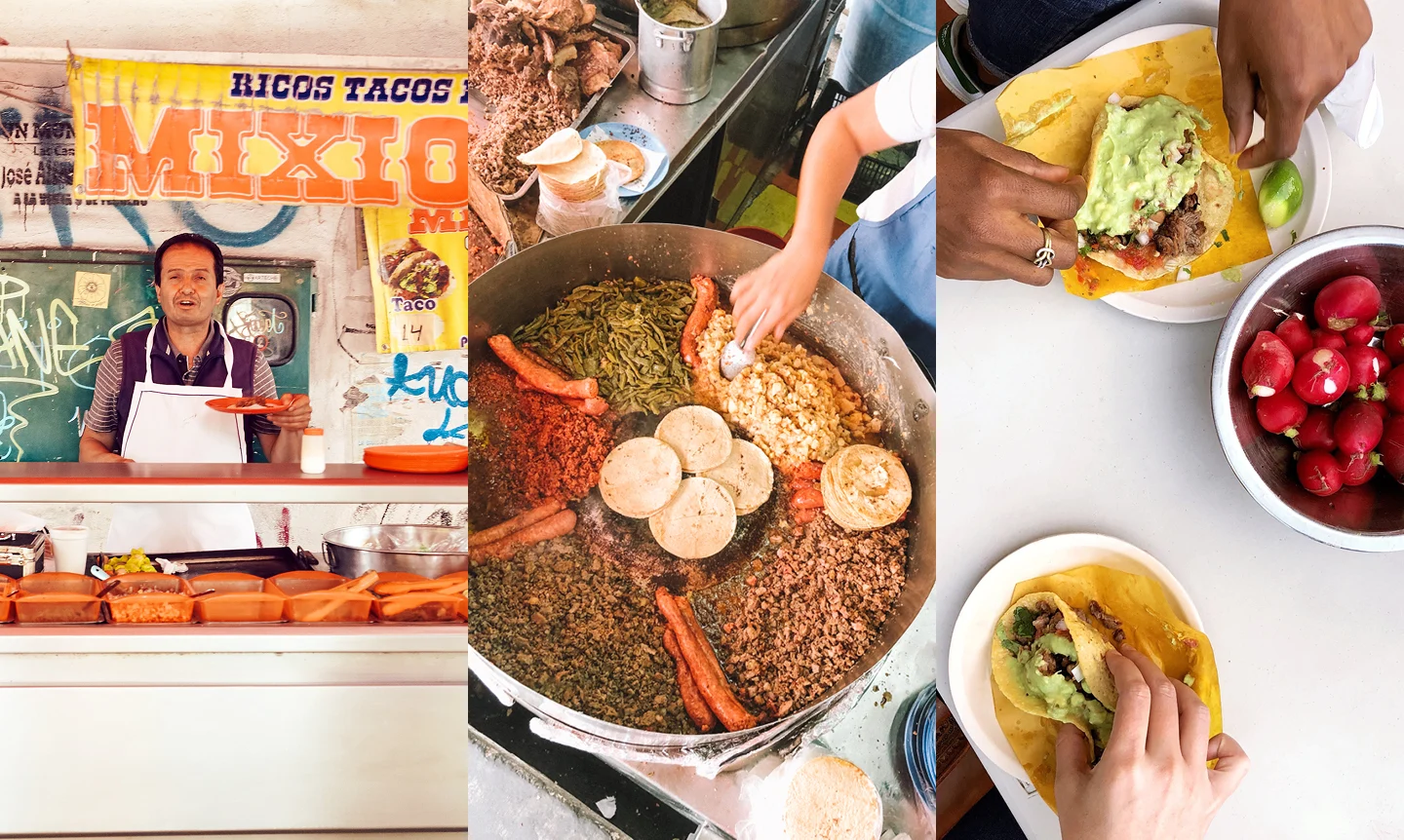
By thinking of the taco less as a dish than as a concept—like sandwiches or curries—it becomes clear how endlessly, imaginatively versatile it is. In fact, since most Mexican meals come with tortillas, used both to complement and transport the food, almost everything ends up as a taco. Though the word “taco“ didn’t appear in a culinary context until the late 1800s, there’s evidence that indigenous Mexicans were eating food wrapped in corn tortillas—maize being native to Mesoamerica—for millennia. Once wheat was brought over from Spain, flour tortillas were created. In class-stratified Mexico City, tacos are a great equalizer, with people from all walks of life crowding the same street stands where the taqueros are too busy to care if you're a celebrity or a street sweeper. But since a crowded taquería is a good taquería, it helps to know the various styles before ordering.
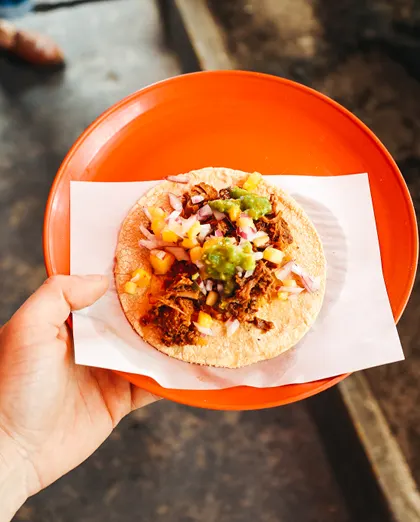
Tacos al carbón
Though fewer and fewer places actually use carbón (charcoal), this is the name for tacos of grilled or griddled meat, often with nopales (cactus paddles) for vegetarians. These are usually served very simply—meat and tortillas—but with lots of salsas and garnishes on offer. If they have it, try a costra, a variation that emerged in Mexico City in the ‘90s, where a crisp-chewy "tortilla" of browned melted cheese is fused to, or wrapped around, the filling.
Try: Los Picudos, Miguel Laurent 101, colonia Del Valle
Tacos de fritanga
One rarely hears the phrase "tacos de fritanga"—in Mexico City, where it is probably the most common taco category, the term is essentially synonymous with "tacos." It refers to meat cuts, mostly from the head or innards (and mostly pork), which are long-cooked in a mix of oil, rendered fat and meat juices. The taquero mans a large, round, shallow tray with a moat of bubbling liquid (the meat is neither deep-fried nor braised, but essentially both), with a convex hump in the middle for draining oil and heating tortillas. Many of these taquerías specialize in specific cuts, like tripe or tongue. For people who aren't fans of certain parts of the animal (eye tacos?) these taquerías almost always have options like chorizo and suadero (brisket).
Try: El Borrego Viudo, Av. Revolución 241, colonia Tacubaya
Tacos de guisado
Guisado translates to "stewed," and these premade fillings, usually in photogenic clay cazuelas, are dolloped deliciously (if unceremoniously) on tortillas. These taquerias are usually the best taco option for vegetarians and vegetable-lovers; the vegetable-based fillings—such as spicy cauliflower, cheese-stuffed poblano chiles, or tomatillo-braised chard—are often the most interesting. In addition to the ubiquitous array of salsas and the lime-onion-cilantro garnish, one can usually choose rice or beans as a base for the filling, making these among the heartier taco options.
Try: Tacos Hola, Amsterdam 135, colonia Condesa
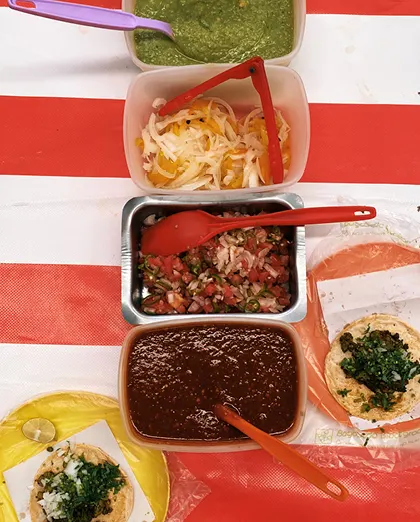
Tacos de carnitas
Mexico didn't have pigs until the Spanish brought them in the 16th century, but one wouldn't know it by the ubiquity of pork in the taco world. Carnitas refers to pork long-cooked in its fat—francophiles would call it pork confit—but because there is such variety of flavor and texture among pork cuts, the carnitas category encompasses everything from lean loin and leg (maciza) to juicy ribs (costilla) and chewy pork skin (cueritos). Tip for the intrepid: try a taco de achicalada, which is made up of meat bits from the bottom of the cooking vat, an ultra-fatty but incredibly tasty mess of porky goodness that's said to be the perfect hangover remedy.