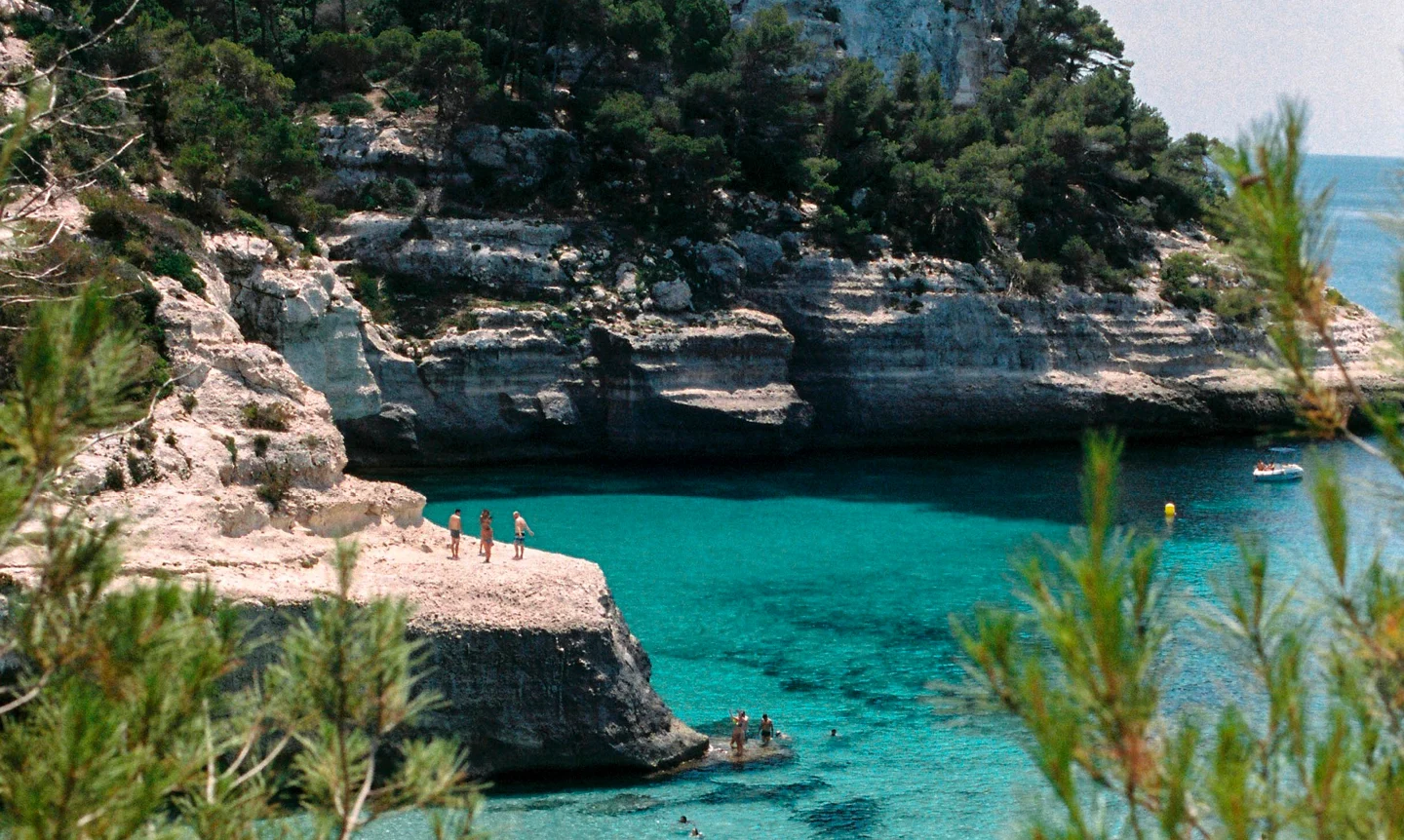
Menorca has long been the forgotten Balearic Island. But despite having less cultural cachet than Mallorca, less unabashed hedonism than Ibiza and less slow-paced glamor than Formentera, Menorca’s prehistoric landscapes and unspoiled antiquity easily make the 270-square-mile Spanish isle the most remote — and, dare we say, exclusive — of the Balearics getaways. The spoils of being an UNESCO Biosphere Reserve, it turns out, are plenty and come in the form of tranquil beaches unbothered by crowds of tourists, charming medieval towns with nary a luxury fashion pop-up in sight and ancient limestone quarries in lieu of booming discotheques.
That is not to say that the secluded island hasn't attracted high-profile attention. Last year, the Swiss-owned art dealership Hauser & Wirth washed ashore on Isla del Rey, an islet in the center of Mahón harbor located just 15 minutes by boat from Menorca’s capital. The international mega-gallery — founded in 1992 by the husband-and-wife duo Iwan and Manuela Wirth — repurposed a series of 18th-century buildings once belonging to a British naval hospital into eight spacious exhibition halls. Outside the galleries, visitors can wander through an outdoor sculpture trail featuring works by Louise Bourgeois and Joan Miró and a garden designed by Piet Oudolf overflows with native flowers and grasses adapted to the temperate Mediterranean climate. Such blending of creativity and authenticity extends to Cantina, the site’s “sea bistro” located in a wild olive tree forest, which serves produce sourced from local Menorcan flora and fauna.
Though the injection of arty sophistication certainly adds a cosmopolitan sheen to the rugged abundance of pine trees and terrestrial caves, Menorca remains a refreshingly low-key and off-the-grid destination. More often than not, you’re still likely to be the only foreigner (or human being) around to soak in the island’s untapped riches.
Where to Stay
Menorca Experimental
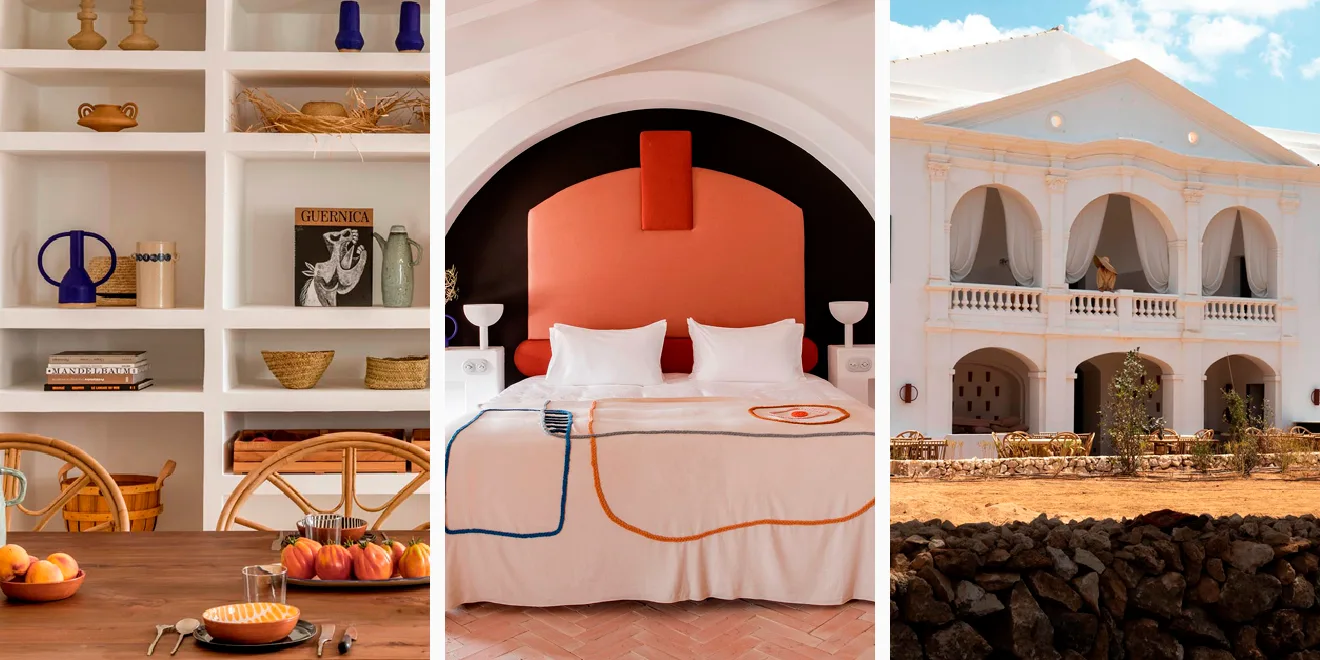
The hospitality gurus behind Experimental Group, the design firm responsible for several of Paris’s most buzzy bars (Experimental Cocktail Club Paris), restaurants (Balagan) and boutique hotels (Grand Pigalle Hôtel), tend to set up shop in places where they vacation: Verbier, Venice, Ibiza, and now Menorca. For Menorca Experimental, a 43-room hotel compound housed in a 19th-century ranch on 74 acres of natural land, Experimental Group partnered with a team of local craftsmen and the interior designer Dorothée Meilichzon to restore the site’s original villa and wild gardens. The property’s nine private bungalows feature waxed concrete, hand-glazed terracotta tiles and olive-wood flooring. Bedrooms pop with Memphis School-esque colors and shapes thanks to upholstery designed by the Marrakesh-based textile studio, LRNCE. With its farm-to-table tranquility and amenities like pottery classes and horseback riding, the Menorca Experimental feels more like a glamorous art commune than a mere island retreat.
Santa Ponsa and Torre Vella
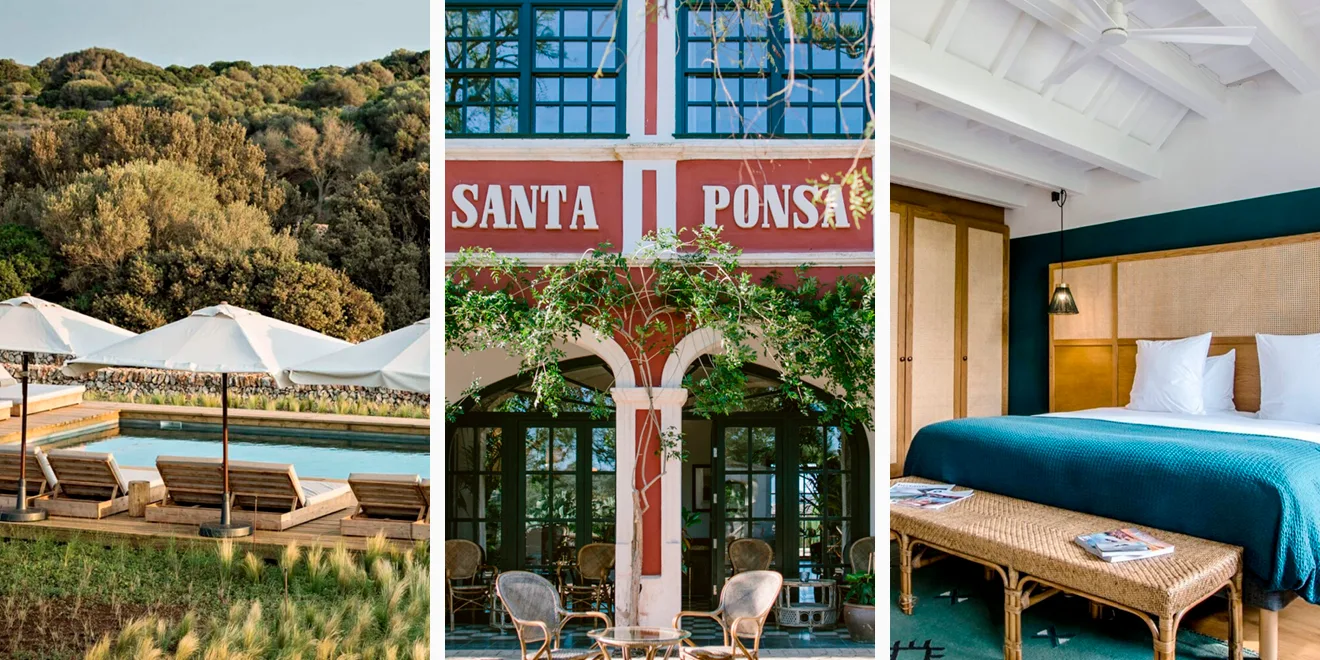
Over the last few years, Les Domaines de Fontenille, a French hospitality chain founded by Guillaume Foucher, a former art gallerist, and Frédéric Biousse, an ex-retail mogul, have renovated not just one, but two historic finca properties on Menorca: Santa Ponsa, an off-the-grid 17th century palace with an atmosphere of in-the-know exclusivity, and Torre Vella, a bohemian countryside retreat overlooking the Mediterranean Sea.
With its Moorish gardens, vineyards, functioning farm (home to goats, donkeys and turtles), hammam and Nordic baths tucked between ancient stone walls, Santa Ponsa is at once an agritourism playpen and serene spa experience. Torre Vella, a retreat partially housed in a former watchtower that is perched on a cliff close to two of the island’s most beautiful beaches, on the other hand, is all sand and sun. Everything about the whitewashed limestone lodgings screams, as the founders Foucher and Biousse put it, “bohemian chic.” Think driftwood furniture, swinging rattan chairs, and stone terraces with views of wild grasses, olive groves and vegetable gardens.
In many ways, the two properties, like their two owners, compliment each other’s distinctive approaches to rest and relaxation. Siempreviva, Torre Vella’s restaurant run by our Catalan Chef Albert Riera, serves healthy dishes like freshly-caught ceviche and salads using leafy greens grown in the property’s vegetable gardens. Nura, Santa Ponsa’s restaurant, is more ambitious, serving contemporary Spanish dishes with a North African twist.
Torralbenc
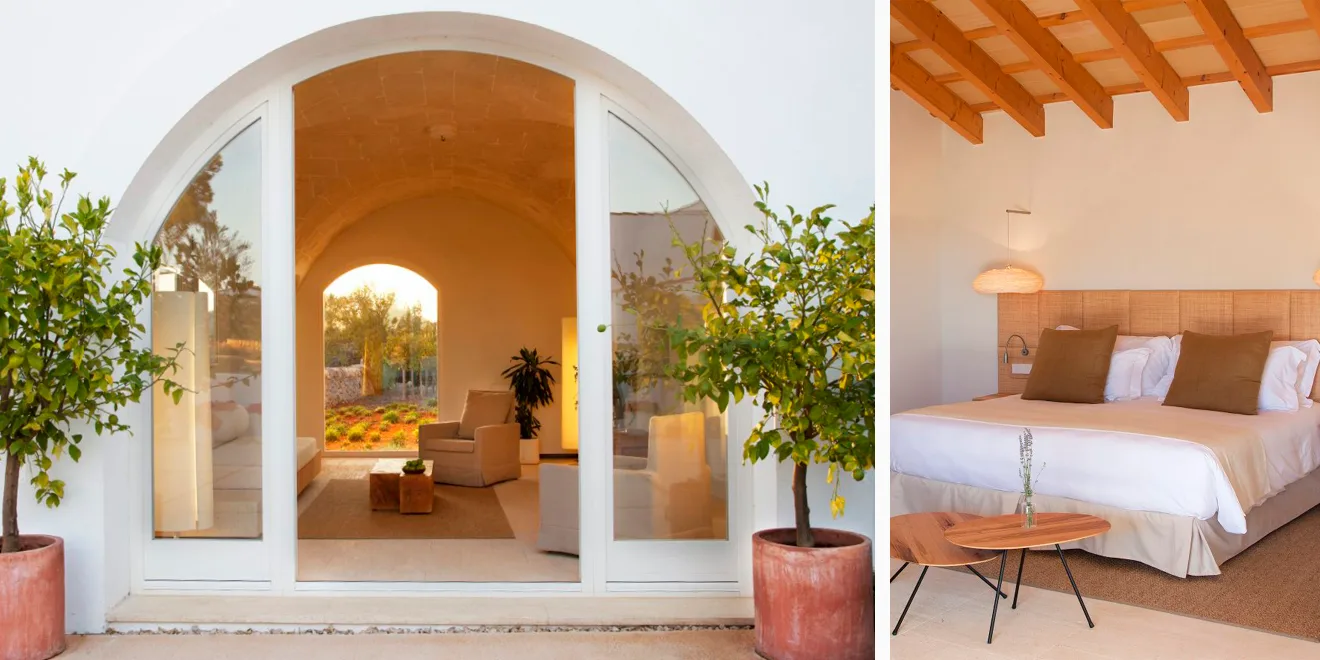
The Spanish architect Antoni Esteva is the mastermind behind some of Majorca’s most important architectural marvels, everything from a private residence with a 13th-century lookout tower belonging to the artist Miquel Barceló to Son Gener, the cult hotel housed in an 18th-century farmhouse. With Torralbenc, a farmstead-turned-rural-retreat in the pastoral hills of the island’s south-eastern tip, the Esteva touch has now finally come to Menorca. The stunning, renovated 17th-century finca is surrounded by dry-stone walls, vineyards (Torralbenc produces its own wine), landscaped bougainvillea and endless sea vistas. The restaurant’s elegant local dishes are courtesy of head chef Luis Loza, who mines local family recipes with his own Basque heritage. Make sure to try the Menorcan lobster served three ways.