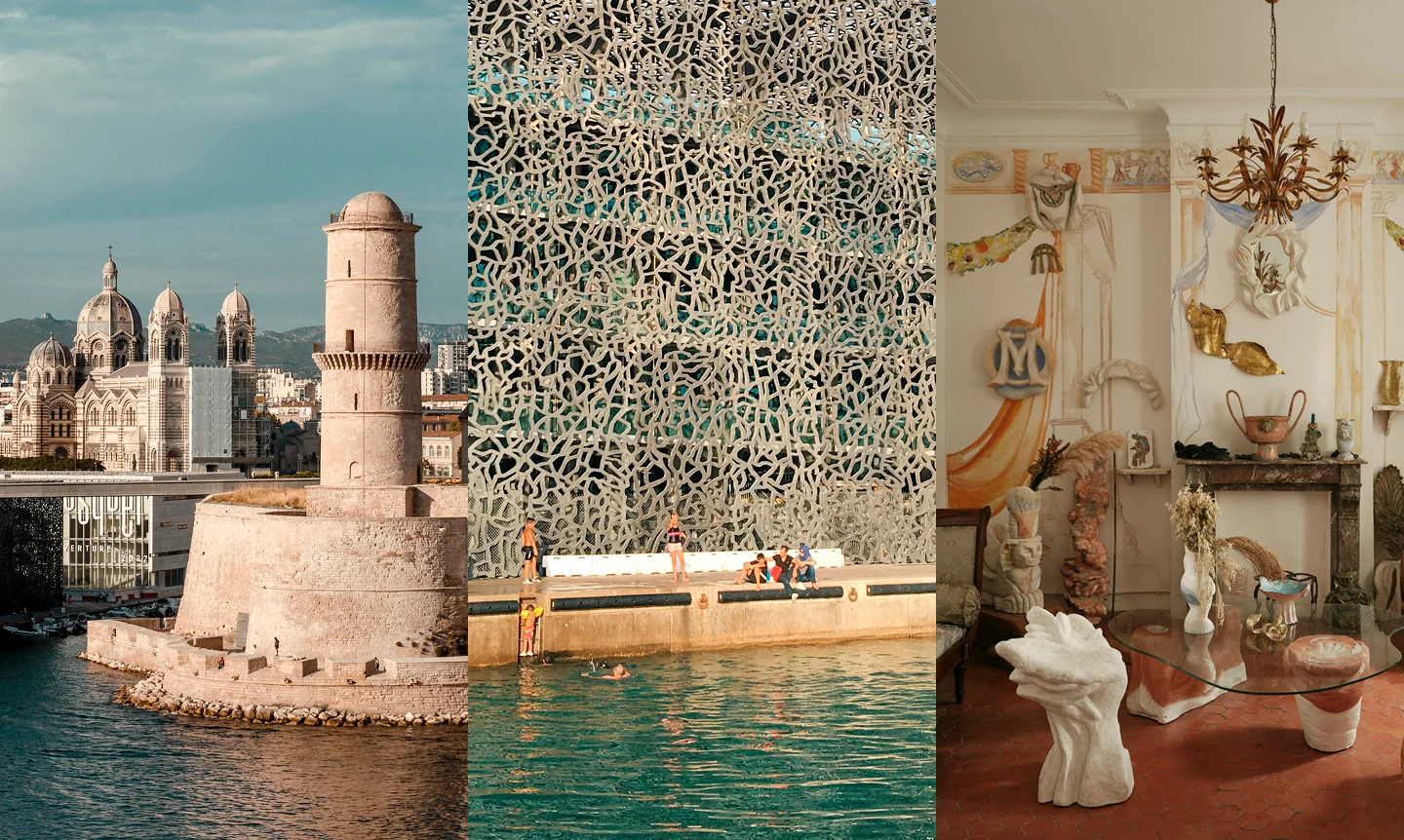
Marseille, one of Europe’s most ethnically diverse working class cities has always possessed a raw and gritty beauty concealed between the cracks of its limestone Calanques and contrasted with the charms of its Provençal traditions, like pétanque and pastis. But over the last decade, a new energy has invigorated the Southern port city.
Marseille-born designer and architect Marion Mailaender described it best when she called Marseille a “joyful and messy city.” Marseille’s allure, or happy mess, is found at the intersections of old and new, charming and chaotic, grand and gritty. Her friend, former film producer-turned-hotelier Fabrice Denizot added that this city with its thousand-year-old history is a land of contrasts, opening an infinite field of possibilities.
From the burgeoning food scene, to new eclectic accommodations (some double as art spaces) to world class museums, shops and galleries attracting Parisians and international crowds alike, Marseille promises a richness of customs and culture paired with wild beaches. Below, we’ve rounded up the best of what Marseille has to offer this season– both old and new.
Where to Stay
Tuba
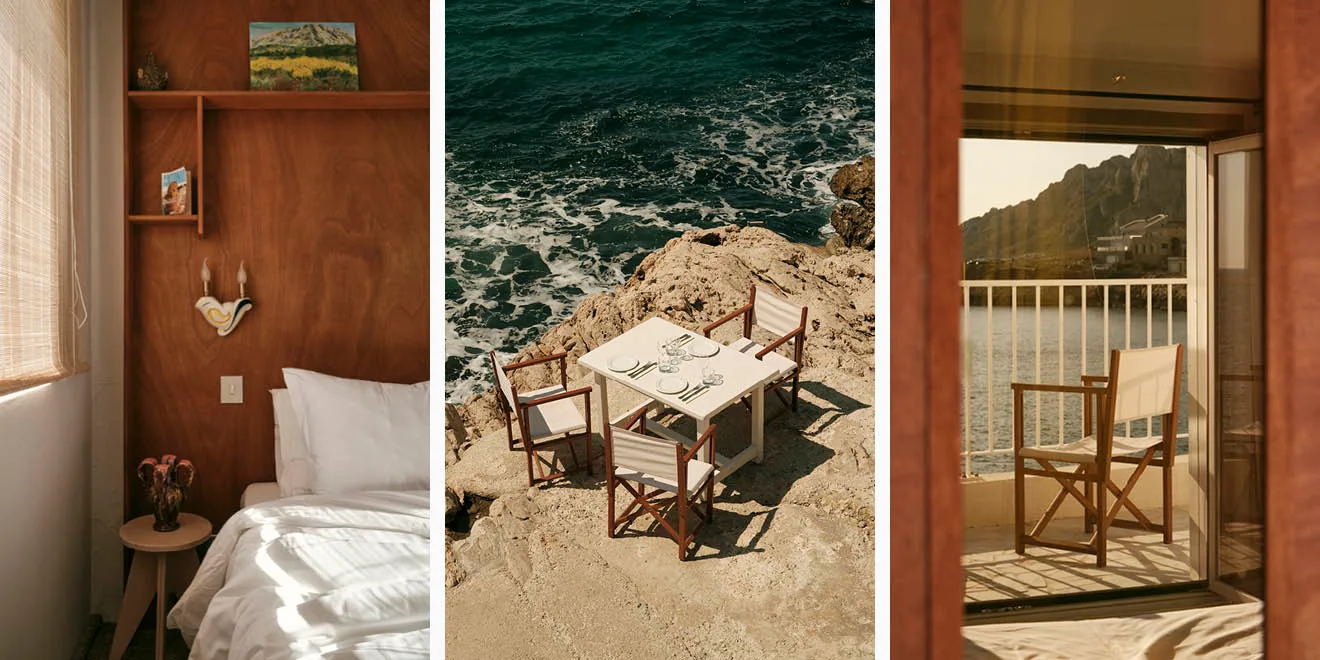
Perched on a rocky cliff in the old fishing port of Les Goudes, this former diving school-turned-hotel and restaurant quietly opened in the summer of 2020. At the helm of the project are Greg Gassa and Fabrice Denizot, with help from long-time friend, designer and architect Marion Mailaender. Before Tuba arrived on the scene, there were just a few classic hotels, like Petit Nice Passedat and Le Rhul, and more unique stays like Hôtel Le Corbusier, but nothing with such an intentional sense of playfulness and soul. The rooms at Tuba are designed as a nod to wooden marine cabins (scuba diving books lining the shelves and flippers, a mask and snorkel hanging on a hook rack beside the beds) while the design ethos outside the rooms follows that same camp-like nostalgia. The owners wanted to create a Mediterranean retreat for friends–which includes regulars like artist Ora Ito and designer Simon Jacquemus– Tuba remains deliberately unpretentious. Guests can spend afternoons on the striped lounge beds dispersed along the rocky cliff or eating a locally-caught lunch at the restaurant, before plunging directly from the rocks into the sea for an afternoon dip.
2 boulevard Alexandre Delabre
La Traverse
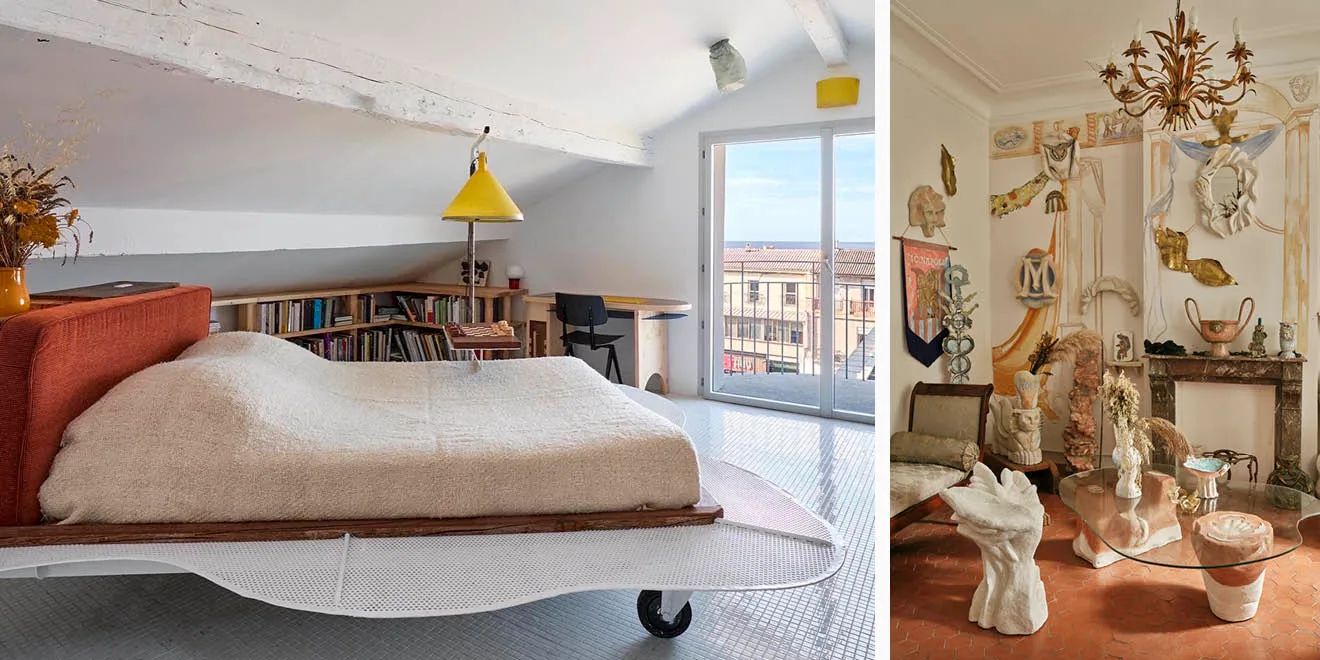
After twenty-five years as a gallery owner in Brussels, artistic director Catherine Bastide is onto her newest project: a hybrid artist house overlooking the cove of Malmousque in Marseille, called La Traverse, which she opened in July 2021. The newly renovated 20th century house is an adaptable space designed to nurture the ideas and projects of the artists she hosts. The programming includes a gallery for emerging artists and international galleries, a biannual artist’s residency and other events surrounding the themes of the environment and circular economy, from initiatives that support local gastronomy or slow design. The airy and eclectic home features an attic studio with a view of the sea, which guests can rent.
16 traverse Sainte Hélène
Pavillon Southway
Curator and art historian Emmanuelle Luciani transformed this 19th-century family home in Marseille’s Mazargues district into a liveable art gallery, where she can host guests as well as exhibitions and conversations with artists and the local public. The place feels like an artist’s home from the main exhibition room to the bedroom upstairs, where Luciani’s own fresco ceiling is the focal point. (Luciani is responsible for the fresco at the entrance of Tuba Club.)
433 boulevard Michelet
Where to Shop
Maison Empereur
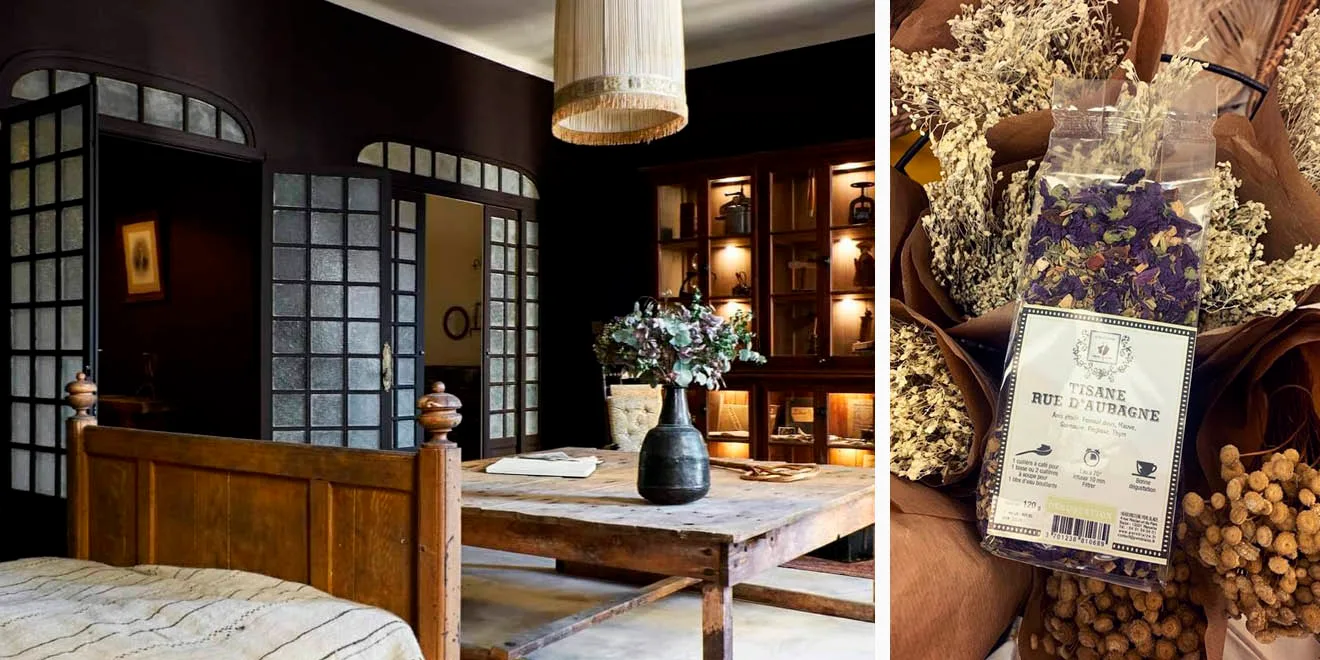
In one of Marseille’s busiest and most diverse neighborhoods, Maison Empereur offers a jolt back to France. You’ll need some time to explore France’s oldest hardware store, which opened in 1827. Inside this two-story treasure trove, you’ll find of course hardware and kitchen essentials but also Provencal baskets, old-fashioned toys, lavender-filled sachets and a small section of typical Provencal clothing and accessories, like breton shirts and straw brimmed hats. Laurence Renaux-Guez— she’s the seventh generation successor to the family business— has opened up a guest apartment above the store’s offices which she calls one night in the back shop for those looking to experience more of the shop’s history.
4 rue des Récolettes
Le Père Blaize
Just around the corner from Maison Empereur, you’ll find another Marseille institution. Le Pere Blaize is a herbal pharmacy founded in 1815, where the knowledgeable staff concoct traditional remedies, using teas, herbs, plants and essential oils, among others, to treat anything that ails you physically or mentally.
4 rue Meolan et du Père Blaize