Mandarin Oriental Ritz
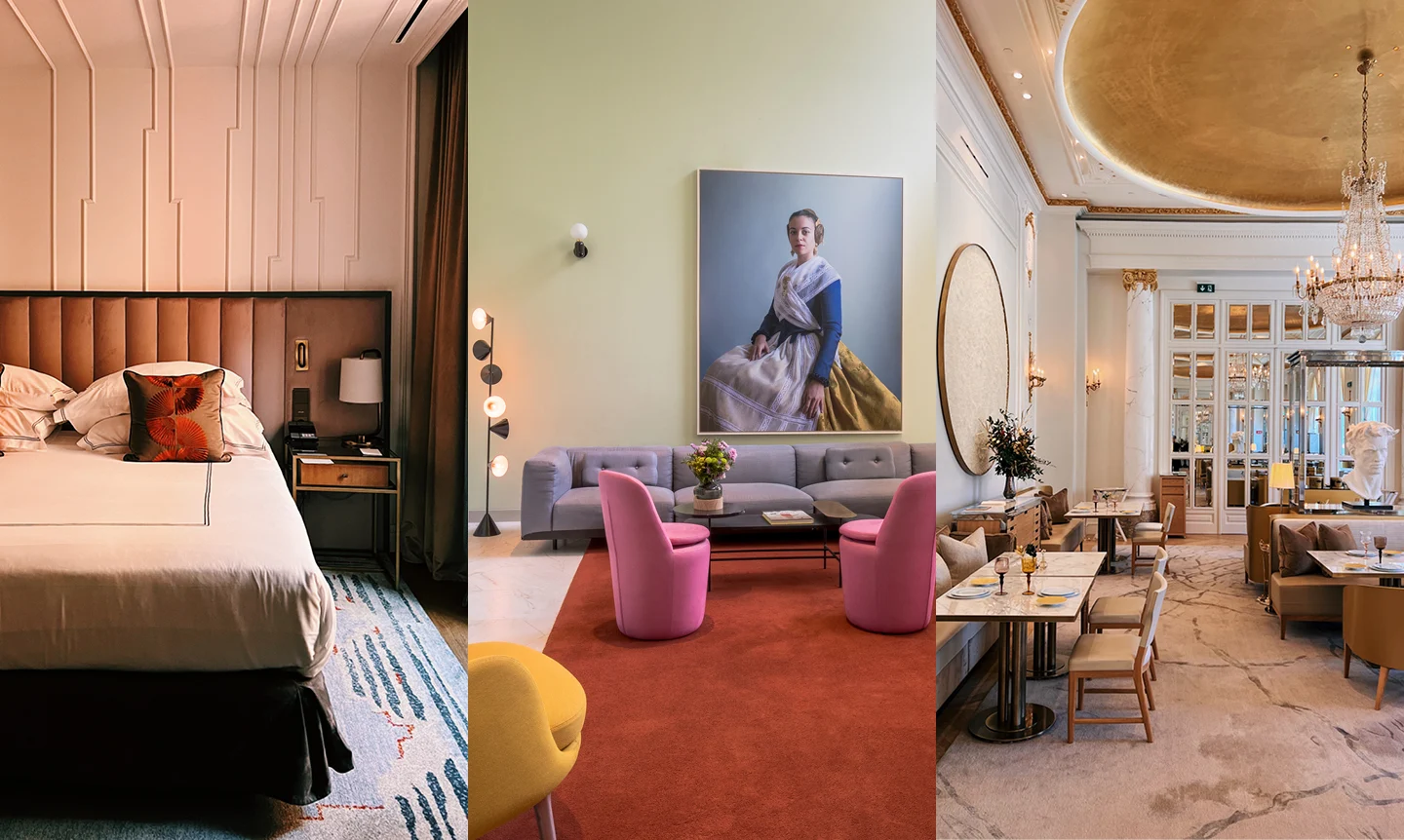
After its three-year renovation, the centenary Ritz has been bathed in light and art by Spanish architect Rafael de la Hoz and French interior designers Gilles et Boisser, all under the new direction of Mandarin Oriental. Fortunately, the luxury hotel is still just as grand as it was at the time of its opening in 1910. The entrance doors are now four meters high, a second entrance allows a view of the nearby Prado Museum from the lobby, and the great glass vault of the Palm Court, the social and gastronomic heart of the hotel which had been hidden for 80 years, has been recovered. In the 153 rooms— classic in style with touches of contemporary luxury— a dialogue between France, Spain, and Asia is evident: Louis XVI-style furniture, lots of white with gold accents, spacious bathrooms, and, in some suites, frescoes on the ceiling alluding to the paintings exhibited in the Prado Museum. Ascend to hospitality heaven in the Royal Suite or one of the Turret Suites, all opulent and ovular with sweeping treetop views. The cuisine, in the hands of celebrated chef Quique Dacosta, oscillates between Ritz classics (take Palm Court’s Wellington sirloin served on silver plating), and more contemporary fare, which can be found at Deesa, an intimate restaurant overlooking the hotel garden— where the Valencian paella is best enjoyed.
Plaza de la Lealtad, 5
Four Seasons Madrid
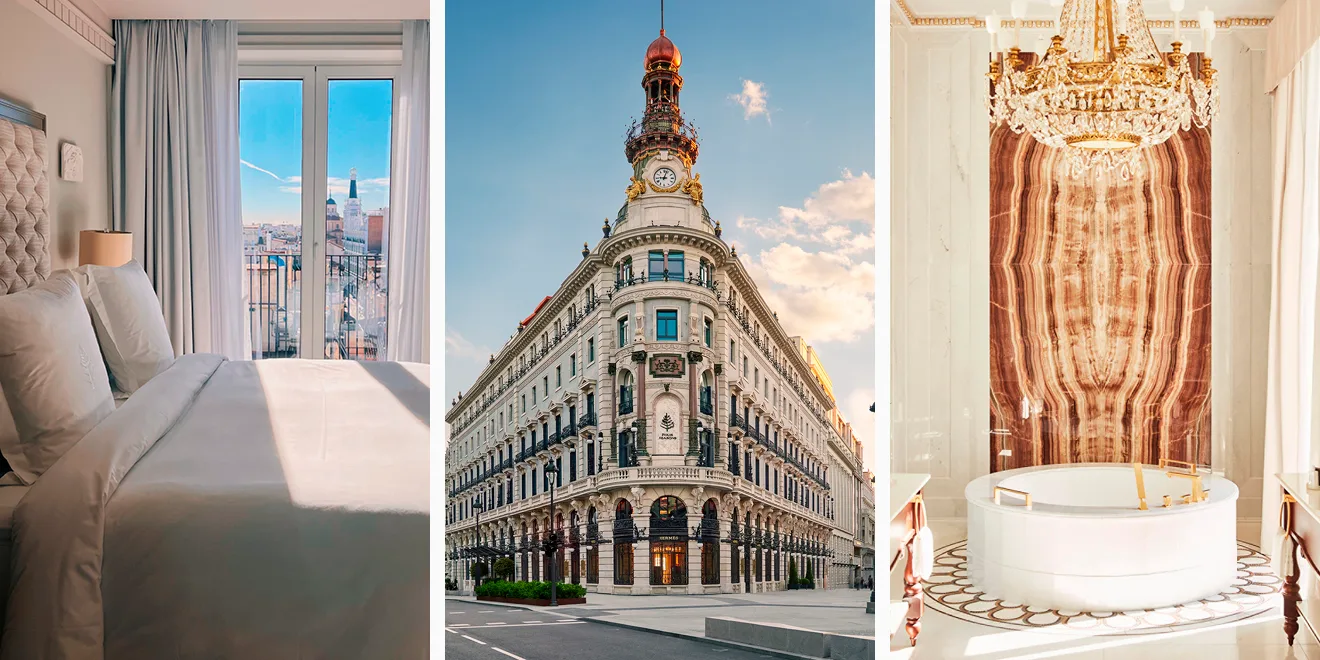
The first luxury hotel to open in Madrid in the last half-century, the Four Seasons is made up of seven 19th-century buildings in the historic city center. The hotel’s lobby retains the glorious richness of what was formerly the headquarters of the Banco Español de Crédito: stained-glass windows from the historic Madrid workshop Casa Maumejean on the ceiling, original Ionic columns, green marble counters, and even an old vault, which now allows guests to access the elegant Canalejas gallery, filled with luxury boutiques and acclaimed restaurants. As in the hotels of London and Paris, the lobby serves all-day cocktails and tea, but in the Madrileño style, with churros, Iberian ham sandwiches, and La Goyesca (a gin martini with grapefruit tonic). Of the 200 rooms, 39 are suites, all generous in space (the smallest measure between 484 and 538 square feet) and most look out onto the iconic Sevilla or Alcalá streets, sometimes both. (The interiors face a courtyard bordered by a vertical garden.) Renowned chef Dani García has taken over the building's corner terrace to set up Dani Brasserie, where you can enjoy al fresco dining all year round. His signature refined take on traditional Andalusian cuisine is one of the best culinary experiences in Madrid.
Calle de Sevilla, 3
Rosewood Villa Magna
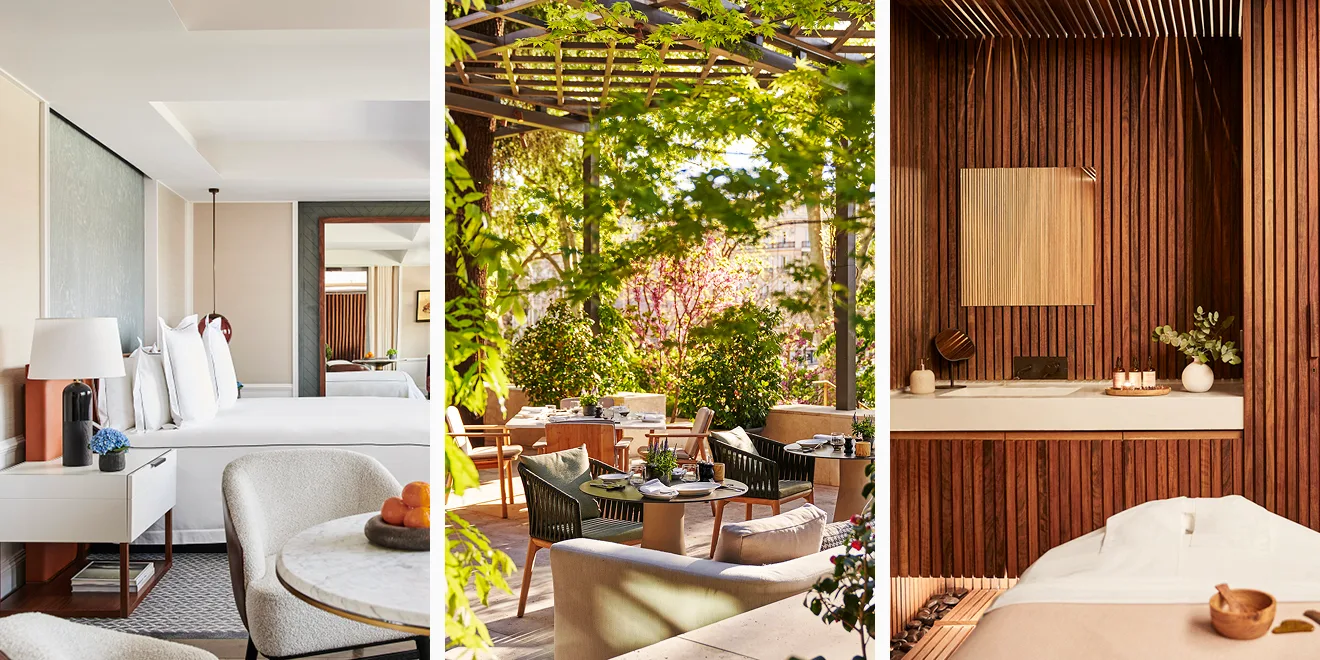
In the middle of the bustling Paseo de la Castellana, a leafy avenue lined with grand palaces, the Hotel Villa Magna, inaugurated in 1972, was once the king of Madrid's luxury accomodations. Today, the marble-lined property has been transformed by the ultra-luxury Rosewood group, offering a cozy, private residence atmosphere with elegant yet unstuffy interiors. The hotel has 101 rooms, 53 suites, and four individual houses. Its gastronomic lineup is led by chef Jesús Sánchez, of Cenador de Amós in the North of Spain, with ambitious Spanish cuisine that highlights the flavors of the Cantabrian Sea and its surrounding gardens. Expect dishes like artichoke and cardoon stewed in their own cream, orecchiette with Cantabrian lobster ragout, and quesada pasiega (cheesecake) made with goat cheese, red fruit, and raspberry coulis.
Paseo de la Castellana, 22
Gran Hotel Inglés
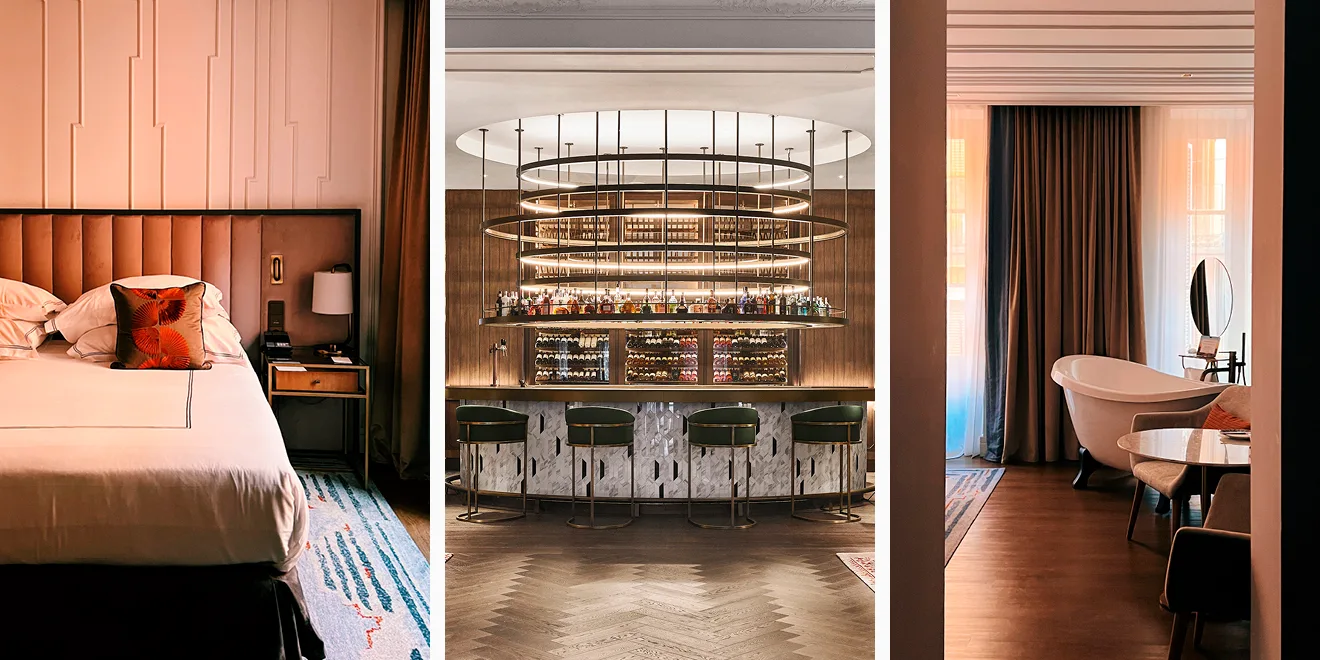
It was the first luxury hotel in Madrid in 1886, and also the first to incorporate a restaurant. Its visitors were equally formidable; Gran Hotel Inglés was the jewel of Madrid during the 1920s, with guests such as Matisse and tango composer Carlos Gardel. In subsequent decades it gradually lost its luster, until it closed its doors in 2012. But in 2018, thanks to the interior design studio of David Rockwell, the property came roaring back. It’s accessed through an impressive Art Deco lobby featuring an elliptical bar with a bronze and leather wine rack, where you can check in while enjoying a dry martini made by expert bartenders. The original chandeliers still remain and, at the back, a library with more than 600 titles recalls its past as a place for literary gatherings. The hotel's 72 rooms have now been reduced to 44 to maximize the size of each, with six larger suites. The hotel design recreates its past with custom-made furniture, freestanding marble bathtubs, and closets lined with old postcards from some of the hotel’s most legendary guests from its 136-year history. Next to the lobby is the CASA LOBO restaurant, where chef Fernando P. Arellano adds a signature touch to Madrid dishes and tapas. Must-try dishes include the Ensaladilla rusa (potato salad) with smoked eel, caviar, and quail egg; Patatas bravas (spicy, crispy, and tender thick-cut potato chunks); and a Madrid-style beef tripe.
Calle de Echegaray, 8
Barceló Torre de Madrid
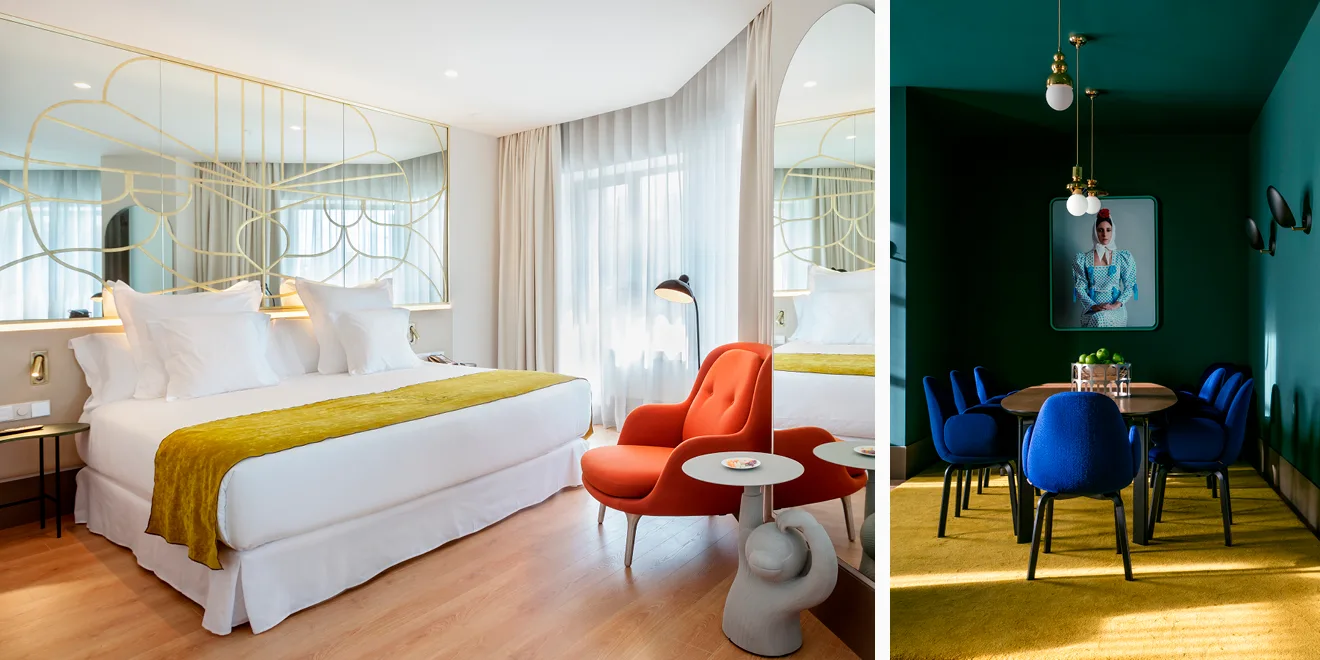
It’s hard to find a bad view of the Gran Vía, Madrid's main thoroughfare since 1910, but there is one that is exceptional, and it can only be enjoyed from the Barceló Torre de Madrid, whose nine floors are located in what was once the tallest building in Spain. Of its 258 rooms, many overlook Gran Vía, but corner suites offer a panoramic view entirely unique to the hotel. You’ll find that same view in the breakfast room and the Somos restaurant, which serves traditional Madrid and Spanish cuisine with portions to share. The interior has been taken over by the imaginative, sometimes surreal, hands of designer Jaime Hayon, who plays with Spanish clichés (bullfighters, flamenco dancers) and elements of children’s folklore, setting them against a sweet pastel palette of pistachio, cobalt, and pale pink.
Plaza de España, 18
Hotel Orfila
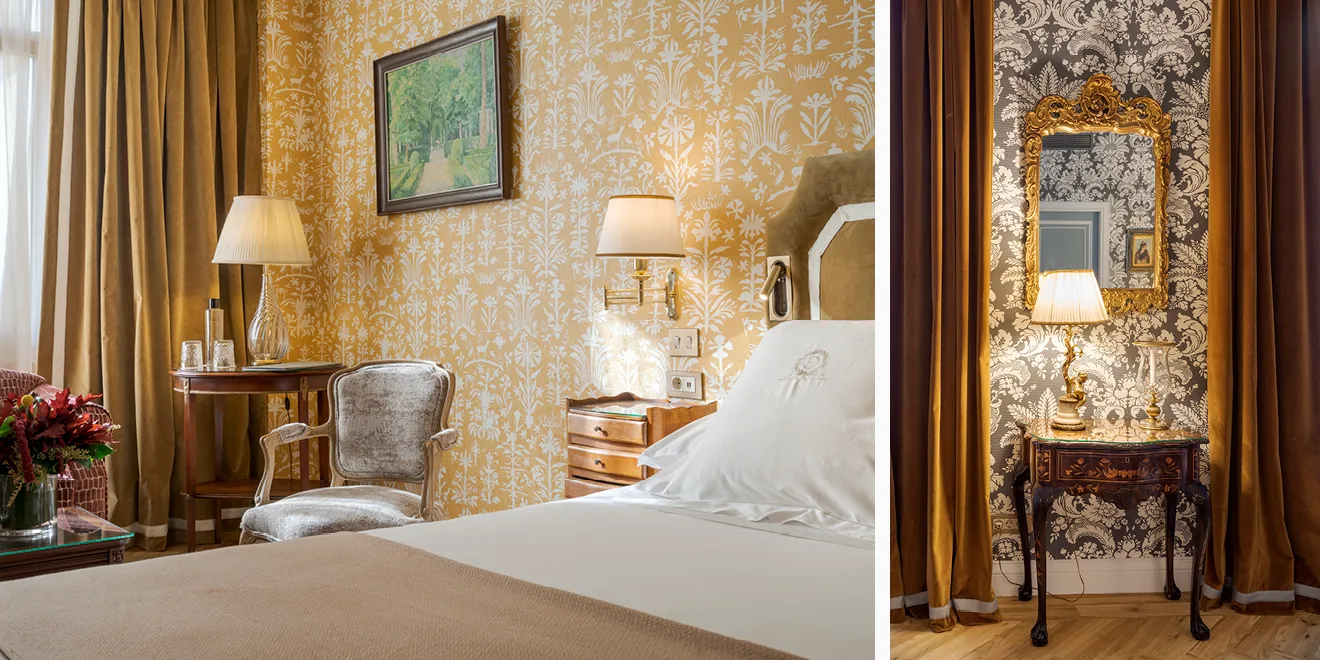
One of Madrid's best-kept secrets, Hotel Orfila is located on a discreet street in the Almagro neighborhood. This classic gem, which is housed in an 1885-built family residence and has been welcoming guests since the 1990s, has taken advantage of its pandemic-era closure to get a decorative facelift. Its 32 rooms are awash with rich printed fabrics, damasks and velvets, marble, bronze, and fine woods, plus rare pieces of artwork. Equally impressive is the restaurant, El Jardín de Orfila, where executive chef Mario Sandoval updates traditional cuisine with avant-garde techniques. His suckling pig confit with bacon crumbs and caramelized apple is a must. The best place to enjoy it is on the canopied patio, where you can eat among topiaries and Renaissance-style trompe l'oeil.
Calle de Orfila, 6
Bless Hotel
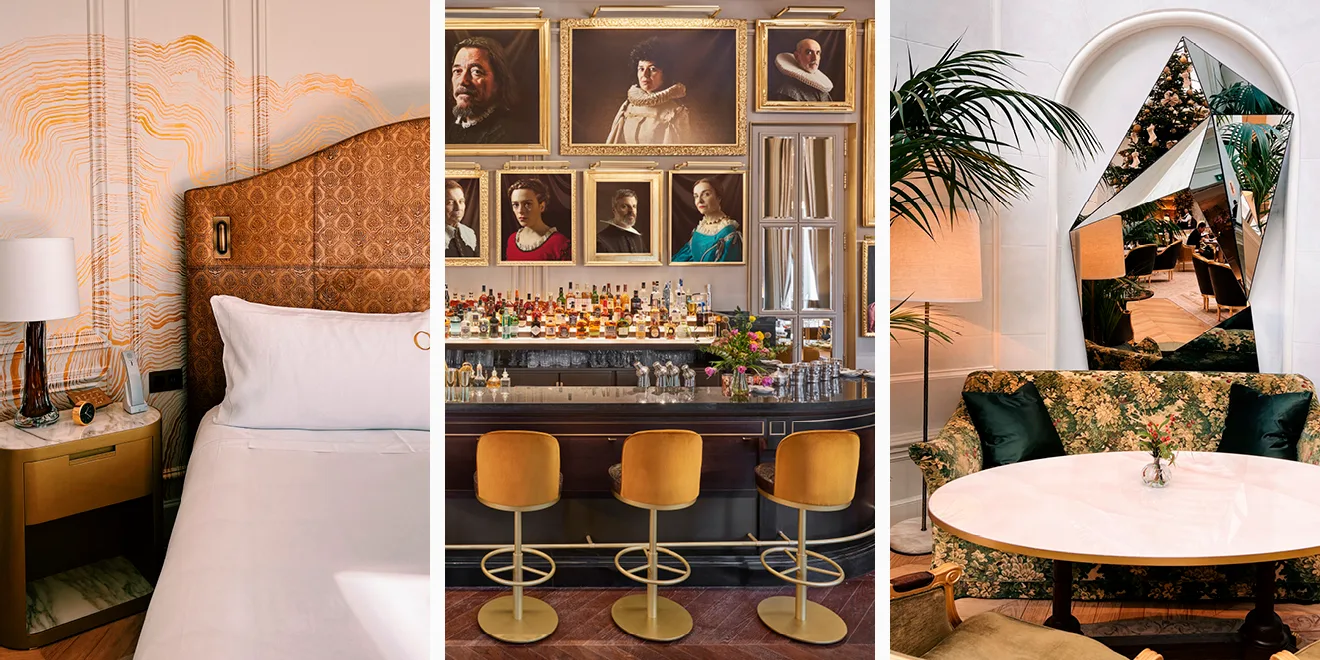
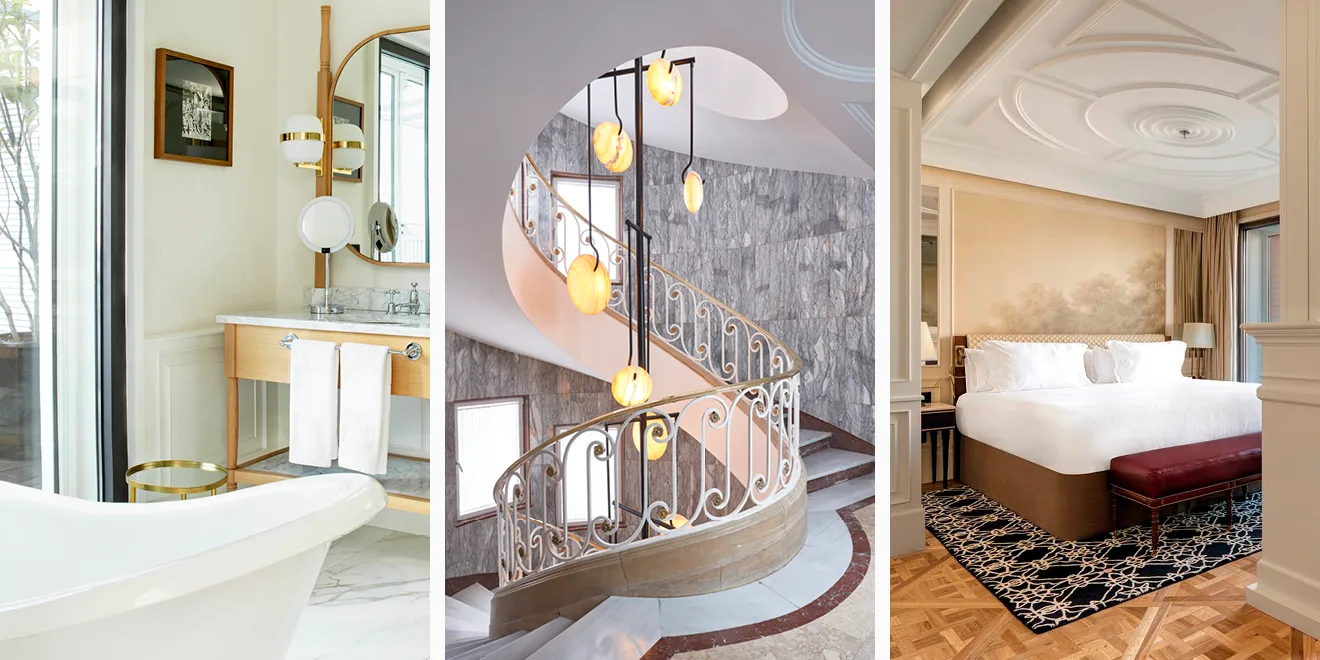
What was once the classic Gran Hotel Velázquez, the Bless Hotel, which opened in 2019, now feels like a direct outgrowth of the Salamanca neighborhood, home to the city's most expensive noble houses and luxury boutiques. The lobby and the restaurants are a fusion of midcentury Madrid style and whimsical, avant-garde design: carpets upholstered with flowers, ceilings with oversized rosettes and cornices, and large rhinoceros sculpture in the restaurant. There’s no shortage of fun here; upon entrance, guests are greeted by an always-buzzing bar, and a speakeasy, hidden in the cellar, is open until six in the morning. At the rooftop lounge, guests drink cocktails by an emerald green pool, lounging in Balinese beds with views of half of Madrid in sight. The 111 rooms and suites, on the other hand, are bright with white wood paneling, watercolor wallpaper, and freestanding bathtubs. Most come with fireplaces and terraces overlooking Velázquez Street.
Calle de Velázquez, 62
The Edition Madrid
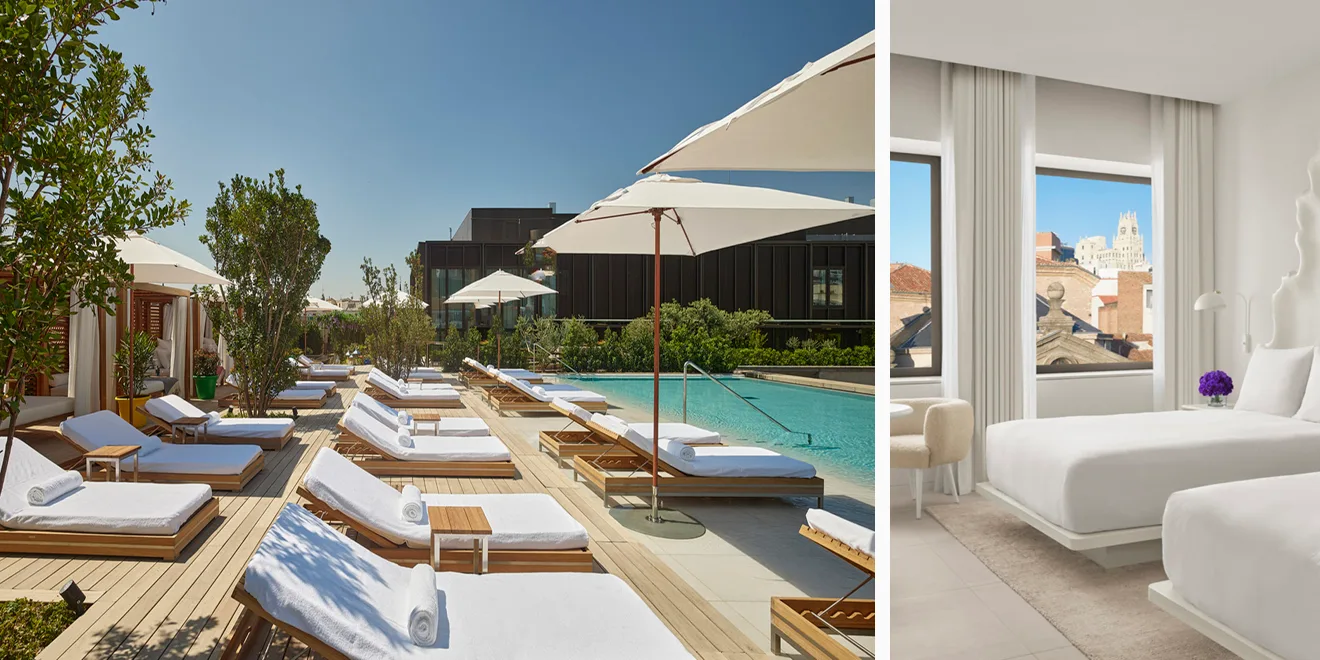
The colossal helical staircase, as if falling from the sky, lends a certain neo-Romanesque mysticism to the entrance of this new Edition. It was part of a brilliant transformation by architect John Pawson in the modern, formerly bland building of the Monte de Piedad in the Plaza de las Descalzas. The lobby is decorated in armchairs upholstered in bouclé wool, marble tables, and refectory tables, all in a range of whites, creams, and warm woods. There’s also a pool table, the signature of Ian Schrager's Edition hotels. A pink corridor— a nod to Mexican architect Luis Barragán— leads to Jerónimo, the Mexican restaurant run by chef Enrique Olvera, and ends at the baroque façade of the Chapel of Monte de Piedad. In an exercise of minimalism meets baroque, the chapel’s intricate silhouette was used to shape the headboards of the beds in the hotel’s 177 rooms, 21 suites, and 2 penthouses— the latter of which are duplexes equipped with private pools and terraces. On the rooftop, the largest infinity pool in Madrid overlooks the old town and a large glass greenhouse, which houses Oruya, a restaurant run by Peruvian chef Diego Muñoz. At night, the Punch Room offers a restorative punch that has become the master potion of the house.
Plaza de Celenque 2