Just as certain meals imprint themselves on one’s memory, certain stories are indelible. For me, Laura Esquivel’s Like Water for Chocolate is one of these. In fact, much of what I know about love and hunger came from the bewitching Mexican novel. How to charm a man with food, put my own spin on an inherited recipe, cook my way through heartbreak. This might sound like hyperbole, but it is completely in line with the heightened passions of the world Esquivel conjures. A novel in 1989 and a film in 1992, the tale has most recently been vibrantly reprised in a new Max series produced by Salma Hayek Pinault, with food scenes so vivid you can almost taste them. I am, as the kids say, here for it.
Like Water for Chocolate — the novel — was first sent my way by a literary aunt known to pilfer appealing galleys from her publishing job and pop them in the mail. Its turquoise cover bore the painted image of a placid young woman with a scarlet flower behind her ear, making tortillas in a kitchen. I guessed that was supposed to be the protagonist, 15-year-old Tita de la Garza — the book is narrated by her great-niece — but as I read about this brave young woman torn between love and tradition, I pictured someone with far more pluck.
Perhaps I was seeking someone to look up to. Like Water for Chocolate came into my life at a time when the dual interests of my nerdy youth — reading and eating — were competing for the first time with something else: desire. There was lust, yes. I was a teenager, after all, like Tita. But more than that, much more, there was the desire for love. The desire for the power to make the person I loved love me back.

I had recently learned my grandparents’ love story — the immediate electric charge they felt for each other when they met at a radio station in New York City where my grandfather was playing live music. The pair fell in love so quickly that they were married within two weeks. To hear my grandmother tell it, decades of passion followed, as did four children. At the time, I was also starting to learn some of my grandmother’s recipes, Jewish and Eastern European classics she often prepared by memory, taking liberties and making substitutions with an authority I admired. I was learning that improvising in the kitchen was like an art form. In Like Water for Chocolate, Tita is described as “the last link in a chain of cooks who had been passing culinary secrets from generation to generation since ancient times.” I was moved by this basic premise: a little girl who is a good eater becomes a good cook, carries on family recipes and — though stuck within the confines of home — satisfies her hunger for life, for adventure and rapture, with transcendent food
In the story, Tita lives on a ranch in northern Mexico at the beginning of the twentieth century, during the Mexican Revolution. The threat of violence at the hands of federales looms. She longs to marry a neighbor, Pedro, whom she believes loves her too (she’s right), but her stern mother insists that as the youngest, Tita must care for her until her death. So her sister Rosaura is married off to Pedro instead, a betrayal that kicks off a star-crossed love affair on par with Romeo and Juliet.

One key difference, though, between this and Shakespeare, is the food. Oh, the food. The story covers one particularly dramatic year in the life of its heroine, and each month begins with a recipe. Christmas Rolls in January, Chabela Wedding Cake in February, and so on. There is Quail in Rose Petal Sauce, Oxtail Soup, lasagna-like Champandongo, in which tortillas are layered with meat, cheese, and sauce, and memorably appetizing Cream Fritters, fried squares of eggs and cream served in hot syrup and sprinkled with cinnamon, like french toast without the dense middleman of bread.
When it comes to food, Tita was born into it — literally. She arrived prematurely, Esquivel writes, “right there on the kitchen table amid the smells of simmering noodle soup, thyme, bay leaves, and cilantro, steamed milk, garlic, and, of course, onion.” From the beginning, the kitchen is her domain. And as her forbidden love for Pedro blossoms, she has no choice but to communicate it through the meals she makes. The book takes a magical realist turn. Tita weeps into the batter for her sister and Pedro’s wedding cake, and her anguish is baked into the confection. The moment the guests take their first bite of the cake, “everyone was flooded with a great wave of longing.” There is collective sobbing, then collective vomiting. Later, Tita feeds her infant nephew from her own breast until he “sleeps like a saint,” even though she’s still a virgin and obviously isn’t lactating. The message? Love makes edible miracles happen.
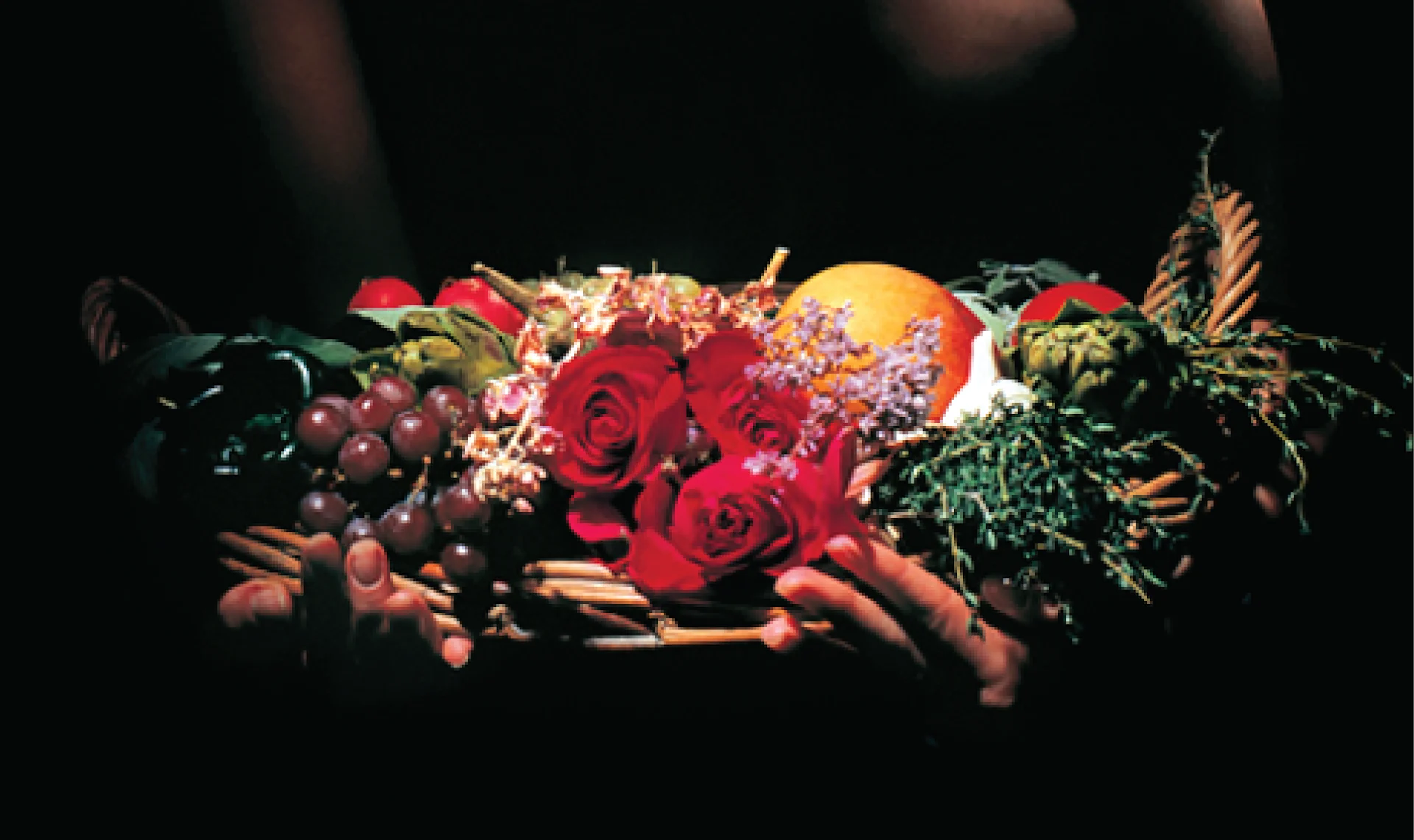
The inverse is true too: food that is divine makes love happen. Tita’s desire for Pedro grows so unwieldy it is dissolved into the rose petal sauce she prepares. “That was the way she entered Pedro’s body,” Esquivel writes. The tortured young couple discovers a new “system of communication.” Tita's cooking is an ode to Pedro, to love itself. He stares into her eyes while eating, and says, “Thank you. I have never had anything so exquisite.” It’s a literal take on the idiom that the fastest way to a man’s heart is through his stomach. (You’ll have to read the book or watch the series to find out whether Tita and Pedro ever do actually end up together.)