
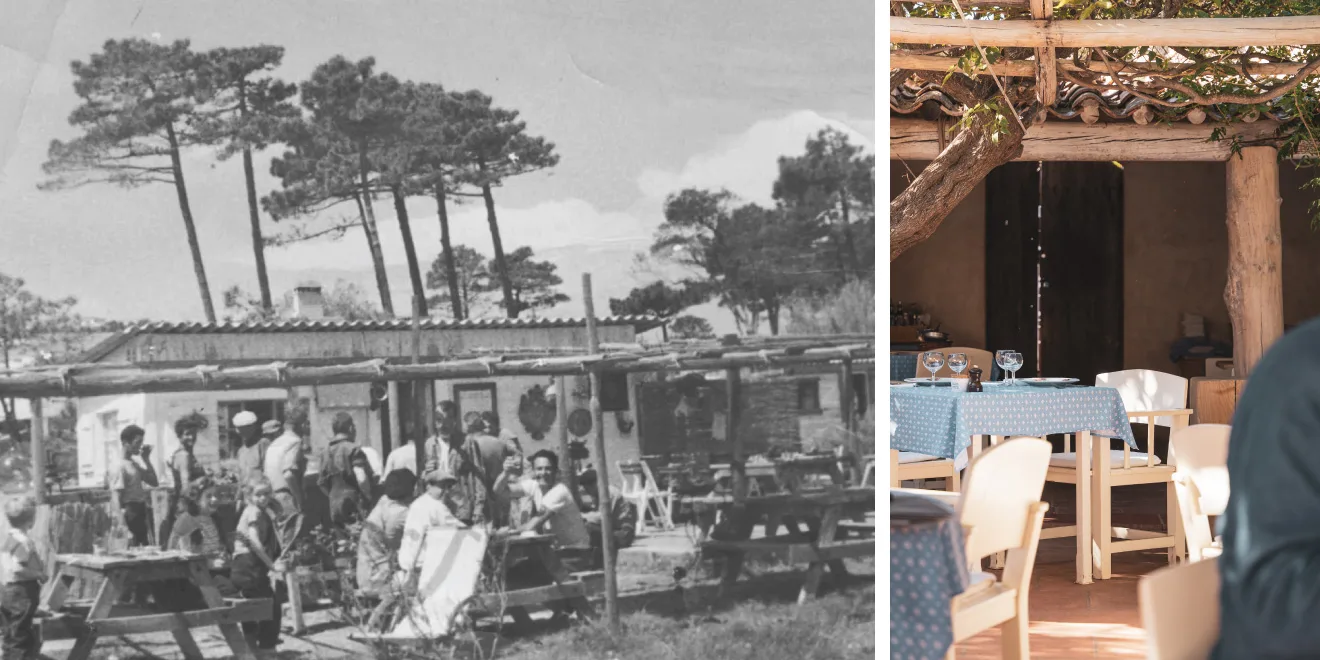
In 1954, French anthropologist and explorer Bernard de Colmont bought a piece of land bordering Pampelonne beach in Ramatuelle, next to Saint-Tropez, and constructed a series of small wooden cottages for his family to live full-time, sans electricity and running water. The beach was wild and undeveloped; tourists would occasionally appear to sunbathe or go for a swim, sometimes striking up a conversation with the family and joining them for lunch or dinner. De Colmont’s wife, Geneviève, sensed a business opportunity: What if they cooked for beachgoers in exchange for a few francs? So the couple built picnic tables inspired by the ones they’d seen in the national parks of the United States — the pair was the first to travel down the mighty Green and Colorado rivers in a kayak — and laid them out on the water’s edge, in hopes of attracting passersby.
One summer day in 1956, the crew of Et Dieu Créa la Femme — And God Created Woman, Brigitte Bardot’s breakout film — stopped by for lunch and asked Geneviève whether she’d be willing to cook for the entire cast and crew of 80 for the following three weeks. She agreed, upgrading her camper stove for full ovens and preparing simple, flavorful Provençal fare like ratatouille and grilled fish with herbs and garlic. The ad hoc restaurant was such a hit that Bardot and her husband, Roger Vadim, the film’s director, returned with their friends multiple times that summer, even after filming had wrapped. Press photos circulated of a bikini-clad Bardot seated around a picnic table, her floppy wide-brimmed hat, heavy kohl eyeliner, and cleavage-clinging chunky necklace signifying the kind of louche glamour that the beach clubs of the French Riviera have come to represent. And so, Le Club 55, arguably the best-known beach club on the Côte d’Azur (and maybe even the world), was born, sealing the region’s reputation as “a sunny place for shady people,” as writer William Somerset Maugham once put it.
As Le Club 55 gained prominence, so, too, did the other beach clubs that cropped up along the golden shores of the coast, their mythical status buoyed by the region’s tourist boom and movie-star style. In 1954, the private beach club at the InterContinental Carlton Cannes appeared in Alfred Hitchcock’s To Catch a Thief, with the towering palms of La Croisette and the hotel’s Art Nouveau architecture in the background. On Île Saint-Marguerite, an island off the coast of Cannes, a barbecued fish hut called La Guérite that opened in 1902 became a magnet for Hollywood’s elite, the island’s imposing 17th-century fortress and speedboat transportation adding to its cinematic appeal. Even today, these spots feel like portals to the past; squint hard enough, blocking out the megayachts and the TikTok influencers, and you’ll be transported back to the region’s glamorous heyday.
These days, once-modest seaside shacks like Le Club 55 and La Guérite have become pinnacles of Riviera cool — a little sleazy, a lot flashy, and a bit too Americanized for most Parisians’ tastes — but that’s part of the fun. On the French Riviera, it’s all about bronzed skin, bikinis with gold hardware, and loose linen shirts that billow like sails in the wind.
Don’t let the effortless summer style fool you, though — these toes-in-the-sand spots are some of the toughest tables in all of France. Travelers endure six-month wait lists to dine in Le Club 55’s open-air, 300-seat restaurant, a favorite of A-listers like Leonardo DiCaprio and Bono. Sure, a spicy lobster pasta at La Guérite will set you back nearly 200 bucks, but a visit to one of these historic beach clubs is practically de rigueur while vacationing in this corner of France.
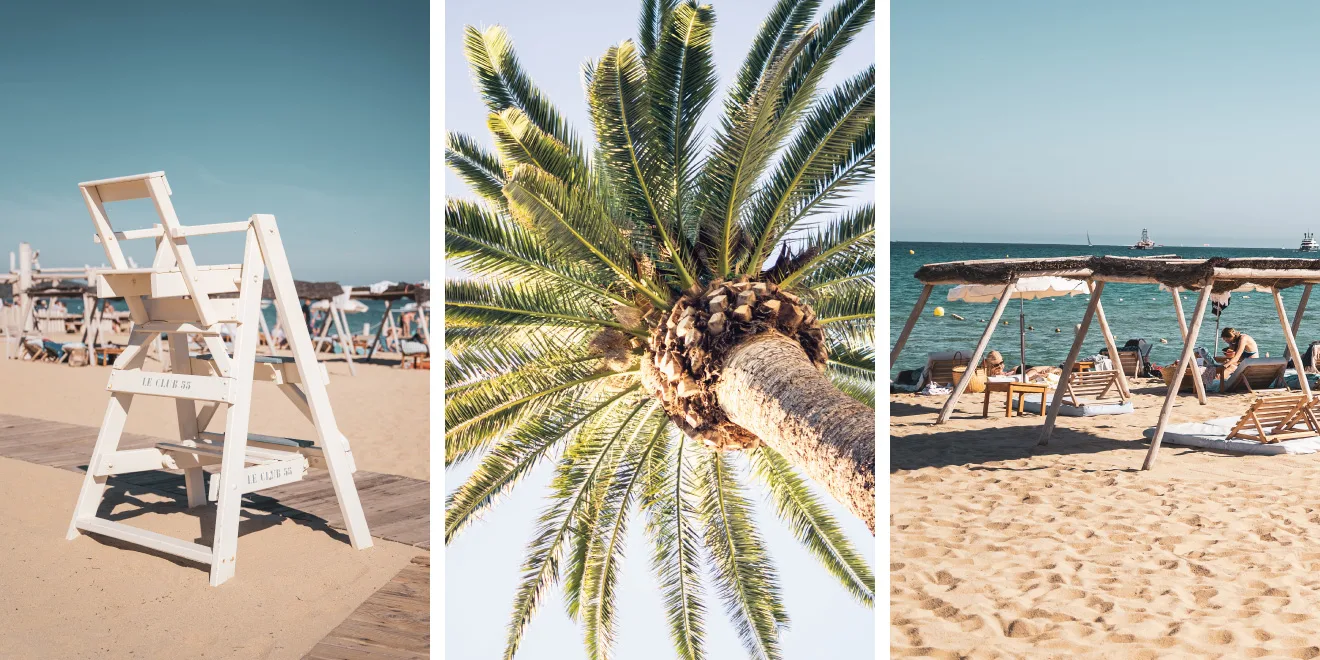
For the quickest immersion in the region’s beach-clubbing culture, head to the Plage de Pampelonne, the finest stretch of sand in Saint-Tropez. At La Réserve à la Plage, the Philippe Starck–designed interiors feature sherbet striped cushions, rattan pendant fixtures, and chic director’s chairs looking out toward the sparkling waters of the Mediterranean. Live concerts, DJ sets, and photo exhibitions lend a festive mood, and chef Nicolas Cantrel’s Riviera-inspired menu is sure to satisfy sybarites and supermodels alike, with wood-fired meats, garlicky pastas, and colorful summer salads.
Also on Pampelonne is Hotel Byblos’s newly reopened beach club, whose airy dining room shaded by a latticework of sun sails is always abuzz with rosé-guzzling crowds. Despite the carefree setting, the place has always had a VIP air; founded in 1967 by Lebanese businessman Jean-Prosper Gay-Para in a bid to woo Brigitte Bardot, it was also the site of Mick and Bianca Jagger’s 1971 nuptials. Thanks to its stylish refresh, it’s never been more of a scene.
If Saint-Tropez is a place to see and be seen, the Saint-Jean-Cap-Ferrat peninsula is where the über-rich go to disappear behind gilded gates and neatly trimmed hedges. For about $20 per person, you can get a taste of the aristocratic life at Paloma Beach, located on the peninsula’s eastern arm, once frequented by the likes of Matisse, Cocteau, Churchill, and Sean Connery. Stretch out on a white sun lounger on the gravelly beach, drifting off to the sound of gently lapping waters and the perfume of pine and eucalyptus trees. With nary a DJ booth in sight, it’s a delightfully down-tempo beach-club experience.