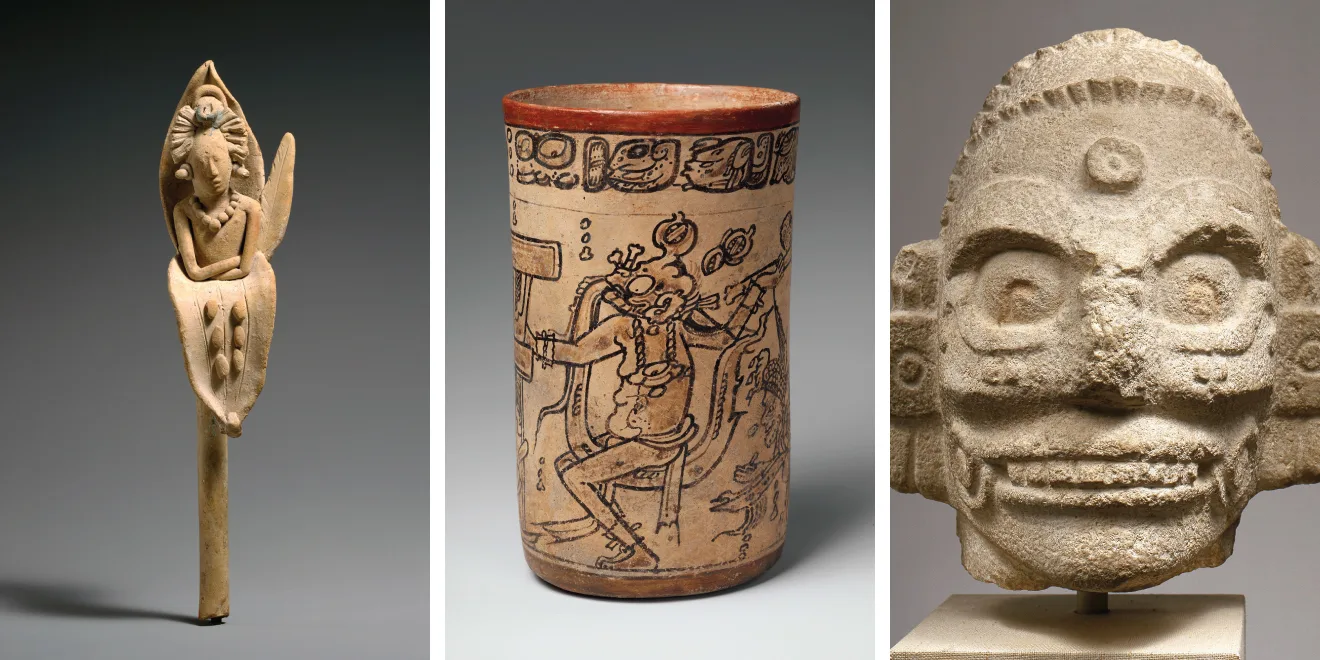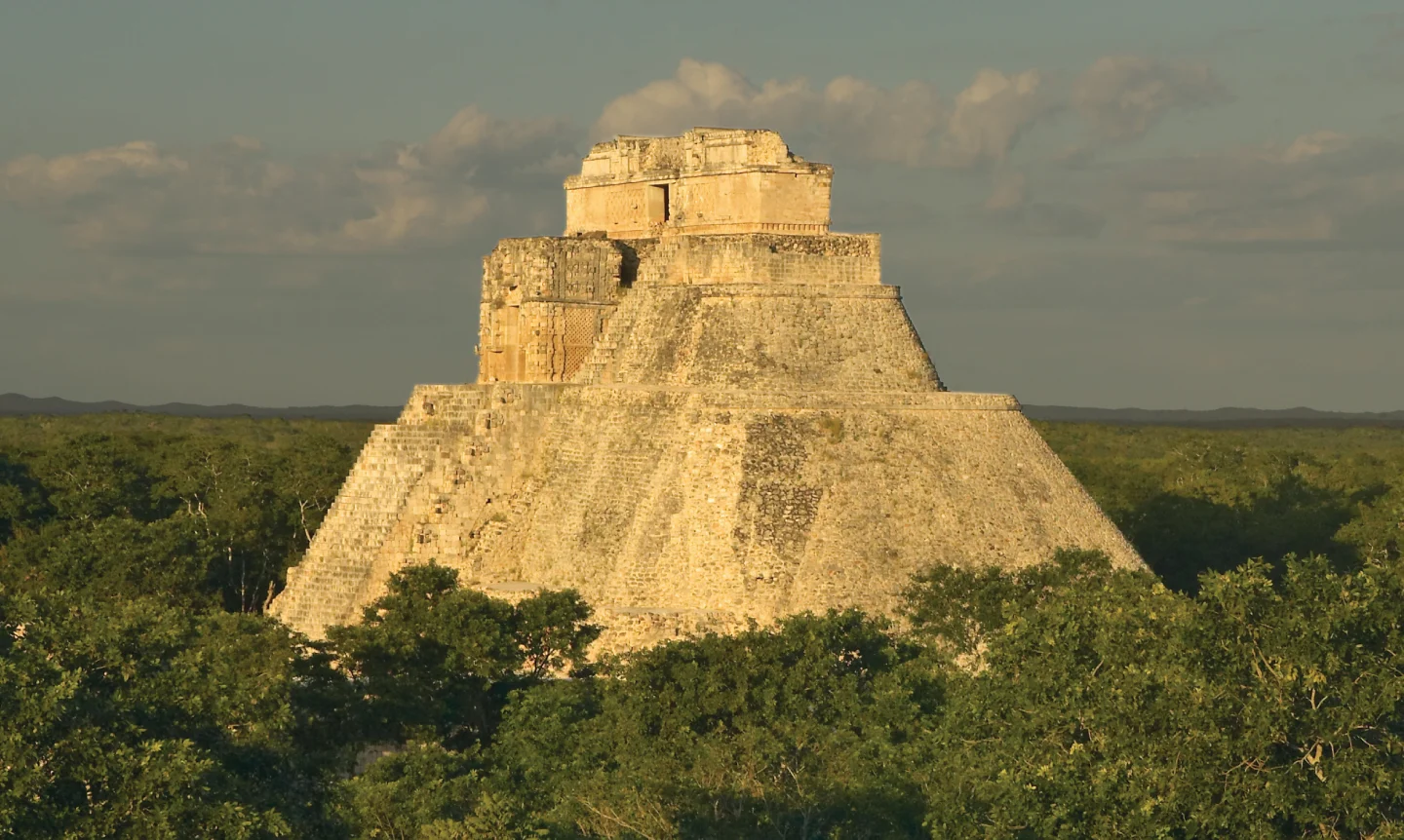
Mayan society made huge contributions to the world of mathematics, architecture, farming, engineering, and even sports, but the Empire also had a rich canon of folklore that informed— and continues to inform— the Mayan way of life. Like many ancient polytheistic civilizations, the Mayans were spiritual people with a strong reverence for the natural world.
If one pays enough attention, a trip to any of the preserved Mayan ruins can be a portal into an ancient world filled with magic, mysticism, and wonder. Even contemporary archaeologists are in awe of the scale of the Mayan pyramids and temples.According to Mayan tradition, however, the ancients accomplished these feats of architecture by whistling, moving heavy objects with the force of their breath, moving melodically through the wind. When modern tools were introduced, the Mayans believe, the secret got out and the power to glide stones with ease was completely lost.
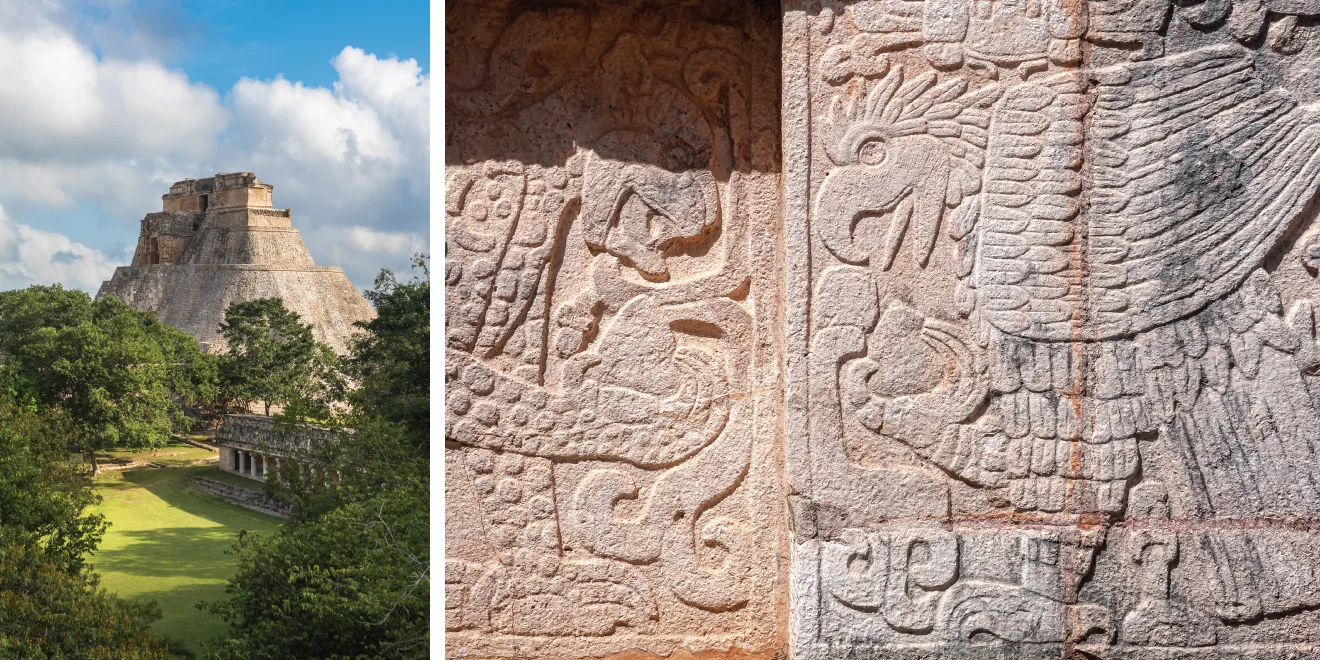
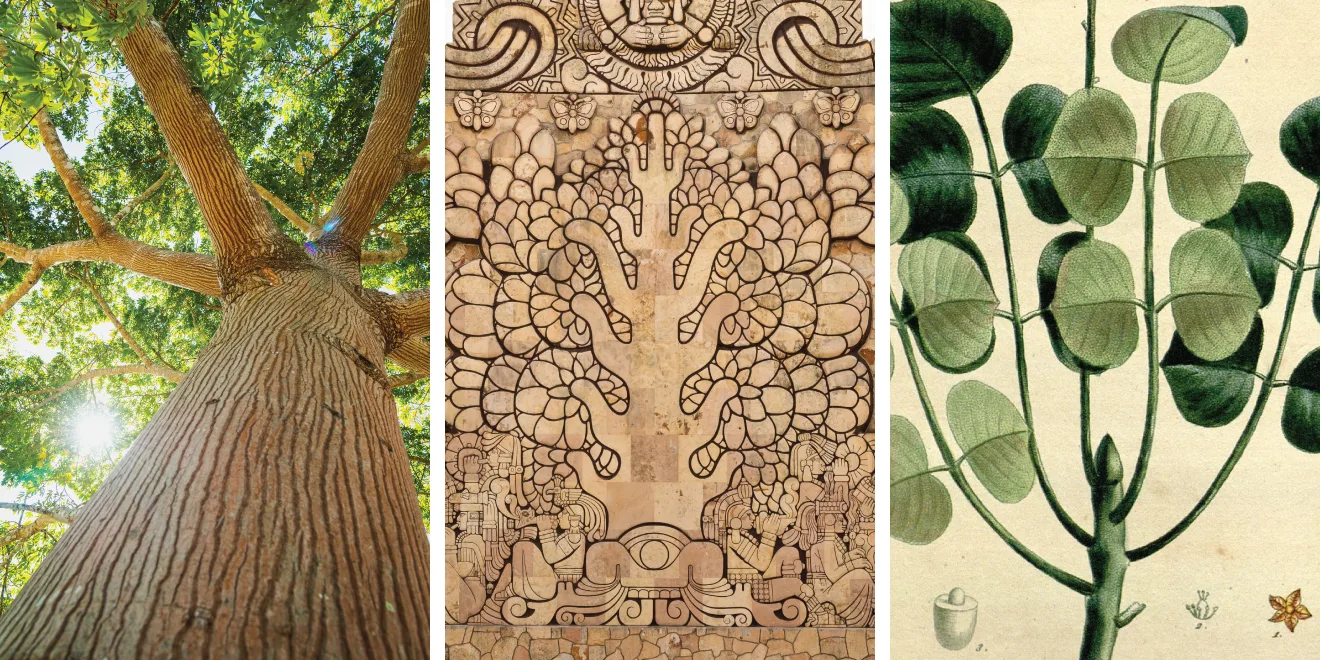
As for the creation of natural phenomena, Mayan mythology has hundreds of stories. In “The Farmer and the Tree,” a tale in which a tree talks to a logger pleading him to be spared, we learn how Mayans believe trees are the bridge between the Heavens, the earth, and the underworld, and that each exists to bring its own gift to humanity. The most famous tree folktale is about the Chechén and Chacá trees, which supposedly were once a pair of warriors. Kinich and Tizich, two brothers both in love with princess Nicte-Há, upset the gods by fighting over the same woman. When they returned to earth, they were revived in the form of trees, one of which (the “bad guy”) releases toxic sap, the other oozing a soothing sage to counteract it. The princess, meanwhile, became the lily flower, living on the surface of lagoons and cenotes.
Almost every culture has its own version of “the enchanted forest”— Nordic trolls, Irish elves, Medieval witches, Greek unicorns— and the Mayans were no different. Mayan lore speaks of aluxes, magical, mischievous forest-dwellers who would come out at night to punish human who did wrong. Mayan tradition has it that people can keep the aluxes happy and off their backs by building them little houses and offering them food, drink, even cigarettes. Stories of aluxes are found throughout the Yucatán’s dense forests. In Lepán, locals swear they’ve heard their voices in a cenote. There’s also the dark tale of Xtabay, a female spirit that kills men who wander in the forest. She’s often depicted coming out of the ceiba tree— perhaps owing to the fact that Spanish colonizers would punish “unfaithful” Mayan women by tying them to the tree thorns until they bled out.
Today’s astrology-abiding spiritual set may be unaware that the Mayans had among the most sophisticated zodiac calendars of the ancient world. Unlike the Greek zodiac, the Mayan calendar, or Tzolk’in, generally had 20 Day signs and 13 Galactic numbers, making up a 260-day calendar year. (It was complex and varied through the various ages.) Like the Greek zodiac, recognizable symbols were ascribed meaning, with many of the signs having similar qualities to those in the Western zodiac. Signs include Jaguar (mysterious, intelligent), Eagle (independent, free-spirited), Dog (kind, loyal), Rabbit (playful, competitive), Knife (logical, with workaholic tendencies), and Death (practical, even-keeled). Each sign has a “friend” and “foe,” as well as a signature color, gem, and glyph.