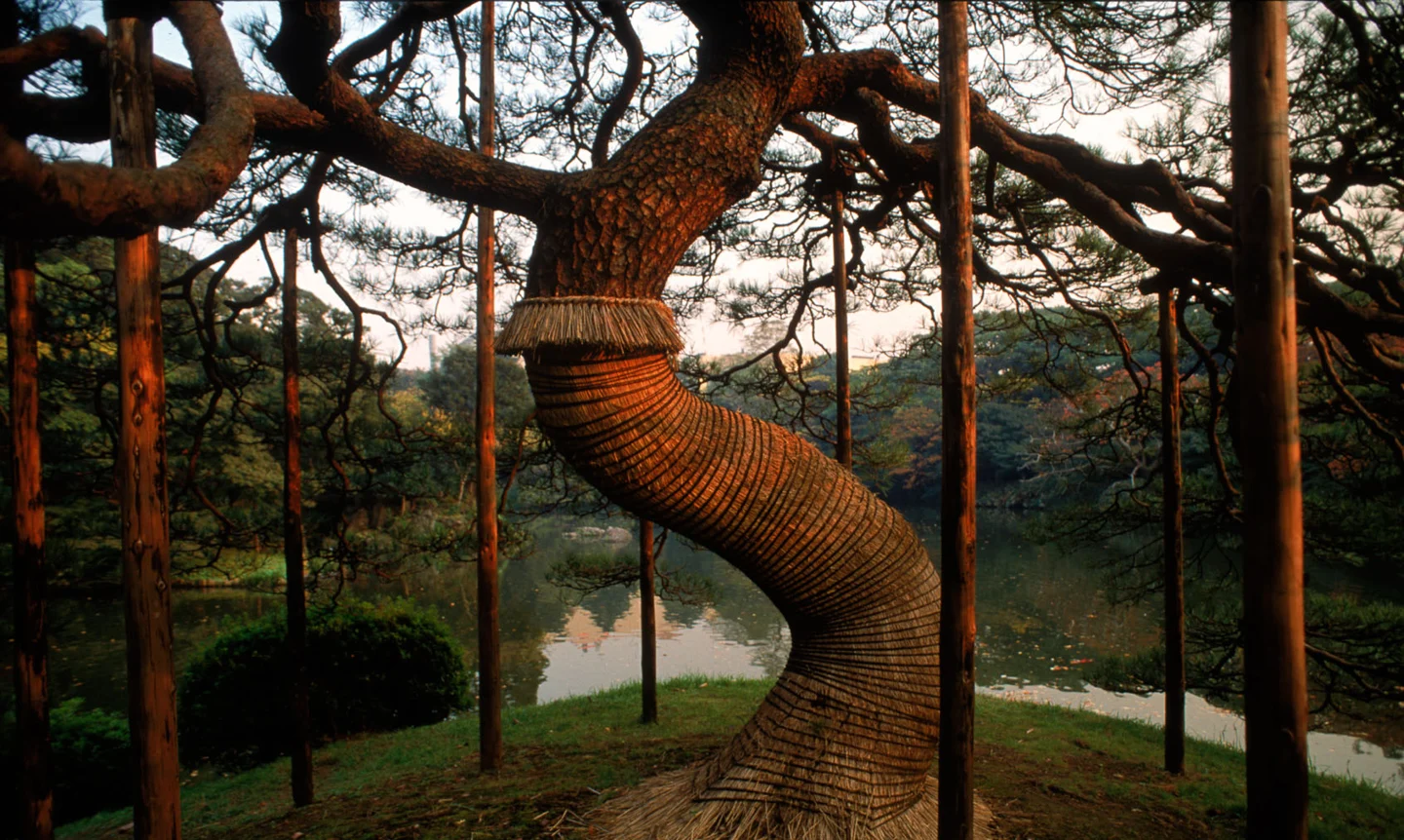
Photographer Michael Yamashita has shot for National Geographic for nearly four decades, traveling the globe to capture fragile cultures in beautiful contexts, from the Mekong Delta and Tibet to one of his great passions, the Silk Road, where he has retraced the steps of Marco Polo and Chinese explorer Zheng He for at least three of his 15 books. But it all started for the American-born, award-winning photographer with a “roots trip” to Japan after college in 1971: he wound up staying for four years and taking up photography. “What got me hooked, like most amateurs when they travel, is taking pictures and sending them back to family and friends,” he says.
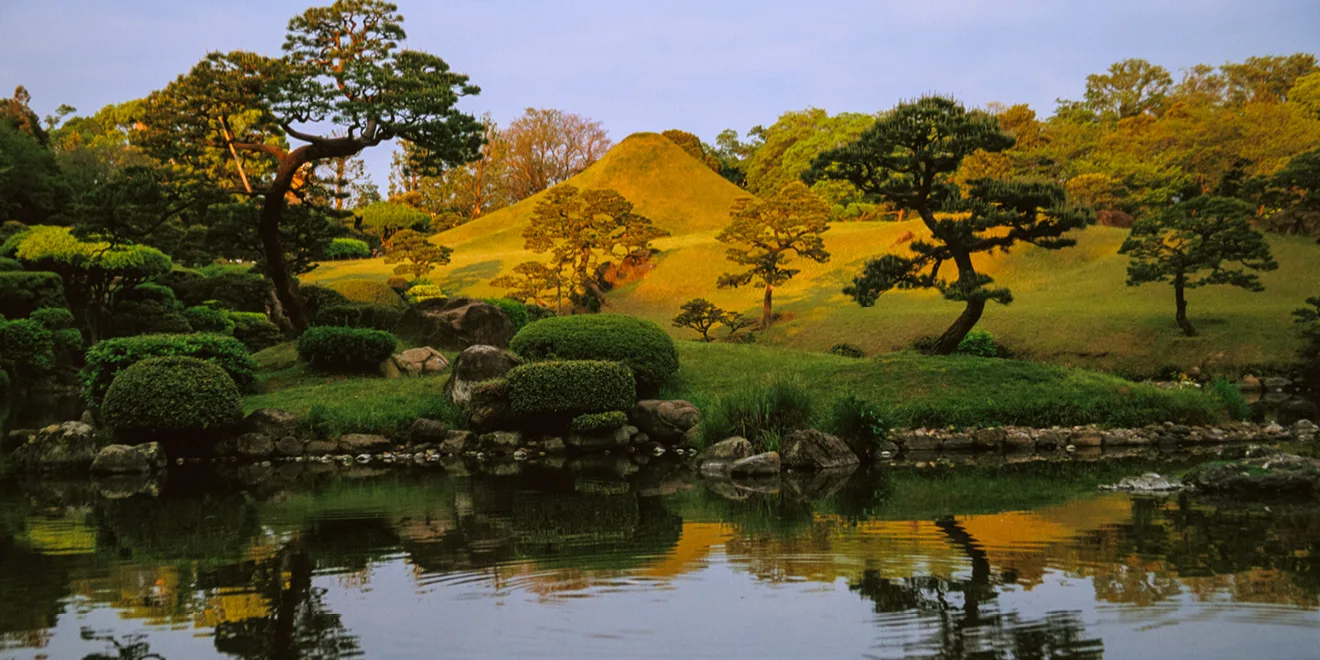
Yamashita has spent the last 15 months contentedly grounded (for once) in rural New Jersey with his wife, Elizabeth Bibb Yamashita, who was also his collaborator on his book, In the Japanese Garden. But the pause has given him a chance to come “full circle,” as he puts it, plotting his return to Japan in the fall to revisit some of the places he first discovered as a young man—from where he is likely to share his poetic, richly saturated landscapes and portraits of everyday life in extraordinary places with his 1.8 million Instagram followers. Both of them joined in for a Zoom discussion about the design elements and diversity of Japanese gardens, and the pleasures and challenges of photographing them.
Alex Postman: You’ve been photographing Japanese gardens—and the rituals and cultural practices associated with them—for nearly 40 years. What fascinates you most about them?
Michael Yamashita: Well, there's a lot to photograph. They're beautiful. It's that one subject that looks great in the rain—it makes everything come alive, the rocks, the sand. You can shoot a garden over four seasons, as the seasons are meaningless for Japanese gardens, unlike Western ones. They look great even under the snow.
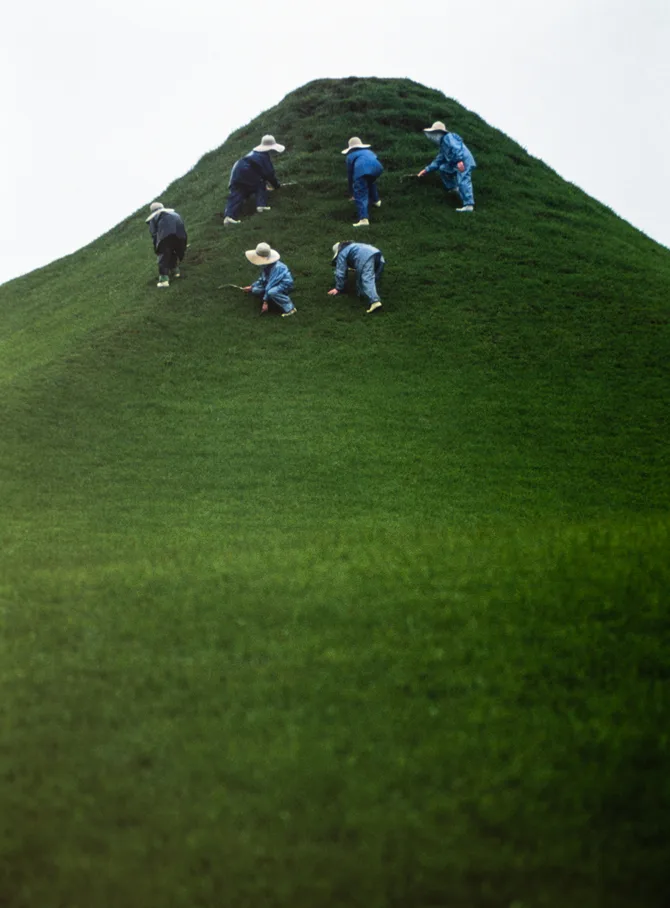
Can you share a few insights about the origins of the Japanese garden?
Elizabeth Bibb Yamashita: There are many different versions of Japanese gardens. I think most people in the West think of the Zen garden as the quintessential Japanese garden, but the origins have a lot to do with culture and religion and the Japanese mindset. They took Chinese concepts and refined them to a point that there really is nothing in a true Japanese garden that is accidental. It’s so tied in with Shintoism, as well as Buddhism. Shinto is an animist-based religion, and when you see some of these temples and their temple gardens, you can understand how that got adapted into the everyday garden that someone might have in their backyard. Many of the gardens are very tied into the tea ceremony and meditation and trying to get the observer to slow down, pay attention. Stepping-stones, for example, in an irregular pattern, are designed to make you really take your time as you walk through a space. The other fascinating thing about Japanese gardens is that there is this whole aesthetic that has refined a lot of the elements, so that you can have an absolutely gorgeous space with different shadings but no color, and yet it doesn't feel devoid of color. It doesn't feel blank because of the placement of stones, the way the gravel is raked.
MY: There are four elements of the garden, which I have photographed in great detail.
EBY: Yes, there’s the flora—the type of plants, moss, grass. Water is very important, and it plays a role, not just as a visual, but also as a sound, of water flowing. Space is another aspect of a Japanese garden, and empty space can be part of the design concept. Then stone and sand and gravel also play a big role with their positioning.