What
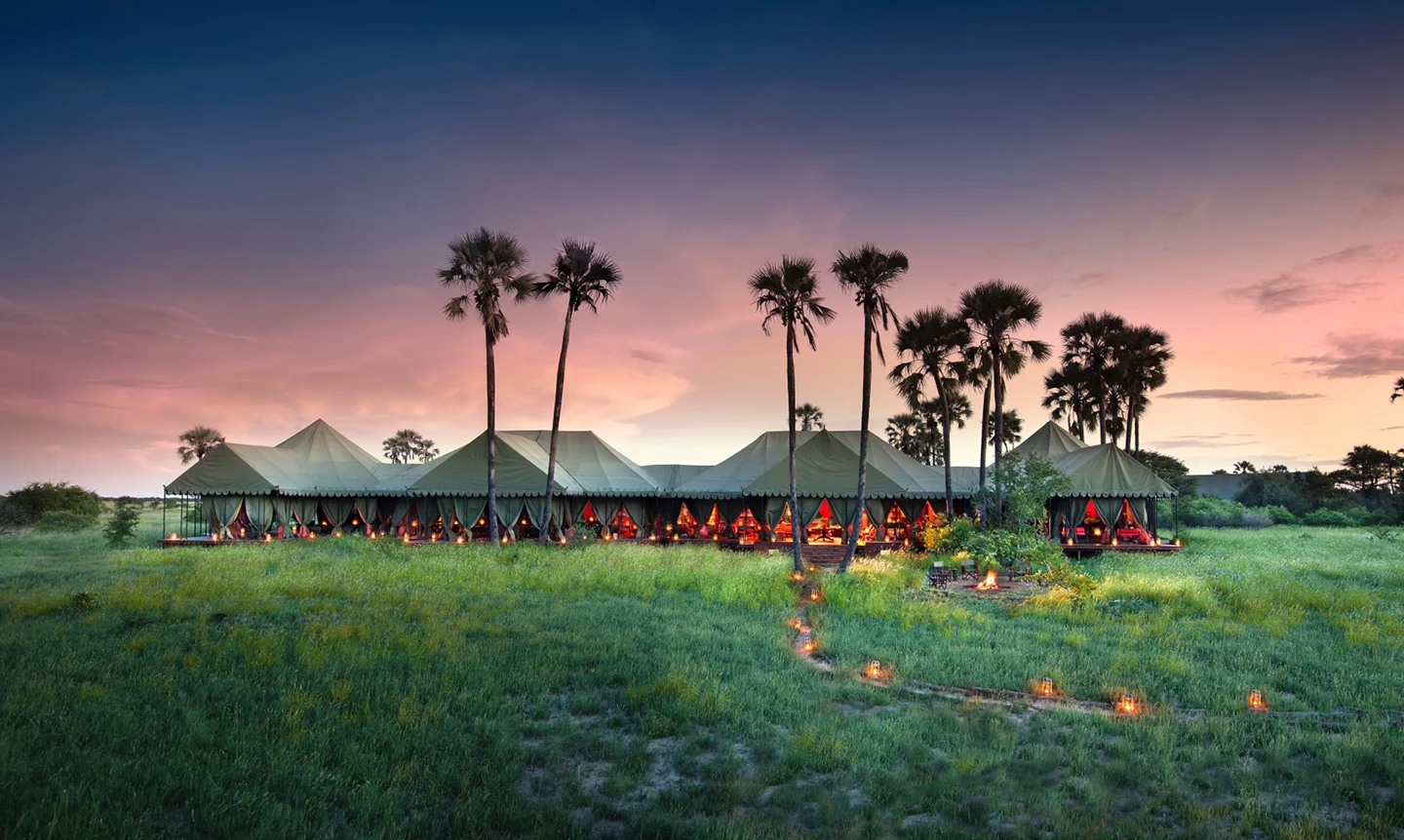
Since it opened almost 30 years ago, Jack’s Camp has gained a reputation as much for its setting as for its setup: authentic 1940s safari-style tents rising like a mirage from the sometimes-lush, sometimes-arid landscape of Botswana’s less-frequented Makgadikgadi Basin, one of the largest salt flats in the world.

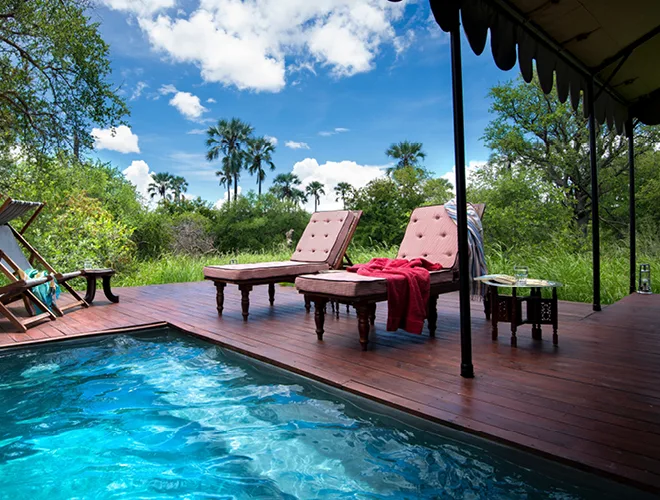
In a climate of extremes, adaptation is essential—and Jack’s Camp has recently undergone an evolutionary upgrade. The anticipated rebuild has remained true to its beloved classic safari DNA, with enhancements such as solar power and private plunge pools that meet the demands of the environment and an increasingly sophisticated safari-goer. If anything, the camp is grander and more magical than ever.
Who
Jack Bousfield – legendary hunter turned safari pioneer – discovered the “island” (a stretch of higher ground in the wet season) that would eventually host the permanent eponymous camp while exploring the pans in the 1960s. He set up an early incarnation, offering word-of-mouth safaris and bringing the first foreign tourists to the Makgadikgadi. As a result of his fascination for this extreme and remote area that others had called him crazy for trying to inhabit, his son Ralph spent a large part of his life here.
Ralph inherited his father’s collector’s eye, deeply curious spirit, and respect for the region and the Bushmen who inhabit it. A fifth-generation guide, Ralph went on to formally established the camp in 1993 following Jack’s untimely death in a plane crash the year before.
In 2016, Jack’s Camp became part of the Natural Selection portfolio, a collection of owner-operated safari camps and mobile safaris within Botswana, Namibia and South Africa, each offering a distinctive experience and a range of wildlife conservation solutions unique to that area.
The surroundings
Jack’s is one of just three camps in a million-acre private wildlife reserve: a striking encampment of crenulated green tents in a photogenic copse of fan palms on the edge of the Makgadikgadi.
The location is fascinating as much for its history as its changeability. Surrounded by Kalahari desert, Botswana’s salt pans lie southeast of the Okavango Delta and are all that remain of an enormous prehistoric super-lake. Unsurprisingly, evidence of early human life has been discovered here.

The camp operates year-round, bearing witness to two wholly disparate seasons. In the dry winter months, from April to October, the bleached pans are scorched and seemingly desolate. The summer rains from November to March transform them into wetlands that welcome migratory birds and the second largest migration of zebra and wildebeest in Africa.