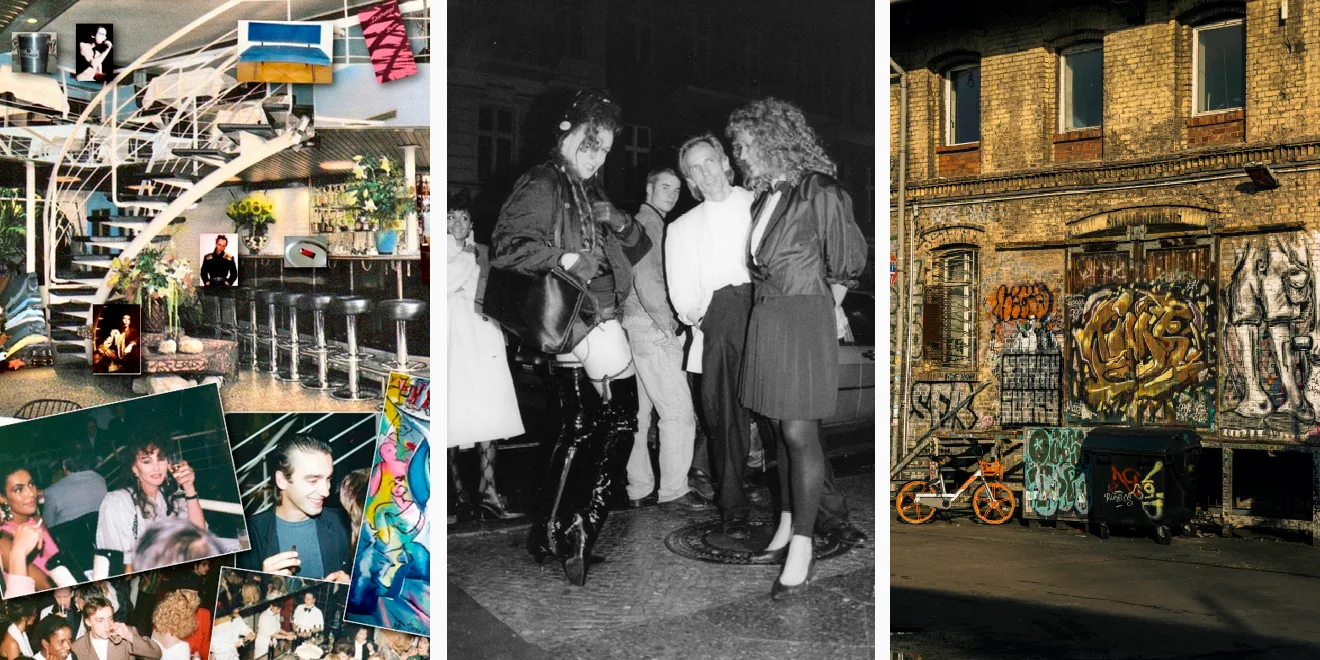
To Berliners in the ‘80s, a night in the jungle was no perilous test of wilderness prowess—DSCHUNGEL, the notorious nightclub located on Charlottenburg’s Nürnberger Strasse, wasn’t a place to survive, but thrive. Known as Germany’s answer to Studio 54, DSCHUNGEL was the it-club of the disco era, frequented by the likes of David Bowie, Nick Cave, and Grace Jones, and boasting an interior fitted with Eames chairs and a black and yellow mosaic floor leftover from its previous incarnation as a Chinese restaurant.
At that time, Munich producers Giorgio Moroder and Pete Bellotte were producing chart-topping hits for Donna Summer, Roberta Kelly, and Chris Bennett, and clubs all over the world were dishing them out. If Germany was an epicenter of disco, DSCHUNGEL was the eye of the storm. “Everything happened at the same time,” as actor Jürgen Vogel told Faz, “hippies, skinheads, artists, gay, straight, don't give a fuck. Even if they didn't really like each other, the ‘JUNGLE’ was a place where anything was possible.”
But the faster the rise, the harder the fall. When radio DJ Steve Dahl invited listeners to Chicago’s Comiskey Park to burn disco records in protest of the genre’s popularity, The Rolling Stone’s Dave Marsh described the 50,000-strong event as “an expression of bigotry,” with a vast crowd of straight white men destroying records fronted predominantly by Black women and enormously popular among gay men. It was this crusade against Black music that launched disco on a steep decline that reverberated across Europe.
In the four decades since DSCHUNGEL’s heyday, disco has dwindled in Berlin, and the legend of its scene has been superseded by the city’s techno mythology. After the fall of the Wall in 1989, the sound that had originated in Motor City Detroit made its way across the Atlantic to become the soundtrack of the Wende-era reunification unfolding on DIY dance floors. DSCHUNGEL closed its doors in 1993 and became the art-deco Ellington Hotel; the days of disco’s glitz and glamour were all but lost to the dank basements and abandoned warehouses of techno’s burgeoning rise, and the star-studded scenes inside the club’s four walls were overtaken by tales of Tresor, the debauchery of dark rooms, and the folklore shrouding Berghain’s ruthless door policy.
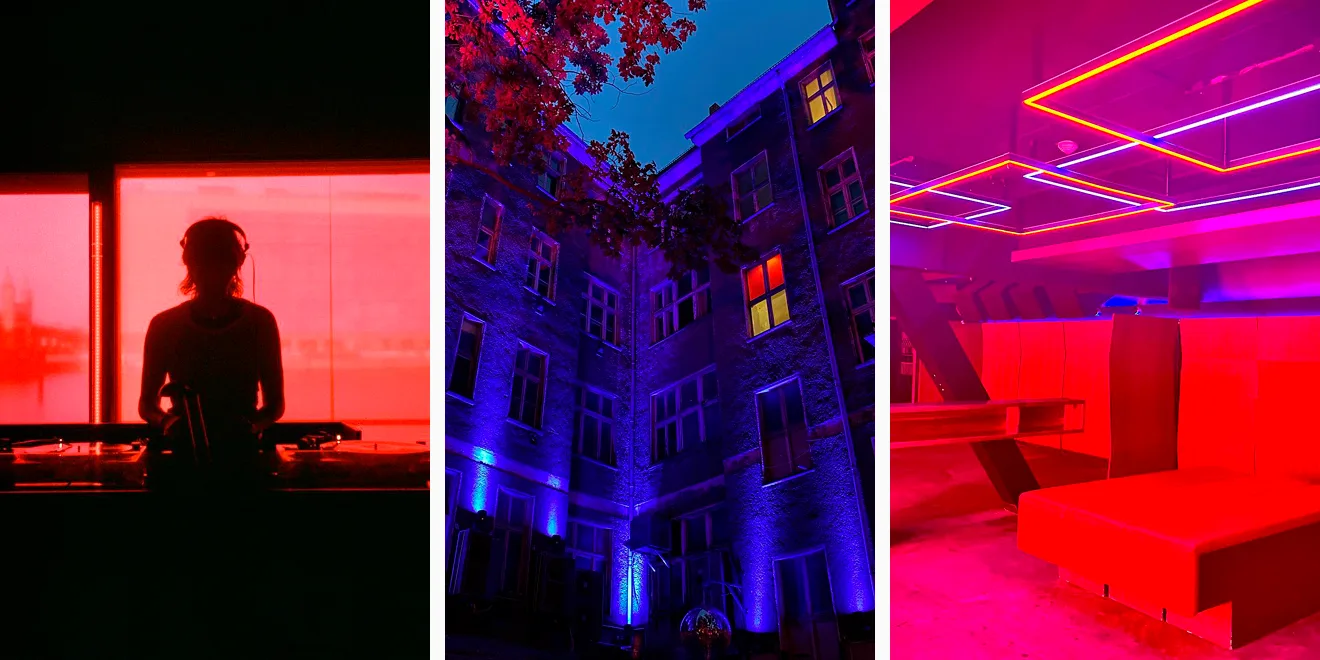
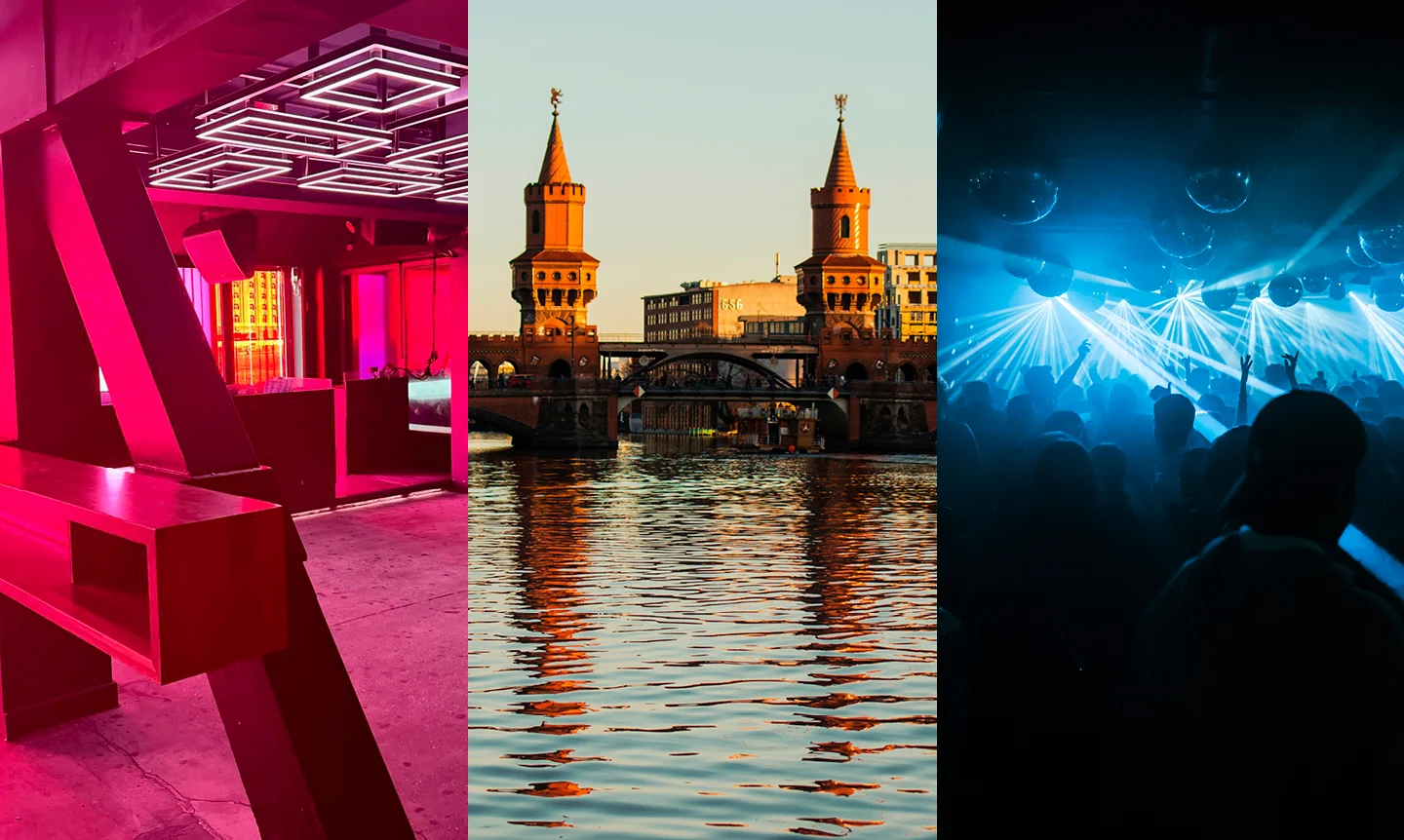
Nevertheless, disco has endured, its anthemic tracks still being spun on Berlin’s dance floors. Partygoers are almost guaranteed to hear ‘80s throwback tracks upstairs in Berghain’s Panorama Bar, sprinkled into sets at Byron Yeates’ colourful queer party Radiant Love, between house records at a Multisex night in OHM, (or more recently Watergate), echoing across the deck of canal-side Club der Visionaere, or spilling out into the garden of Renate on any given visit. DJs of HÖR’s prolific toilet-tiled booth— broadcasted to the world via YouTube from its home next to Kreuzberg’s Volkspark Hasenheide — dabble in four-to-the-floor too, but parties dedicated strictly to disco are fewer and further between.
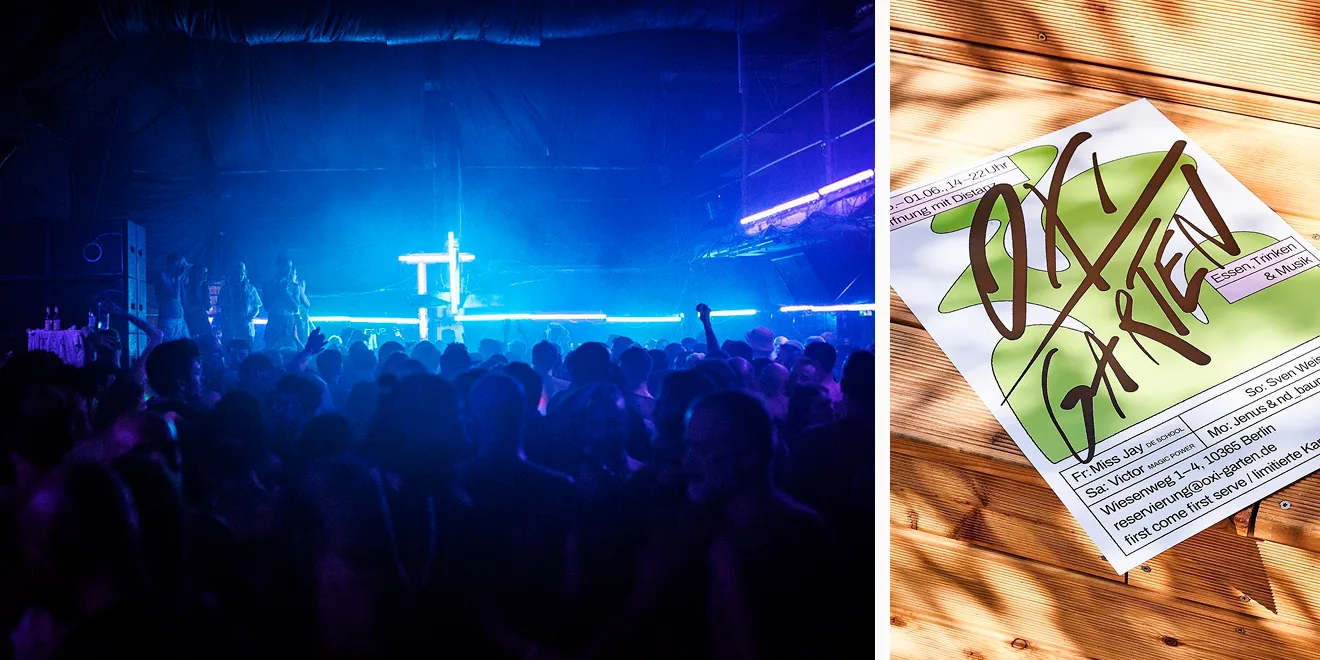
Against the grain, however, nicher disco scenes are flourishing and carving out their own identities. Breaking with the stereotypes of Berlin’s underground nightlife— monotonous techno beats, all-black outfits— the city’s best disco parties encourage expression, joy, and hedonism, as well as sonic experimentation and innovation. One such space is the legendary Cocktail d’Amore, a party described by The Guardian’s Liam Cagney as “friendly,” “gay” and “delirious.” Founded in 2009 by Italian DJs Giacomo Garavelloni and Giovanni Turco, better known as Discodromo, along with Berghain resident Boris, Cocktail was conceived to cultivate the kind of vibrant, spirited, and sexy music and energy they felt was lacking from Berlin club culture at the time. “Our taste was Italo, disco, house, and in general music that would create some emotional reaction,” Discodromo told Cagney.
In its first five years, Cocktail club-hopped between around 15 different locations, including an abandoned GDR supermarket and a circus tent, before finding a more permanent home at Berlin’s Griessmuehle at the eastern end of Sonnenallee in Neukölln. The former pasta factory with a garden overlooking the water was the party’s playground for four years, until the beloved club’s much-protested closure in 2020, when the collective launched a new era of monthly party series held at OXI Garten.
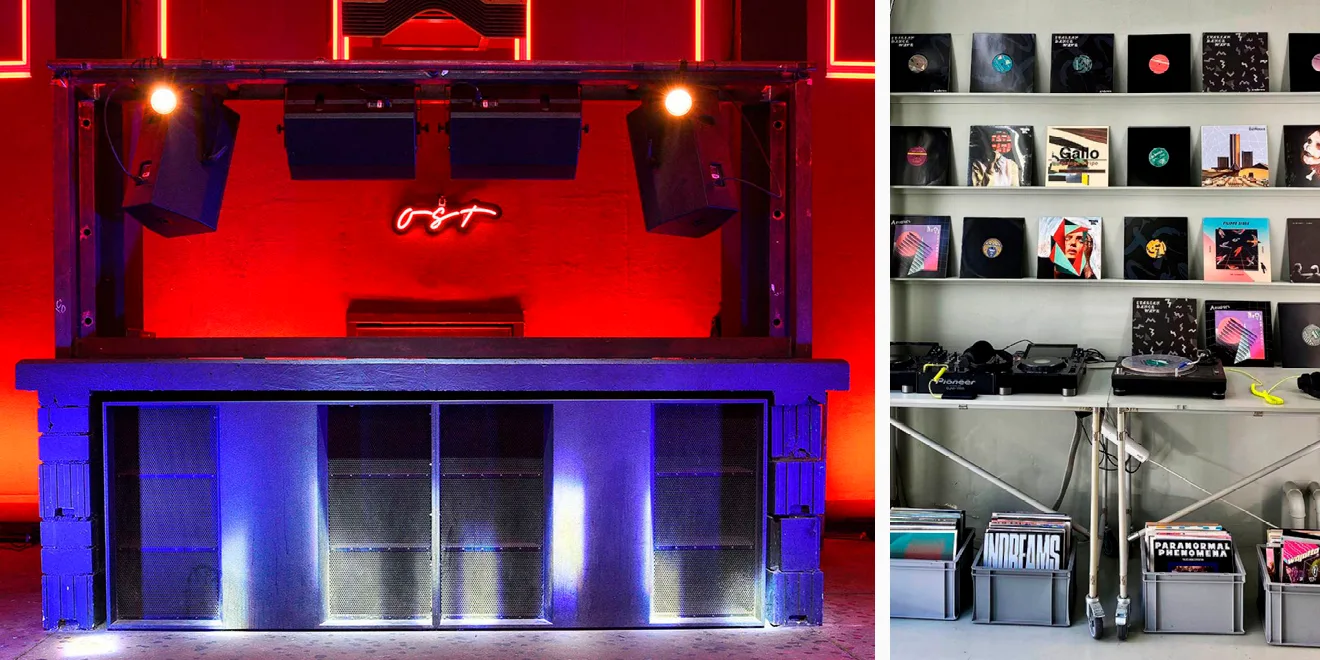
Since its inception over a decade ago, Cocktail and the loyal following it has fostered have incited a shift in Berlin’s clubbing landscape, creating space for upbeat music and indoor/outdoor partying to thrive. Slow Motion, the Italo-focused record label headed by Franz Scala, Giulia Gutterer, and Fabrizio Mammaerella was founded the same year as Cocktail, and its sister label and party series Wrong Era began shortly afterwards. Sameheads, the Neukölln bar-slash-club and collective, which is also home to Scala’s music studio, became a sure-fire stop for more disco-leaning bookings.