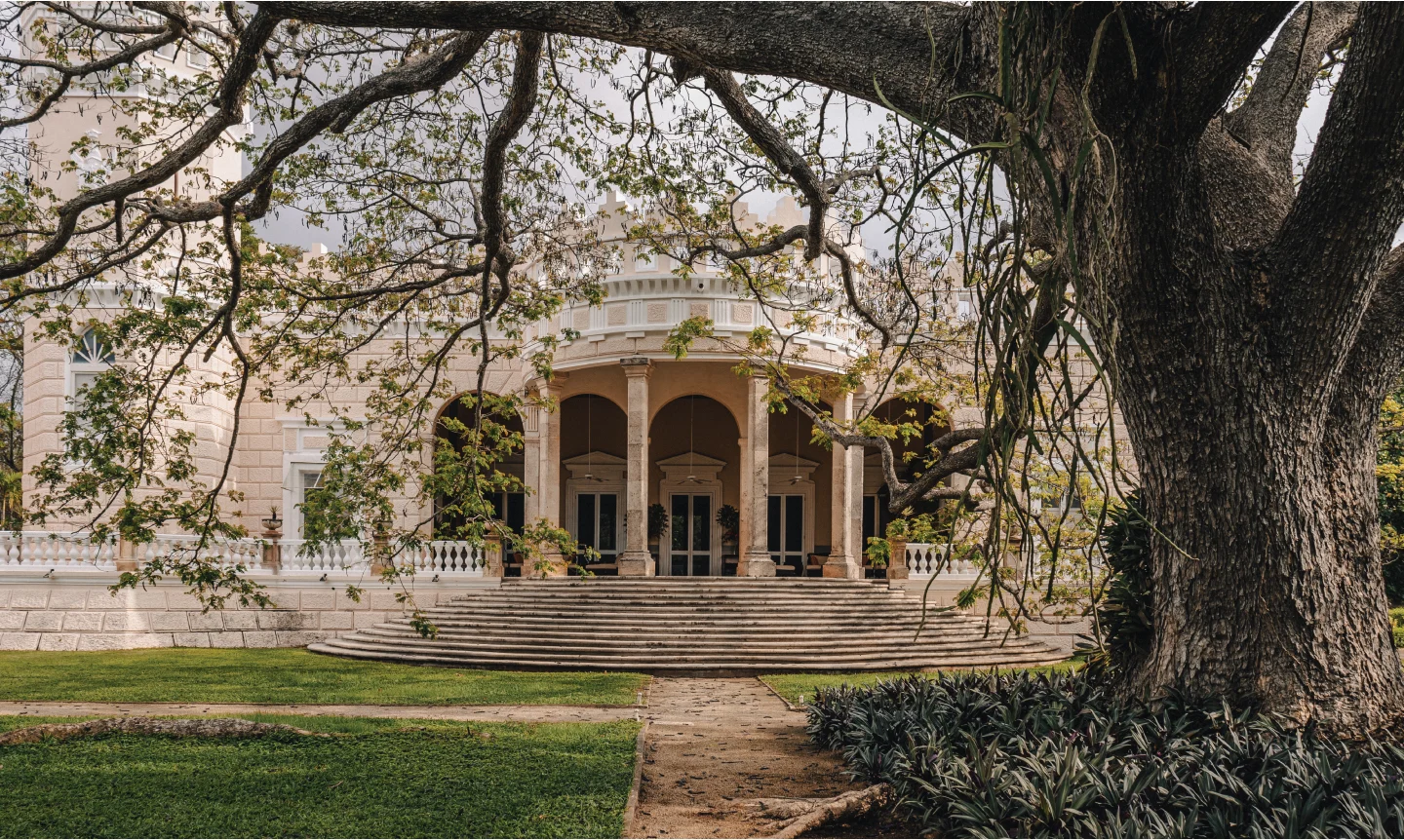
In 517, the Spanish conquistador Francisco Hernández de Córdoba led two warships and a brigantine crewed by one hundred intrepid men on an ill-fated expedition across uncharted waters, from Cuba to an expansive (and, to them, unknown) stretch of land ruled by the great ancient Maya civilization.
When the Spaniards finally arrived on this remote peninsula, they inquired about the name of their current location. Speaking in Yucatec Mayan, the indigenous Maya peoples responded that they could not understand his Spanish tongue. Thinking that some part of this answer sounded like the word “Yucatán,” Hernández de Córdoba, ever the conquistador, took it upon himself to baptize this wondrous coastal region of Mexico with that name.
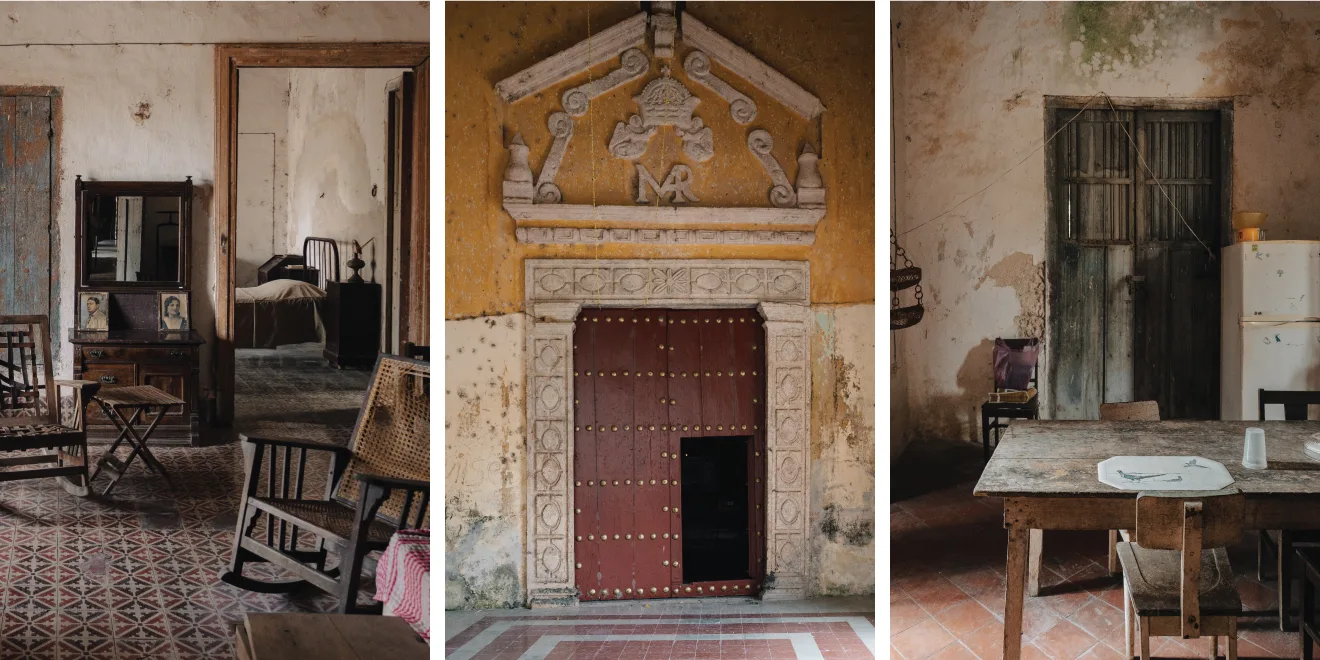
Tales of bygone eras such as this one echo throughout the Yucatán. Crumbling haciendas and breathtaking archeological sites adorn lush tropical landscapes. Colonial ruins line the bustling streets of the capital city of Mérida. Simply put, to understand this isolated region of Mexico, one must know its rich history.
Around the turn of the 20th century, Mérida was said to briefly house more millionaires than any other city in the world, thanks to the mass production of henequen, a fibrous agave native to Yucatán used to craft high-quality rope, twine and sacks to transport grain. Though henequen was cultivated by the ancient Maya long before the conquest of Mexico, it wasn’t until the mid-19th century that the technological innovations of the Industrial Revolution allowed haciendas to increase their production enormously and keep pace with international demand. As a result of this boom, Yucatán experienced a period of astonishing prosperity unparalleled to anything Mexico had ever witnessed before.
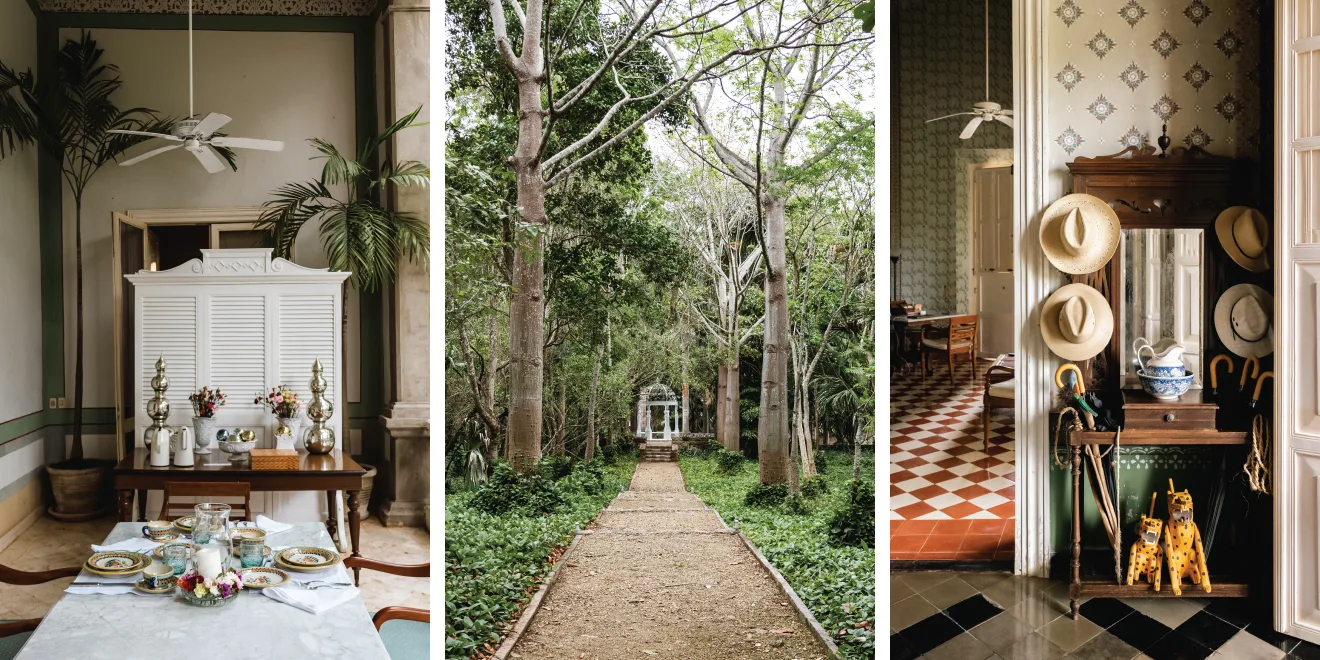
The height of the henequen heyday, from 1880 to 1910, saw over a thousand haciendas in the region dedicated to the crop’s production. The agave was so valuable, in fact, it became known as oro verde, or “green gold.” (The term “sisal” comes from the fact that henequen was largely exported from Sisal, Yucatán’s principal port during this period.) A handful of families controlled the trade and spent their fortunes on the finest European furniture, china and crystal money could import, which they used to decorate their haciendas built in a bewildering variety of styles — Medieval, Moorish, Renaissance, Baroque or sometimes a combination thereof.
This concentration of immeasurable wealth is still detectable today in the countless haciendas dotting Mexico’s southeast peninsula. The grandest testament to the era is perhaps Paseo de Montejo, Mérida’s main avenue, which is lined with ornate mansions built by affluent hacendados for their families. But by the 1940s, two forces — lingering tensions of the Caste War, when the native Maya people of the peninsula rose against the Mexican and European-descended ruling class, and the invention of synthetic fibers — caused the henequen industry to plummet. With little means of economic sustainability, the majority of haciendas were abandoned, fell into disrepair and left to perish in the unforgiving jungle.
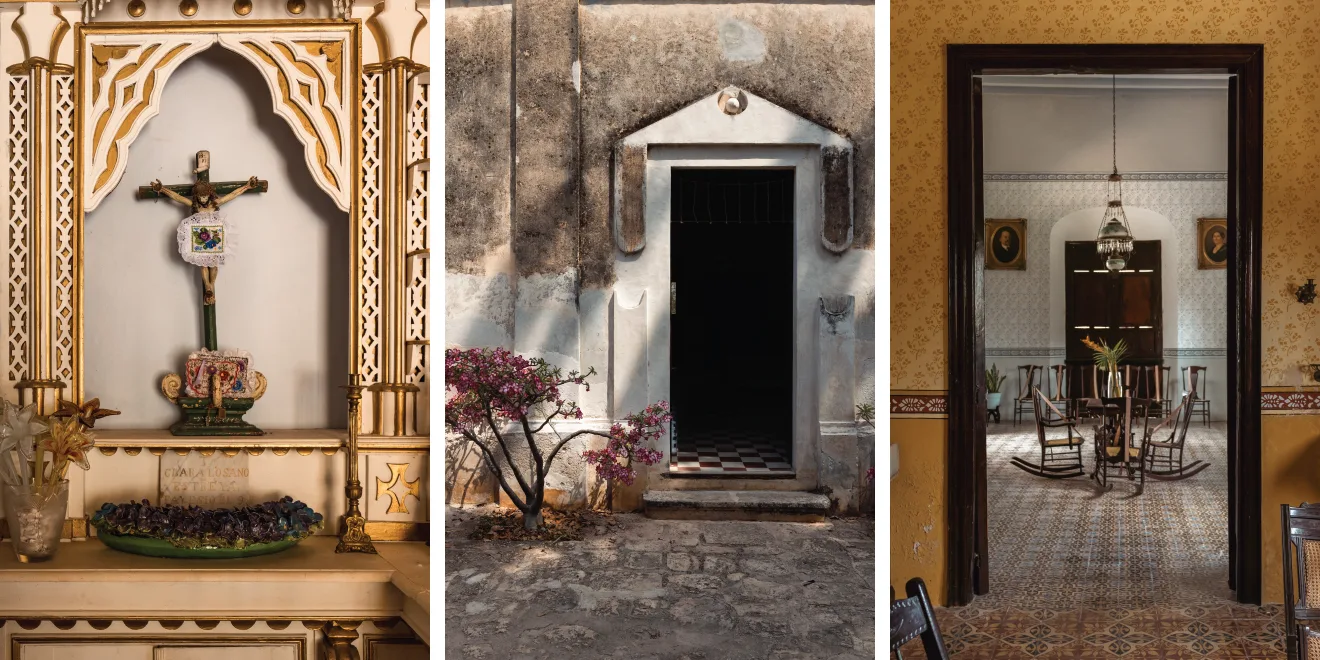
The lavish estates remained in this derelict state for decades, until the early ’90s when properties were slowly brought back to their former state of splendor as rustic hotels, historical sites and museums. Today, however, many haciendas are still in ruins; their collapsed roofs and walls tangled in vines serving as romantic reminders that there are layers to Yucatán's story still being written.
To sign up for PRIOR x Cabana Caravan’s January trip to the Yucatán, click here.