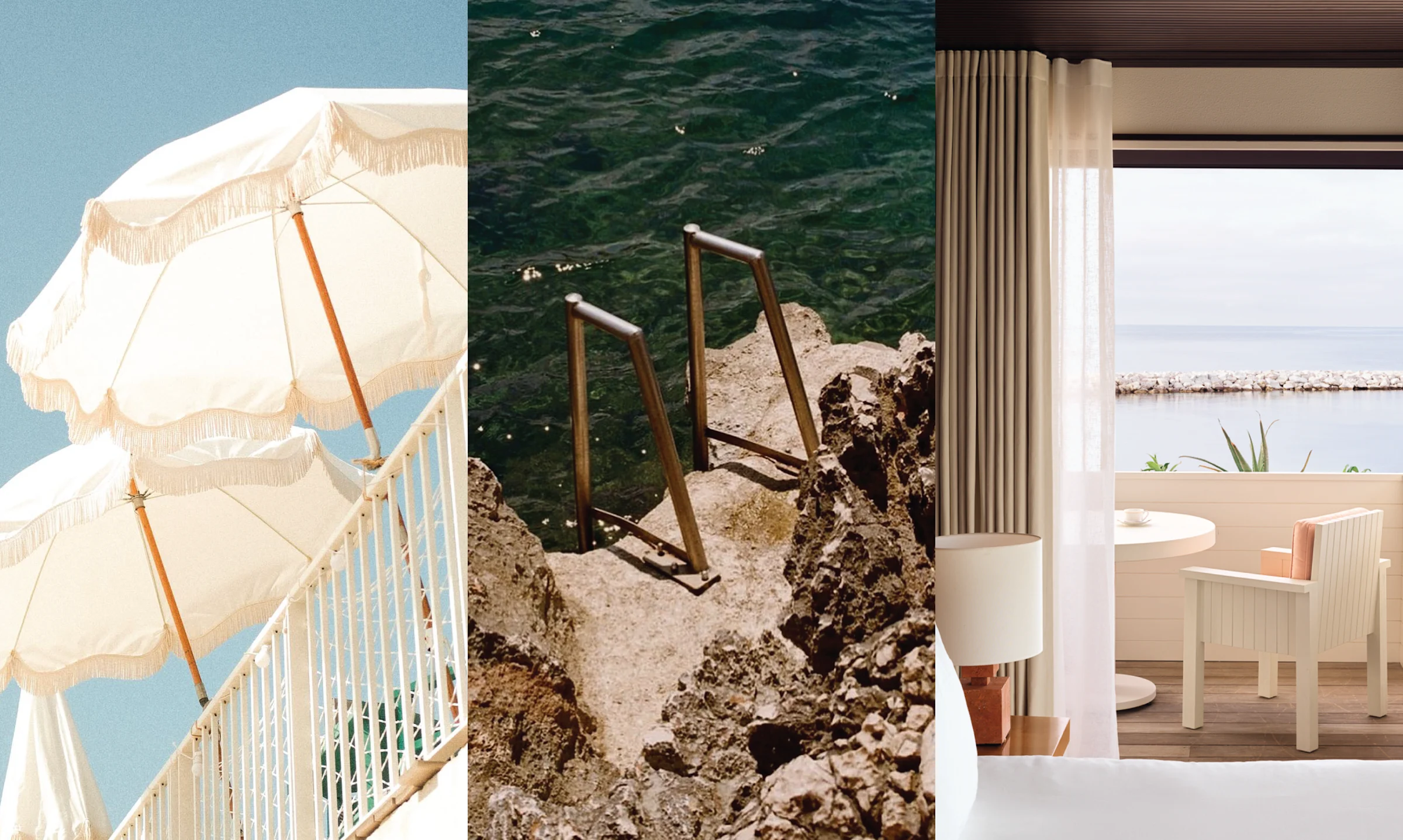
For more than a century, the South of France has been a magnet for creative minds. Matisse, Chagall, and Picasso all found in its magical light and slower pace a kind of productive distraction—one that continues to attract architects, designers, and collectors today. But this isn’t just a place of artistic legacy; it’s one where style constantly evolves. From the sculptural surrealism of Palais Bulles above Théoule-sur-Mer to new interventions like LUMA Arles, the region’s creative spirit continues to reinvent itself.
Nowhere is that more visible than in the new era of design-first hotels stretching from Nice to Marseille. These are not cookie-cutter resorts or restored Belle Époque relics; they’re independently minded and design-led properties that approach hospitality with a clear perspective. Some are rooted in history, others defiantly modern. What connects them is a sense of intention: materials chosen with care, architecture that reflects its surroundings, and an atmosphere shaped by a sense of place and the culturally curious guests that visit.
This route follows four such hotels, each with a distinct take on the Côte d’Azur of now — from a cloistered convent in Nice reimagined for a new generation, to a cliffside dive club in Marseille where the dining room disappears into the rocks and a family-run inn where museum-grade art still hangs casually beside the pool. Collectively, they form a portrait of a region still deeply rooted in creativity and pulsing with a new energy.

Hôtel du Couvent – Nice
Opened in June 2024, Hôtel du Couvent is a major new addition to the Côte d’Azur’s hotel scene, located in a restored 1604 Visitation convent in the hillside Libération district of Nice. The project comes from Valéry Grégo (behind Paris’s Le Pigalle), whose style – thoughtful, site-specific, and intentionally low-key - lets the building do most of the talking.
There’s no heavy branding or flash here. The hotel is built around calm: a Roman-style thermal spa in the former chapel, terraced gardens by Tom Stuart-Smith, and a center courtyard that serves as host to a monthly farmers market, lemon groves, and a boulangerie that begins turning out fresh bread and croissants as the sun rises over the convent.
Every detail of Couvent is part of a layered, site-specific, sensory experience with deep links to the building’s past. Check-in begins with a warm madeleine, made with eggs from the hotel’s own farm. A low, monastic hum plays quietly through the corridors—subtle enough to miss if you’re not listening, but unmistakable once you catch it. In the herboristerie, a part-time herbalist from Nice prepares custom infusions for guests using site-grown plants. Just outside, a working boulangerie supplies bread and pastries to both locals and guests, and once a month, the cloistered courtyard turns into a small farmers market, with cheesemongers, bakers, and regional producers set up beneath the arcades.

Rooms are split between the original structure and a newer wing, but it’s worth requesting the former: terracotta floors, thick stone walls, and an unmistakable energy evoke the building’s past. The newer rooms, closer to the spa and wellness studio, are larger and include private terraces, but they trade that inimitable atmosphere for space. Interiors by Charlotte de Tonnac and Hugo Sauzay of Festen Architects add a sophisticated note to the sense of calm.
Even in a city with a deep culinary scene, the food stands out. Chef Thomas Vitel runs Le Restaurant, the more casual La Guinguette, and the charming bistro with an aggressively simple, farm-driven ethos. Most ingredients come from a partner farm nearby; the menu changes often, but the impulse is always the same—regional, restrained, and of the region.