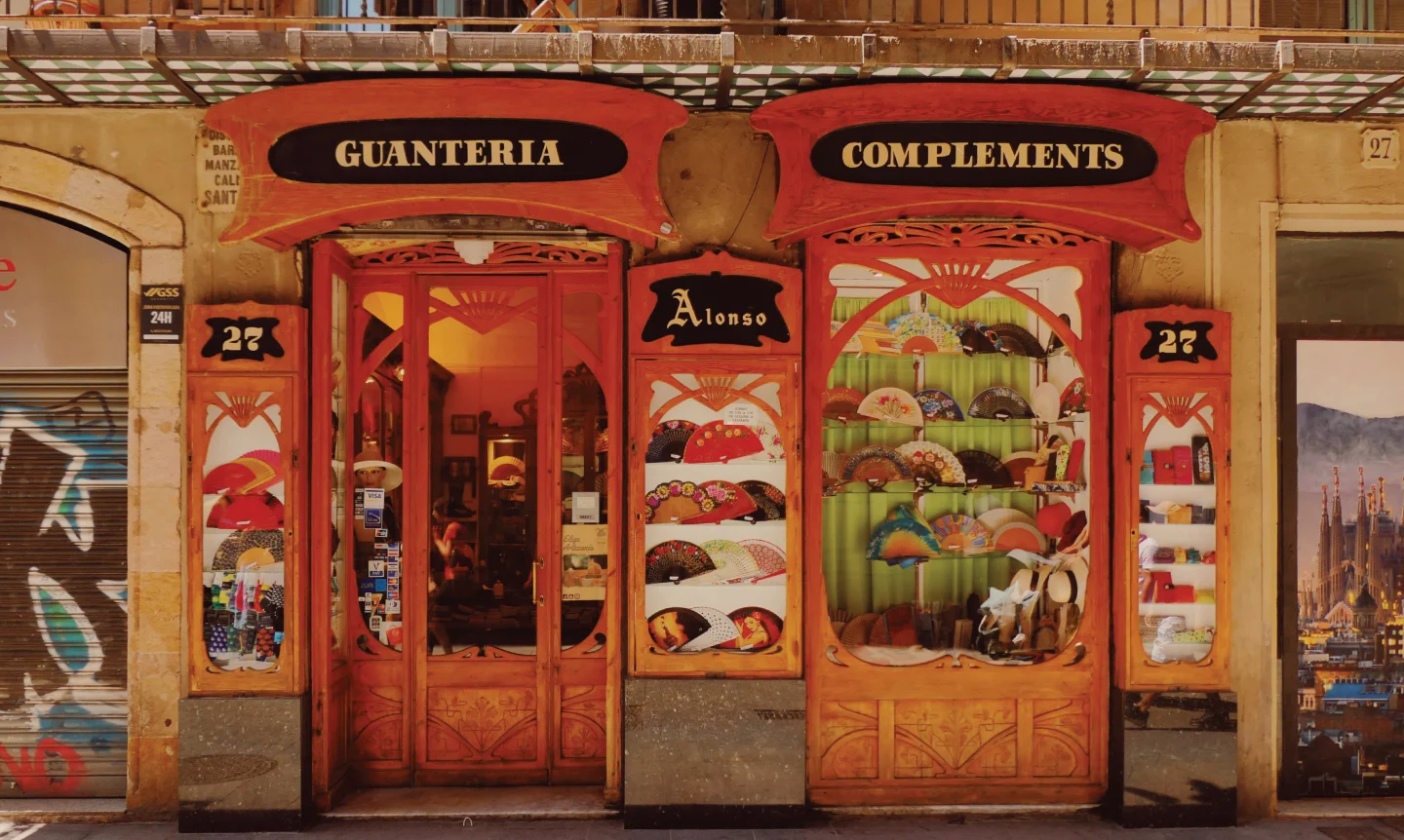
It is said, in the days of yore, that a blind man could navigate his way around Barcelona’s old city by following the sounds of artisans toiling away in the Gothic Quarter.
These days, most urban noise comes from the cacophony of street musicians and tour guides. Listen close enough, however, you will discover that Barcelona’s history of craftsmanship still rings throughout the city’s stone-walled squares and hidden cul-de-sacs, with hole-in-the-wall treasures like the antiquarian bookseller Llibrería Rodés and the family-owned fan boutique Guantería Alonso marking a centenary of shopping.
Still, it’s getting harder to find ‘Made-in-Spain’ gems. In 2020, a law passed that did away with protecting the rents many of these generational establishments had long enjoyed. This, coupled with a drop in demand for regional items, from basketware to boardgames, caused many shops to pull down their shutters for good.

Beautiful buildings featuring Art Nouveau decor or medieval remnants were soon cannibalized by American coffee chains and dreary head shops filled with bongs and half-baked pot paraphernalia. Barcelona’s ancient core, with an abundance of gothic-era landmarks, was starting to feel what one might call “Euro-generic.”
Whether through luck, tenacity or market prowess, a number of historic shops have managed to hang on. Over the past five years, I embarked on a sumptuous shopping safari in search of the endangered creators behind Spain’s vanishing crafts — from Galican ceramics to mohair blankets spun in La Rioja — for my latest book, Made in Spain: A Shopper's Guide to Artisans and Their Crafts by Region, published in May from Princeton Architectural Press.
The stores below are each living retail history. They are monuments to the shopping dynasties keeping the Catalan craft tradition alive, hopefully for years to come.

El Rei de la Màgia
One for the kids (or penny-arcade nostalgics), this small store is ground zero for old-fashioned magic tricks. So, expect to see a live rabbit jump out of a hat. Swathed in velvet drapes á la a small theater, the shop was founded in 1881 by the famous Catalan illusionist Joaquim Partagás, better known by his stage name The King of Magic.

La Manual Alpargatera
Yves Saint Laurent may have made the Spanish wedge-heeled espadrille a la mode in the 1970s, but locals have been buying their rope-soled footwear in this wonderful emporium since 1940. Packed to the rafters with all sorts of colors, patterns and styles, the traditional Catalan alpargatera and vintage-look canvas loafers for men stand out as must buys.