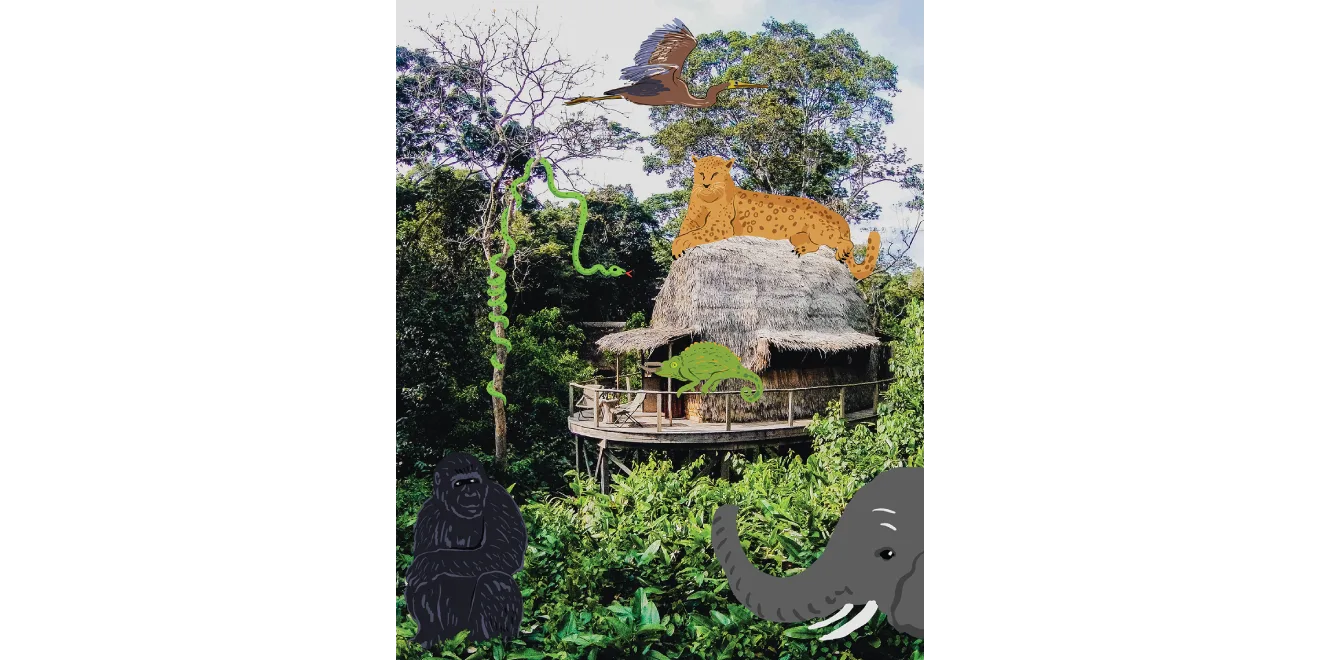
Sure, the Big Five — lions, leopards, buffalo, elephants and rhinoceros — are the obvious safari stars. But any game driver worth their weight in wildebeests will tell you that there is no one-size-fits-all approach when it comes to exploring the animal kingdom. These days, itineraries are as diverse and encompassing as Africa’s ecosystem itself. Choosing an experience that is right for you — classic jeep rides through Serengeti grasslands, trailblazing conservation treks in the Congo rainforests, island “sea safaris” off the coast of Madagascar — is part of the adventure, writes Jackie Caradonio in this week’s newsletter. And it begins right here.
The Safari Front Lines
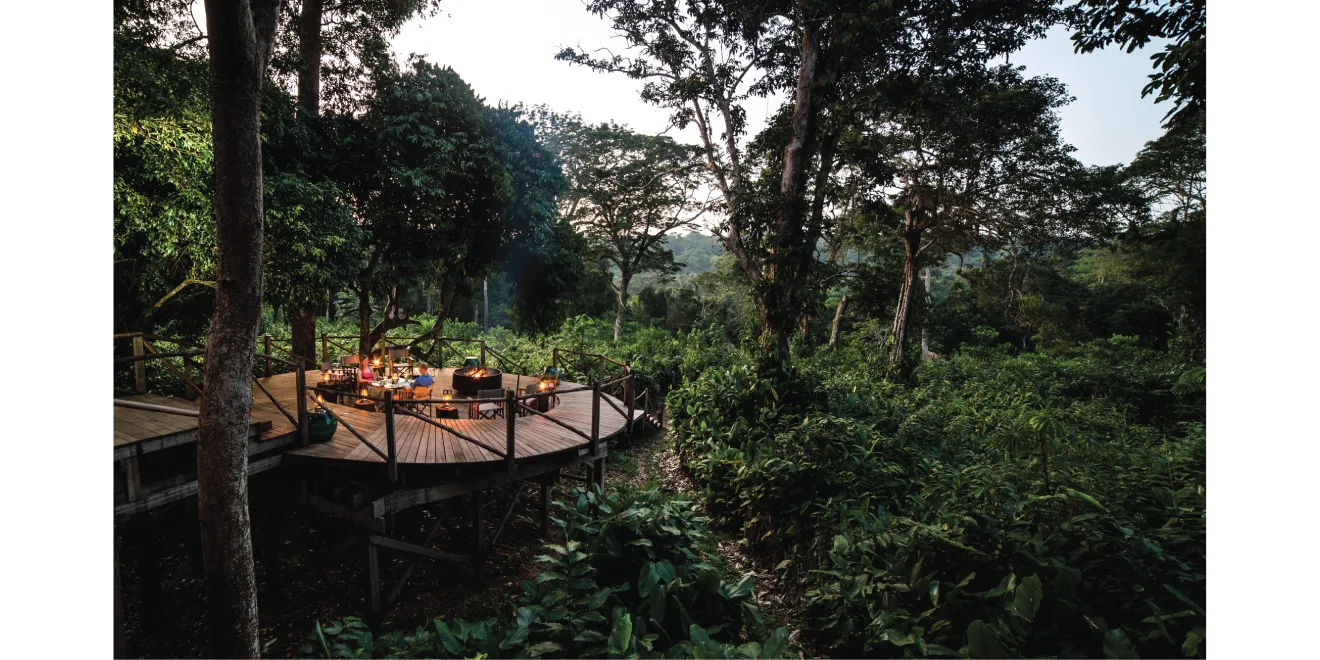
Beyond Big-Five bucket lists and savannah sundowners, there are still plenty of off-the-beaten path experiences out there in the wild. At the top of our list: Ngaga Camp, in the Ndzehi Concession of the Republic of Congo, a pioneering conservation project on the western boundary of Odzala-Kokoua National Park built around the region’s critically endangered western lowland gorillas. Since opening five years ago, the camp’s mix of hardcore gorilla trekking (crossing rivers by foot, bushwhacking knotted arrowroot with a machete) and architectural tree-hut lodgings (courtesy of funding by the German philanthropist, Sabine Plattner, founder of the Congo Conservation Company) has emerged as a new benchmark for conservation in an environment where wildlife has historically been far less fortunate. The camp's location in the depths of the world’s second-largest tropical rainforest may be more rough and tumble than more well-trodden safari camps, but that is surely part of the thrill. (The operatic cacophony of whistles, croaks and hoots is a mind-altering sensory experience like no other.)
The Arty Safari
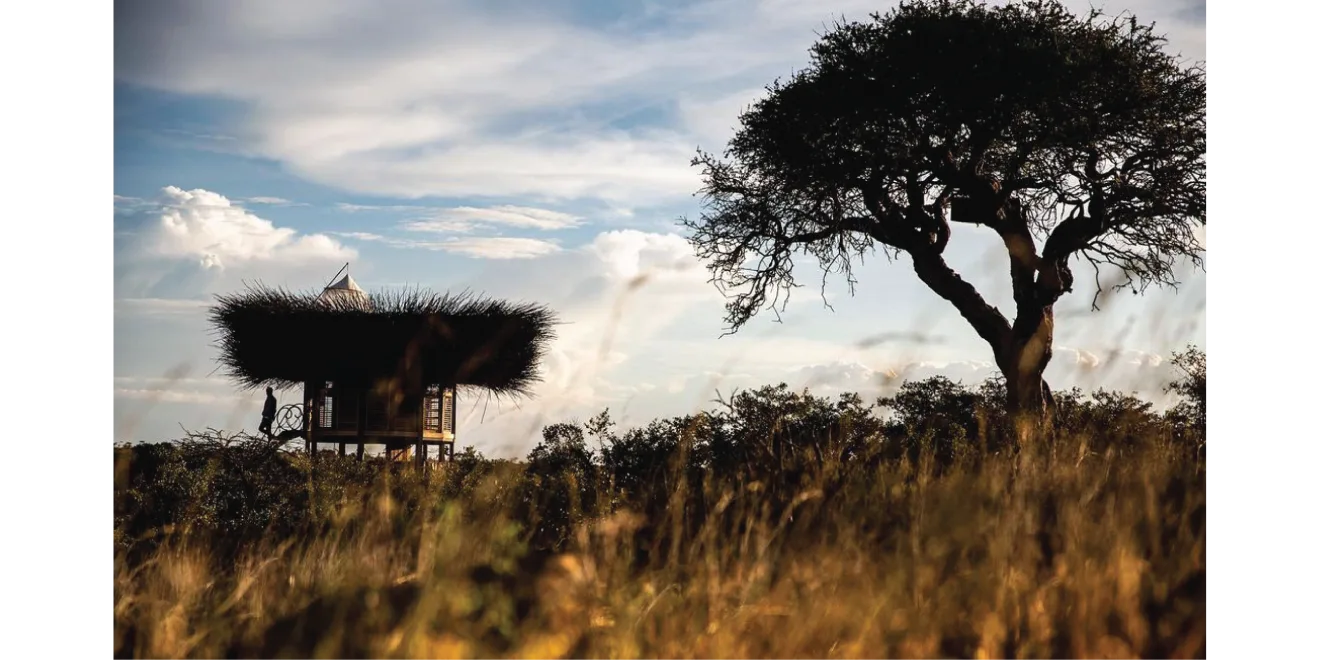
Segera, a 50,000-acre private game park in the center of Kenya’s Laikipia Plateau, is an unspoiled playground for endangered patas monkeys and prowling cheetahs. It’s also a playpen for the property’s owner, Jochen Zeitz, the former Puma C.E.O. and founder of the Zeitz Museum of Contemporary Art Africa. The inspired and extravagant grounds include modernist timber villas (including the Nay Palad Bird Nest) and works from Zeitz’s personal collection of contemporary African and diasporic art. (If you’re lucky, you can even take in the view of the 147,000 trees planted in the shape of a rhino with a scenic aerial safari.) Beyond the cultural flourishes, Segera is a showcase of Laikipia’s locals: The campus for All-Women Anti-Poaching Ranger Academy, the first such female-focused training center in East Africa, is housed on site.
The Surf Safari
Are the thrills of safari and the frills of a beach resort compatible? Yes, it turns out, at least at Miavana by Time + Tide, a private island getaway off the coasts of northeastern Madagascar, where 2,500-acres of lush jungle meets three miles of white-sand beach. The retreat is only accessible by helicopter, but the bird’s eye view allows an introductory survey of the land, where lemurs swing between leafy canopies, and sea, where bales of Hawksbill turtles drift along coral reefs. So whether you’re in the mood for a sunset cruise or a game drive, Miavana offers the best of both wildlife worlds.
The All-Ages Safari
Nothing brings a family together quite like an adventure. Finding a safari that caters to the whole clan, from the tiniest to the eldest, however, is not so easy (especially as many camps have strict age requirements). The perfect camp has to accommodate every interest, every ability and every attention span — and schedule. Thankfully, South Africa’s Phinda Private Game Reserve, a protected 70,560-acre home for the Big Five plus some 436 bird species in KwaZulu-Natal, hosts several solid all-ages lodges. The safest bet for multi-generational travelers? The four-bedroom Phinda Homestead, where kids of all ages can pile into the bunk room (which doubles as a nanny room) and adults can actually relax (thanks to the assistance of a butler, chef and qualified “child minders” on staff). A private dedicated ranger and tracker ensures that whatever wilderness wish you want— from daring turtle scuba safaris at night to the not-so-daring Maputaland walkabouts or Zulu village tours — is age appropriate. (There are frog safaris for any tadpoles, aged 3 to 12, in your clan.)
The Conservation Connoisseur
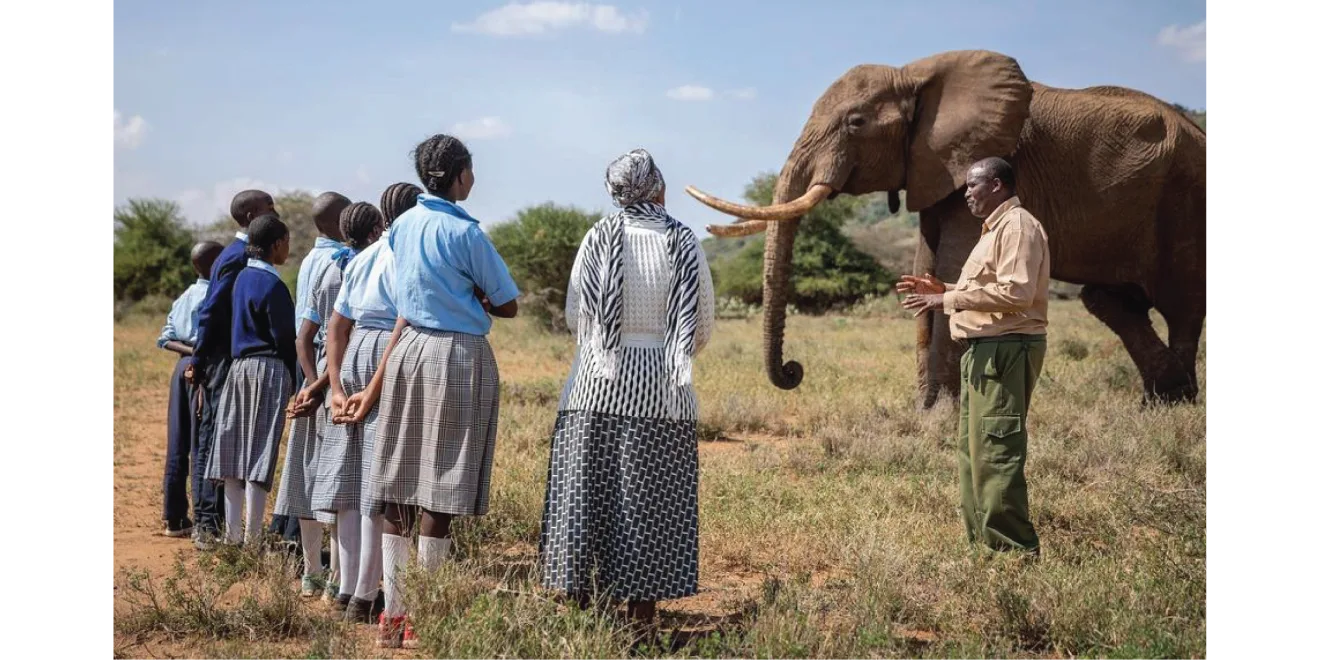
Every safari should be planned conscientiously, but few do conservation and community as ambitiously as Ol Jogi Wildlife Conservancy, a 58,000-acre private conservancy in Kenya’s Laikipia Plateau. A haven for critically-endangered species like Grévy's zebras and the eastern black rhinoceros, Ol Jogi spares no expense when it comes to their high-tech game drives (electrically-powered Land Cruisers arrive this summer), world-renowned veterinary clinic, wildlife orphanage (guests can bottle feed baby rhinos) and all-in local outreach. (An on-site school teaches 230 children from the surrounding area.) Whether you’re feeding rescued elephants, joining researchers in the bush or simply relaxing at one of the camp’s eight cottages (guest stays fund the in-house anti-poaching team), Ol Jogi offers not just an up-close view of the world’s rarest creatures, but the work it takes to keep them happy, healthy and in their natural habitat.
The Safari Heavyweight
There is a reason so many first-timers head to any one of the lavish safari grounds scattered across Botswana’s Okavango Delta, a vast inland river estuary offering some of the choicest year-round game viewing. But with its perch at the center of the delta bordering a sprawling feeding plain, the region’s grande dame is undoubtedly Mombo Camp. Case in point: Mirrors in the bathrooms are angled to reflect the endangered wattled cranes right outside your zip-up door; plunge pools offer views of grazing giraffes and zebras. Summer renovations on the boardwalk-connected tented Art-Deco lodgings should only extend Mombo’s safari reign.
The Gastro Safari
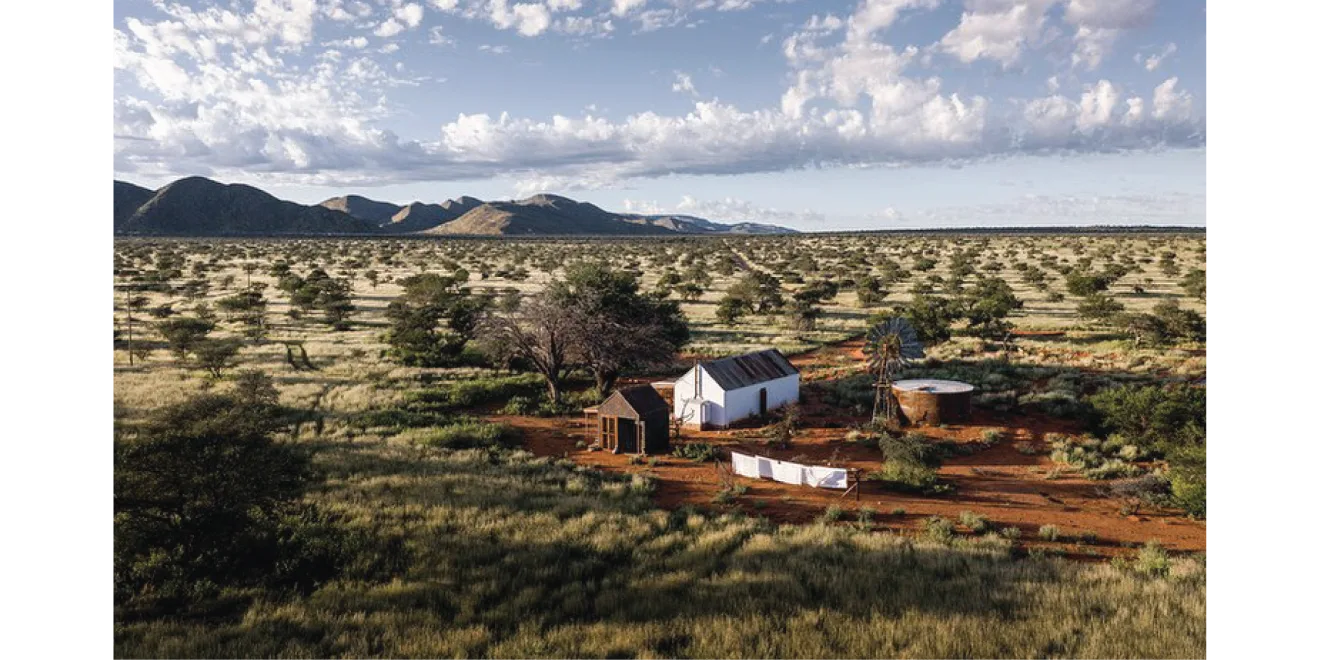
The Oppenheimer family runs Tswalu Kalahari, South Africa's largest private reserve in the foothills of the Korannaberg Mountains, with a clear mandate: Rewild formerly agricultural land with native plant and animal species, such as lions and giraffes, and create a refuge for rare, less-discussed species, like pangolins and canid African wild dogs. Tswalu is now a home to rarefied gastro-tourists, too, who flock to Restaurant Klein JAN, Chef Jan Hendrik van der Westhuizen’s 20-seat tasting-menu destination. Dramatically perched in the middle of the reserve’s arid savannah grounds, the restaurant is only open to guests staying at the reserve or those who can book a private plane to fly in. Fittingly, the meal is a three-hour culinary journey unto itself. Guests start on the patio for hors d’oeuvres (foraged Spekboom succulents, desert tsamma melons, Senqu River pistachios), then head to a pickling cellar located nearby in a century-old farmhouse before finally sitting down for inspired locally-sourced dishes like biltong-dusted lamingtons and spiked cucumbers.