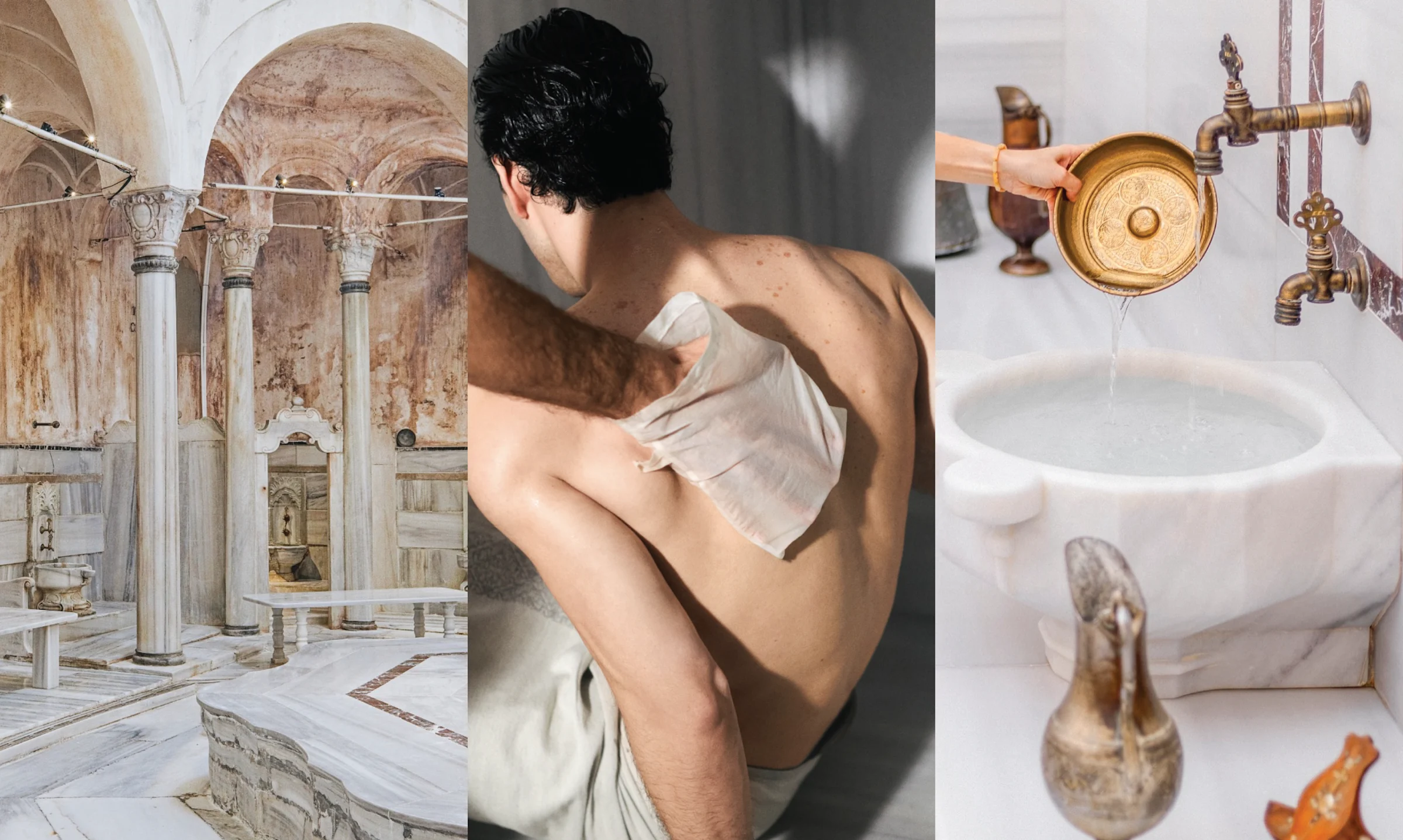
In Turkey, there is a famous saying: Hamama giren terler — whoever enters the hammam will sweat. It’s more than a warning about heat; it’s a reminder that stepping into a hammam means surrendering yourself — your time, your thoughts, your body — to an ancient ritual that is both deeply physical and profoundly calming.
The hammam is the essence of Turkish beauty and hospitality. There’s a kindness in the ritual — a gentle intimacy that feels unique. It might sound surreal to let a stranger scrub and bathe you, but the respect and professionalism of the natır (female bath attendant) or tellak (male bath attendant) transform it into an act of pure care. You lose your sense of time, and perhaps even yourself for a while.
The hammam culture in Turkey traces back to Roman thermal baths and blossomed through the Seljuk and Ottoman eras. In times when homes lacked running water, public baths were vital. But they were never just places to wash. They were social spaces, full of conversation, laughter, and sometimes even conspiracy. Mothers would visit hammams to quietly assess their sons’ future brides, observing everything from poise to skin. History remembers that revolts, too, could rise from the steam, as in 1730 when Patrona Halil — once a humble tellak — used his connections in hammams to rally the Janissaries and intellectuals in an uprising against the Ottoman Sultan, eventually dethroning Ahmet III.

Istanbul’s hammams still belong to this living story. Many have a bani, the patron who funded their creation — a tradition of civic generosity stitched into the city’s fabric. The water running through their pipes often comes from aqueducts and cisterns dating back to the Byzantine era, part of an ancient water network still flowing beneath Istanbul’s streets.
A distinct detail of hammam culture is the nalın, the ornate wooden clog worn by bathers and staff alike. These clogs keep feet from the hot marble floors and puddles of water. Traditionally, the height of the heel indicated social status or professional rank — the higher the heel, the more important the wearer.
We Turks have countless more idioms about hammams. Eski tas, eski hamam — same bowl, same bathhouse — means nothing changes. And indeed, step into a hammam today and so much remains as it was centuries ago: the cool şerbet or tea offered in the soğukluk (the cooling room), the sound of voices echoing off domes, the glow of marble under soft light, and the silent invitation to reflect.
No special belongings are needed. Everything is provided — the peştemal (the cotton towel to wrap yourself), the kese (mitt) glove, the soap. Just remember to visit before eating, tip generously in smaller, local hammams, and leave valuables at home.
Because once you’re stretched out on the göbektaşı — the heated marble platform where attendants scrub you — watching shafts of light filter through the dome, you’ll understand: the hammam isn’t merely a bath. It’s a place to shed your burdens, quiet your mind, and, for a few precious moments, feel entirely renewed.

Istanbul’s most beautiful hammams
Zeyrek Çinili Hamam
This 500-year-old hammam in the historic Zeyrek neighborhood reopened after a masterful 13-year restoration and stands out for its tasteful design rather than ornate excess. Built by the Ottoman architectural genius Mimar Sinan for Admiral Barbaros Hayreddin Pasha, it once dazzled with İznik tiles, now displayed in an on-site museum alongside beautiful artifacts of hammam culture. Today, it’s part hammam, part art space, featuring a well-curated series of exhibitions by international artists. The refined boutique store offers modern peştemals designed by Hussein Chalayan.