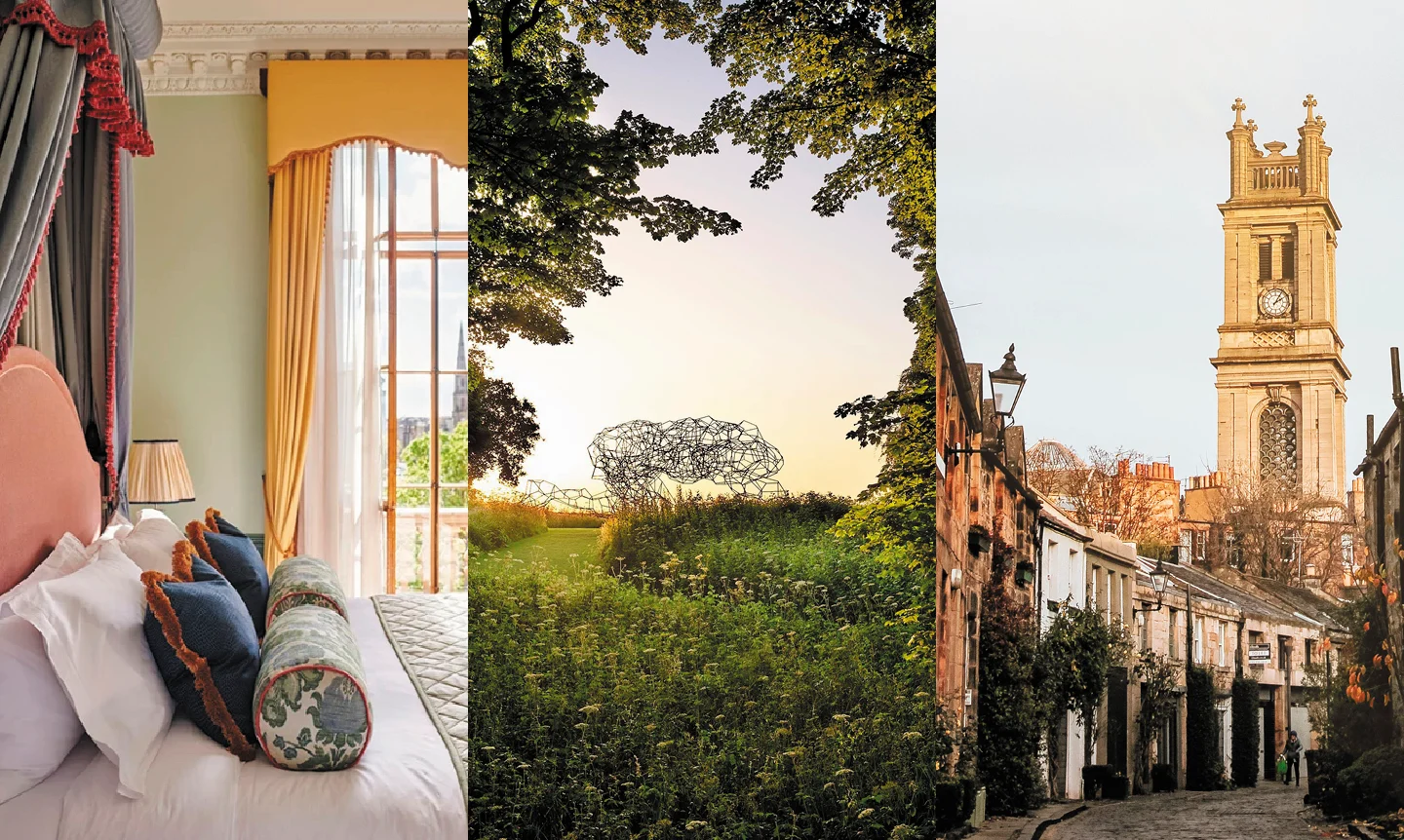
Of Europe’s many cultural giants, Edinburgh is perhaps the most diametric. The Scottish capital festooned with medieval alleyways and Gothic architecture is as well known for its whisky pubs and Auld Reekie charm as its cutting-edge art scene and independent boutiques. It’s no surprise—the rich history and folklore that’s baked into this historic city has lured creatives for centuries, from Walter Scott, who penned a revolutionary in fiction with his Waverley Novels, to Irvine Welsh, who based his cult-novel-turned-film Trainspotting in the (once) gritty Leith neighborhood.
Today, Edinburgh’s cultural scene has been made famous in large part due to Fringe, the enormous arts and performance festival that takes place every August, when the city’s notorious mist and gray cede to longer, sunnier days. But that’s only the beginning: Year-round you can catch thought-provoking art shows, dynamic design hotels, and indie boutiques all over town.
Gleneagles Townhouse
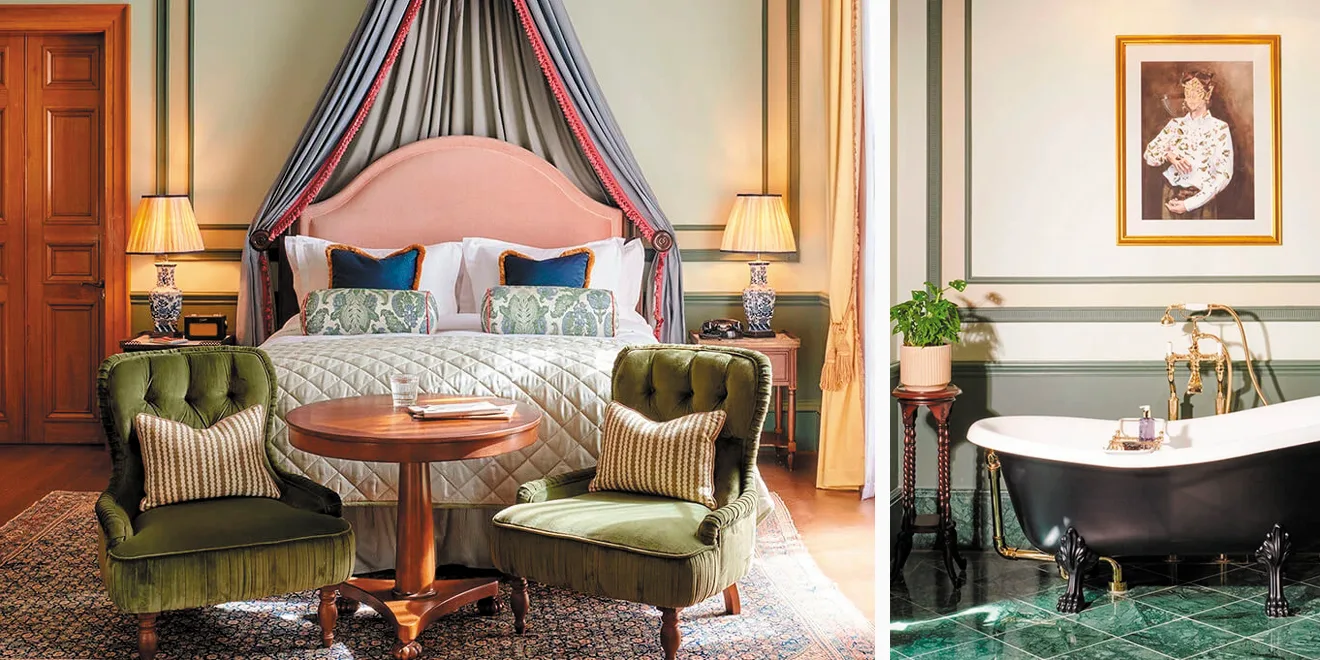
Perthshire’s grand dame, the legendary Gleneagles country estate, has gone urban with the opening of this jewel-box hotel and members club located within a late 18th-century landmarked building in St Andrew Square. Its 33 rooms and suites are an ode to classic Georgian style with a touch of the contemporary—a dichotomy it shares with Edinburgh itself. Crown canopies hang over the beds and sketched gundogs chase pheasants across the Toile de Jouy wallpaper, while downstairs the Spence restaurant takes on the role of a classic Scottish larder, serving beef tartare and langoustines beneath a restored glass-dome ceiling. It’s all very refined, with just the right amount of irreverence.
No. 39 St Andrew Square
100 Princes Street
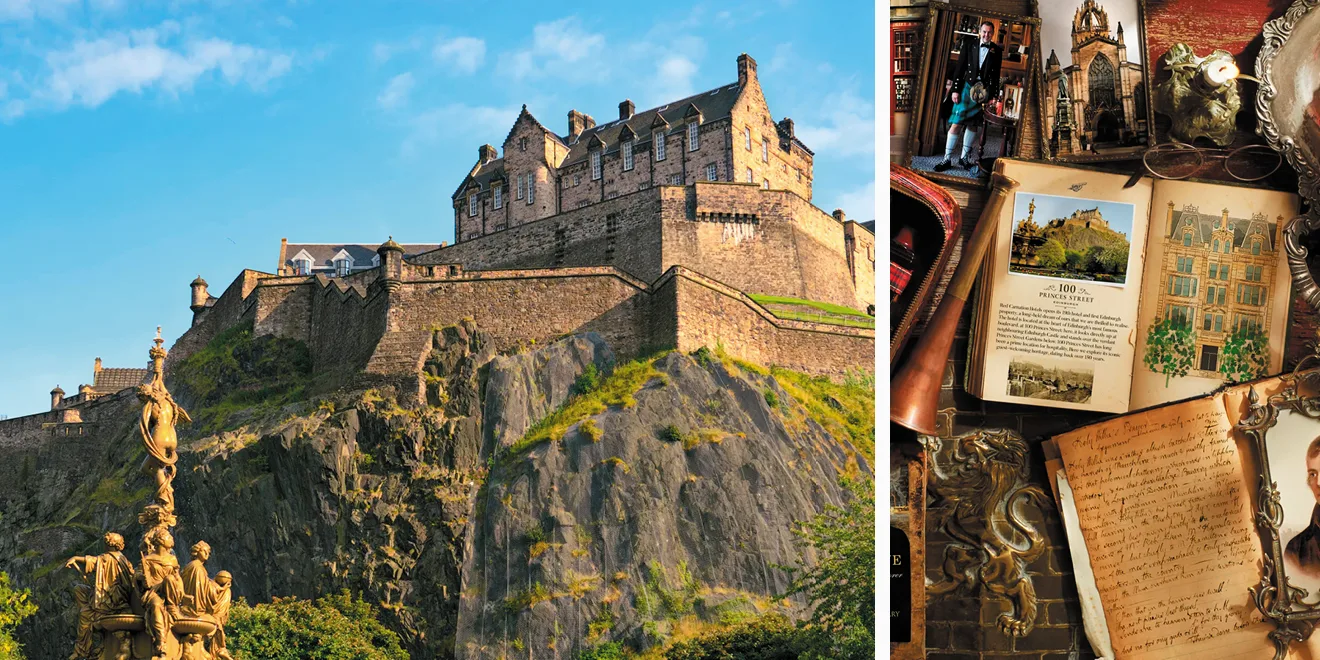
100 Princes was once the address of the Royal Over-Seas League, an elite members club with royal honorifics from Queen Elizabeth II. Next spring, it will reopen with a decidedly less buttoned-up style as a 30-room hotel from London’s Red Carnation Hotels. “Wherever, whenever” promises to be the credo, with guests free to wander the property (currently being restored by local artisans) and treating its restaurant and Explorers’ Club as their own. And unlike at the ROL, ties and jackets will be entirely optional.
100 Princes Street
Ingleby Gallery
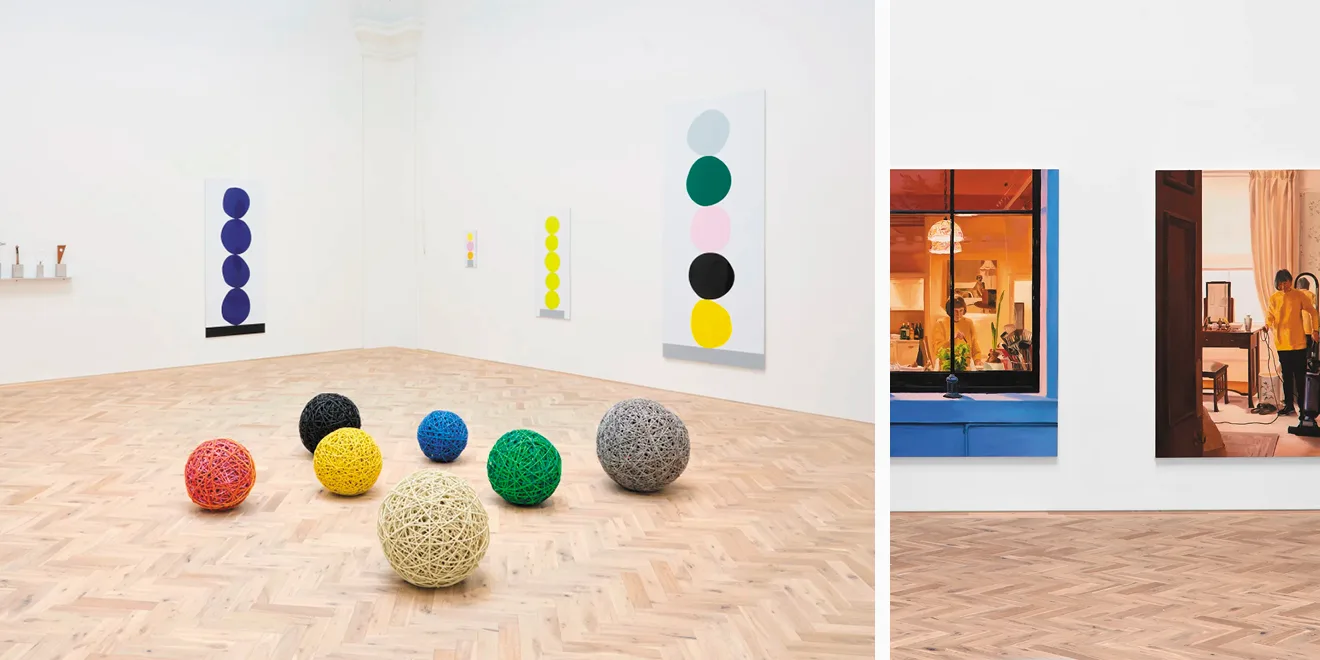
Established in 1998, amid a burgeoning turn-of-the-century arts scene, this private gallery spearheads an ambitious program of exhibitions and off-site projects throughout the year, with an emphasis on emerging Scottish artists. Ingleby’s long standing relationship with the local community has recently been bolstered by the opening of a new space in a 19th-century Meeting House, where works are displayed beneath an enormous octagonal stained-glass skylight. The gallery has championed the careers of numerous Scottish artists, including David Batchelor, whose sculptures and paintings share an otherworldly fluorescent luminance, and Moyna Flannigan, whose abstract paintings of women are inspired by a fusion of personal experiences and broader cultural references.
33 Barony Street
Fruitmarket
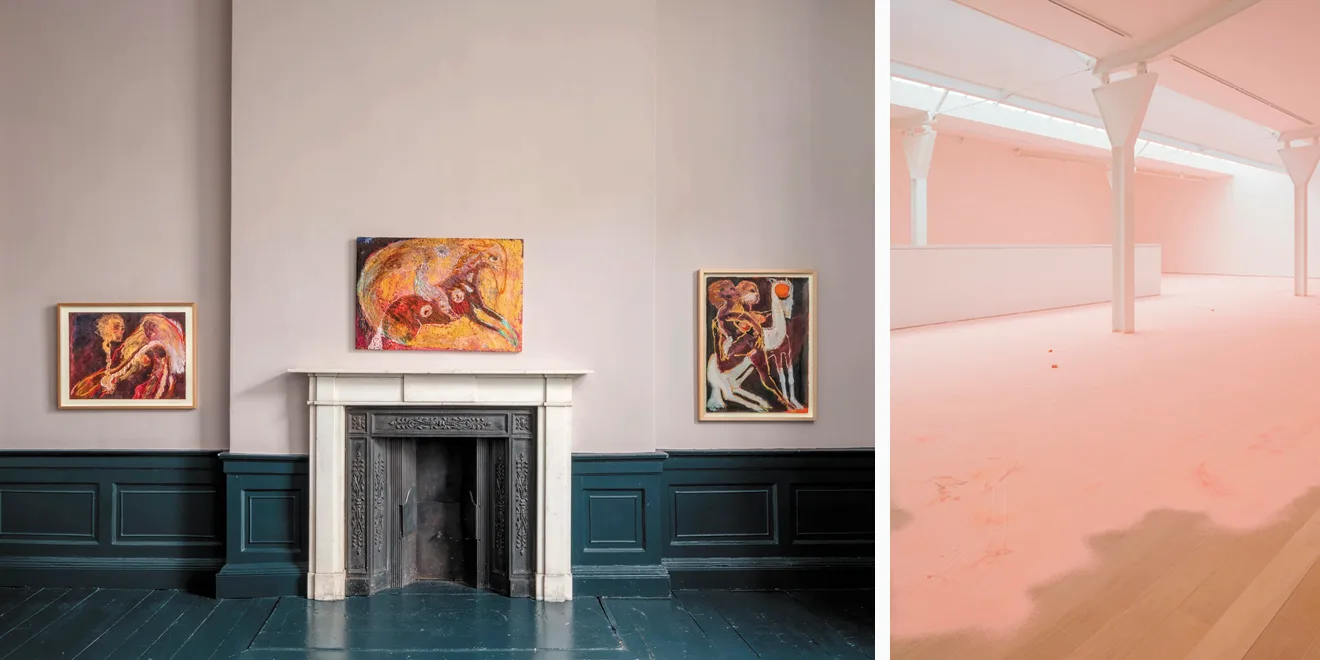
This free art space in a former produce market has been an inclusive platform for contemporary art since 1974. Today, the space, which has recently doubled in size with the addition of a new gallery by local architecture firm Reiach and Hall, continues its legacy as a benefactor of raw creativity by hosting community programs whose themes dovetail with current exhibitions. For instance, to further connect the public to Daniel Silver: Looking, an exhibit of the London artist’s ceramic busts and figures displayed en masse throughout the gallery, Fruitmarket will host a series of artist-led clay ceramics workshops, the resulting works of which will become part of a new show later this year.
45 Market St
Arusha Gallery
New and emerging UK artists are the primary focus at this contemporary art gallery in historic New Town. Among the talents represented (and regularly shown amid the space’s historic crown moldings and exposed brick walls) are London’s Grace Mattingly, whose cheerful figurative paintings are a potent mix of whimsy and sensuality, and Scotland’s Jack Dunnett, who achieves a sense of ethereal uncertainty through the combination of traditional painting techniques and chemical manipulation.
13A Dundas Street
Jupiter Artland
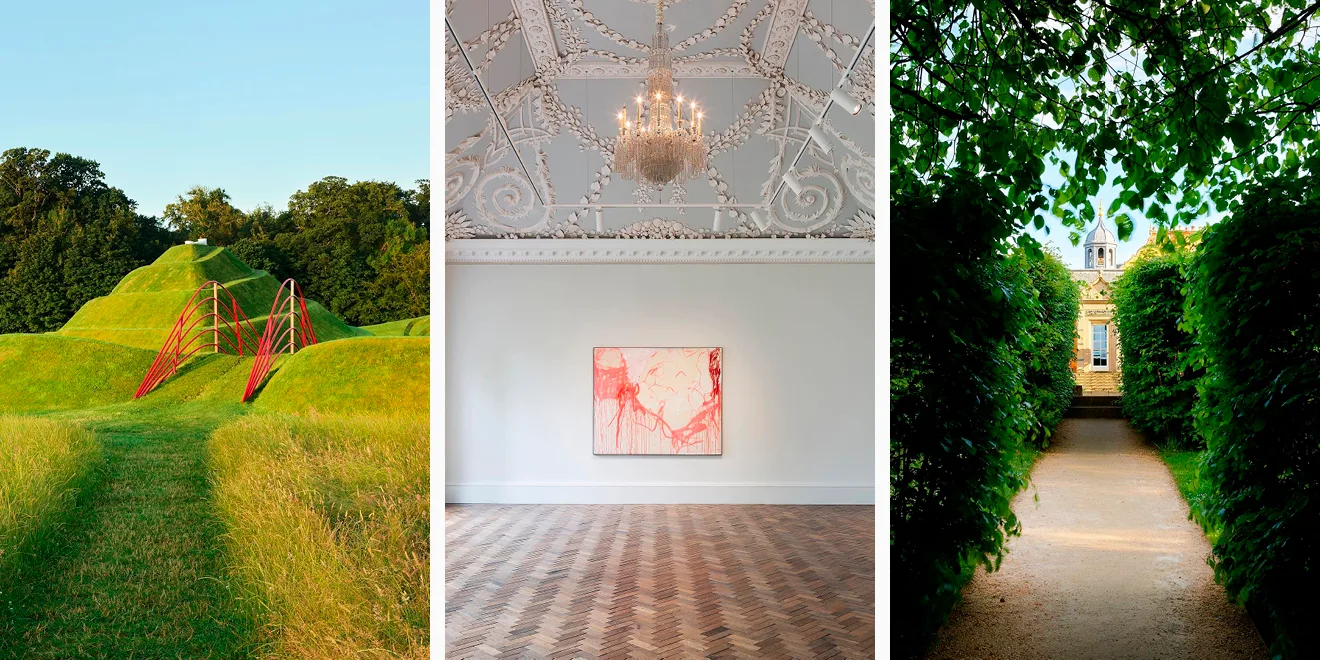
Art collectors Robert and Nicky Wilson have devoted 100 acres of their Bonnington Estate outside the city to this contemporary sculpture garden. Home to 30 permanent works—including Anish Kapoor’s curved metal Suck and site-specific installations by British artist Phyllida Barlow and American architect Charles Jencks—Jupiter also hosts exhibits throughout the year, often coupling large-scale outdoor works with paintings and other pieces on display in the indoor gallery.
The Steadings, Bonnington House, Wilkieston