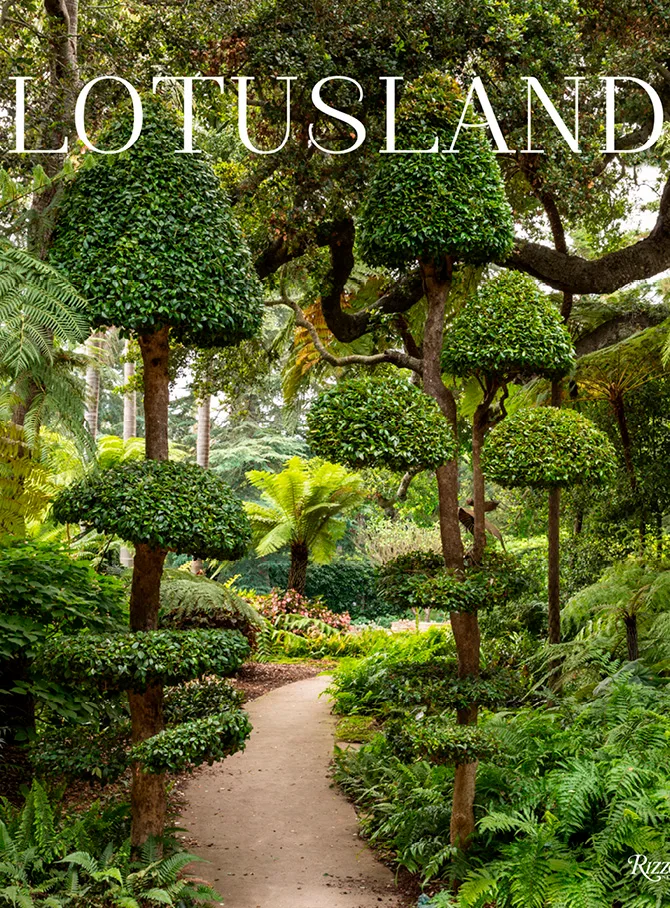
Out this month, a new coffee table book, Lotusland, presents not only the extraordinarily diverse and imaginative gardens of Montecito’s Lotusland estate, but a sense of the inimitable woman, Madame Ganna Walska, who created them.
“I am an enemy of the average,” was a credo of Madame Ganna Walska, a Polish-born opera singer and socialite turned gardener extraordinaire. In 1941, after having lived and performed in Europe, she moved to America, where she, with her sixth (and final) husband purchased an estate in Montecito, California. This would become Lotusland, which Rizzoli celebrates this month with a new book, written by Marc Appleton with photographs by Lisa Romerein. For the next 43 years, until her death in 1984, Walska lived out her horticultural fantasy, creating one of the most unique gardens in the world, with over 3400 plant varieties and 35,000 specimens over 37 acres. “There are 20 different types of gardens,” says Rebecca Anderson, the director of Lotusland. “But there’s not a precise number since there are so many allées and pathways throughout the property.” While it’s one of the world’s most diverse gardens, it’s also a pioneer and leader in sustainable practices.
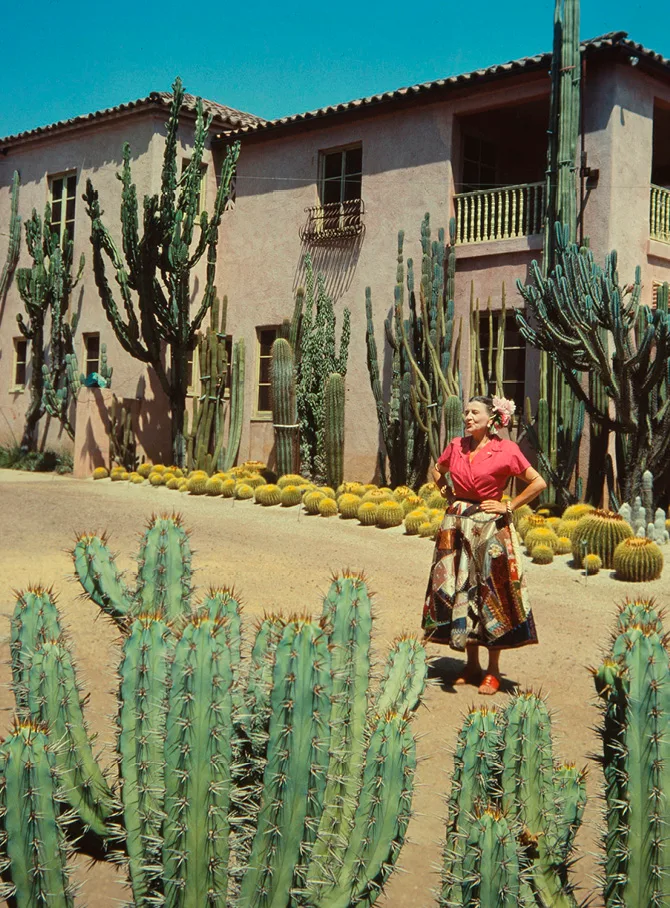
Indeed, Walkso was anything but average. She had a maximalist approach to life: she favored piles of ornamental jewels, Carmen-Miranda style hats and millionaire husbands. Her approach to gardening was no different. For example, instead of planting one or two shrubs or flowers in a small patch of land, she would insert several hundred— whether it was towering eucalyptus trees in the Australian garden, clusters of lotuses in the Water garden (which is located in property’s original swimming pool) or the Dr. Seuss-like cacti that populate the Succulent garden.
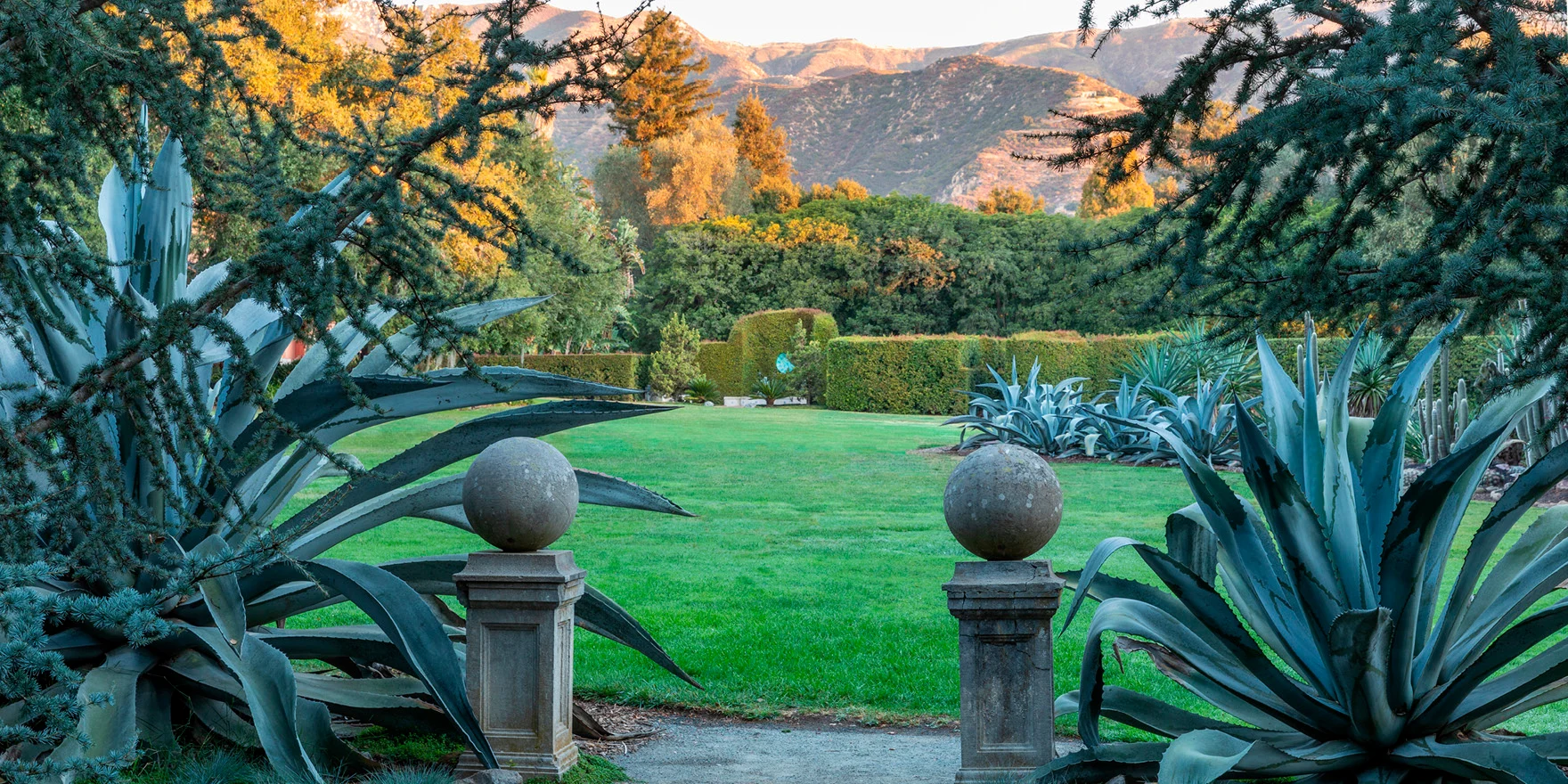
Walksa's artful mind is on particular display in the Blue Garden, where she planted blue hyacinths, blue delphinium, giant agave plants and blue Atlas cedar trees, to create a shimmering silver-and-blue oasis. But it is the Theater Garden, which perhaps best showcases Walska’s singular vision. She planted a three-tiered garden with African fern pine, Japanese sedge and African boxwood to create a stage.“It’s an absolutely magical place,” says Anderson. “It’s where Madame could conjure her theatrics.” There are stone benches to accommodate guests as well as miniature grotesques (what Walska called her “Venetian figurines”) throughout the garden. Walska would often perform here for an audience and today the area is still used for concerts and screenings.
Lotusland is open to the public Wednesday through Saturday and reservations are strongly recommended.
The artistic, eccentric and visionary Madame Ganna Walska lived at Lotusland from 1941 until 1984, planting, collaborating and divining all the while.
When the Blue Garden was designed in the late ‘50s, it was very timely, as color-themed gardens were in vogue. Beginning with blue Atlas cedars, which have a sort of silvery sheen, Walksa dove into the strange world of blue plants and flowers, with giant spiky blue agave as punctuation. Today’s Blue Garden has been reconceived a bit, fewer flowers and more succulents and palms which rely on less water. Also here, a pair of stone celestial globes, one of which was relocated from Walska’s French chateau in the ’60.
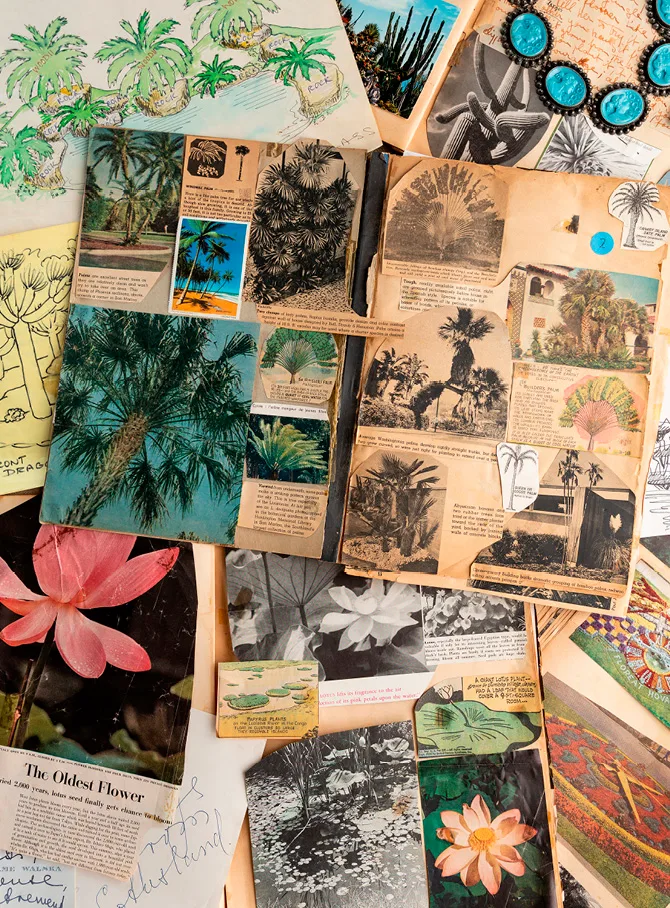
Lotusland’s archives are full of drawings and notes from Walska over the years, including more than 200 scrapbooks collaged with clippings from magazines and papers, as well as sketches and plant orders.
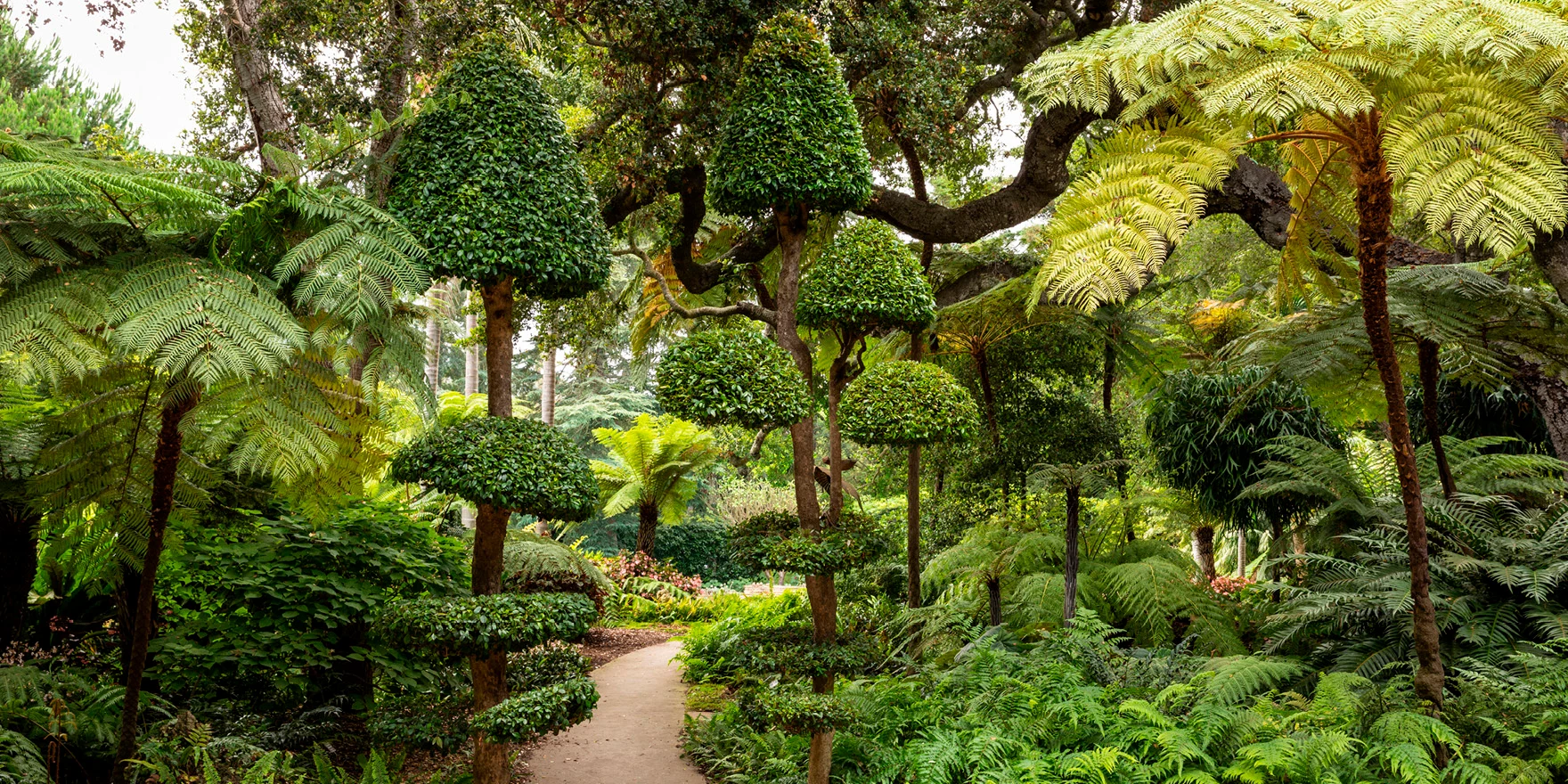
Lotusland’s Fern Garden is perhaps the greenest stretch with ferns of all shades, shapes, and sizes, fiddleheads to tree ferns, meandering and self-dictating. The entrance to the garden is framed by playful eugenia topiaries, as designed by fern and bromeliad expert Bill Paylen between 1968 and 1970. In order to add a little visual diversity, Paylen planted varieties of begonias along the walkway throughout.
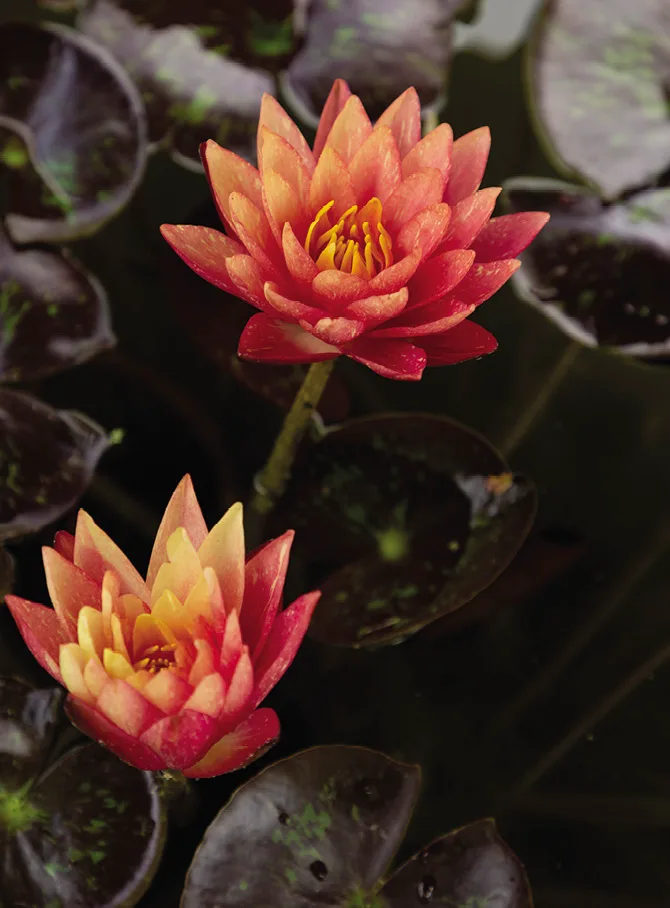
The property’s original owners had a very simple, rectangular concrete pool, which Walska reimagined as an oasis of lotus plants, adding a couple of curved pools, also filled with the flowers, around it. Walska’s initial plan for the estate was that it would be a retreat for Tibetan monks, called Tibetland, but over the years that idea went away and the gardens took over, the lotus becoming the project’s namesake. From mid-June to early September the Water Garden is full of pink Asian lotus blooms, with this red Wanvisa variety in an adjacent pool.
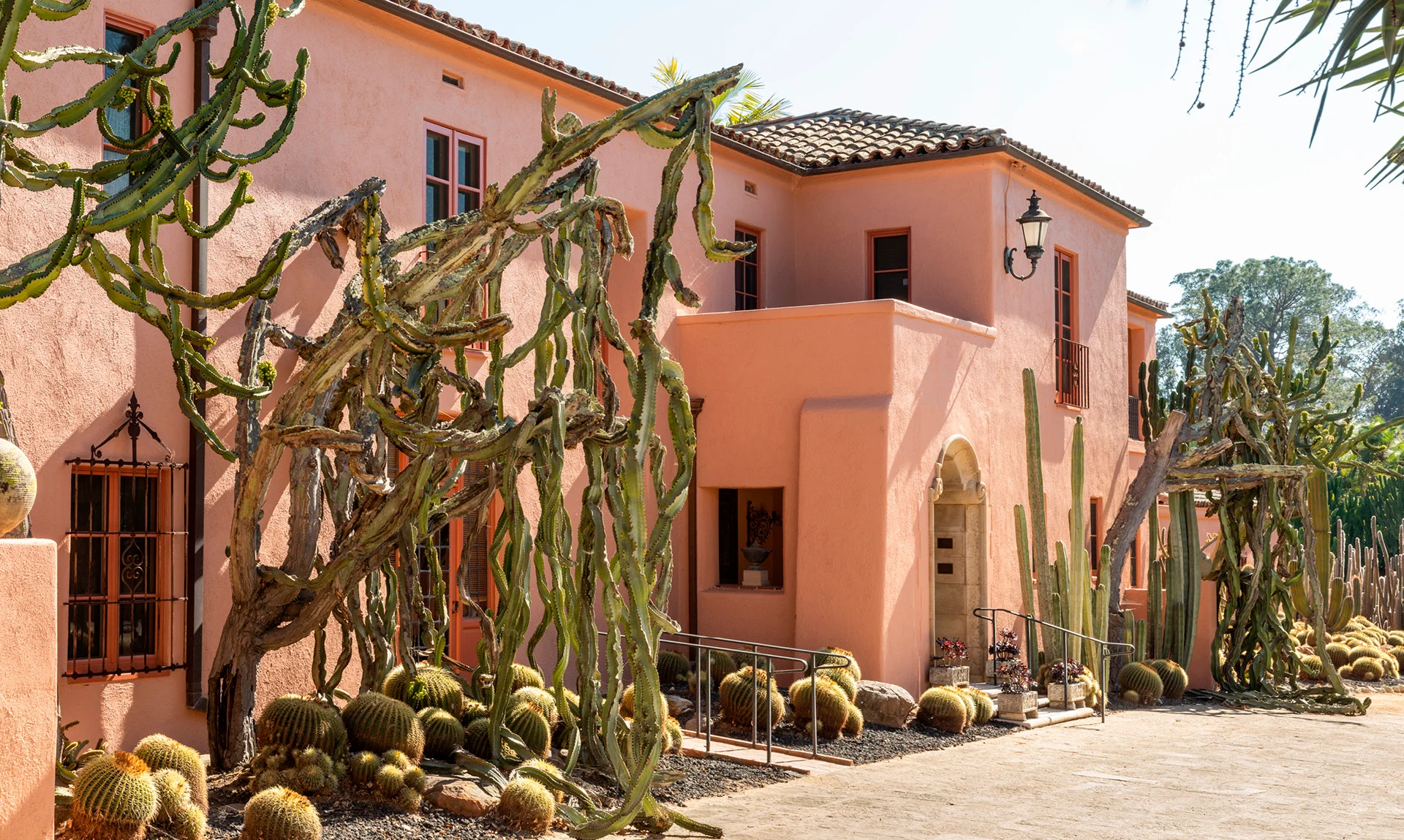
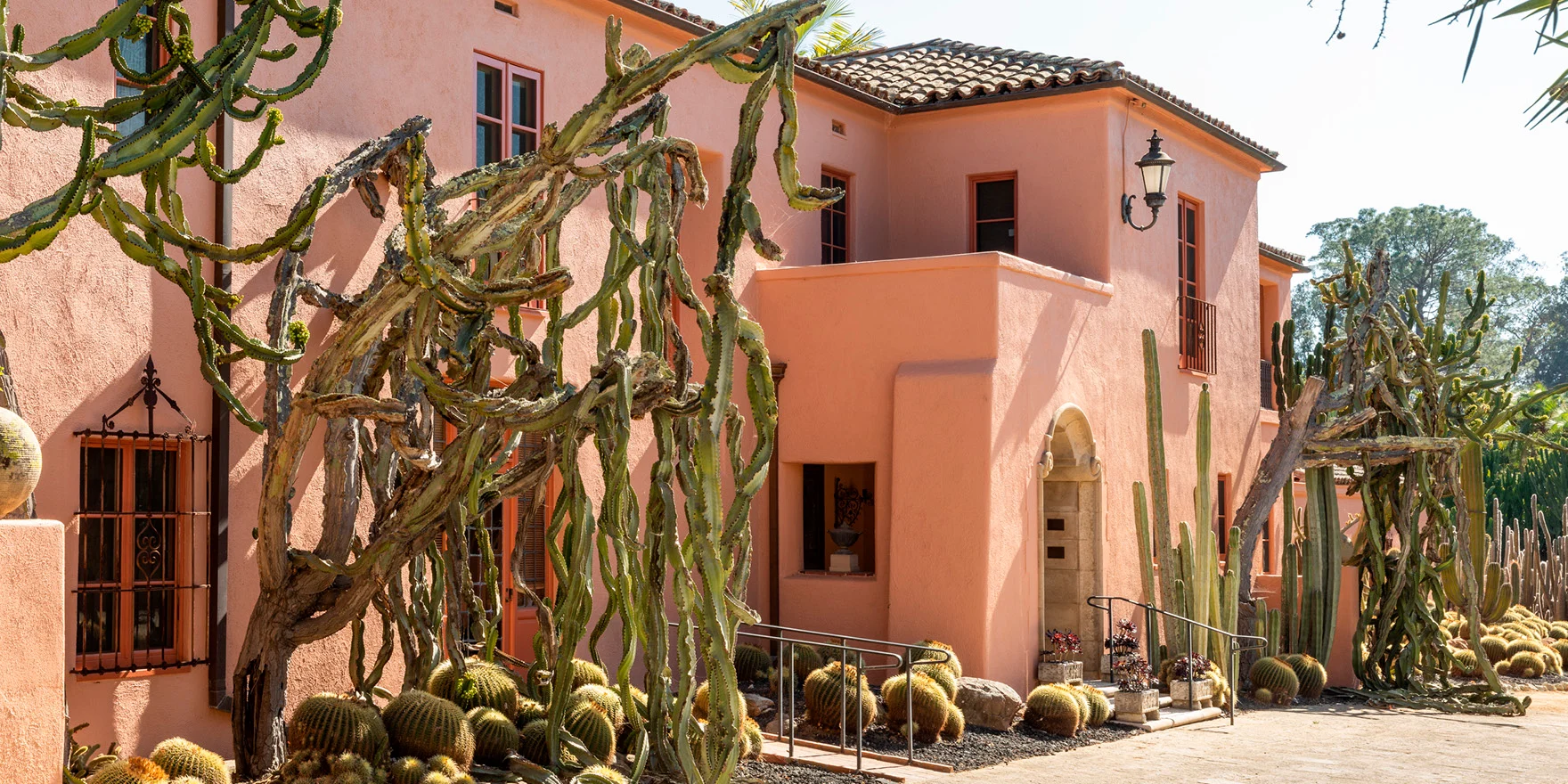
The property on which Lotusland now stands has a long lineage of gardeners and diverse plant life that dates back to the late 19th century. In 1920, the Gavit family built its enormous pink stucco-ed estate home, designed by architect Reginald Johnson, who also designed Santa Barbara’s Spanish-colonial style Biltmore Hotel. The Gavits established proper gardens surrounding their home and concrete pool. When Madame Ganna Walska moved in, she expanded on their vision, surrounding the house with beds filled with her favorite squat golden barrel cacti, as well as tremendous clumps of towering Mexican varieties. Today the house serves as administrative offices and the pool as a lotus garden.
Lotusland, written by Marc Appleton with photographs by Lisa Romerein, is out now.