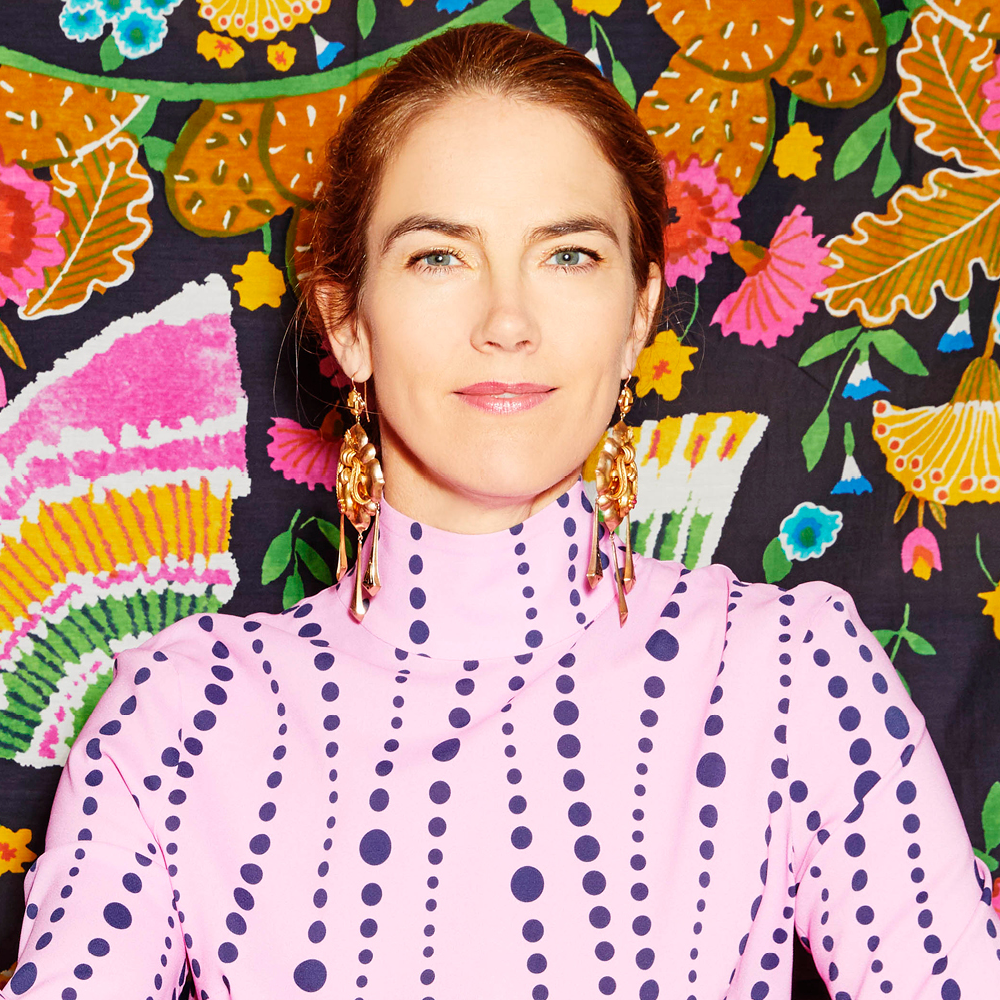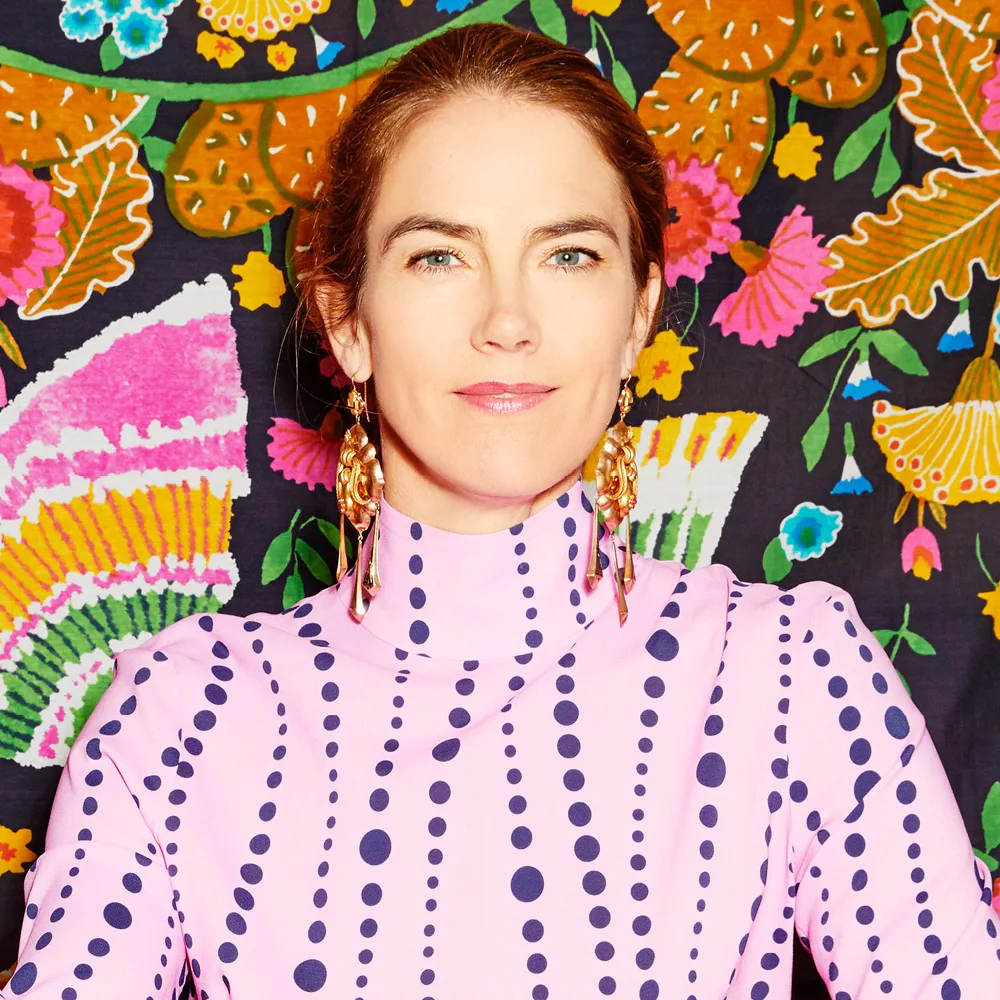
“There’s an endless stream of terrible news about the planet. I try to show the beauty and joy of birds, and in shifting our focus onto them I believe we can achieve so much through optimism and love as opposed to being frozen by fear.”
Art as activism it is not, but Leila Jeffreys has spent the past 12 years photographing the birds she’d like to receive more attention than a passing upward glance or a Netflix-style five minutes of fame. From endangered parrots to convalescing cockatoos, rare doves to domestic budgies, she has traveled to California and the Arctic Circle from her home in Sydney, Australia, to take portraits of her avian subjects, quirks and all, and exhibit them as fine art in the Australian capital, London and New York.
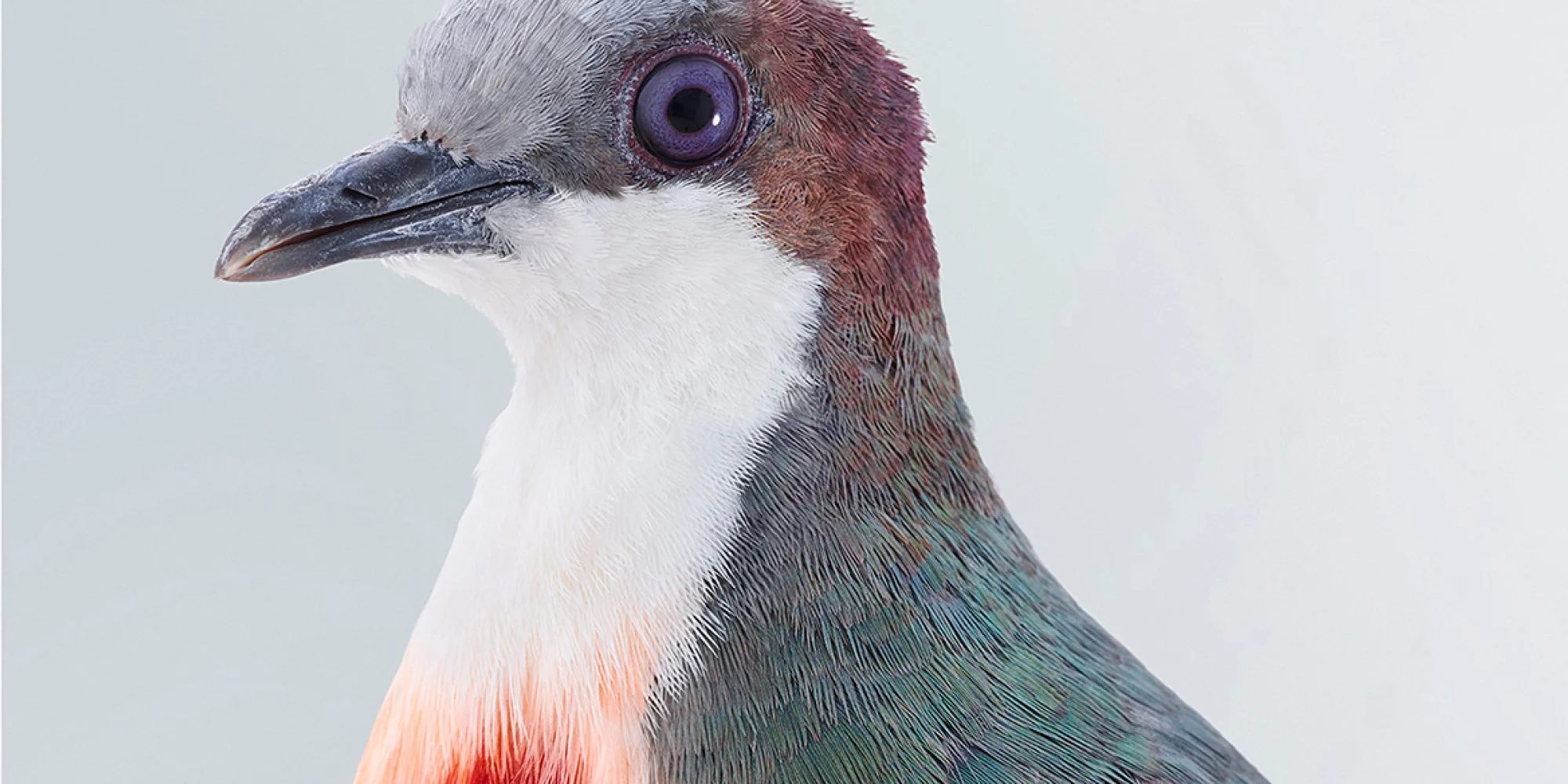
Her mission is to help reverse the decline of endangered species, encouraging state and government funding programs and on a grass roots level, volunteering and donations. Her method? To highlight our uncanny similarities and our exquisite differences to birds. She blows the prints up to a human scale to reveal some very relatable attributes - inquiring eyes, inquisitive turns of the head and in the cockatoo’s case, a rye perma-smile. But her shallow depth of field captures the delicate essence of their anatomy as if under a microscope: the brilliance of tail feathers, the pin-sharp texture of down and the architecture of the character defining beaks.
“The works are quite emotional. I try to connect people by their heart strings. If you’re connected and you care, you’re more likely to change your behavior to do the right thing for wildlife.”
She works on three-year cycles, ready to drop everything and fly to rescue centers, zoos and breeding programs for an audience with a new arrival. For her latest exhibition, which has just opened at Olsen Gruin in New York’s Lower East Side, she wanted to shoot flocks for the first time and knew that budgies would play ball. With sea eagles and gannets already in the bag, her next show about sea birds is lined up for 2022, as long as she lands an albatross by then. “Sea birds are really at the forefront of a lot of the trouble that’s going on. Single use plastic is one thing that we can change really quickly.”
Here, she shares the stories of some of her favorite subjects from her archive.
ORANGE BELLIED PARROT
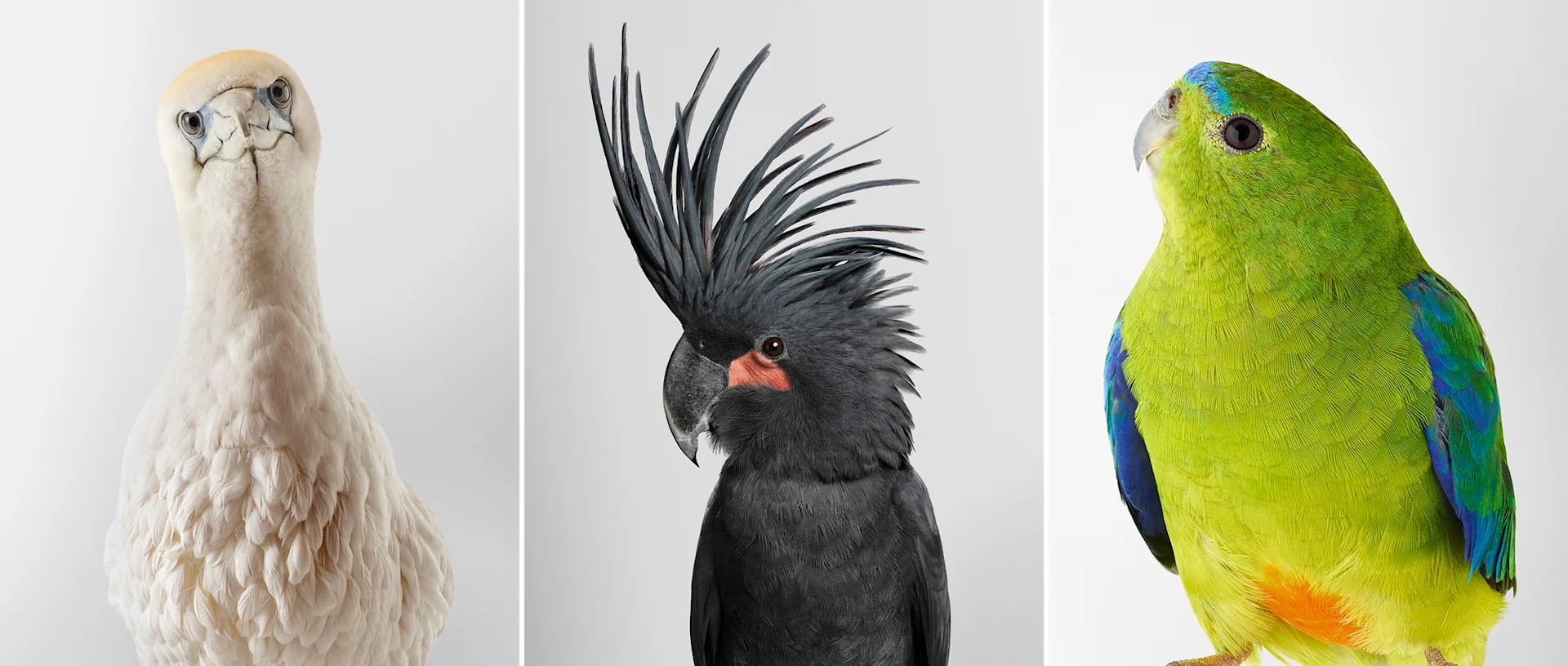
“This tiny little bird is critically endangered. There is something like only 30 left in the wild. It breeds in Southwest Wilderness moorlands of Tasmania and migrates hundreds of miles to mainland Australia crossing Bass Strait which is one of the most treacherous stretches of ocean. It’s crazy when you discover they are only 20 centimeters long and weigh about 1.5 ounces. The adults depart first in Spring and the fledglings a few weeks later. The reason for their decline is we have drained their wetlands for grazing, and exploited their salt marshes for industrial and urban development. Now their habitats have predators like foxes and feral cats.
When I was invited to shoot this parrot at a captive breeding program at the Moonlit Sanctuary, southeast of Melbourne, he was about to be released to join the wild population. They got him flying-fit but released him young in the hope that the older ones would show him how to migrate. I named him Blue.
KAKAPO
This flightless, nocturnal parrot is the heaviest parrot in the world. For its mating call it creates this booming sound by inflating itself like a balloon. But they only mate every three to four years, when there’s this particular fruit on the tree, so it’s basically the panda of the bird world. They’re really rare, a protected population only found on some offshore islands in the south of New Zealand. The scientists split them over three islands and work out which mums are the best at raising chicks. They give them the eggs from other young mums not doing such a good job to increase the chances of survival.
This one’s name is Sirocco. The shoot was really intense: I had to wash my hair, wear a special suit, special boots and triple sterilize my equipment. The setup was his favourite tree stump where he would have his dinner. There was no light because he is nocturnal. I was super nervous When he first saw me he could tell there was some tension in the air so he walked straight out. I was like, “oh, its over.” But once he could see things had calmed down, he came back, got up onto his stump and I got my portrait.