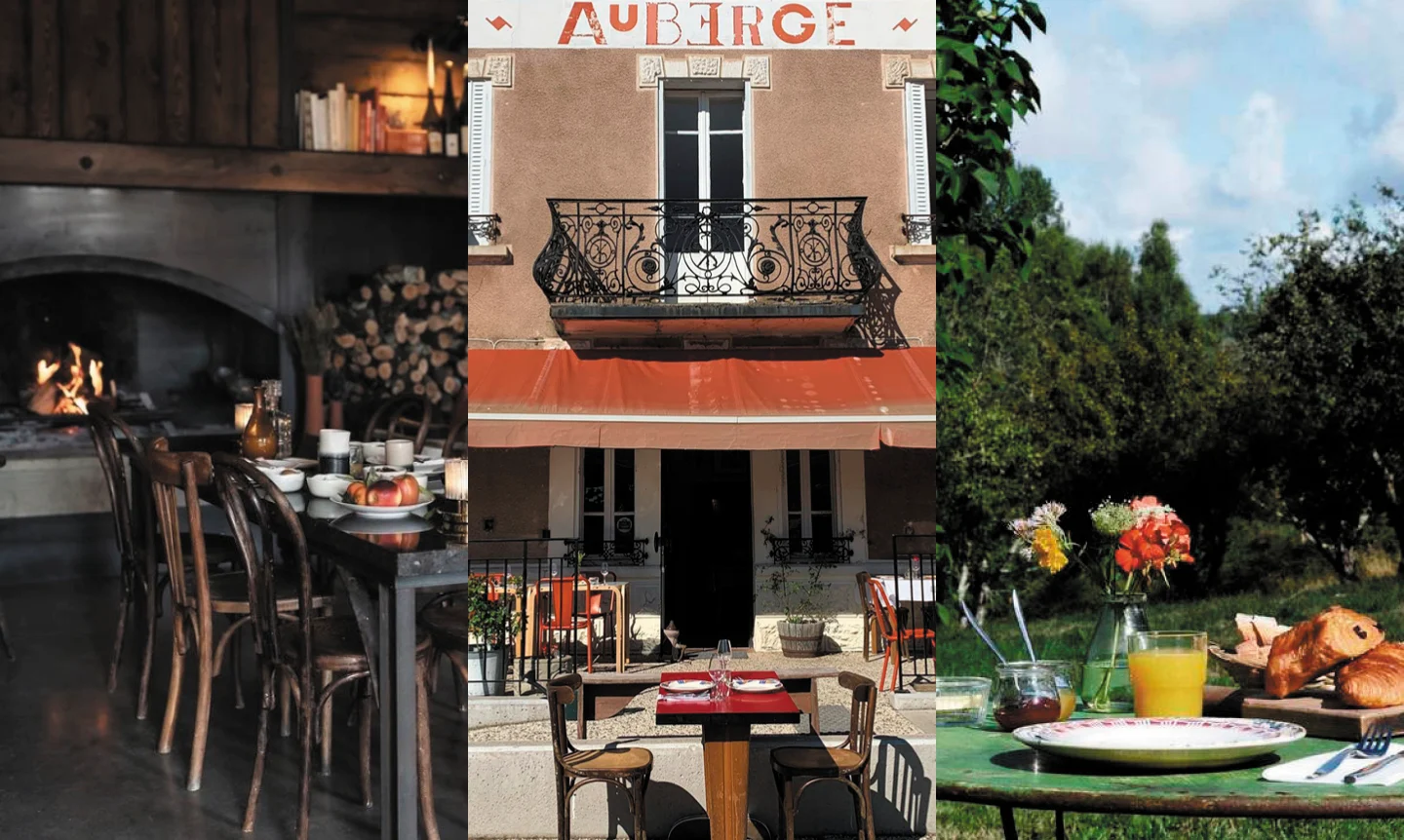
As with London, Paris has recently seen a migration of culinary talent move to the country’s verdant corners. In many ways, it’s a logical next step for the city’s bistronomy movement. From the early 2000s, a wave of young chefs began upending Paris’s traditionally starchy and star-focussed dining scene, serving simply prepared ingredients in more casual environments and disregarding Michelin’s fussy metrics of quality that many saw as outdated.
Now, a handful of those cooks have moved out of the capital. Swayed by seasonality, sustainability, and the bounty of France’s regional larders, they’re finding new inspiration in one of France's oldest institutions, the auberge. Traditionally a rural inn and tavern, the genre is now being reimagined by some of the finest Gallic chefs (and a few Brits) as a destination for contemporary farm-to-table cooking. From the languid Marche coastline to lofty Alpine outposts and heartland farmsteads, these are the backcountry bookings in France worth the trip.
Le Doyenné
5 Rue Saint-Antoine, Saint-Vrain, Île-de-France
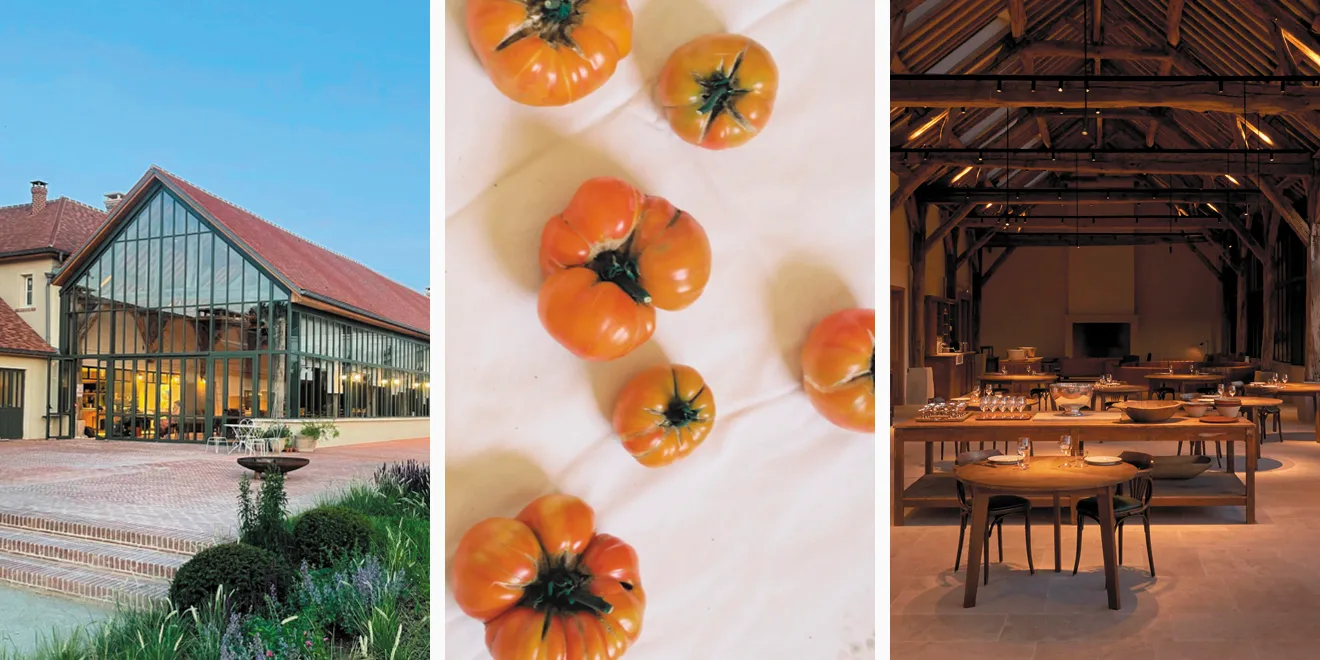
Set in light-soaked former stables on the grounds of the Château de Saint Vrain, about 30 miles south of Paris, Le Doyenne is the brainchild of Australian bistronomy chefs James Henry and Shaun Kelly. Henry cooked at Daniel Rose’s trailblazing Spring before making his name at beloved 11th arrondissement néo-bistro Au Passage, and then opening the gutsy Bones nearby. Kelly, meanwhile, moved to Paris after time at London’s St John, grabbing the mantle from Henry at Au Passage and then opening Yard, a lively natural wine bar gem in the 11th.
In 2017, they turned their sights to Saint-Vrain. They created an orchard and potager garden – the yields of which were so abundant that they started selling back to seasonally minded restaurants in the capital – then took to overhauling the Château’s former stables into a 40-seat restaurant.
The years of effort paid off: The conservation-driven architecture is meticulous – the vertiginous, glass-walled cathedral of a dining room, with gnarled original beams and sandstone-slab floor, was reimagined by the architecture firms Ciguë and 1224, while the interiors were restored by local craftsmen. Equally impressive is their focus on regenerative, no-till agriculture – a low-impact approach by which mulching, rather than aggressively turning over soil, supports microbial life and better-tasting produce.
This green mindset extends to the kitchen’s sustainable dairy, poultry, seafood, wild game, mushrooms, and wines (and so on), but the potager is the hub of the operation, brimming with fruit trees, heirloom vegetables, and herbs, which harvested each morning to create inspired dishes like leeks and chard with Albufera sauce, coal-roasted Kriaxera duck, and Jerusalem artichoke gratin.
L’Auberge de la Roche Valdeblore
La Roche, Valdeblore, France