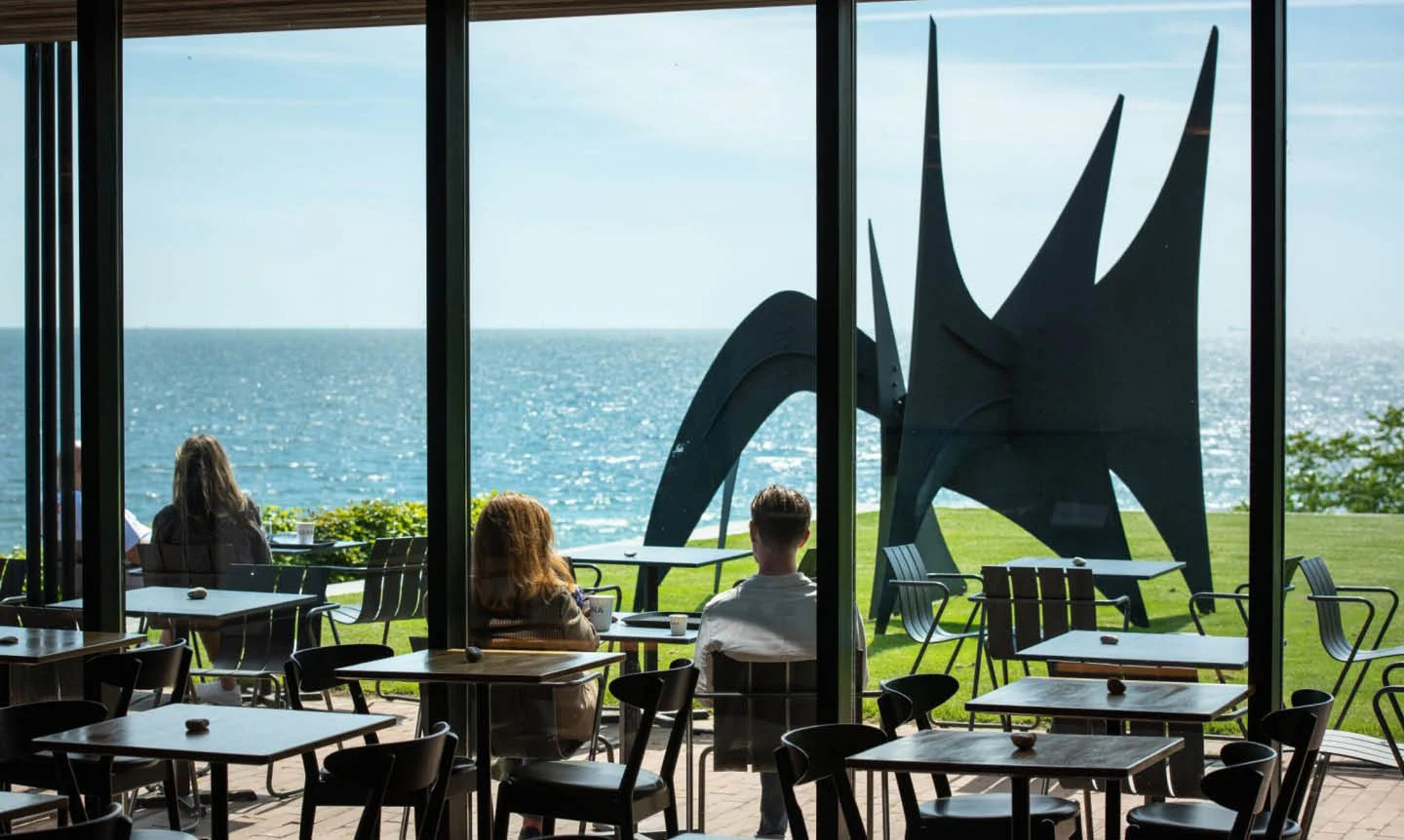
It’s not unusual for dwellers in Europe’s largest cities to routinely decamp to small towns, countrysides, lake towns, and seaside escapes, for holiday or a change of pace. There’s immense value in travelers following suit, taking leave for a day or two from strictly urban-focused itineraries to plunge into the often picturesque and culture-packed—but equally lesser known—locations just a train, bus, or car ride away. As in elsewhere, so many of Europe’s smaller but commuter-convenient locales are brimming with activity and offerings right now. These include museums and exhibits, many of which are on par with those in the major or capital cities nearby.
These seven museums in particular offer fresh perspective—not only on art and curation, but on what gems can lie past the outer bounds of these iconic cities. They also prove that the unexpected places to seek out art can be among the most rewarding.
Louisiana Museum of Modern Art - In Humlebæk, near Copenhagen, Denmark
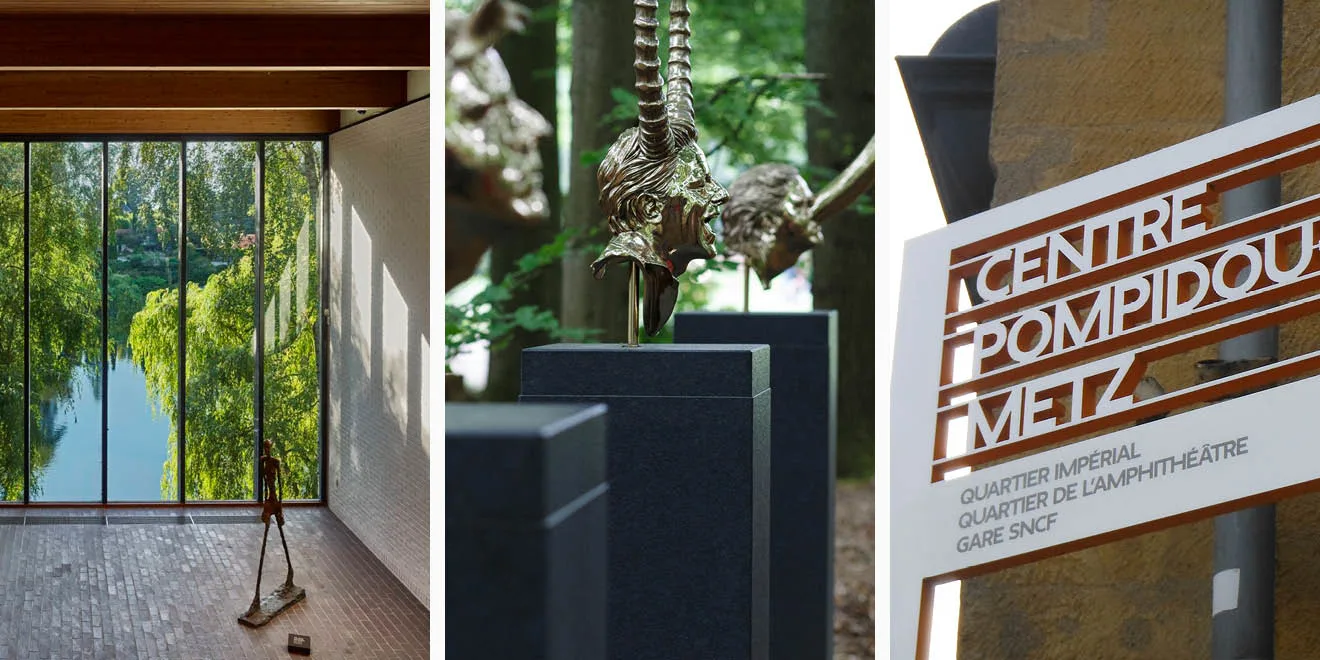
Set a half hour’s train ride from Copenhagen in a 16th century former fishing village, the Louisiana is a masterpiece of Danish modernism and an amalgam of art, architecture, and landscape. The museum, surrounded by a superb sculpture park that overlooks the Øresund strait, specialises in European post-war art movements, while also hitting touchstones from across the Atlantic such as Warhol and Lichtenstein. Giacometti is centre stage, his sculptures the subject of a stunning gallery whose floor-to-ceiling windows overlook a willow-fringed lake. Current contemporary ‘wow’ moments include a Yayoi Kusama mirror room and temporary exhibitions that highlight international art stars: The beguiling figurative paintings of the Swedish artist Mamma Anderson are now on view alongside a show by the influential US filmmaker Arthur Jafa.
Kröller-Müller Museum
In Otterlo, near Amsterdam, The Netherlands
An hour by car or minibus from Amsterdam is this national art museum, in the centre of the forests, dunes, and moors of beautiful Hoge Veluwe National Park in the small village of Otterlo. The buildings are by great architects including Henry van de Velde (art nouveau innovator) and Gerrit Rietveld (De Stijl designer) but the paintings here are really the star of the show, and one name sings out: Vincent van Gogh. The Kröller-Müller houses the second-largest collection of the Dutch master’s art, including Café Terrace at Night. Alight at the park’s entrance and continue into the forest lanes on one of the free bicycles on offer, before emerging into the museum’s gardens, which are full of modern sculptures.
Centre Pompidou-Metz
In Metz, near Paris, France
Metz is beloved for its beautiful old town, known for its Gothic cathedral, clusters of medieval-looking streets, and German Imperial district. But since 2010, visitors have also made pilgrimages on behalf of the Centre Pompidou-Metz, which welcomes art lovers in their many thousands, especially from the French capital. A sister institution to the famous Paris art museum, its splendid exhibition spaces are enveloped by a mammoth, billowing white roof structure—inspired by a floppy hat, according to its Japanese architect Shigeru Ban. The museum draws from the Pompidou’s incredible collection of modern and contemporary art, but it has its own way of doing things. Its current show, ‘Arcimboldo Face to Face’, for example, depicts the influence of the 16th-century Lombardy painter Giuseppe Arcimboldo through the works of artists ranging from Rodin, Picasso, Duchamp, and Bacon to the contemporary photographers Wolfgang Tillmans and Cindy Sherman.
Dalí Theatre-Museum
In Figueres, near Barcelona, Spain
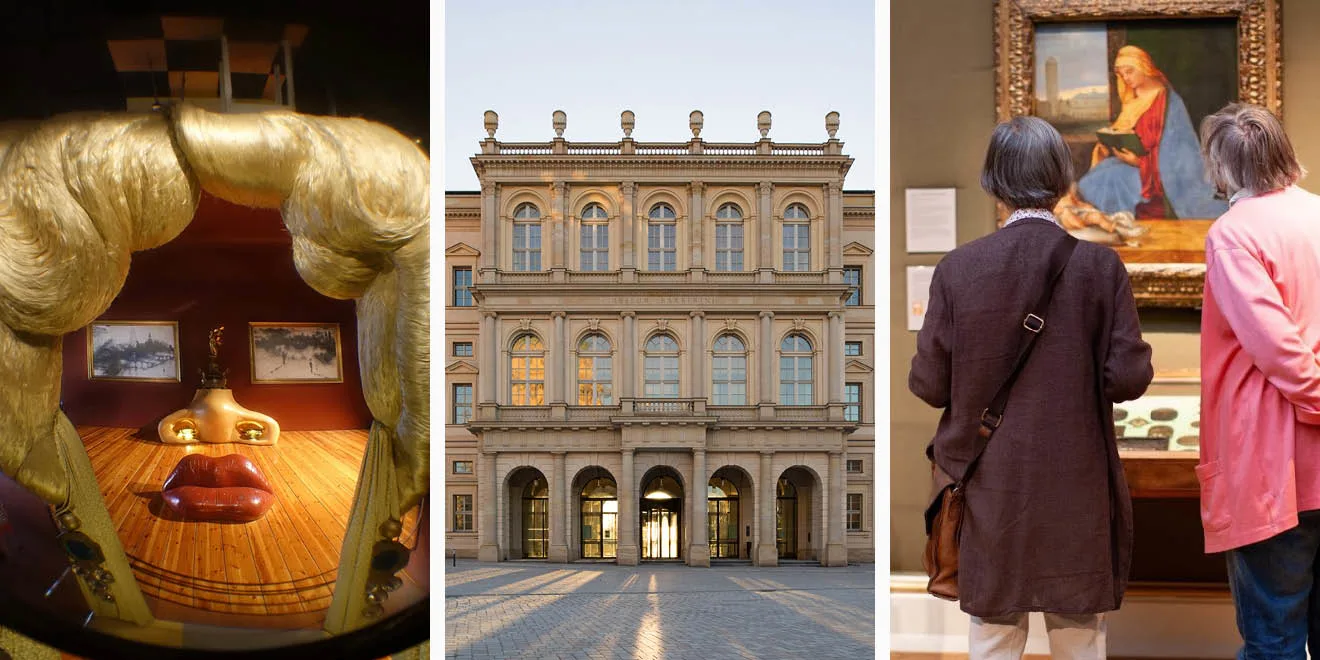
The Dalí Theatre-Museum in Figueres, the artist’s birthplace in Costa Brava, its name Catalan for “fig trees”, is a work of art in its own right. Dalí himself designed it to the last detail, to immerse others in the strange stew of his speculative thinking. From the outside, it’s as if you’re approaching one of his fever-dream paintings: Red walls reminiscent of a medieval castle are adorned by replica bread rolls. The roof is crowned by giant egg sculptures, flanked by a glass geodesic dome. Inside, rooms of paintings and sculptures chart the artist’s development, and include monumental installations. An upside-down boat, drooping scores of cobalt blue, resin-coated condoms, is suspended high above Dali’s 1941 Cadillac (put a coin in a slot and it starts to rain inside). The museum incorporates the ruins of the city’s municipal theatre; Dalí is buried under the stage.
Museum Barberini
In Potsdam, near Berlin, Germany
A short train ride from Berlin, Potsdam—a royal Baroque city—was once a destination largely for its parks and palaces, especially Sanssouci Palace, the sumptuous summer getaway of the 18th-century Prussian king Frederic the Great. Since 2017, the Museum Barberini has been more reason to visit: Frederic’s grand townhouse on the old market square, reconstructed by billionaire Hasso Plattner, is now a home for his magnificent collection of modern art. French Impressionism is the focus, including 34 wonderful Monets, and the art movement serves as a jumping off point for some of other temporary exhibitions. The current show “Impressionism in Russia: Dawn of the Avant-Garde” connects Paris’s painters with those of Moscow and St Petersburg, and an intriguing survey explores how photography, then in its infancy, was informed by Impressionism.
The Ashmolean
In Oxford, near London, UK
Art and archaeology come together in Oxford’s Ashmolean, which is Britain’s oldest public museum. It opened its doors in 1683, after Elias Ashmole donated his superb natural history collection to the university, before the museum morphed over the centuries into a treasure trove of antiquities and art objects, spanning Greek pottery and Pre-Raphaelite paintings. It combines something of London’s best museums under one roof, a fascinating place to explore on a day trip from the capital, with its imposing façade giving way to elegant internal architecture. The Ashmolean also offers a superb temporary exhibition programme with an international outlook. It takes Tokyo for its subject in a current five-star show, which ranges from Hokusai to contemporary Japanese photography, and in February the museum spotlights Pissarro, the elder statesman of French Impressionism.