Over the past decade, travelers have been seeking out destinations customized to their personal interests. Intrepid travelers opt for destinations where they can engage in familiar active and outdoor pursuits, like hiking, scuba diving, surfing or skiing, while a crop of new-age wellness travelers are looking to remote eco lodges, luxurious wellness resorts or med spas for restorative resets. The ubiquity of sustainable eco lodges and upscale wilderness retreats around the world is evidence of the wellness trends that have come to define today’s cultural zeitgeist. While equestrian tourism has quietly emerged as a subset of this larger trend, it isn’t limited to travelers with a specific set of interests; it harbors a more global, cultural and even unifying appeal for those travelers in search of greener pastures.
There is a predictability and intrinsic feeling of both comfort and control when booking trips aligned with one’s personal interests that can inhibit a traveler from truly experiencing a new place, thus undermining the very reason we travel. Horseback riding holidays, however, are drawing the curious travelers looking for something new and unfamiliar that would provide them access to uncharted territories. Exploring a new destination on horseback affords access to corners of the world that may have otherwise remained off limits, offering unfiltered access to hard-to-reach places and an entry point into new cultures. In many of these cultures, horses are not just a recreation or sport, but a way of life, impacting the ways in which its members live, work, eat and interact with the land.
Many travelers today are looking to horseback riding holidays to fulfill their craving for immersive experiences that provide insight into new worlds and incite deeper connections to the places they visit, like at a working ranch in Wyoming that hosts week-long pack trips to explore the red rocks and deep canyons of the American west on horseback or on a horse safari in southern Spain where frequent breaks for local tapas are apart of the program, or even listening to old folklore from Argentinian gauchos, the real cowboys of the Pampas and the Andes. Travelers are discovering the awe-induced joy that comes from traversing streams that lead to hidden valleys, indulging in farm-to-table picnics in a sweeping field of wildflowers and trekking through rural villages brimming with their own sets of traditions, before finally ending the day with a campfire under the stars– surely, an experience like this is only possible on horseback.
Posting Through The Sierra Morena
George Scott, The Sierra Morena, Andalucia, Spain
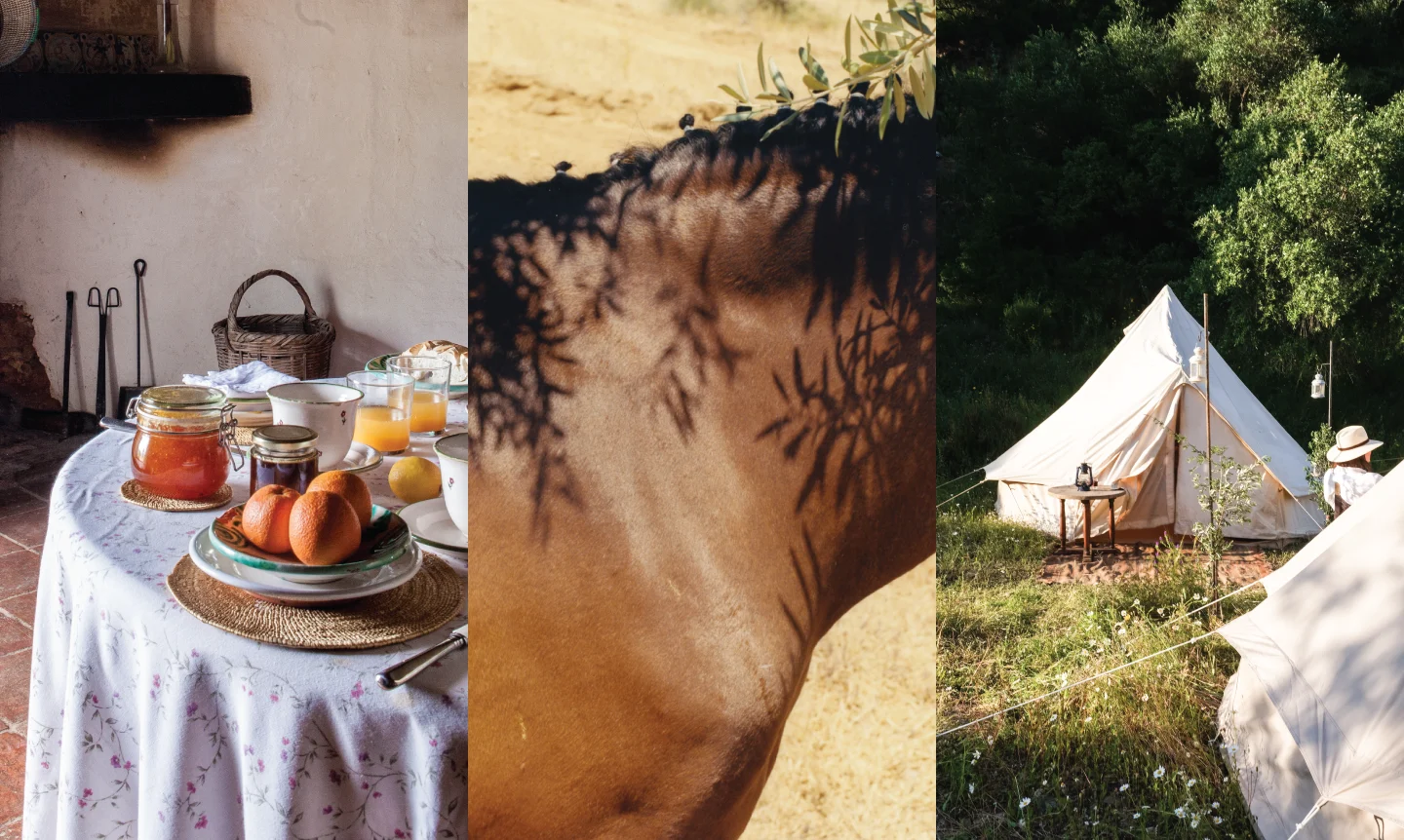
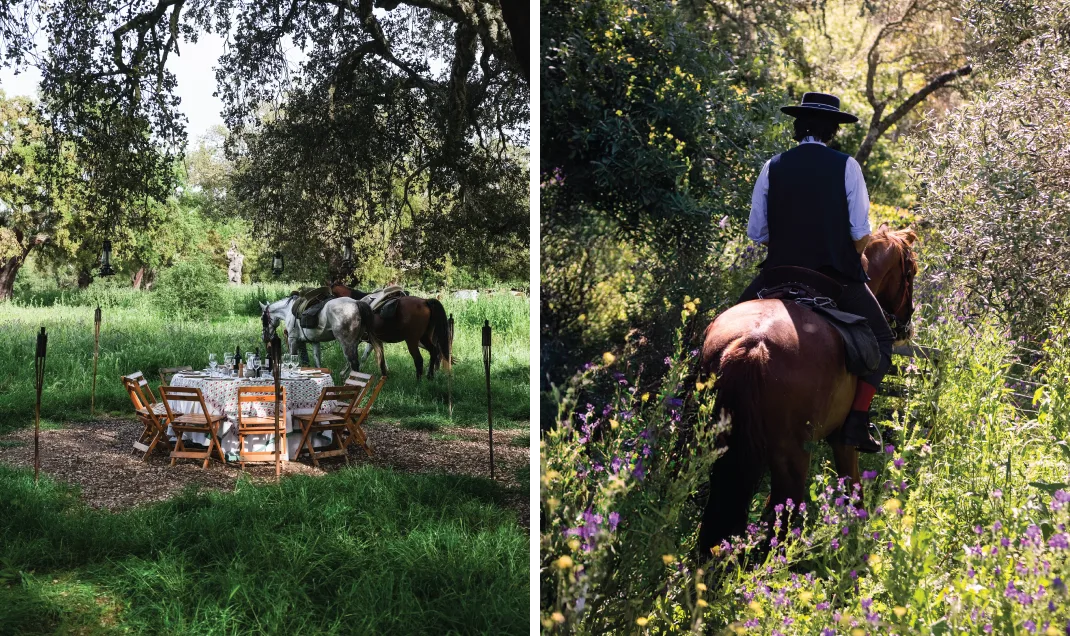
The rugged and untapped mountain range of The Sierra Morena in northern Andalucia feels far removed from southern Spain’s glitzy coastlines and burgeoning cities, yet it possesses some of the most breathtaking landscapes in the country. There is no one better to guide the way through this unique Spanish countryside than Seville-born George Scott, who grew up high in the Sierra Mountains at his family finca turned guest house hotel, Trasierra. A natural rider since he was a child, George grew up exploring the hills of the Sierra Morena on horseback, accessing inaccessible places, learning the folklore from locals and uncovering all of its beautiful corners with a childlike sense of wonder that he continues to possess today. Sharing his passion and curiosity through the experiences he creates on his three to five day riding safaris, where travelers become immersed in authentic Spanish country life as they traverse backcountry trails, like old cattle-driving routes and bridle paths carefully selected by George, revealing hidden corners of Spain that few get to discover. Daily rides last five-hours with frequent breaks to indulge in local tapas while overlooking a valley, lazy picnic lunches in an open field brimming with wildflowers and romantic candle-lit dinners before settling into fairytale accommodations at which travelers will sleep under a canopy of stars Rajasthani-inspired tented camp or at at a bucolic 16th-century farmhouse. While the land speaks for itself, George is among those whose thoughtful execution in creating celluloid moments at every turn only elevates the equine experience in a way that reflects the culture and authentic spirit of the region.
The Gardian Way
Les Bains Gardians, La Camargue, France
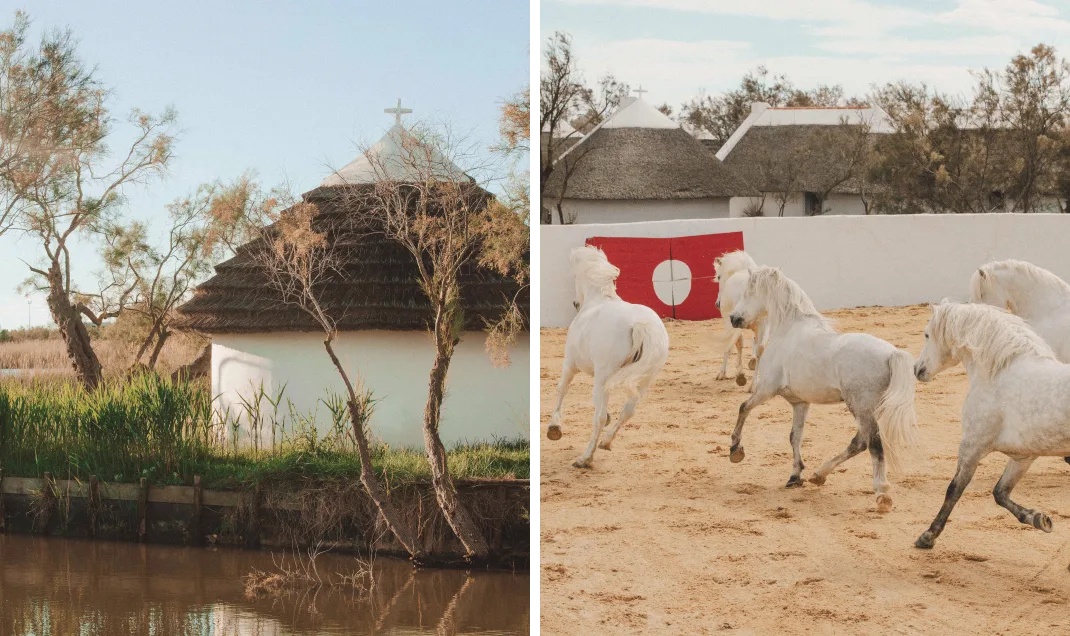
Located just south of Arles, La Camargue is a unique natural region bordering the Mediterranean Sea and the two arms of the Rhône delta, forming the largest wetland in France. Camargue Regional Natural Park comprises over 320 square miles across the communes of Arles and Saintes Maries de la Mer. The region has preserved a unique and important cultural identity that’s become characterized by its wild white horses, black bulls and pink flamingos. Camargue cattle and white horses grazing the marshlands and roaming across the delta in a “manade“, or a semi-feral group led by a gardian, known as the ‘Camargue cowboy’, has been a common sight here since the 16th century when these local herdsman used the horses to monitor herds of Camargue bulls. The Camargue is host to various festivals and events throughout the year in celebration of the traditions that reflect the spirit of the region, like the Transhumance Festival, where twice a year, people gather to celebrate the sheep and bull herds traversing the lands to change pastures with parades and local festivities, as well as La Course Camarguaise, the famous Camargue bull races. Given the marshy landscape, La Camargue is a biosphere best explored, unsurprisingly, on horseback as it grants access to the region’s wildest and most remote corners. At Les Bains Gardians, a new boutique hotel and equestrian stay that opened in June 2024 in the heart of Camargue regional park, guests are encouraged to embrace the Camargue way of life, as 48 of the 67 sleeping quarters occupy traditional gardian huts, emblematic of the region. The property features horse stables, a small performance arena, and offers equestrian experiences led by local gardians for riders of all levels. Trail rides will weave through this unique biosphere’s marshes, lagoons and beaches, passing the rice paddies and pink lakes of the salt flats that enhance La Camargue’s otherworldly appeal. To complete the experience, guests can book the sunset gourmande option which includes a beach picnic with champagne and local products from the region, like local sausage and Terrine de Taureau Camargue.
Exploring the American Wild West
The Paintrock Canyon Ranch, in northern Wyoming, USA
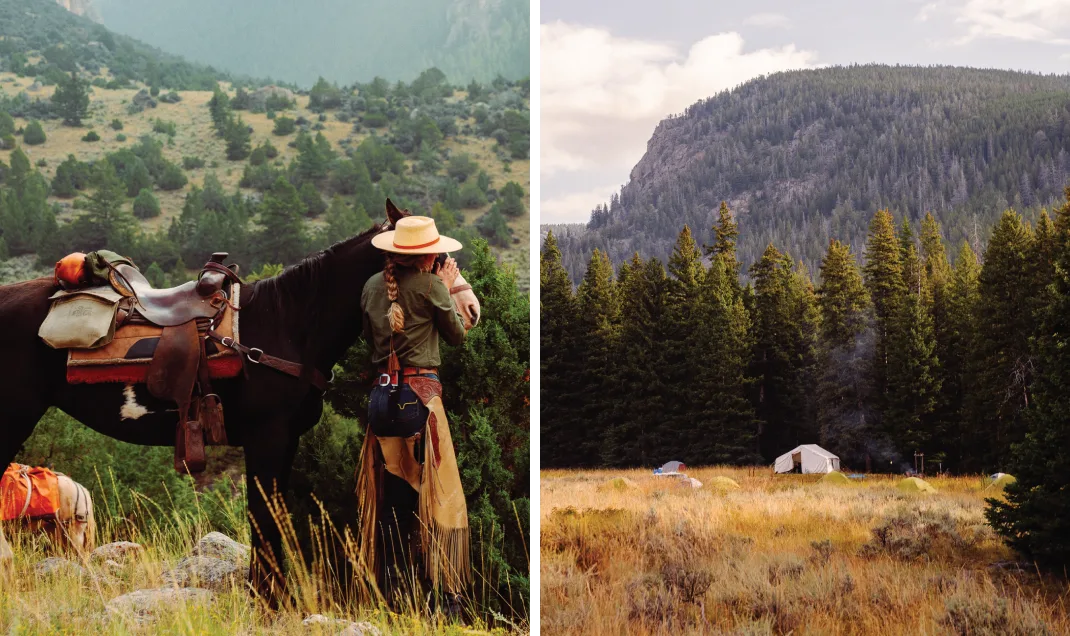
The United States is packed with traditional hotels, like Lone Mountain Ranch in Big Sky, Montana offering an introductory approach to equestrian tourism in the American West with a multitude of equine activities adapted to all skill levels. Alternatively, there are a few family-run ranches across the American West offering equestrian stays and programs for travelers seeking a grittier and more intimate equestrian experience, like Ranchlands, a 25-year-old family ranching business that owns and manages ranches across the American West, most notably Zapata Ranch and Chico Basin Ranch in Colorado. Ranchlands stays and experiences are designed to immerse travelers in hidden corners within the unique landscapes of the American West, inspiring a deeper connection with the area, while giving them profound insights into ranching. This year, Ranchlands opened Paintrock Canyon Ranch located at the western base of the Bighorn Mountains in Wyoming, which the family had acquired in 2021. The property extends across 80,000 acres towards the highest peak in the range, Cloud Peak, which is characterized by creeks, springs, meadows, and canyon walls reaching thousands of feet above,” explains Tess Leach, co-owner of Ranchlands. “The terrain changes from deep orange and burgundy sandstone hills to monolithic rock formations to high mountain meadows, pine forests, and lakes,” she muses. The landscape is made up of various ecosystems best explored on horseback, from red rock walls that tower above the deep canyons that descend towards roaring rivers and open green fields and high mountain meadows full of wildflowers to canter through. Travelers of all levels have the option to book a Ranch Vacation, which includes five nights on the ranch and four days of riding through the hills, exploring red rock formations on horseback or hiking up Lumen Canyon to see ancient pictographs, as well as days spent afternoon fly fishing. “The Paintrock Canyon starts at the ranch headquarters and meanders for eight miles. At the bottom of the canyon is Paintrock Creek, widely known to be one of the best trout fisheries in the region, where wildlife is aplenty– bobcat, elk, mule and whitetail deer, pronghorn and bears all roam freely,” Tess muses. Pack Trips are an alternative option offered to riders intermediate and above, which is a seven-night backcountry ride on horseback, beginning creekside in canvas wall tents that combine home comforts before riding into the 80,000 acre backyard towards Mountain Camp at the foot of Cloud Peak for days of cold plunging in high mountain lakes and streams, exploring the various trails on horseback, with evenings spent fireside. Meals are cooked over the fire with meat from the ranch, produce from the farmers in the Bighorn Basin and cheese from the dairy next door. Curated Workshops also give guests an opportunity to nurture creativity and connection to the land through a variety of options, such as poetry, photography and painting, with each day ending with a ride across the ranch. “Our stays are inspired by the last 25 years of hosting guests on the Chico and Zapata Ranches,” says Tess, “We have taken the best of both and combined them in an entirely new experience that immerses guests in nature and ranching, without foregoing the top-level hospitality that we are known for.”
Galloping With Gauchos
Estancia Los Potreros, Argentina (Córdoba province); Estancia Don Joaquin, Argentina (Corrientes province); Estancia El Cóndor, Argentina (Santa Cruz province in Patagonia Sur)
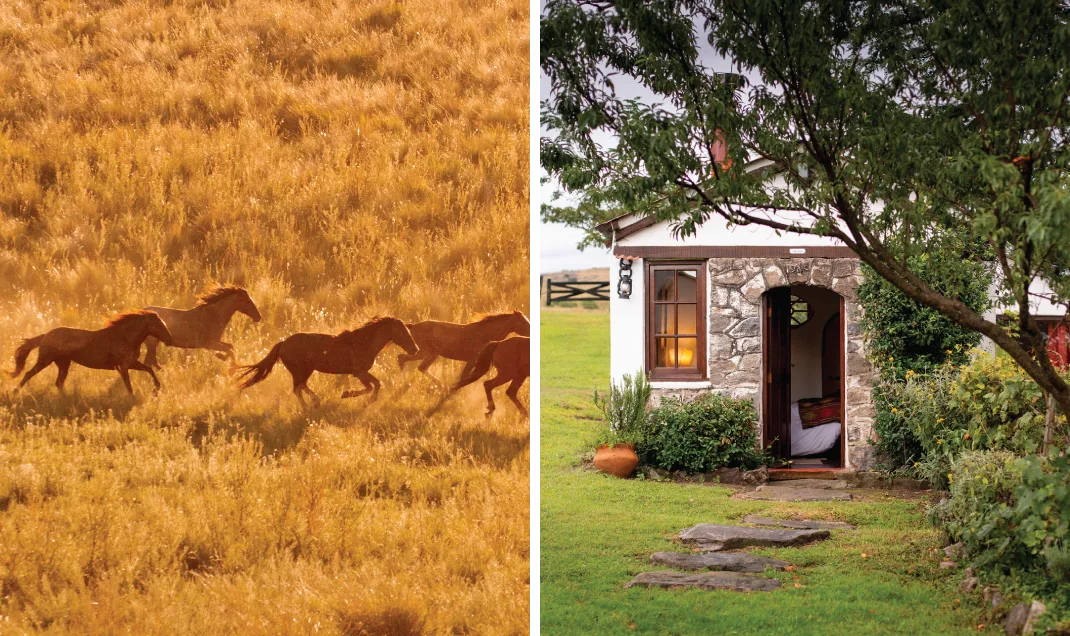
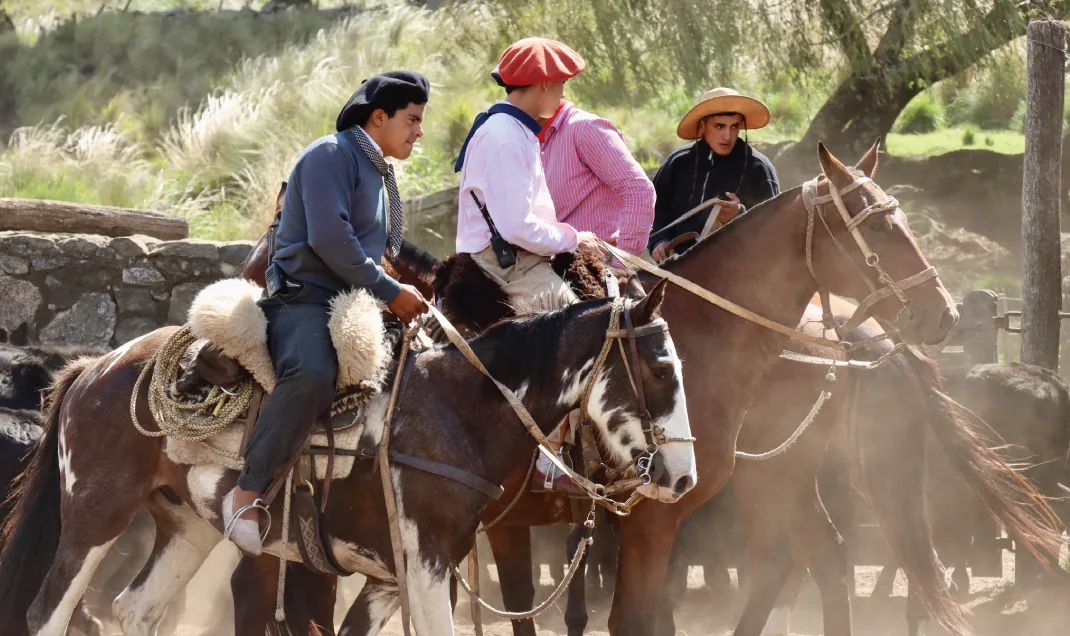
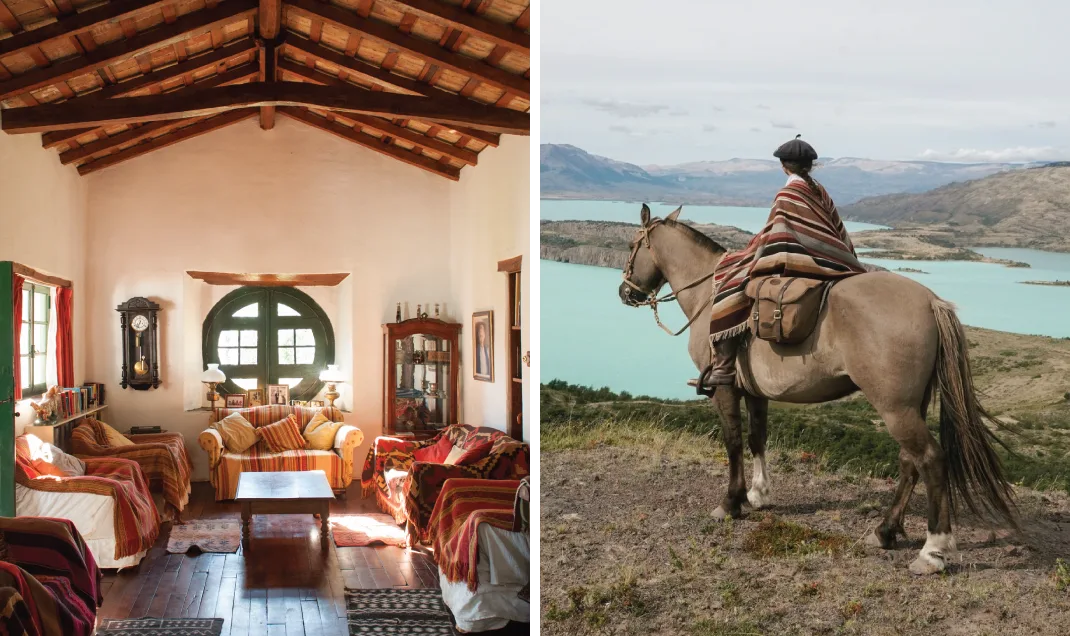
Gaucho folklore has made traveling horseback in Argentina somewhat of a rite of passage when visiting the country. Gauchos, with their relaxed riding style (one-handed with loose reins) remain the ultimate cowboys; an equestrian way of life is second nature. Today, there are many family-run estancias across the country’s various regions offering horseback experiences for travelers to ride like a gaucho on a variety of landscapes and terrain. In the Córdoba province in central Argentina, situated within the pampas grasslands and the Sierras de Córdoba foothills, Estancia Los Potreros is a traditional working family ranch where guests can ride alongside gauchos to help them achieve their daily tasks, partaking in gaucho games, such as ‘sortija’ or polo lessons, as well as trail riding, which is customized to match each person’s skill levels. The Córdoba province features some of the most varied terrains across Argentina, so in a single ride, travelers will ascend rocky outcrops opening to sprawling hillsides, hidden valleys with secret waterfalls and swimming holes, as well as visiting neighboring villages for a glimpse into rural life. Meanwhile, Corrientes is a subtropical province known for its Iberá wetlands. The lagoons, wetlands and rivers that surround Estancia Don Joaquin, a family-run working farm, provide a richly diverse natural setting for travelers to explore on horseback– from beginner level rides, to seven-day horse riding treks in which intermediate to advanced riders will get a deeper glimpse into the second largest wetland in the world. Long days spent on the saddle will immerse riders into the local culture of the wetlands where they’ll observe as gauchos ride by them accomplishing daily chores as their children ride to school. Passing through the lowlands of the pampas that open to scenic lagoons, riders will benefit from a stunning array of landscapes before settling into evenings at rustic estancias and lodges for evenings of traditional food and wine tastings. Estancia El Cóndor in the Santa Cruz province is a remote stay located at the foot of the Andes in southern Patagonia for those seeking an off-the-grid experience. A local guide will assemble a daily schedule based on the expected weather that week, in which travelers will ascend through beech forests, traverse rivers and lakes and trek through the grasslands on horseback, with the option of longer outings to Lake Corazón, The Condoreras and the Ancla Peninsula. After long days out on the trails, evenings will end with delicious home-cooked asados by the wood fireplace.
Traversing the Silk Road
Alexandra Tolstoy Travel, Kyrgyzstan
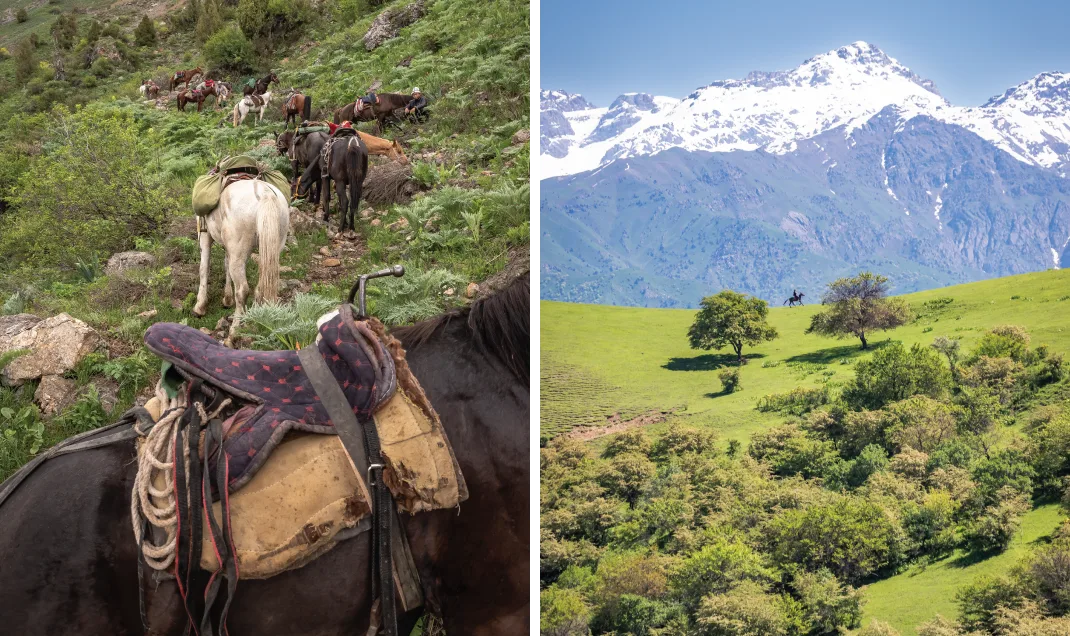
It was after her nine-month adventure traversing 5,000 miles on the Silk Road on horse and camel, from Merv in Turkmenistan to Xian in China in the 1990’s, that fueled adventurer, broadcaster and relative of the great Russian author, Leo Tolstoy, Alexandra Tolstoy’s deep passion for this unique form of intrepid equestrian tourism. In the years that followed, she’d explore Mongolia, Siberia, Russia and other mountainous regions within Central Asia by horse, presenting a documentary series on communities that revolve around horses, as well as publishing a book on her travels, until Tolstoy began leading her own horse riding holidays in Kyrgyzstan, where she could share her passion first-hand with other adventurous and curious travelers. Today, she organizes three horse riding journeys through Kyrgyzstan’s Tien Shan, or ‘Heavenly’ Mountains each year, along with custom-made private trips. “Kyrgyzstan is a mountainous and most importantly a nomadic country,” Tolstoy explains. “The incredible landscapes are inaccessible without a horse but you also live alongside the people which is the most extraordinary experience.” On these 10-day immersive trips in the wild, travelers will ride over dramatic mountain passes, through ancient walnut forests and across wildflower-strewn valleys flanked by alpine lakes. By employing local shepherds as her guides, Tolstoy is able to gain access to this incredibly rich culture. “We enjoy unparalleled access to the local nomadic community, which still lives as it has for the last hundreds of years,” muses Tolstoy. “We visit their yurts, watch them play goat polo, or ulak, and truly experience another culture– something that is unfortunately rare in travel today.”