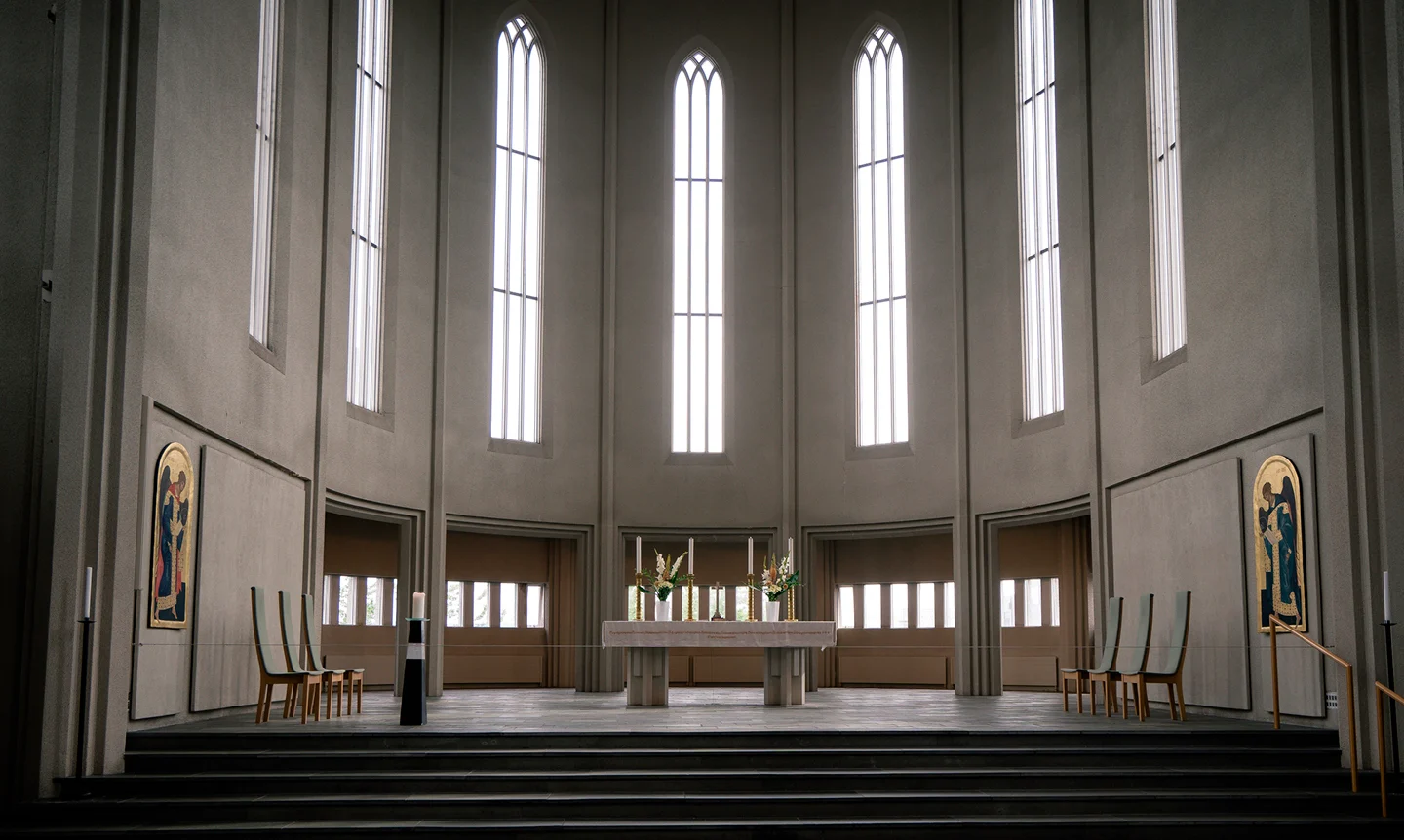
Nordic architecture is often described as warm, quiet, and spiritual — so it is no wonder, then, that some of its best examples are churches. Scandinavia has its share of imposing stone cathedrals, but it is the smaller parish churches where the form is perfected. Because it is a precious commodity, light plays an important part in these luminous structures, adding to the spiritual nature of these houses of worship. Below are eight exemplars of the Nordic church, all from the golden period of the mid 20th century.
The Woodland Chapel, Stockholm
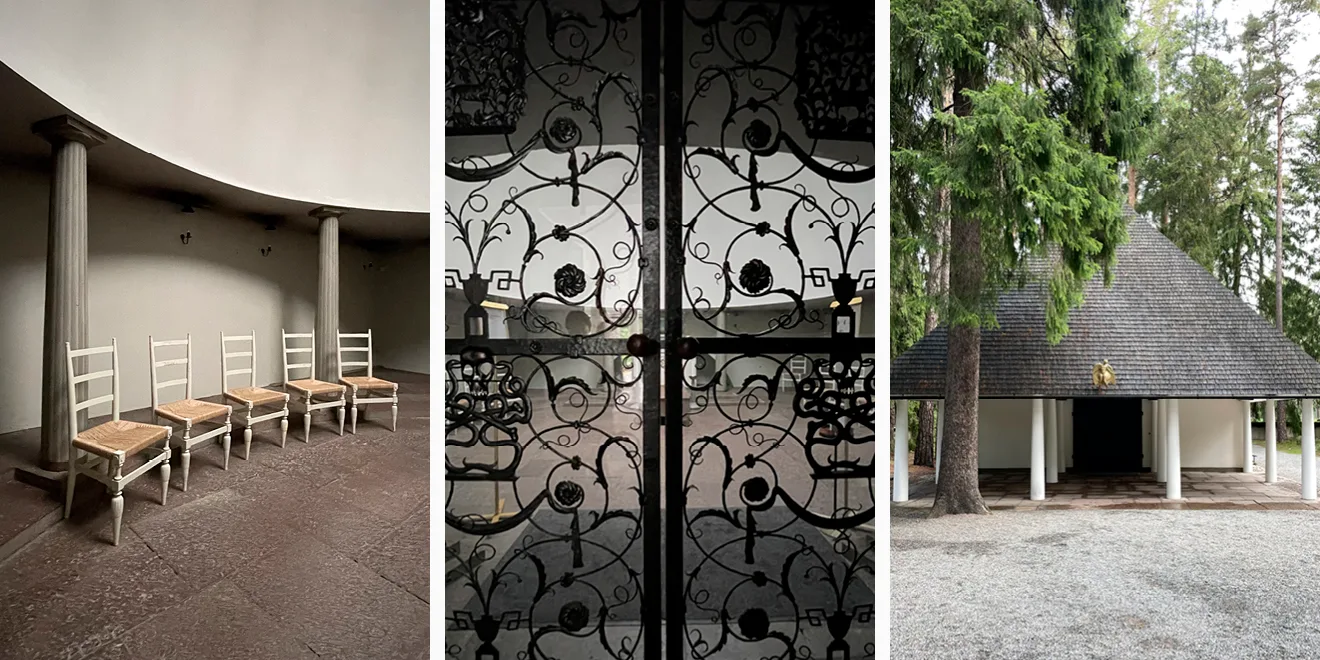
Diminutive in size, the Woodland Chapel has had an outsized importance in the development of 20th-century Nordic architecture. In 1915 the architects Gunnar Asplund and Sigurd Lewerentz won the competition for a new cemetery for the city of Stockholm. The design and construction took over 25 years, with the Woodland Chapel, designed by Asplund, being the first structure on the site. Highly influenced by 19th-century Swedish country churches, Asplund envisioned a small but powerful space surrounded by trees. Once inside, the only light source is a round cupola, with the seating arranged in the round. Although it was built mainly for funeral services (note the skull-shaped keyhole on the gate), the chapel is also used by the Swedish royal family for baptisms.
Grundtvig's Church, Copenhagen
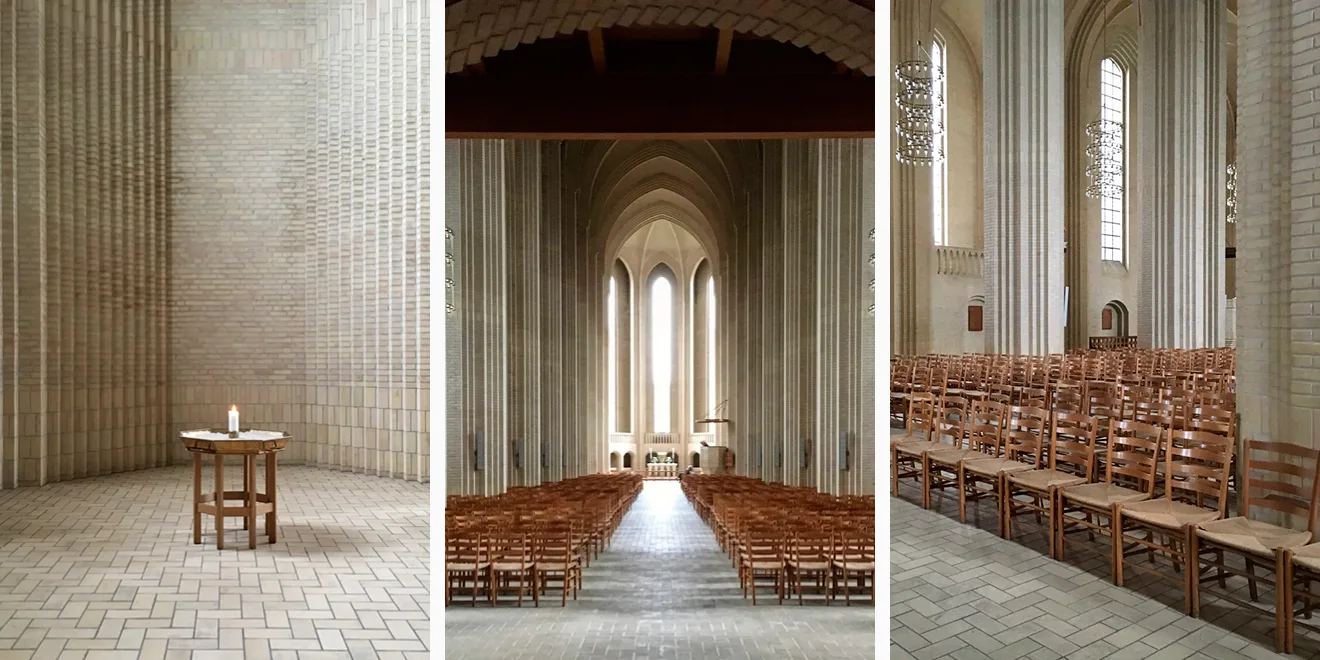
Although it is massive in form — taking a similar shape as a Gothic cathedral — Grundtvig’s Church used only the humble brick as its sole building material; six million bricks, to be exact. The design by the Danish Peder Jensen-Klint was the winner of a competition to design a church in honor of an important 19th-century author and pastor, Nikolaj Grundtvig. Grundtvig’s writings emphasized the strength of the common man, hence Jensen-Klint’s inspiration to use the common brick. The resulting structure is both humble and monumental, a Gothic cathedral stripped of its excess decorations to reveal a powerful and spiritual form.
The Chapels of Hope, Faith, and Resurrection, Stockholm
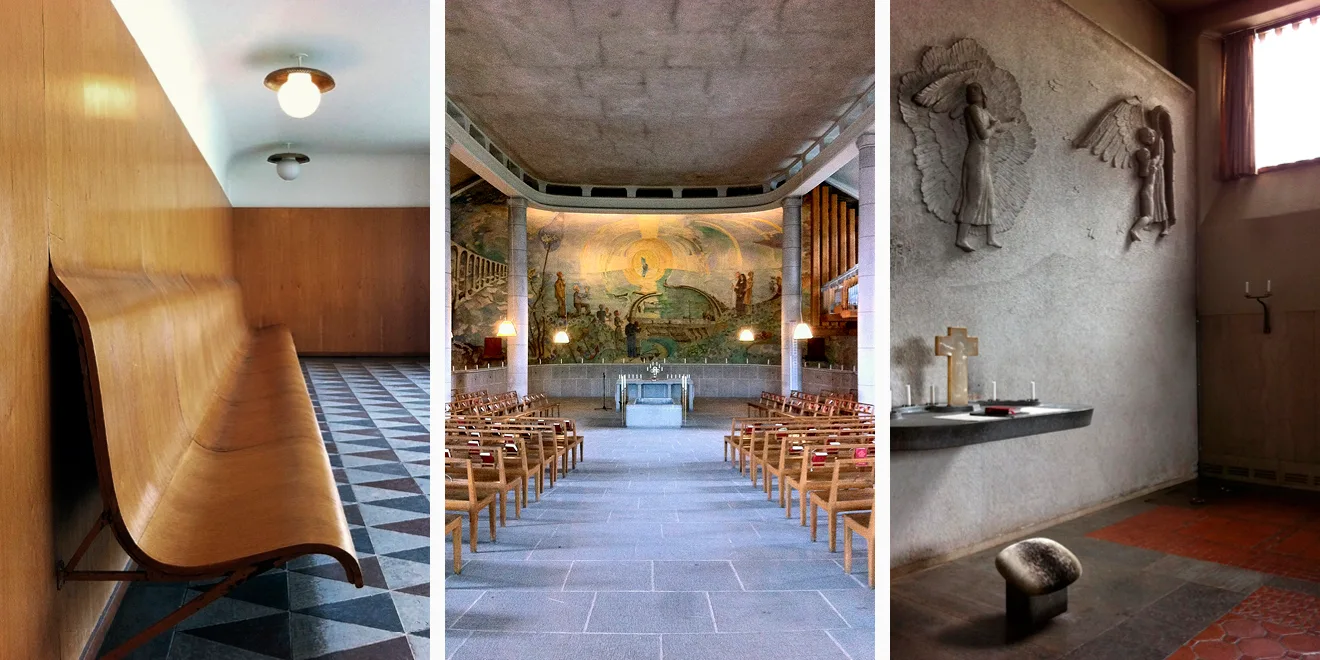
In addition to the Woodland Chapel (see above), Gunnar Asplund also designed three other chapels for the Woodland Cemetery in 1940 — this time in his unique version of the International Style. Stripped down in form, these connected buildings nonetheless have a warmth and humanity to them due to the use of wood, carved stone, and sensitive lighting. The Chapels of Hope and Faith are smaller in size, with generous and comfortable seating areas for guests right outside the chapels, while the Chapel of Resurrection is grander in scale, with a colorful mural depicting the cycle of life. The chapels, along with the rolling hills of the Woodland Cemetery, has been named a UNESCO Heritage Site.
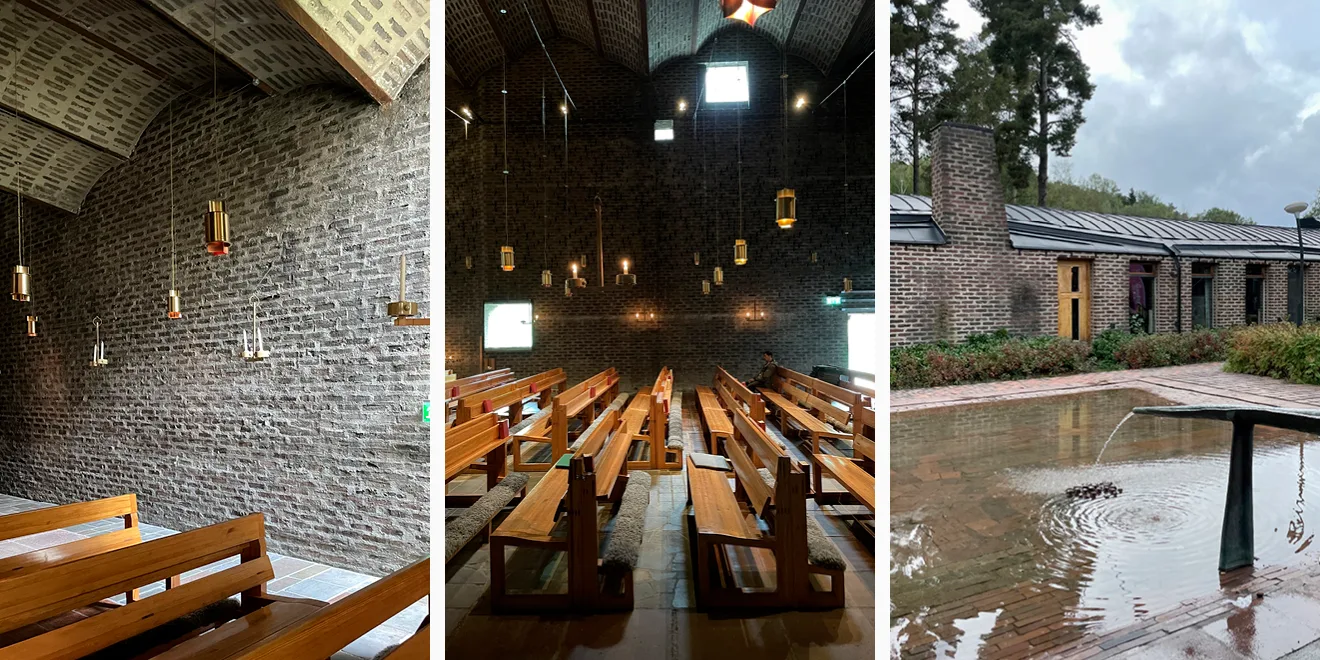
St. Mark’s Church, Stockholm
Located in a suburb of Stockholm, not far from the Woodland Cemetery (see above), Sigurd Lewerentz produced a masterpiece that in form and experience is very different than the chapels at the Woodland. Constructed mainly with a dark brick, St. Mark’s is a dark box punctured with a few windows to selectively let the sunlight in. Once your eyes adjust to the interior, the fine brickwork along with the custom lights and crafted wood seating reveal themselves. In addition, the sanctuary is surrounded by warm and bright meeting halls and offices to serve the community, along with a center water feature that visually and auditorily animate the complex.
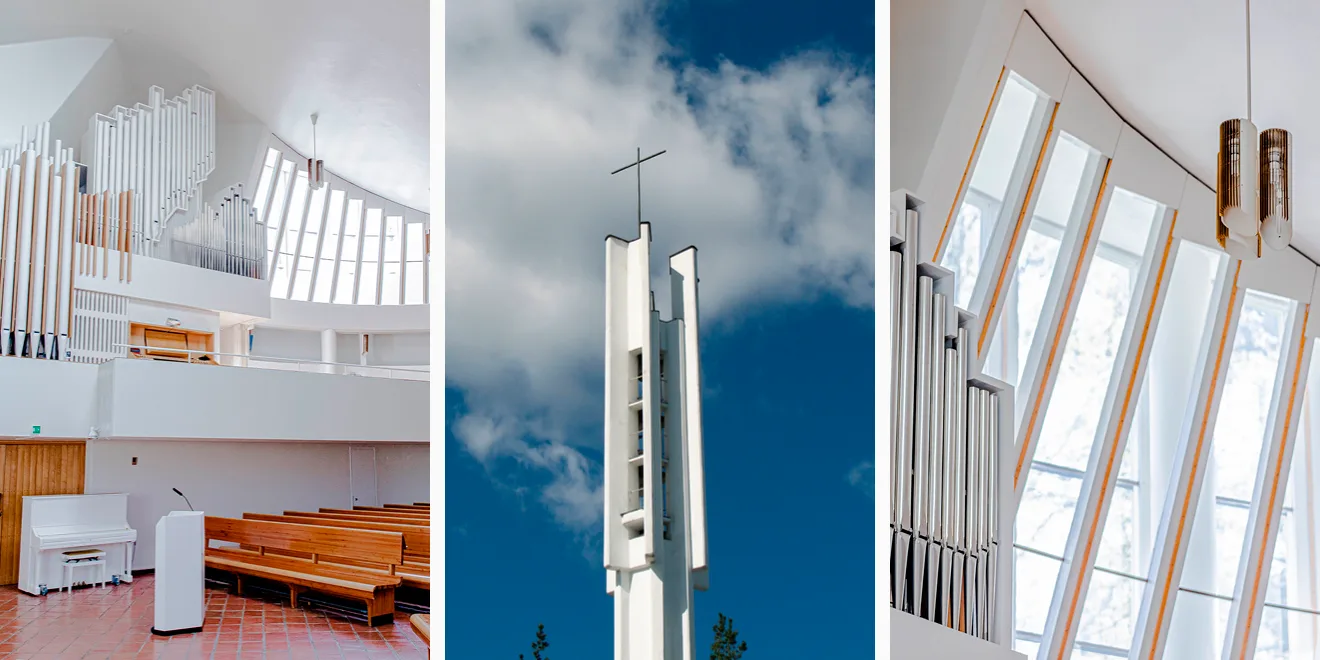
Church of the Three Crosses, Imatra
Alvar Aalto is perhaps Scandinania’s most famous architect, and he brought two of his signature design moves to the Church of the Three Crosses: flexibility and asymmetry. In wanting to create the most possible uses for a parish church, Aalto designed the interior as three spaces that can be connected or divided with movable partitions. When all open, the church can accommodate 800 worshipers; when subdivided during the weekdays for parish activities, each individual hall can seat around 300 participants. Because of the nature of this novel programming of the church, the tripartite composition of the plan takes on an asymmetry that blends the building into the surrounding trees, achieving Aalto’s overarching goal of harmonizing man with nature.
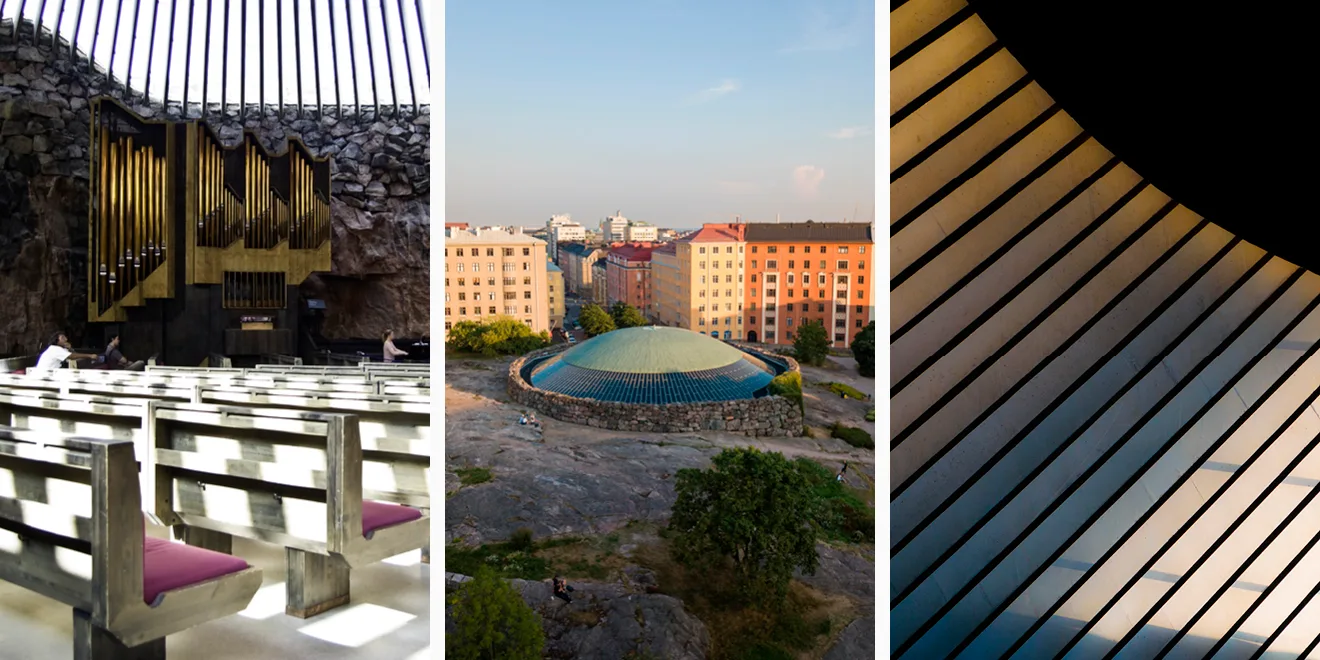
The Church of the Rock, Helsinki
At the heart of Helsinki is a large rock formation that has been landmark for centuries, and in 1965 a competition was held to turn the site into a monument. The architect brothers Timo and Tuomo Suomalainen won with a proposal to insert a chapel into the solid rock itself. The interior was excavated into a round space, and topped with a copper dome with skylights, creating an otherworldly atmosphere. It was noticed immediately by a Finnish conductor that the rough stone walls created the perfect acoustical space for concerts, and now the church hosts musical events as well as religious services.
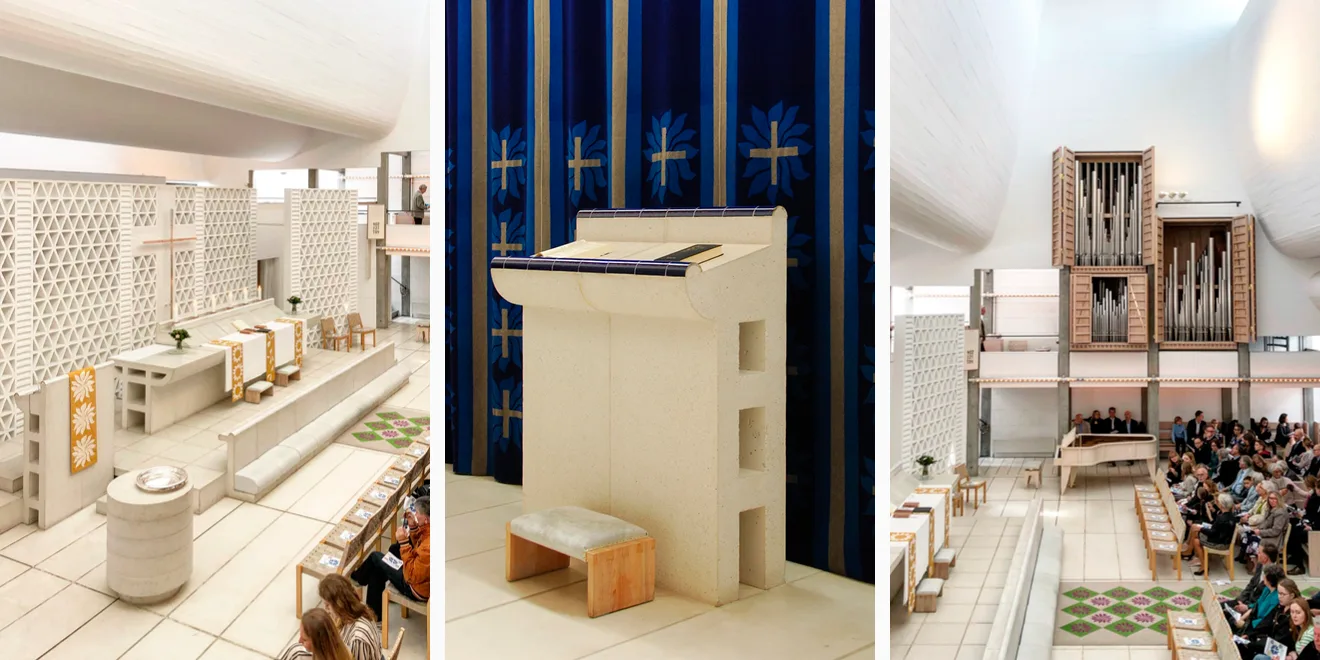
Bagsvaerd Church, Copenhagen
Most famous as the architect of the Sydney Opera House, Jorn Utzon designed the Bagsvaerd Church for a Copenhagen suburban congregation. Using his signature combination of rigid and organic geometric, Utzon shaped a curvaceous light scoop at the front of the church to bring in illumination to the altar and organ. Finished in white plaster and pale wood, the volume glows with even the faintest of daylight. As with all Nordic churches, attention is equally paid for the more humble spaces, such as the meeting rooms and dining hall at Bagsvaerd Church.