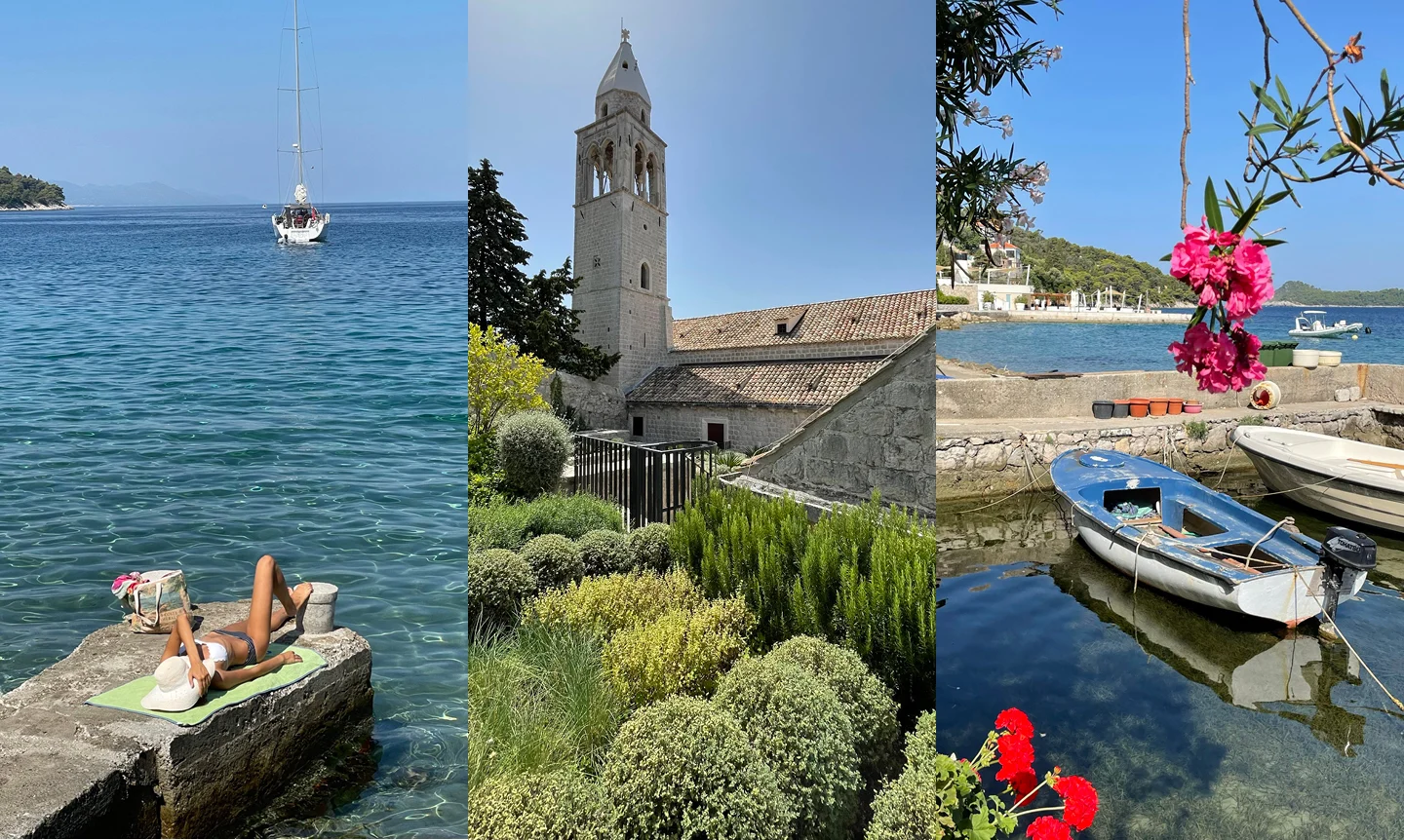
Just a few nautical miles off the coast of Dubrovnik, Croatia’s postcard familiar fortress city, a largely uninhabited little archipelago known as the Elaphiti Islands is just a short ferry ride out onto the Adriatic. These 13 little isles, 8 of them more substantial in size but only a few with any permanent dwellers, are becoming a little more known to those seeking a change of pace from the increasingly crowded Old City. But according to PRIOR Director of Membership Carlos Huber, one in particular—Lopud—invites a longer stay and a deeper dive. It offers a more insular and off the beaten path Croatian experience than simply staying in Dubrovnik.
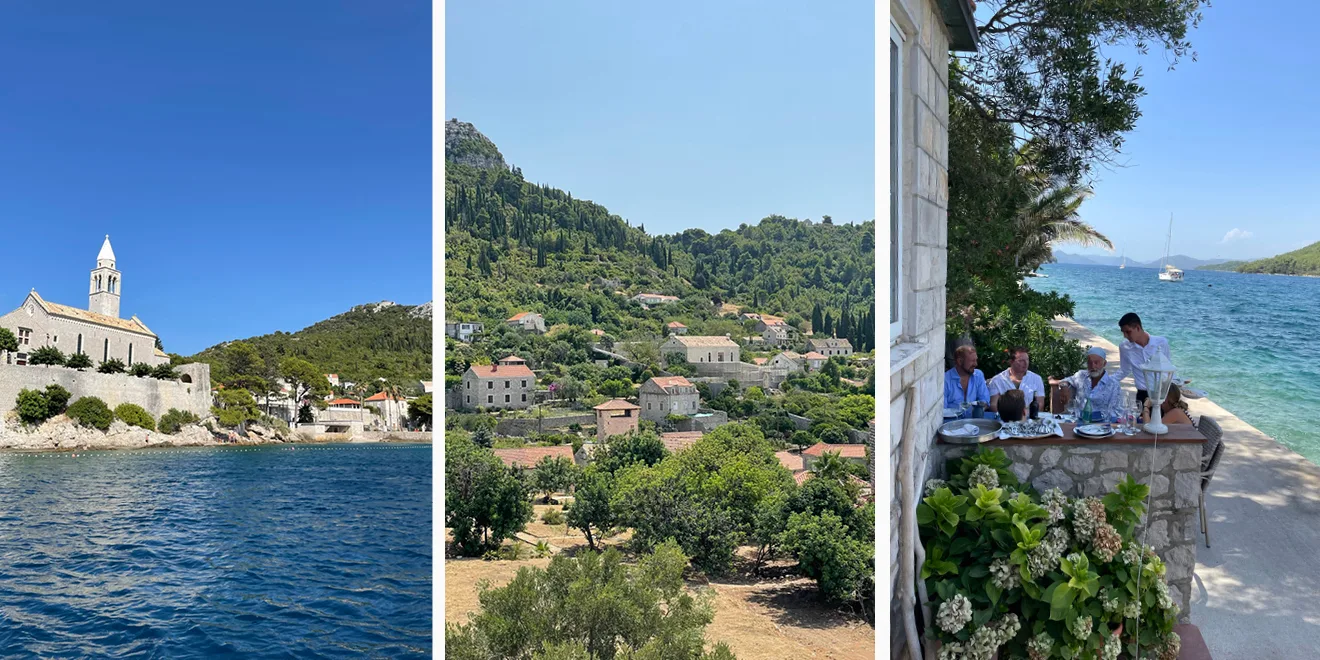
After boarding a boat from Dubrovnik’s Port Gruž, pass through smooth, aquamarine waters and watch as the signature deep green evergreens you’d recognize from the Mediterranean, as well as some stately stone buildings and harbors, come into closer view. This is Lopud, and according to Carlos, “You need at least 5 days to really get the place, to start meeting the savvy expats who have their houses there, and understand the little community.” You also will want to have a day to island hop to Šipan, a mere 20 minutes away by boat, and explore.
Huber recently stayed for a week (“We would have definitely stayed longer,” he says) and brought back with him a highlight reel of fresh seafood restaurants, private swimming coves, particular local wines, and 15th century monasteries and gardens to visit. Here’s his take on the place to stay, the best boats for getting around the island, and—of course—relaxing ways to spend your days.
Why These Islands in Croatia
“The water of the Adriatic is really beautiful. It's warmer than the Mediterranean in general as it’s sort of contained up there [between Croatia and Italy]. It’s very clean, with no jellyfish, and only sea urchins but nothing invasive, and it’s really a beautiful sea to explore and coast around. You know how sometimes you go sailing in Greece and certain places are notorious for winds that make boating a little rocky and intense? The Adriatic is more mellow.
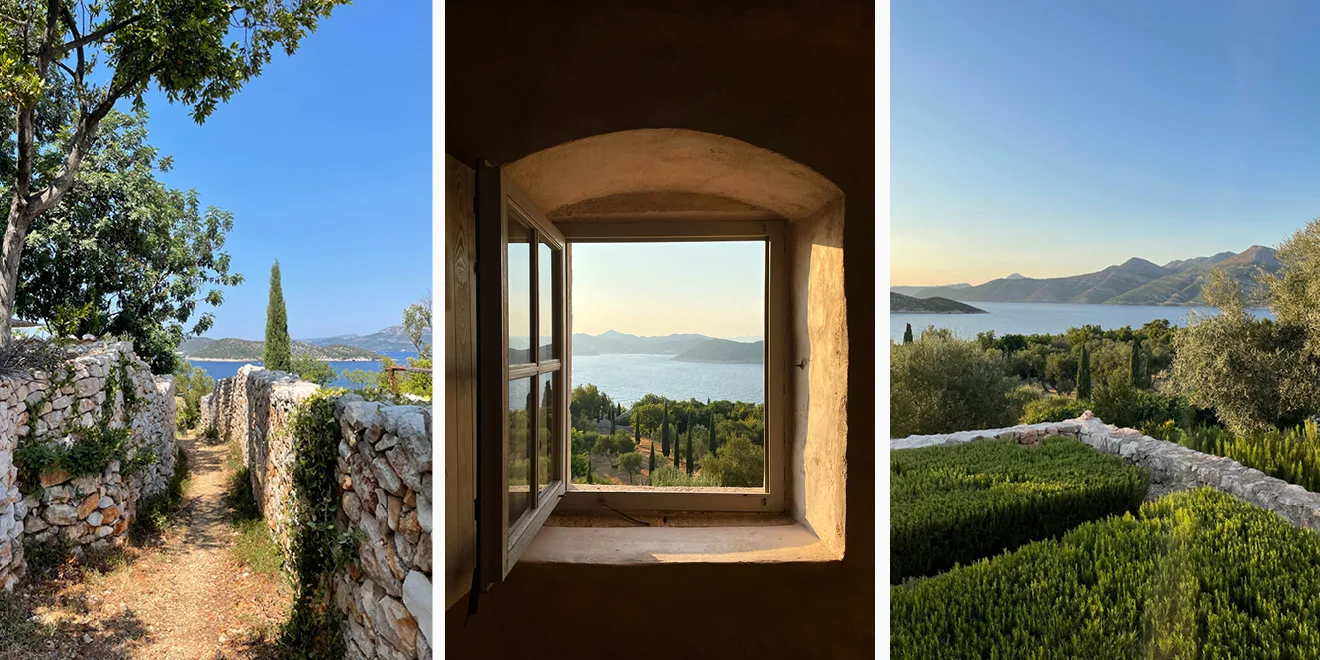
There are more than a thousand islands off Croatia, and so many are not explored. Even Lopud, where we stayed, has only one hotel, and Šipan, where we day tripped, doesn’t have any. Neither of these islands has any nightlife, thankfully—certain island ports like Hvar are known for nightlife and partying, but in comparison the islands of Lopud and Šipan are completely quiet and unspoiled.
Lopud and Šipan’s buildings were all built during the 15th and 16th centuries, and in fact, the local landmark commissions don’t allow for any new development unless it’s to restore an existing ruin or to build on old foundations. Not only is this wonderful for sustainable development, but it also means you’re in a time capsule of a place: The views and villages in this island have not changed in more than five hundred years. With this in mind, only a handful of extremely sophisticated expat architects, restorers, and landscape designers have restored stone houses, medieval towers, and old monasteries on the island. They’ve created a small community of aesthetes rediscovering a sort of haven, having identified something special in Lopud, a quiet beauty of idealized Renaissance landscapes frozen in time.
Influences from Italy, Greece, and the Balkans
“The architecture of Lopud, like that of Dubrovnik (the old Republic of Ragusa) is extremely influenced by Venice, Italy, especially. You see the similarities in the food today too—a lot of grilled fish of course, but Northern Italian cuisine has influenced it a lot recently, with risottos, shellfish, and more. The region also has a lot of grilled meats and Balkan-influenced food from nearby Bosnia and Herzegovina, which is heavy on sausages, lamb, and cold cuts.
Stay in a Converted Monastery
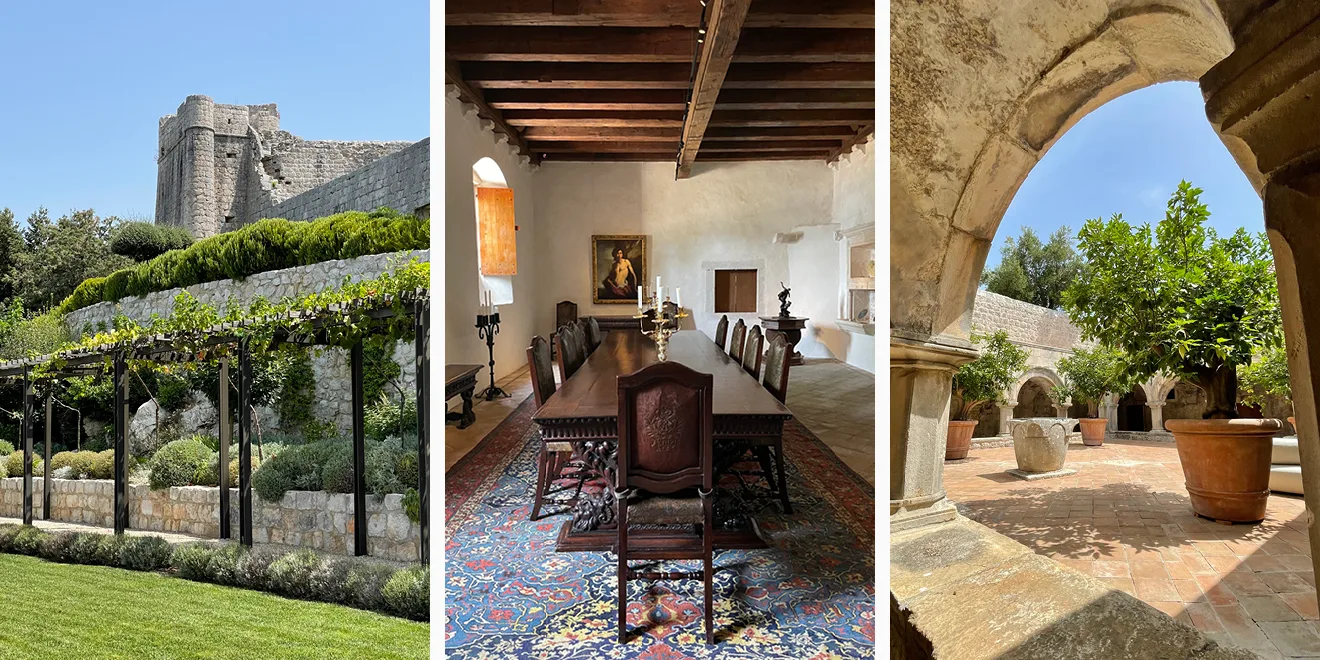
“At the northern end of the island of Lopid, right on the waterfront, there’s a restored Franciscan monastery and fortress which has been converted to a unique property called Lopud 1483. It has 5 suites, and you have to take the entire property when you’re there. The museum-level art throughout the property are part of the Thyssen-Bornemisza collection. There are incredible gardens and lounges everywhere where you can organize all kinds of activities, from evening aperitivo to yoga classes or open-air movies, and its closed-off location gives you private access to a walkway where you can jump into the water for a swim. There are so many places you can plan dinners or meals all over the property, like the monastery cloister, the lounge space above the fortress walls and the many terraces and gardens. The most amazing amenity is that the monastery also has its own speed boat that can take you around the island to discover hidden coves for swimming and diving for sea urchins, or to Šipan, another island nearby. Across the water in the mainland facing Lopud is a seaside town with a Renaissance garden called the Trsteno Arboretum. It’s an old, late 15th century garden that once belonged to a noble family. Really beautiful.