There’s a certain high that comes from a truly masterful night at opera, one that ought to be carried through with an exquisite meal after. These days, in some cities, it’s possible to achieve that without ever leaving the opera house, with theaters calling on outstanding chefs to serve modern tasting menus that make the restaurants destinations in and of themselves. We look at those opera houses that set the bar high culinarily, too, and also recommend a few restaurants that are nearby the world’s top performance spaces.
Royal Swedish Opera, Stockholm, Sweden
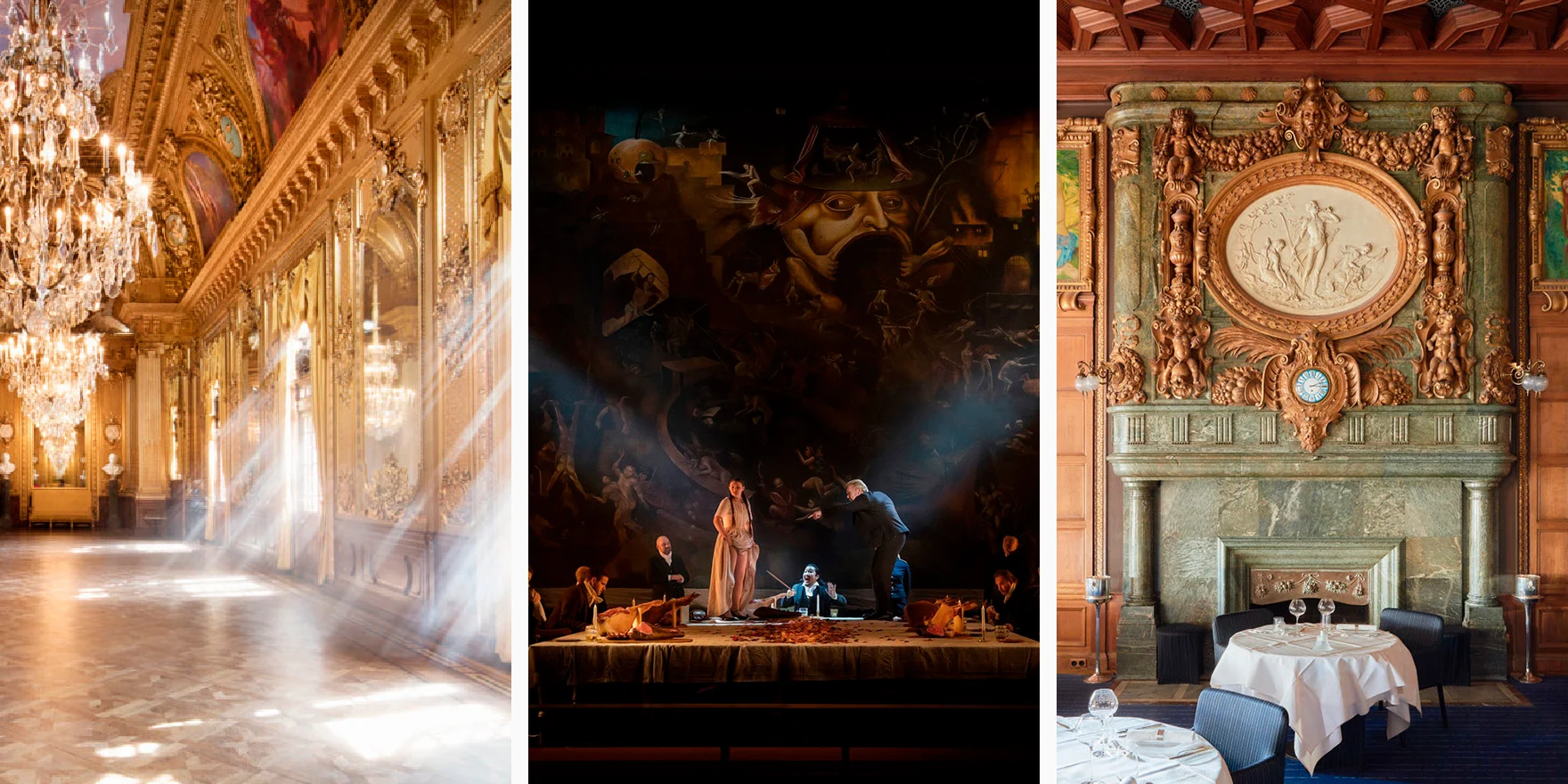
That Swedish royalty has had an interest in opera for hundreds of years will come as no surprise. Stockholm’s original opera house had its first performance in 1773. And has been knocked down and rebuilt or entirely renovated a number of times since. Today’s iteration is decadent in every way, from the neo-Baroque foyer, covered floor to ceiling in gold leaf, the grand marble staircase and the two-ton chandelier that hangs in the auditorium. Since its inception, there’s always been a restaurant in (what’s now called) the Royal Swedish Opera House. Originally, it was just a tavern in the basement with a staircase that led from the dressing rooms backstage down to the dining room. But today’s opera house restaurant, the Michelin-starred Operakällaren is above-ground, with one of the more beautiful rooms to dine—inlaid wood paneling, deep blue carpet, more chandeliers— in all of Europe. A recent addition, Viktor Westerlind is chef de cuisine here, proposing a menu that changes with the seasons, with exquisitely presented dishes like quail stuffed with girolles and tarragon with sweet corn purée or turbot with beurre blanc and squid, gooseberries and Osetra caviar. Its pastry selection is not to be skipped. Aside from the formal dining room, the Royal Swedish Opera also has the storied, century-old Art Nouveau Opera Bar, with a stunning curved wooden bar and ornate stained glass ceiling, with cocktails and a distinctly Swedish menu of pickled herring, steak tartare, and meatballs. Also of note, its subterranean Nobis wine cellar, the largest in Sweden, with over 2000 different wines, curated by wine director Jean-Paul Bénèzeth for 35 years.
Sydney Opera House, Sydney, Australia
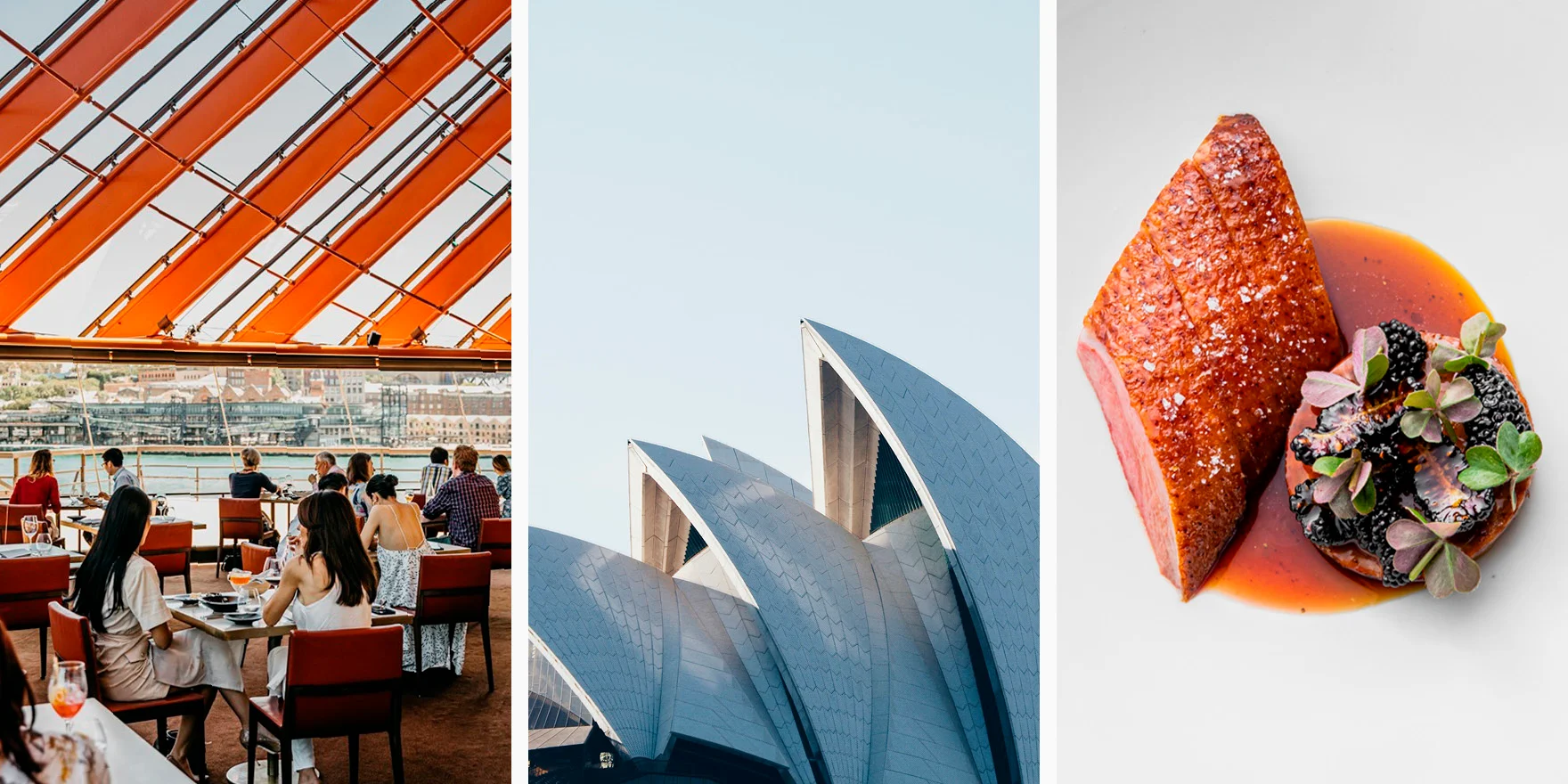
The bright white sails of the Sydney Opera House, as imagined by Danish architect Jørn Utzon, and clad in over a million shimmering tiles, represent the modern face of opera, one that has little to with baroque expectations. Few opera houses attract more than 10 million people annually, as Sydney’s does, and its roster of performances are often more boundary-pushing, as well, reflecting its contemporary design. Case in point: this season, it will present Madame Butterfly, as envisioned by Graeme Murphy and starring South Korea soprano Sae Kyung Rim, with a set that is largely digital. Also exceptional is the fact that the opera house was designed with several venues for dining – they range from the casual Opera Bar for cocktails and oysters overlooking the harbor to Opera Kitchen, an outdoor food hall, but the crown jewel is Bennelong (named for the point the opera house sits on), one of the top restaurants in Sydney. Here, the vaulted bones of the building’s architecture are left in plain sight, with brass lamps and mid-century furniture in the dining room. The menu comes by way of executive chef Peter Gilmore (of the vaunted Quay, also in Sydney), a celebrated champion of Australia’s native ingredients—plants like muntries, seafood such as mud crabs and Tasmanian lamb—who is often inspired by Japanese and Chinese influences that play a role in the country’s culinary identity.
The National Theater, Munich, Germany
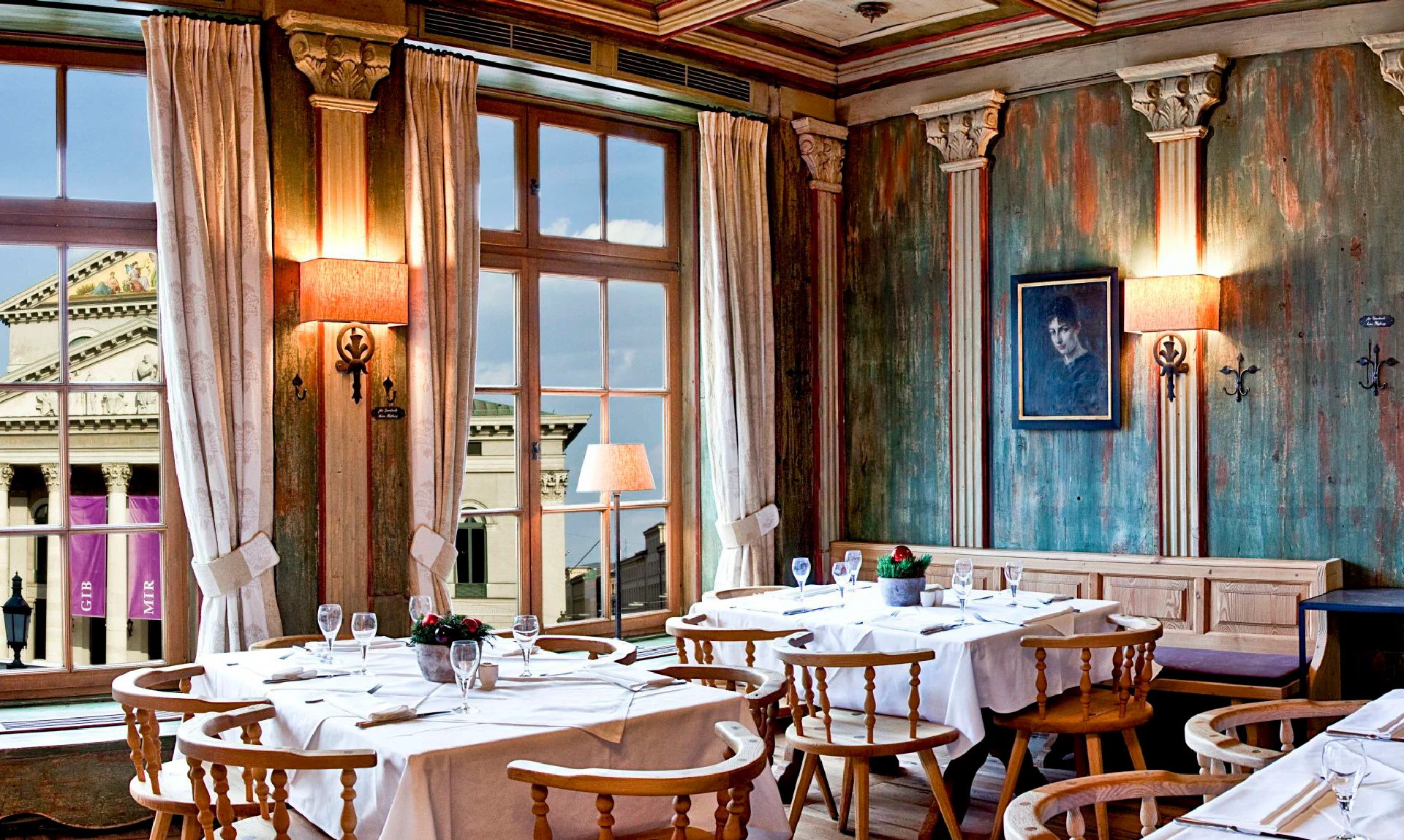
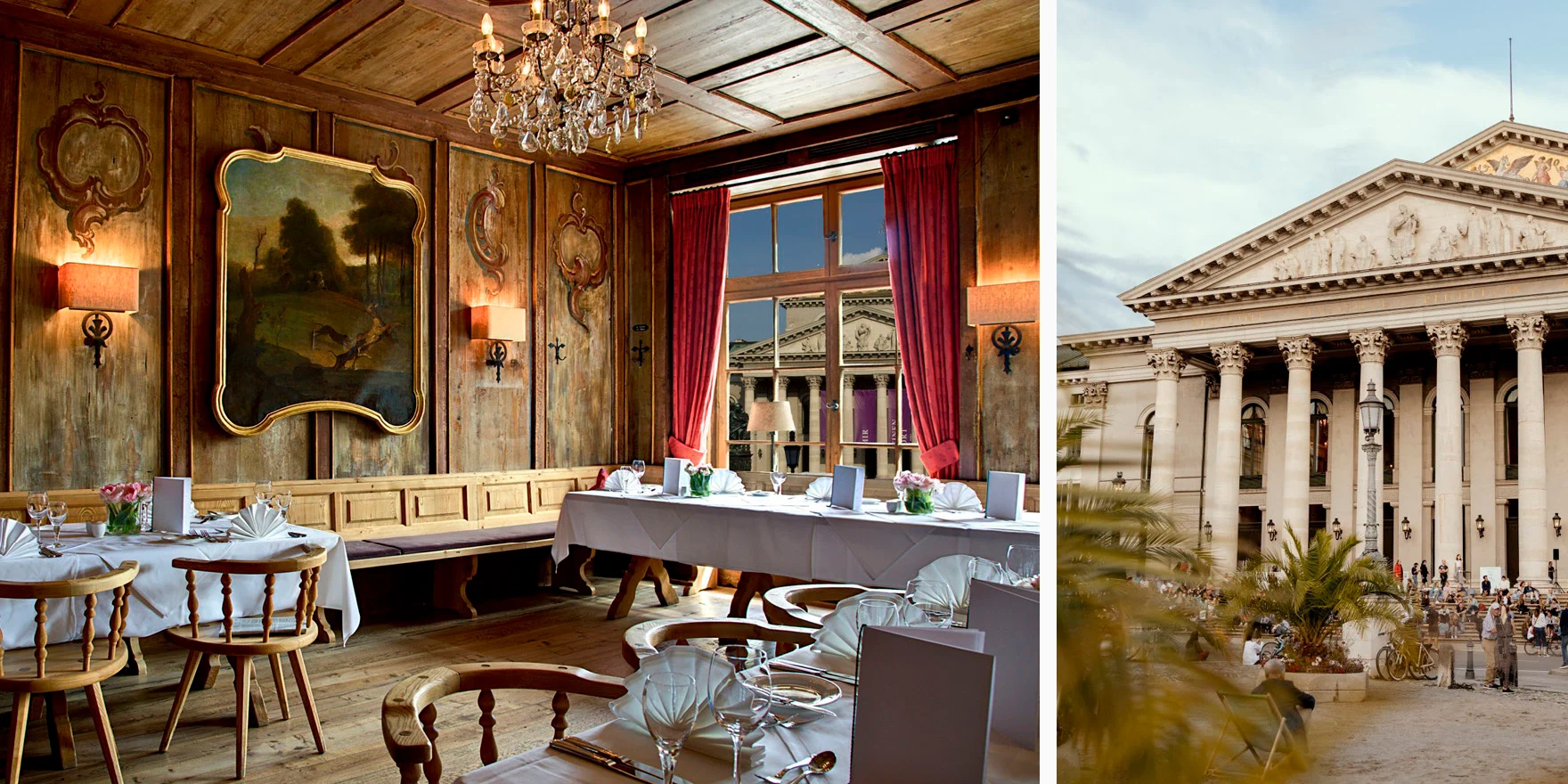
Home to the Bavarian State Opera (Bayerische Staatsoper) the National Theater was designed by neo-classical architect Karl von Fischer in the early 19th century, envisioned as an opera house that was for the people, democratically created without box seats (save for one for royalty). Over the years, the Bavarian State Opera has been an important place for German composers to show their works, including Wagner whose Tristan un Isolde and Die Meistersinger von Nurnberg were first shown here, among others. The theater was completely destroyed in a bombing during World War II, but was reconstructed to von Fischer’s specs in 1963. The rather spartan space nearly disappears once the curtain goes up. Beyond its year-round schedule of operas, the National Theatre hosts an opera festival every summer, an event that attracts up-and-coming composers and well-known performers. Just across the Max-Joseph-Platz from the theater is Kuffler’s Spatenhaus an der Oper which has two distinct dining spaces. The first floor is quintessentially Bavarian, both in its simple décor and on its menu, which revolves around sausages of all sorts, homey dumpling soups and spaetzles, while upstairs is more upscale, with a terrace that overlooks the square, and more modern takes on classical German dishes.
Royal Danish Opera, Copenhagen, Denmark
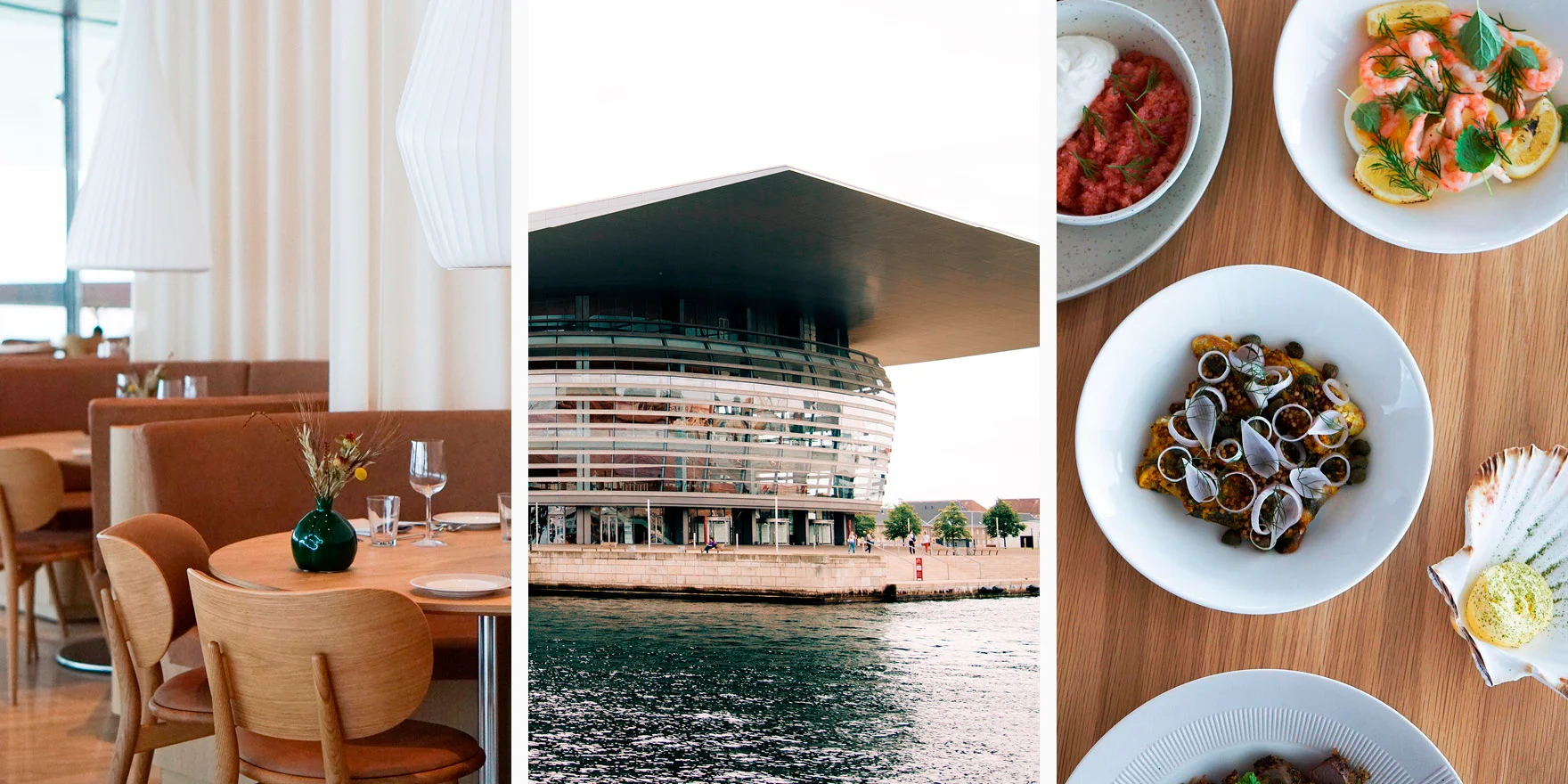
Copenhagen’s original opera house was inaugurated in 1748, a hobby of the royalty, on King’s Square (Kongens Nytorv) and has remained there, through various renovations and reinterpretations for over 250 years. Its newest opera house was finished in 2005 with Danish architect Henning Larsen. A new staging of Wagner’s Valkyrien and Mozart’s Don Giovanni, as well as Manualen from Danish composer Louise Alenius, will be presented this season. And just this past February, a new restaurant, Almanak i Operaen, took up residence in the opera house, with floor-to-ceiling windows overlooking the harbor. A so-called “Danish tribute to the French bistro,” the menu from chef Christian Hoffmann is distinctly Nordic with seafood and local plants peppering the monthly-evolving tasting menu with dishes such as jerusalem artichokes with lumpfish roe and halibut with blanquette de veau and cabbage.
Teatro Colón, Buenos Aires, Argentina
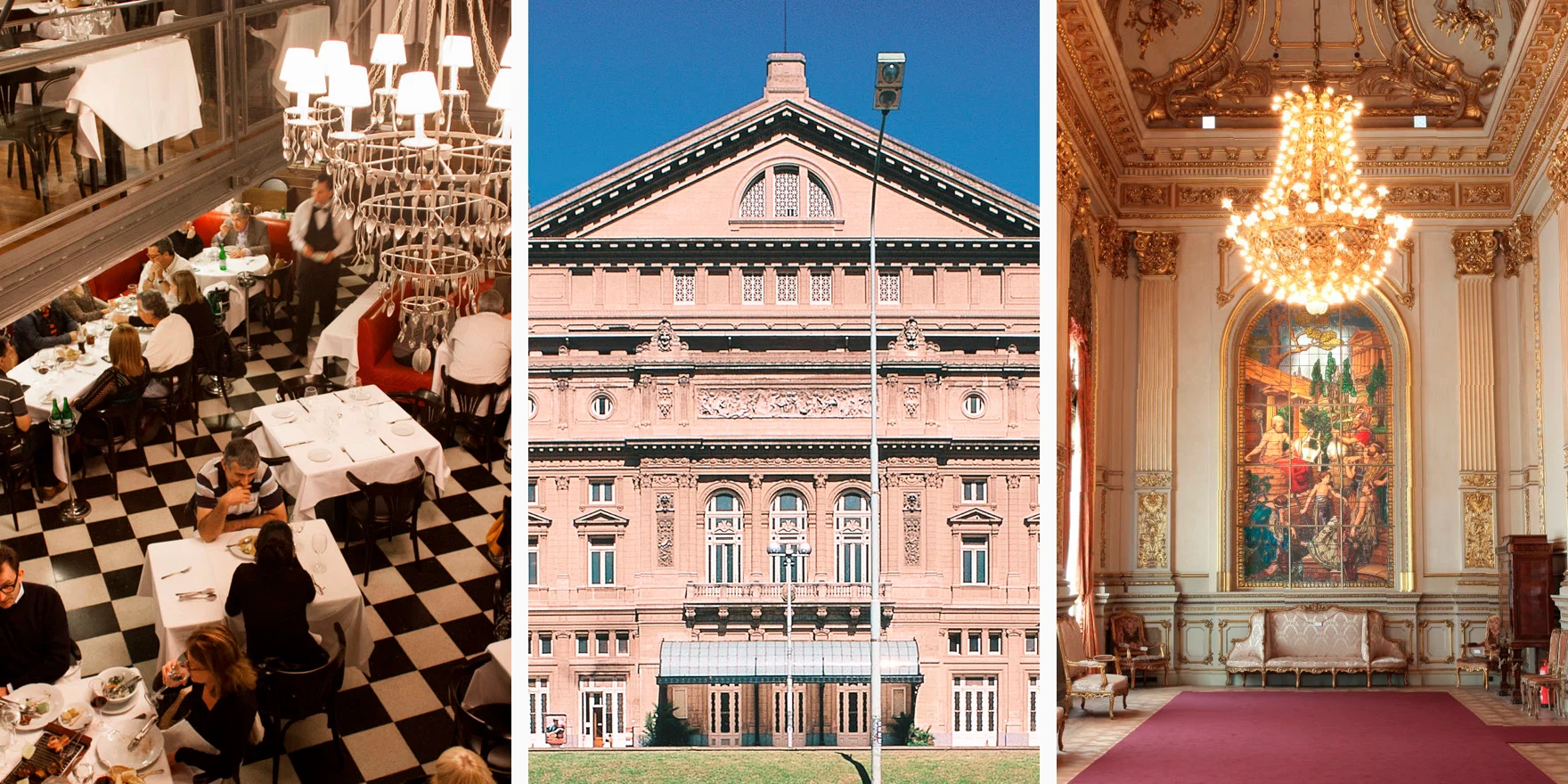
Some performers at Teatro Colón have worried that its acoustics are almost too good—amplifying any small mistakes—due to the resonating dome in the center of the auditorium. The hundred year-old, seven-story opera house on Plaza Lavalle is remarkably large, seating 2500 people, with standing room for another 500, in a similar horseshoe configuration to European opera houses like Palermo’s Teatro Massimo. This season offers up classics like La Bohème, Nabucco, and Tosca, as well as lesser-knowns, like The Pearl Fishers and L’Elisir d’Amore. While Teatro Colón doesn’t have its own restaurant, it's within a short distance of the Recoleta neighborhood, which is a dining hub in the city. A destination for porteños is Fervor, a brasserie. There are certainly many options when it comes to steaks and classic Argentinian dishes like provoleta and salchicha (sausage made in-house), but there’s standout seafood like whole fish, prawns and squid cooked over the grill.
Arena di Verona, Verona, Italy
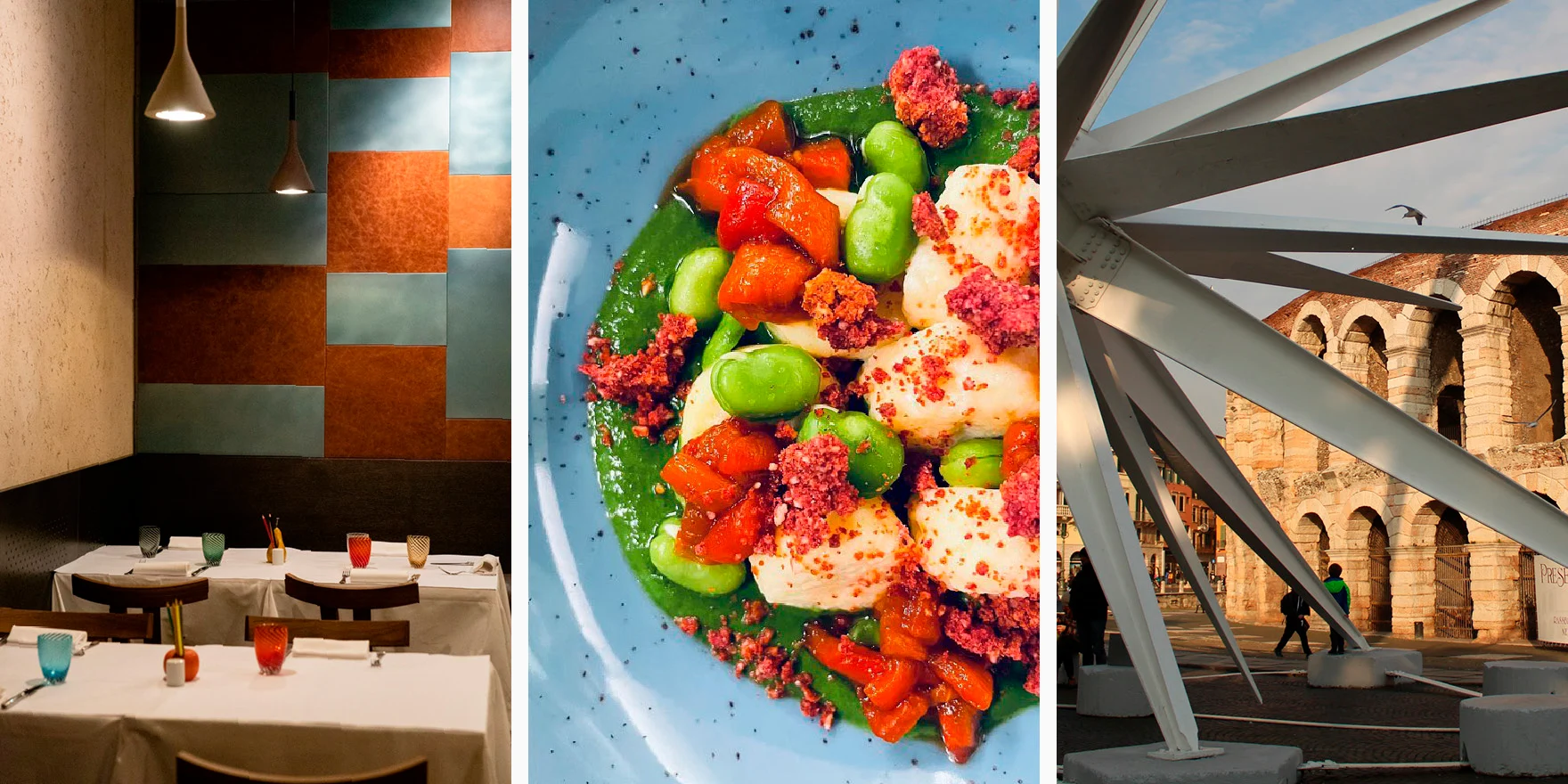
With Palermo’s Teatro Massimo to Milan’s Teatro alla Scala to Naples’s Teatro San Carlo, Italy is known for its opera houses. But in the summertime, when the nights are hot and humid, there is no better seat for opera than on the steps of the Arena in Verona. The well-preserved and repaired Roman amphitheater was originally constructed 2000 years ago, built from white and pink marble from nearby quarries. And while the enormous arena has served all sorts of purposes, since 1908, it has been a place for opera. The first one performed here was Verdi’s Aida and it’s been shown every year since. This year, the schedule will also include Carmen, La Traviata, and Puccini’s Turandot, as well as an evening with Plácido Domingo. Before the show, reserve a table at Locanda 4 Cuochi, a bistro led by Dario Fracasso and Moreno Pellegrini, protegées of esteemed chef Giancarlo Perbellini (a partner in the restaurant), just a 2-minute walk from the Arena. The pair turnout contemporary, seasonal dishes inspired by classics throughout Italy: zucchini blossoms filled with ricotta, spaghetti alla carbonara with vegetables and Malaysian black peppercorns and roasted lamb with herbs.
The Municipal Theatre, Ho Chi Minh City, Vietnam
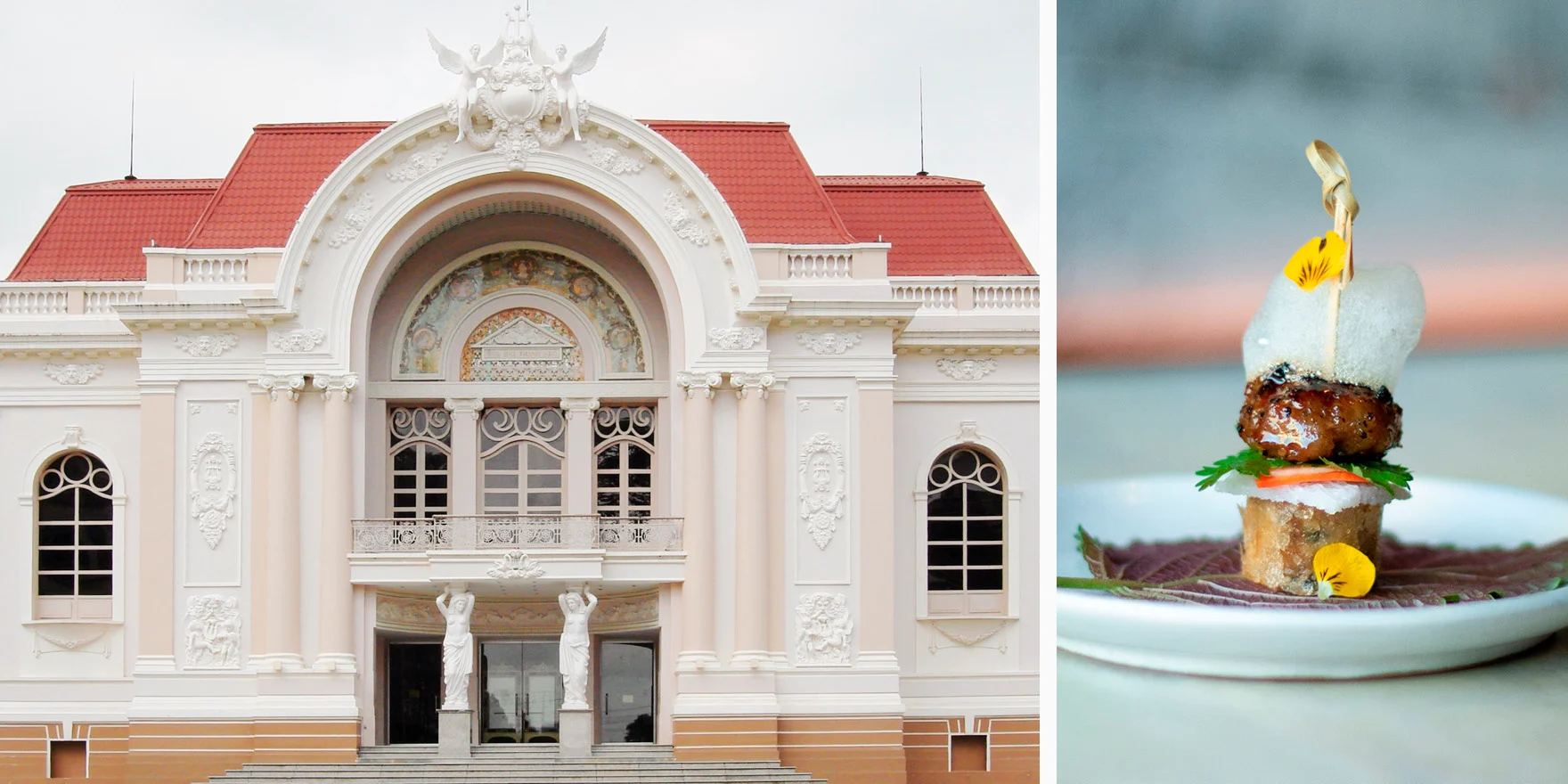
A relic of Vietnam’s colonial past, Ho Chi Minh City’s opera house was completed in 1900, designed by Eugène Ferret, with nearly all of the building materials—granite floors, crystal chandeliers, and white stones statues— sourced from France. The opera house is quite small, with only 500 seats in the oval-shaped performance space. For decades the building was used for the country’s house assembly, but in 1998, was established as an opera house and today, the focus is on featuring works from Vietnamese artists alongside international ones. Just a 10-minute walk from the opera house is AnAn Saigon, set in the middle of Chợ Cũ, Saigon’s oldest wet market. The restaurant has attracted attention internationally for the impressive creativity of chef Peter Cuong Franklin, who uses his tasting menu to showcase playful versions of Vietnamese street food. After the opera, walk back over to AnAn for cocktails at Cuong Franklin’s rooftop bar Nhaunhau to see the city all lit up at night.