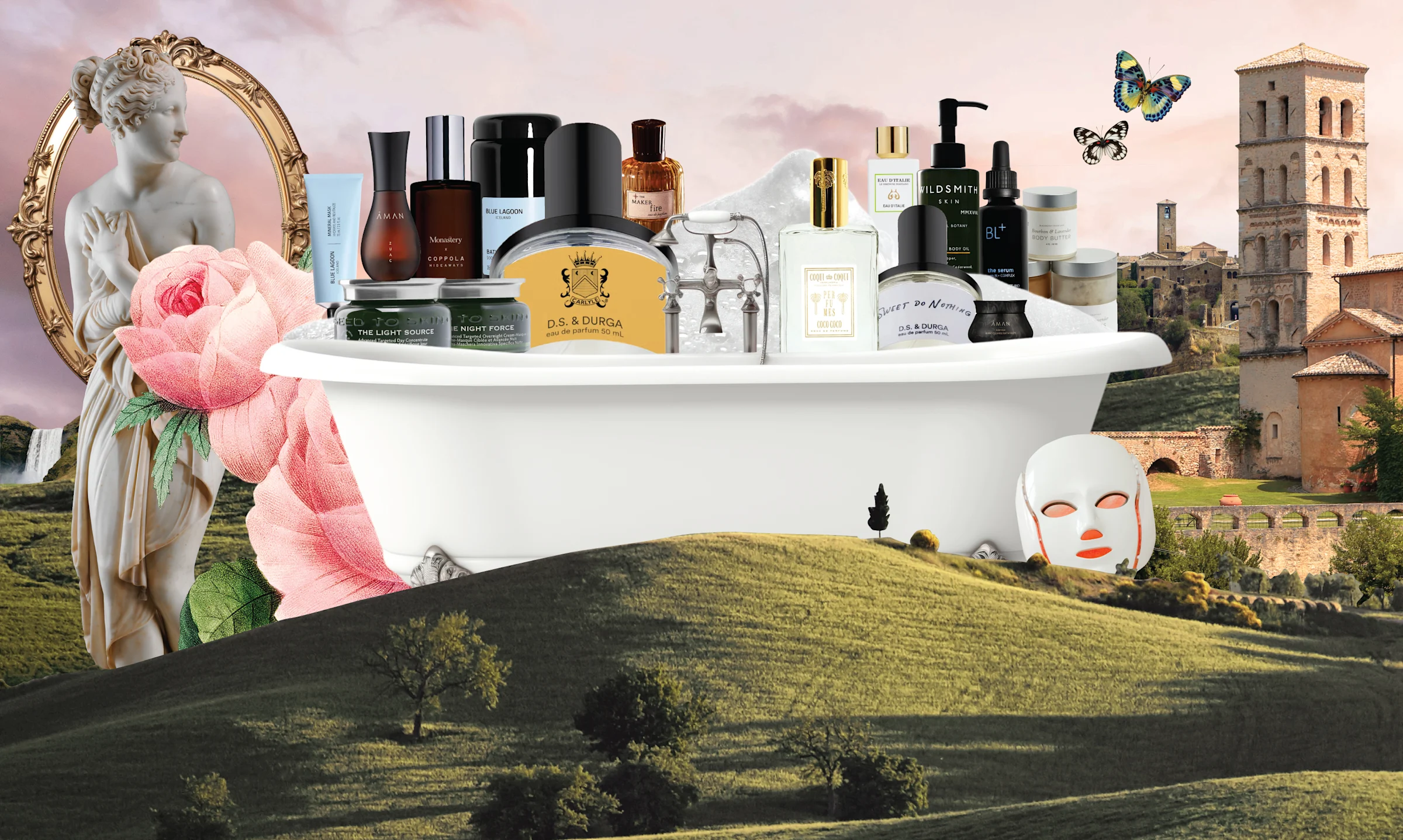
David Moltz, the self-taught nose behind the Brooklyn fragrance house D.S. & Durga, has a go-to phrase for his line of work: “Perfume is armchair travel.” Indeed, in one clear whiff, an olfactive portal cracks open, taking you to a radio repair shop in Mumbai or a cypress grove set among Roman ruins. If a bottle in hand can ignite an imaginary journey, it’s no surprise that a far-flung destination would bottle up its own sense of place. That explains the current wave of beauty launches from hoteliers across the globe. It’s not enough for luxury travel to set the stage for ephemeral pleasures, to be experienced only in situ. Now, there are handheld emissaries to take home — everything from body butter infused with local chamomile, to bath oil that evokes an alpine hike, to face serum supercharged with geothermal seawater.
In the case of the Carlyle — the 95-year-old hotel on Manhattan’s Upper East Side, now part of the Rosewood portfolio — there was plenty of site-specific lore to inspire D.S. & Durga’s scented amenities and an accompanying eau de parfum. John F. Kennedy, Mick Jagger, and Diane von Furstenberg at times maintained apartments there; everyone from Princess Diana to David Bowie swanned through. Moltz is a regular, too: He and his wife and cofounder, Kavi (the Durga to his D.S.), periodically check in to catch their friend Hamilton Leithauser’s annual residency at Café Carlyle. What Moltz assembled is “a who’s who of fancy fume materials,” as he puts it, as if neroli, bergamot, Balkan rose, and sandalwood could rub elbows at the bar. There’s also a note of honeysuckle: a through line to the signature Gilchrist & Soames soap, butter yellow and debossed with the hotel’s crest.
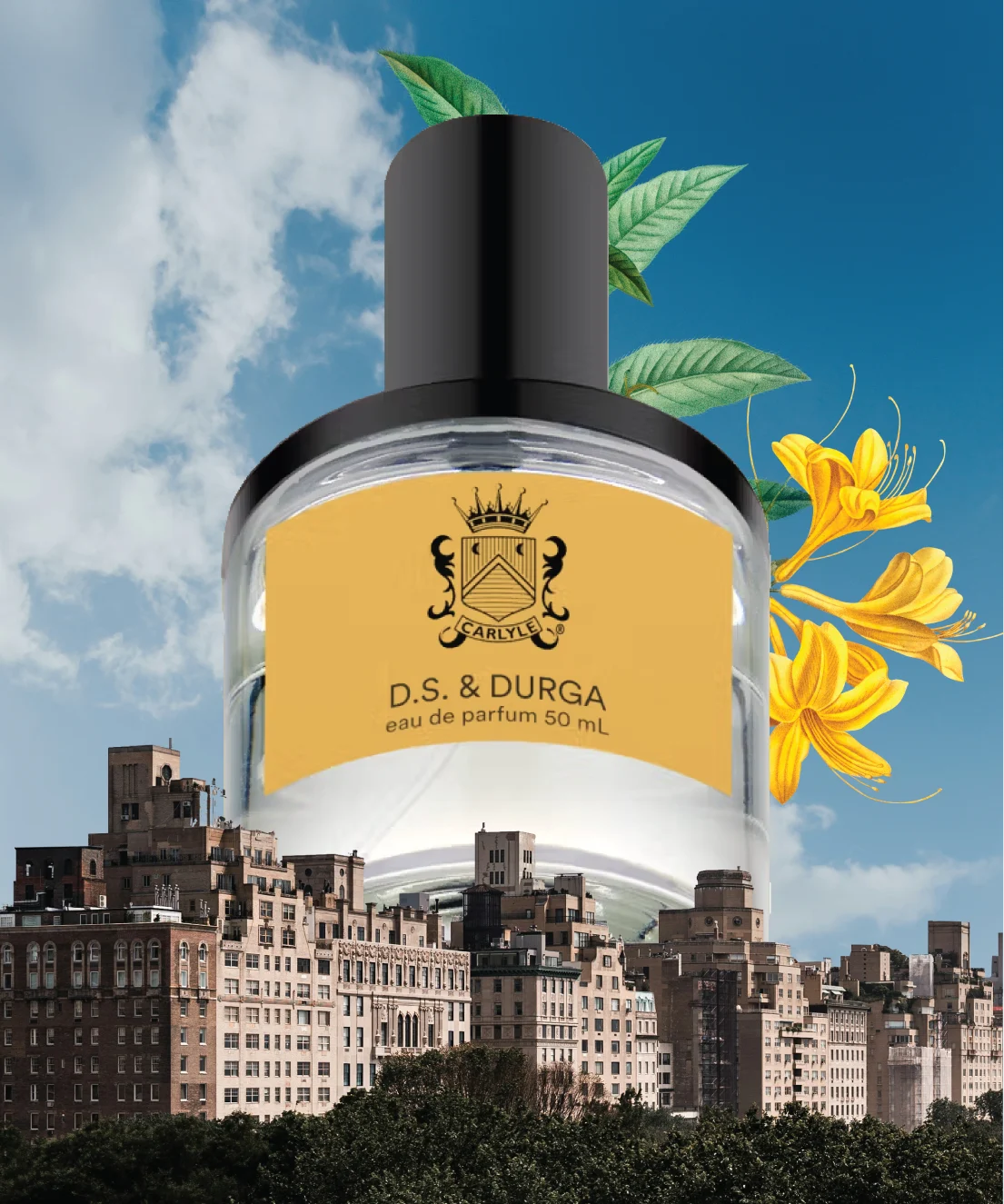
When the Carlyle perfume arrives at my Brooklyn apartment during an inhospitable February snowstorm, the concept of armchair travel floats back to mind. Now, while the slush persists, is the time for a vicarious odyssey via hotel-made beauty finds. I cue up the cabaret singer Bobby Short’s 1974 album, “Live at the Café Carlyle,” anoint my wrists, and settle into my make-believe hotel room. The around-the-world trip has begun.
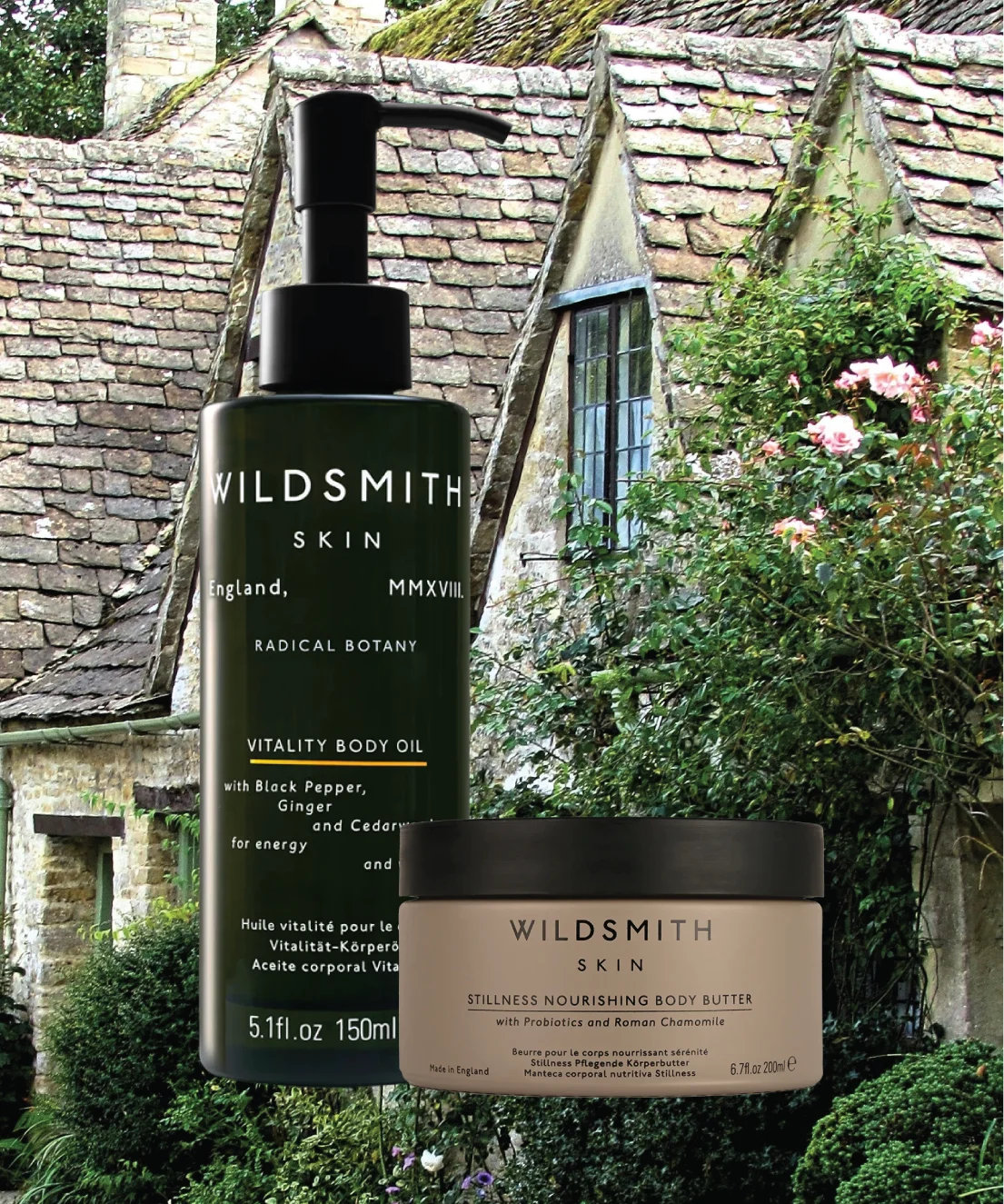
Heckfield Place, the Georgian manor house set in the Hampshire countryside, an hour outside London, makes for a genteel first stop. Opened in 2018 after a nearly decade-long restoration, the 400-acre property embodies a philosophy of self-sustenance: biodynamic kitchen garden, apple and pear trees, dairy cows and pigs and black-headed sheep that, if I squint, resemble my German shorthair pointer curled up on the sofa. William Wildsmith, a bearded horticulturalist who assumed the role of head gardener in 1865 and went on to shape the estate’s impressive arboretum, lends his name and ethos to the accompanying beauty line, Wildsmith Skin. Every detail is impeccably wrought — from the recyclable aluminum packaging for the in-room body wash, to the estate-grown chamomile distilled into a hydrolat for the Stillness Nourishing Body Butter. One evening, as I massage in a dollop of the Active Repair Cleansing Balm, my mind flits outdoors, detecting an earthy undertone in its frankincense and rosemary essential oils. The next morning, in a pre-caffeinated fog, I do my best to approximate the Wildsmith Time treatment — a circadian reset offered at the idyllic on-site spa, the Bothy — with an all-over slick of the Vitality Body Oil. Blended with circulation-boosting black pepper, cedarwood, and ginger, it brings a zip to my rounds of begonia-watering, convincing me that another bottle via international shipping would be entirely justified. My plants and I feel, to quote a description on Heckfield’s website, “both tamed and gently wild.”
In this landscape of hotel-beauty crossovers, there are photogenic spin-offs (Soho House, once synonymous with Cowshed products, launched Soho Skin in 2022) and spa ranges (Lefay’s ski-proof creams) and site-specific novelties (the bohemian toiletry pouch from New York’s Nine Orchard), along with fully conceived brands that earn their laurels, independent of the hospitality glow. Susanne Kaufmann’s namesake line is one of those. Born into the family-run Post Bezau, a fifth-generation wellness destination in the forested Bregenzerwald region of Austria, Kaufmann saw a need for high-minded skin care rooted in nature. I toss a few capfuls of the Mountain Pine Bath, infused with a handpicked spruce tip, into the tub to conjure the place’s serene wooded vistas and clean-lined architecture. Kaufmann gives advice with the Mineral Body Lotion, featuring lymph-stimulating homeopathic salts: “First take a cold shower. Be brave — it will be worth it.” I remain cowardly and warm, although a layer of the new Ectoin Repair Serum, a facial remedy for the chronically parched, takes me incrementally closer to well.
In Irene Forte’s case, her father’s Rocco Forte Hotels got her into the spa business. She then teamed up with an Italian research scientist, Dr. Francesca Ferri, to develop the kind of botanically driven skin care she’d always hoped to find. Forte Vita is the domestic-leaning collection that brightens hotel rooms and my kitchen counter: hand wash scented with sun-ripened apricot, milky lotion nodding to Sicilian pistachio. The Irene Forte line, meanwhile, is serious business. The jewel of the lineup, Phytomelatonin Rejuvenating Serum, builds upon Dr. Ferri’s decades-long study of plant-generated melatonin, with an eight-week clinical trial showing measurable improvement in skin elasticity, wrinkle depth, and brown spots. A more immediate blessing: The golden elixir simulates a spring-break glow.
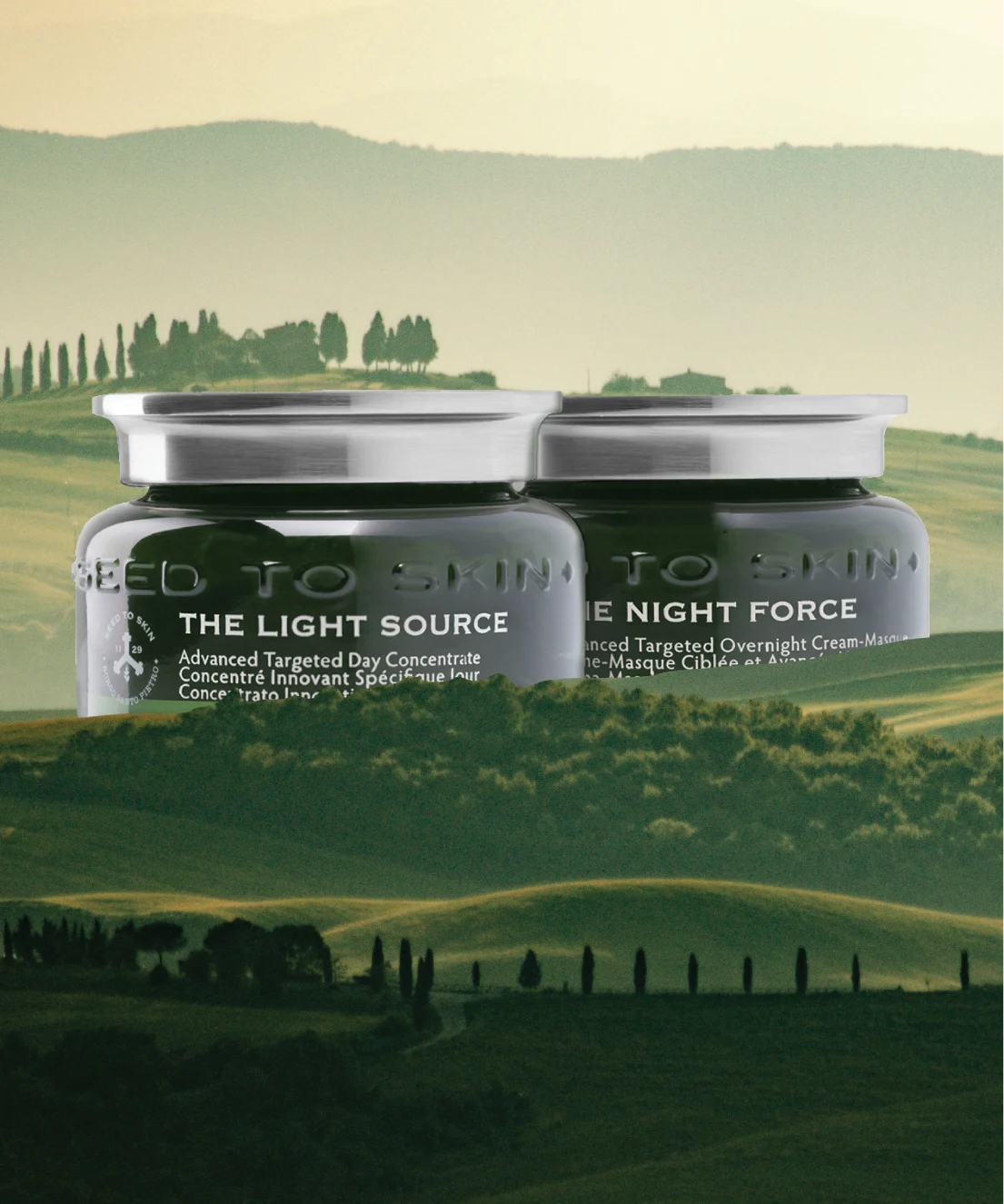
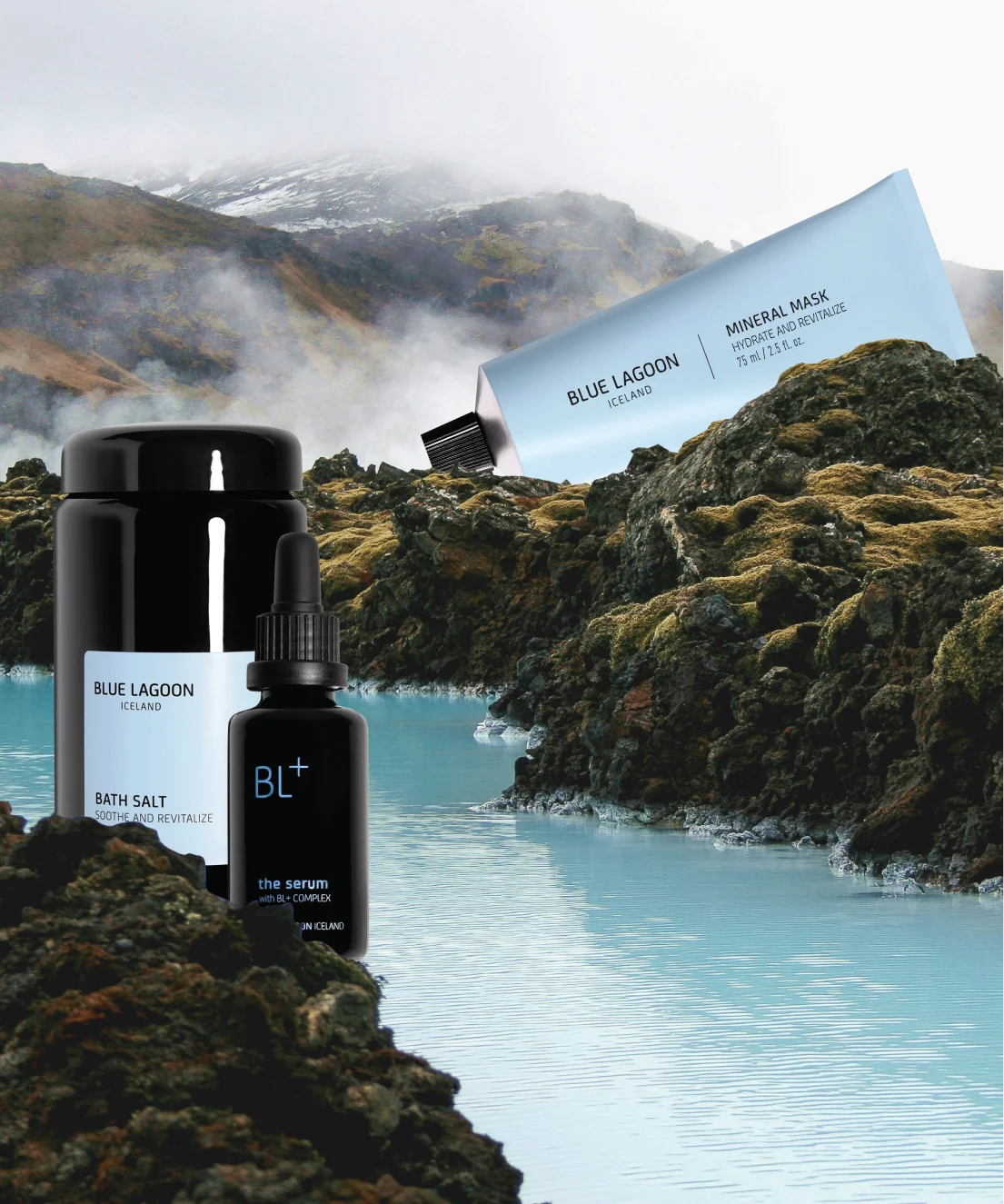
Destination beauty is often wrapped up in terroir. Case in point, Seed to Skin, the expansive line created by the Tuscan property Borgo Santo Pietro, acts as a corollary to its Michelin-starred farm-to-table restaurant. The 300-acre estate delivers a bounty — pigs and honeybees, vineyards and a sprawling vegetable garden — but it’s the six-acre plot for rosehip, calendula, lavender, and more that fuels the on-site product research. I bookend my day with a twinset of skin care treatments: The Light Source acts like a front-desk wakeup call with regenerative peptides, ceramides, and herb-infused marula oil, while the Night Force works with the body’s nocturnal repair cycle, using a snow crocus bulb extract that purportedly enhances communication between skin cells. What is the aquatic equivalent of terroir? The answer lies somewhere in the turquoise depths of Iceland’s Blue Lagoon, the mineral-rich geothermal pool known for its skin-healing properties and Instagram allure. I fill the tub with heaps of Mineral Bath Salt, imagining myself next in line for one of the lagoon’s improbable-sounding floating massages; the exfoliating Lava Soap has a pleasing cat’s-tongue grit. There’s a quartet of masks, including a deep-cleansing version with the area’s prized silica (a barrier-strengthening mineral that has summoned psoriasis patients for treatment), but the most talked-about formula is the BL+ Serum, designed to plump the skin and double down on hydration. Even in that tiny bottle, there is Icelandic seawater: a precious drop of paradise.
Some of the pleasures of the hospitality beauty boom lay not in breadth but in exacting expression. At the Hôtel du Couvent in Nice — a 17th-century convent reborn in 2024, following a $100 million restoration — the only site-specific apothecary offering is a custom body lotion: at once monastically simple and divinely rendered in a sunflower yellow tube. The hotelier Valéry Grégo believes in “beauty through utility,” and this skin salve is elevated by in-the-know perfumer Azzi Glasser’s composition: bright neroli and green galbanum, grounded in cedar and sandalwood and musk. In Belize, where the director Francis Ford Coppola launched his hospitality group in 1993, converting his family’s jungle retreat into Blancaneaux Lodge, its skin care debut comes bottled in oxblood glass: the Hydrating Floral Essence, created with the San Francisco–based line, Monastery. (It all began when its founder, the aesthetician Athena Hewett, gave one of her intuitive, massage-intensive facials to Sofia Coppola; Hewett now advises on the facial protocols for Blancaneaux and its beachfront sister property, Turtle Inn.) The small-batch mist draws on Central American flora, including sustainably harvested rosewood leaf, orchid oil, wild rose, and hibiscus oil. I spritz it on, like rainforest dew, before a session with Monastery’s Deep Red LED mask, mentally swapping out the car horns for a chorus of yellow-bellied birds.