For most everyone on the planet right now, normal life has been curtailed in ways both banal and profound due to coronavirus. For the planet itself, however, life goes on. The wildernesses, the vast species that live within them, and the communities that rely on both for livelihoods—all the exigencies of their protection have not gone away. In many ways, right now may be a more urgent time than ever in the world of conservation and cultural preservation, since many existing projects are currently operating without any tourism dollars to support them.
The dedicated founders behind each of these four continue to pour passion and resources into their missions—with or without present guests to help sustain them. Each is a place within its region where cares for the land, its indigenous cultures, and thoughtful hospitality dovetail in innovative, and important, ways. They're all deserving of our attention, now and when travel ultimately resumes.
Championing Indigenous Art at Australia’s Heart
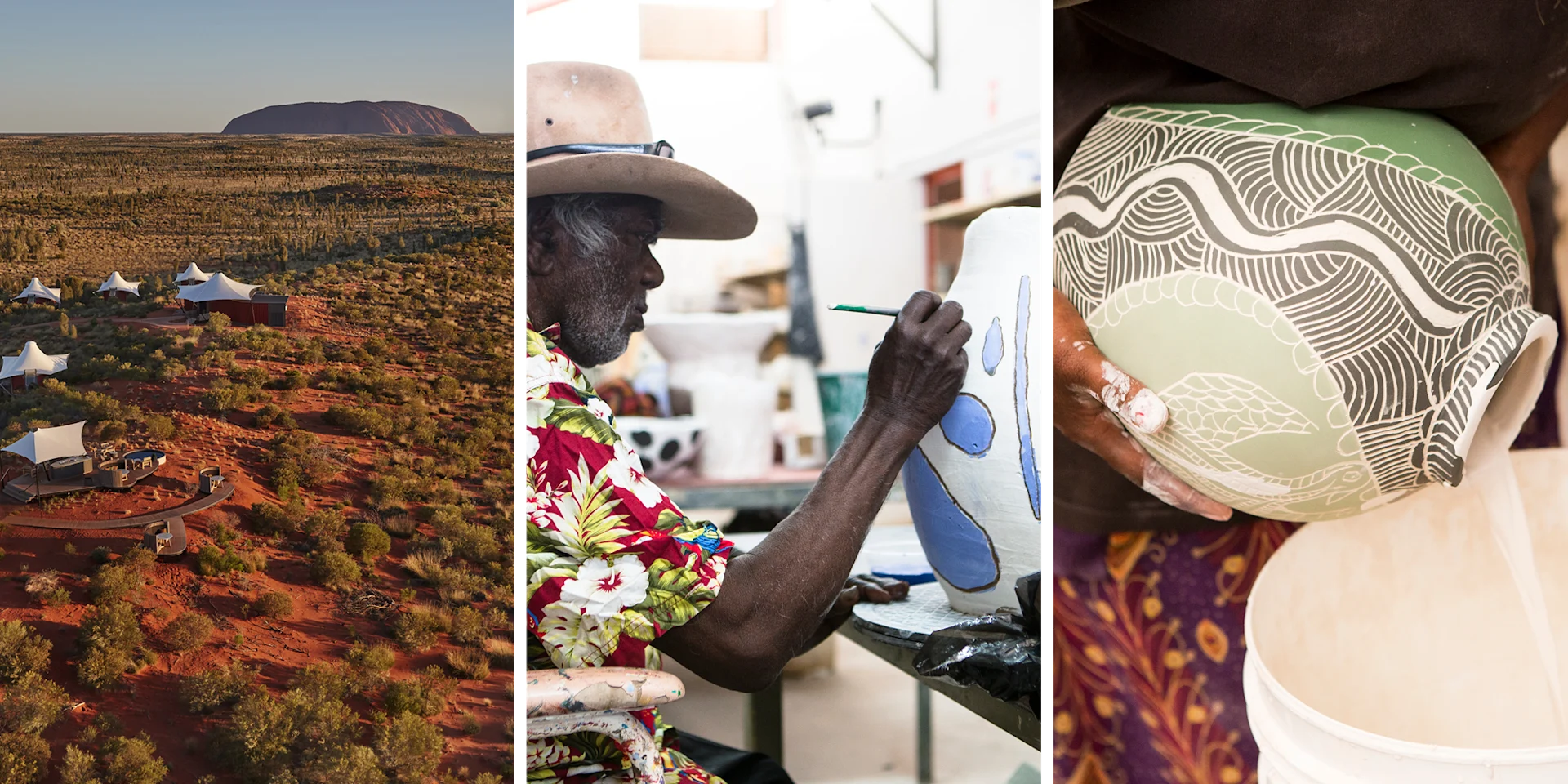
James and Hayley Baillie know more than most about the resilience and inherent beauty of the land and its inhabitants: Southern Ocean Lodge, their 21-suite flagship resort on Kangaroo Island, burned to the ground in January’s bushfires. It makes sense, then, that at Longitude 131—an eco-minded, luxury camp in the shadow of Uluru in Australia’s outback—the region’s indigenous communities are at the heart of the founders’ mission.
Hayley Baillie has personally cultivated collaborations with four aboriginal communities in both the Northern Territory and South Australia’s Anangu Pitjantjatjara Yankunytjatjara (APY) Lands. The primary such relationship, with Emabella Arts Community, takes various forms: special commissions for the camp’s interior design (among them a collection of several hundred spinifex-design ceramic tiles, produced by an Emabella womens’ collective aged 18 to 89); a standing three-year contract role for a ceramicist who mentors Emabella artisans toward the goal of total economic sustainability; and quarterly artist-in-residence programs. Interested visitors can visit with the community through a day-long 4WD journey that’s a true lesson in living close to the land.
“The objective–and running result to date,” the Baillies say, “is to allow the community’s artists to establish economic independence whilst conserving their art and culture, and [have] the resources to continue to share the skills and stories with their families. It demonstrates an economically viable future based on their cultural heritage and talent.”
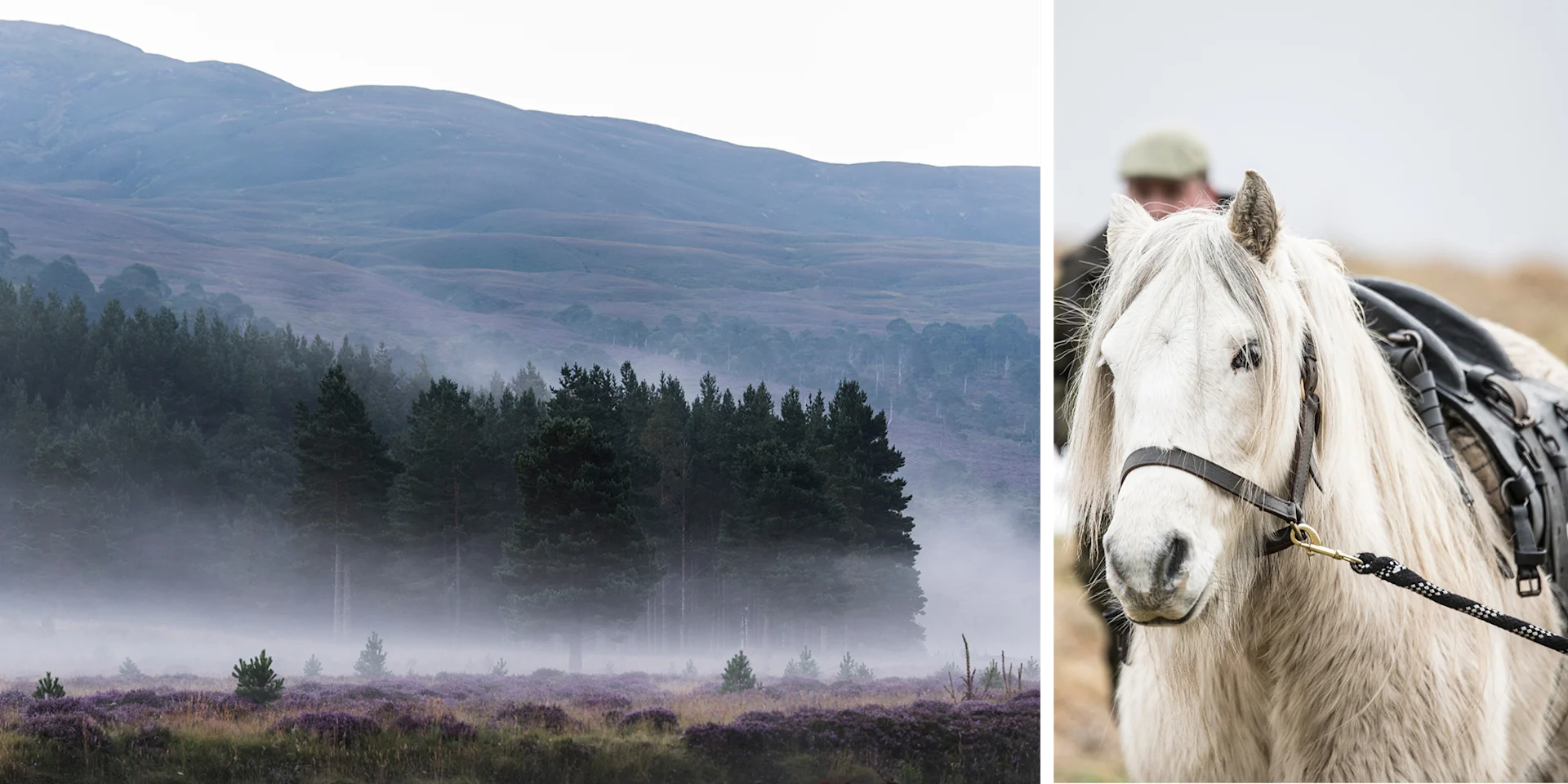
A Wilder Scottish Highlands
The highlands of Scotland are among Europe’s more recognisable landscapes, redolent with both aesthetic and cultural beauty. But in truth, it’s a spurious natural beauty, many of the land’s familiar tones and shapes the result of centuries of farming, deforestation, and the introductions of invasive species.
Anders and Anne Holch Povlsen, Danish billionaires who are now the largest private landowners in Scotland where they live full-time, have made the ecological rehabilitation of the area their work. It’s called Wildland, and the unique hospitality component they’ve incorporated does as much to educate and restore as it does provide a tremendous escape into nature. With properties from the coast of Sutherland to the Cairngorms, the owners take the rehabilitation of the built environment as seriously as they do the natural one: the property’s castles and estate manors, village houses, bothies, and two inns have been restored to rustic-minimalism with exteriors that look much as they would have one or two hundred years ago. The accommodations run on solar or hydro power, or a combination, and a few currently in development will be off the grid entirely.
The time scales of the land rehabilitation will extend far beyond our lifetimes; it can take decades for nature to regain a foothold (a ‘200-year-vision’ is much referred to across the project). But the long view is the best view—and one this land’s custodians hope will again someday be lush with the juniper, birch, and majestic Caledonian pines that flourished here a millennium ago.