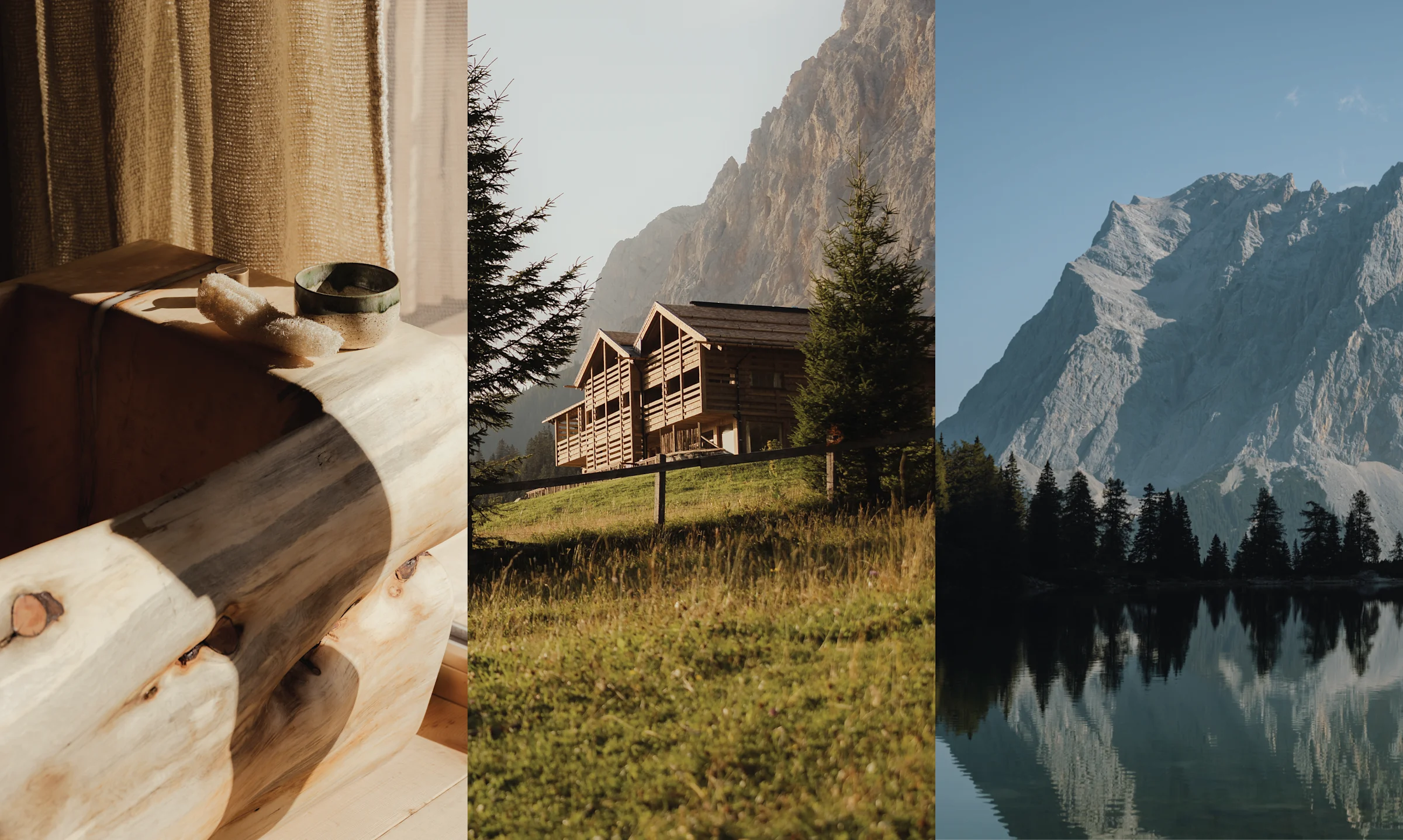
The Tyrolean Alps represent one of Europe's most historically significant mountain regions, where human settlements date to the Bronze Age. The dramatic landscape straddles the Austrian-Italian border, with North Tyrol bounded by Germany, and South Tyrol extending into Italy. This central location in the heart of Europe—shaped by rugged terrain and diverse cultures—has created a distinct identity that blends Austrian, German, and Italian influence.
While winter draws skiers to crowded slopes, summer reveals the region’s true character. During the warmer months, this vast alpine wilderness becomes more accessible to tourists in search of a summer away from the sea. Instead of battling for space on well-groomed ski runs, summertime visitors can explore 15,000 kilometers of marked hiking trails, cycle through valleys of dedicated bike paths, or tackle via ferrata climbing routes that thread through dramatic cliff faces. Cerulean-blue mountain lakes, narrow canyons, and numerous glaciers replace the sterile white of ski slopes, and mountain huts serve hearty regional cuisine. The contrast is sharp: while winter means lift passes and crowded pistes, summer provides access to some of Europe's most pristine alpine terrain, with hiking trails leading to remote peaks and glacial lakes untouched by ski industry infrastructure.
———————
The Scene
Above the valley floor, the air is crisp, carrying the scent of pine and woodsmoke as sunlight filters over the ridgeline. In winter, guests return from the slopes and slip off cold ski boots in the warmth of the dry room, where gear is neatly arranged and left to dry overnight. Come spring and summer, the landscape thaws into blooming meadows, forest trails dry out underfoot and sunlight lingers. Early risers head out in hiking boots or mountain bikes; others linger in thick wool socks (provided by the hotel) and take their coffee by the window, gazing out to the green slopes before easing into the day with local mountain honey, dark bread, homemade porridge, and soft cheeses served in the restaurant, where the only sounds are clinking cutlery and the summer symphony of cowbells. By late afternoon, most guests return to bliss out in the spa or gather around the suspended fireplace with a glass of biodynamic wine. There’s no dress code, but everyone has received the quiet luxury memo.
Location
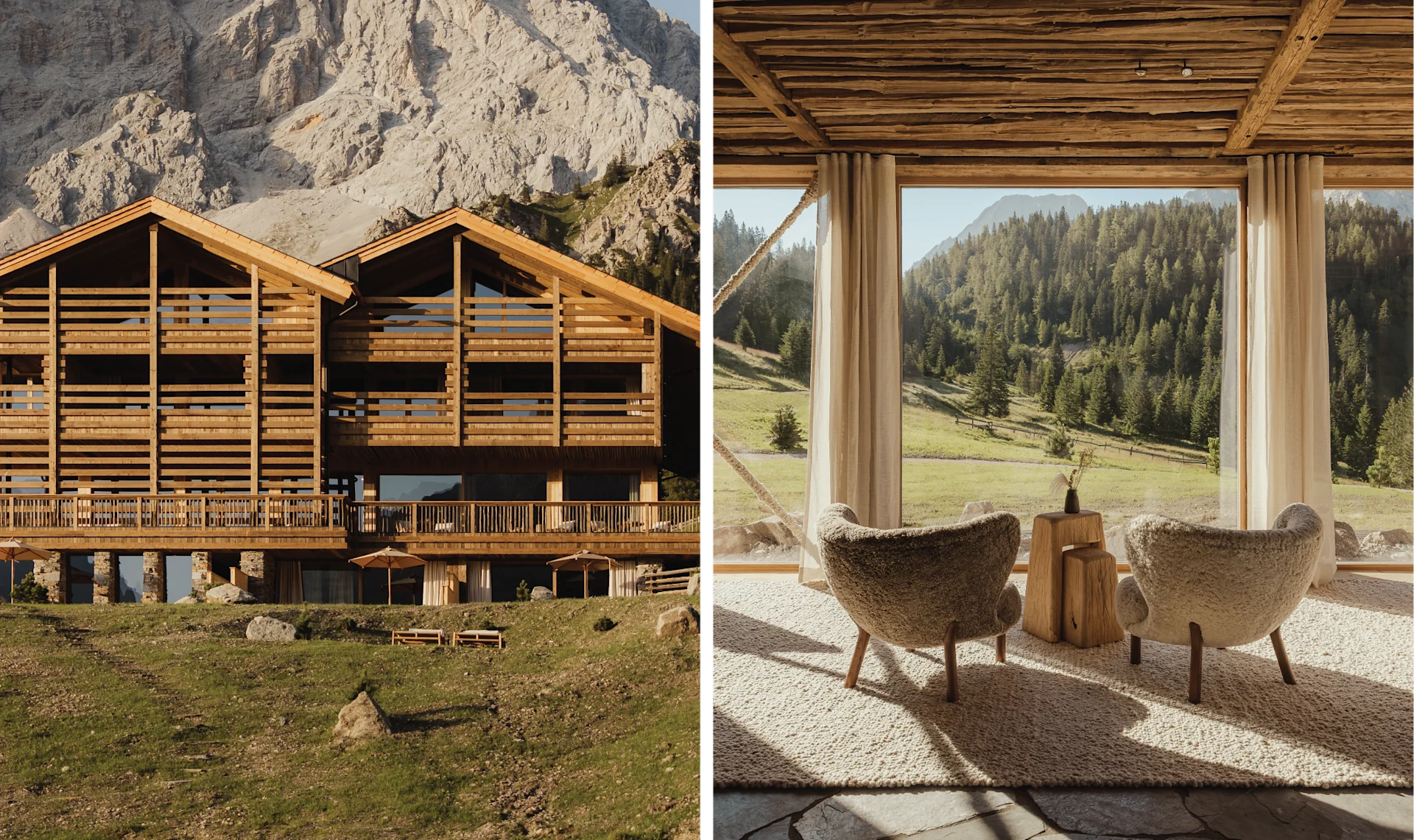
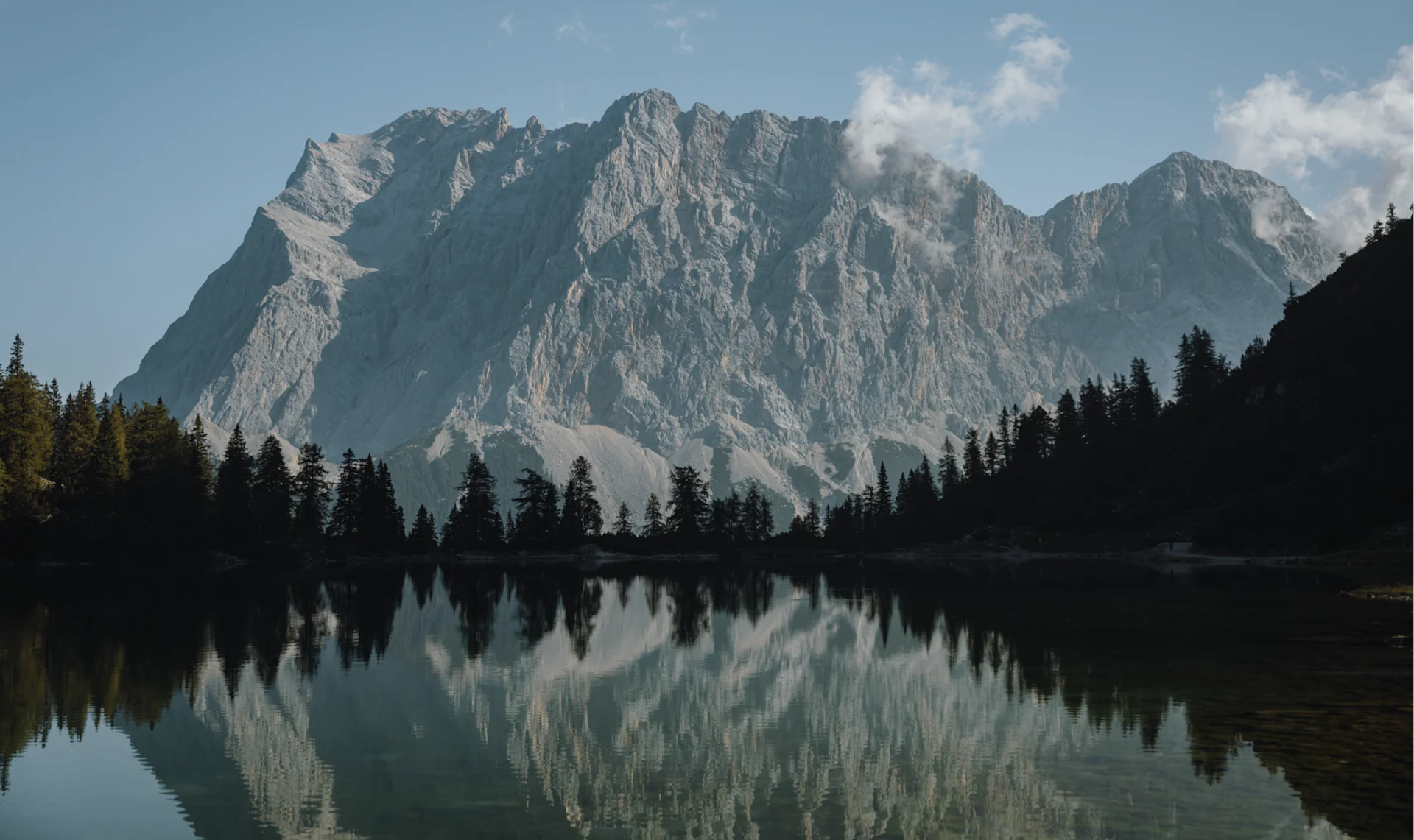
Above the village of Ehrwald in Austria’s Tyrolean Alps, Eriro is a design-led mountain retreat at the foot of the Zugspitze — Germany’s highest peak. Technically Austria, but just a few miles from the German border, it feels like its own alpine microcosm. In winter, it’s ski ‘in’ ski out and in warmer months it becomes the gateway to some of the Alps’ most untouched terrain. The Tyrolean Zugspitz Arena, which links six alpine areas and blooms in the off-seasons. Instead of ski crowds, you’ll find glacier-fed lakes, high-altitude hiking paths, and ridge trails lined with wildflowers, without the crowds or flash of bigger-name resorts. Despite its remote feel, Eriro is surprisingly accessible: reached by cable car in peak season or by car during the off-season, and just 90 minutes from Innsbruck Airport or around two hours from Munich.
Eriro, Ehrwald - Austria
A quiet, chic, and handcrafted nine-suite alpine retreat, away from the fray of flashier neighboring resorts.
The Proprietors
Eriro is the result of a collaboration between two local hospitality families – Amelie and Dominik Posch of La Posch Chalets and Christina and Martin Spielmann of Hotel Spielmann – alongside timber construction expert Andreas Mader and South Tyrolean architect Martin Gruber. Each brought a different strength: hospitality know-how, deep local roots, design sensibility, and building expertise. Taking their time – Eriro was years and years in the making – they transformed a former 1930s Alpine hut into this nine-suite hideaway.
The Design
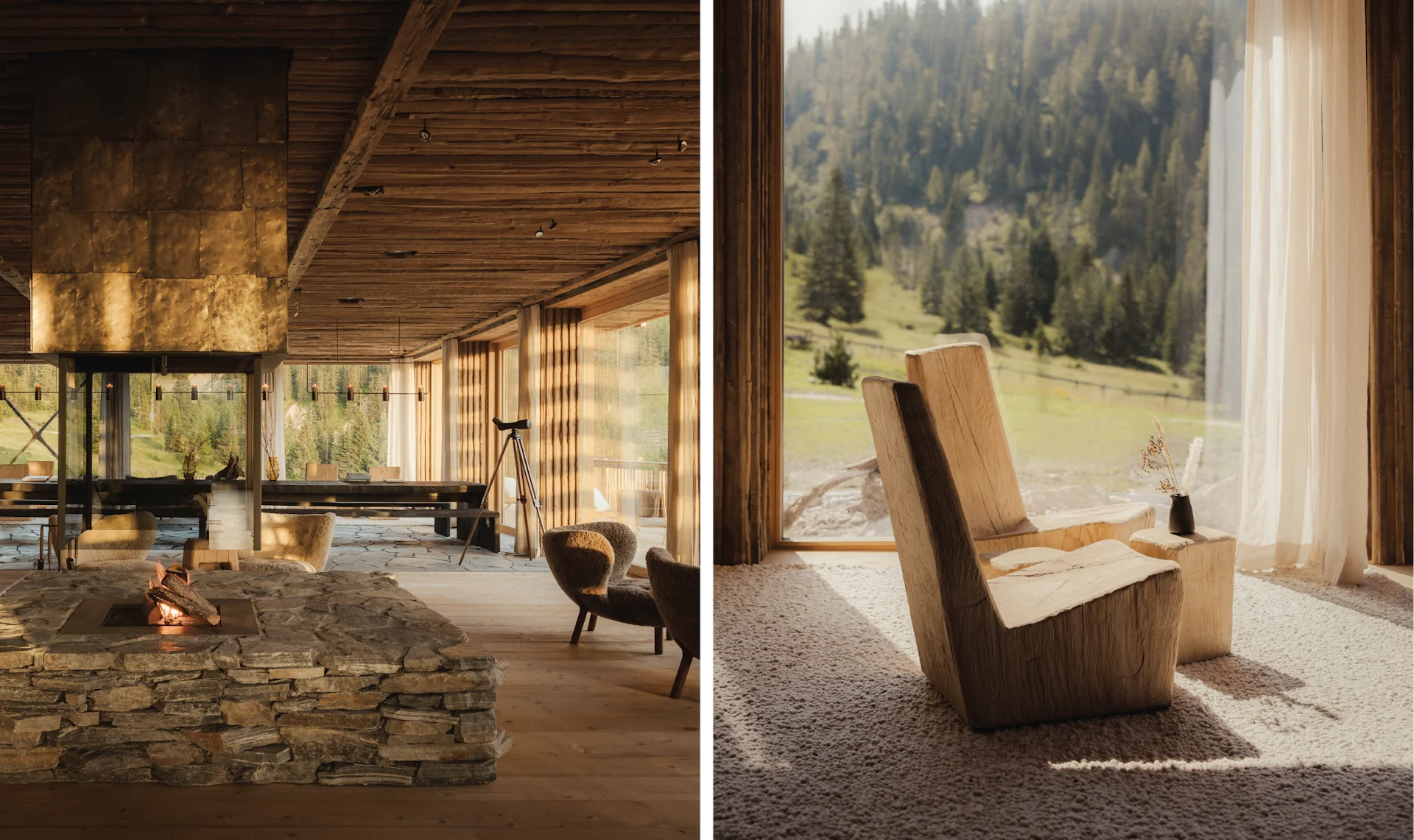
An earthy, minimalist dream, Eriro is a stripped-back version of luxury – quietly stylish with nothing loud or showy. You won’t find antler chandeliers or faux-rustic finishes here. The entire hotel has been crafted from reclaimed Tyrolean timber (90% of the structure is wood, with 95% harvested locally, some recycled from its earlier life as an Alpine hut) and locally quarried stone. Floor-to-ceiling windows frame the mountains in every room, and everything — from the in-room baths carved from single tree trunks to the wool-covered walls and ceilings made from rough-hewn beams — feels hand-chiseled by skilled regional craftsmen. Textiles are tactile and familiar — nubby linens and dense wool woven just a few valleys away. The living room is warmed by a suspended fireplace. There’s no formal reception desk, no grand entrance or background music — just shelves of books on architecture and mountain ecology, and a few well-placed chairs upholstered in sheepskin or hand-chiseled pine.