Åmot
PROPERTY OVERVIEW:
From hiking up to waterfalls, plunging into restorative, glacial water, sharing meals crafted from locally foraged ingredients, to simply soaking in the quiet rhythms of fjord life, Åmot invites guests to slow down, reconnect, and savor a profound sense of calm that lingers long after departure. To arrive here is to understand that the journey itself is part of the experience: a four-hour boat passage through the fjords, punctuated by a pause on a quiet shore for fresh cinnamon rolls and coffee, before reaching a small harbor that feels like the edge of the known world. No tour buses pass, no cruise ships squeeze through the narrow inlets, Åmot exists apart from it all.
Guests often say that stepping onto the estate feels like a warm embrace, an unexpected ease that comes from being genuinely cared for. Whether hiking up to waterfalls, plunging into the crisp, cold river, sharing meals crafted from locally foraged ingredients, or simply soaking in the quiet rhythms of fjord life with those closest to you, Åmot invites you to slow down, reconnect, and savor a profound sense of belonging that lingers long after departure.
This is not a hotel. It is a deeply personal expression of place, hospitality, and history—best shared with those you know well, and where, if you’re lucky, you’ll be reminded of the beauty in simply being looked after.
When:
Åmot is open from April through October, during Norway’s summer months. May and June are particularly beautiful, with lush greenery and flowers in bloom. Although not officially open during the off-season, festive dates can be requested.
Where
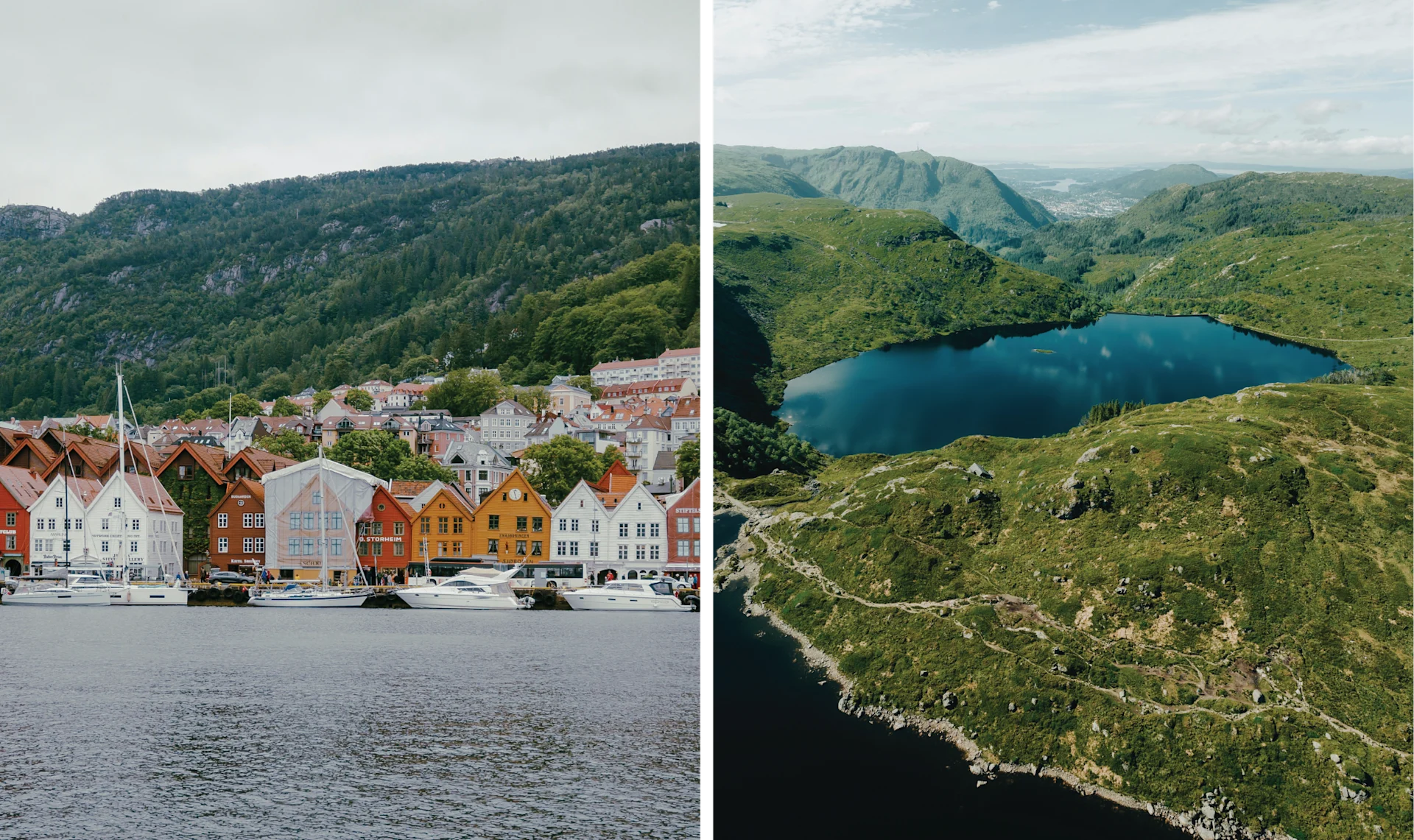
The journey to Åmot should begin with a private boat ride offered from Bergen (charming and walkable, a two-night stay here is recommended before heading to Åmot.) This 4-hour journey, inclusive of stops along the way, takes you exclusively through the fjords, making the trip an adventure in itself. The boat, an Axopar, is small and fast, and a guide from Åmot will join the local captain, who’s deeply familiar with the area, to navigate through the fjords. Halfway, the guide may stop for a coffee break with charcuterie and homemade cinnamon rolls, or they may take a detour for a particular view or fishing spot. The boat then continues to Bygstad Harbour, just 10 minutes from the hotel, where a vehicle transfer awaits.
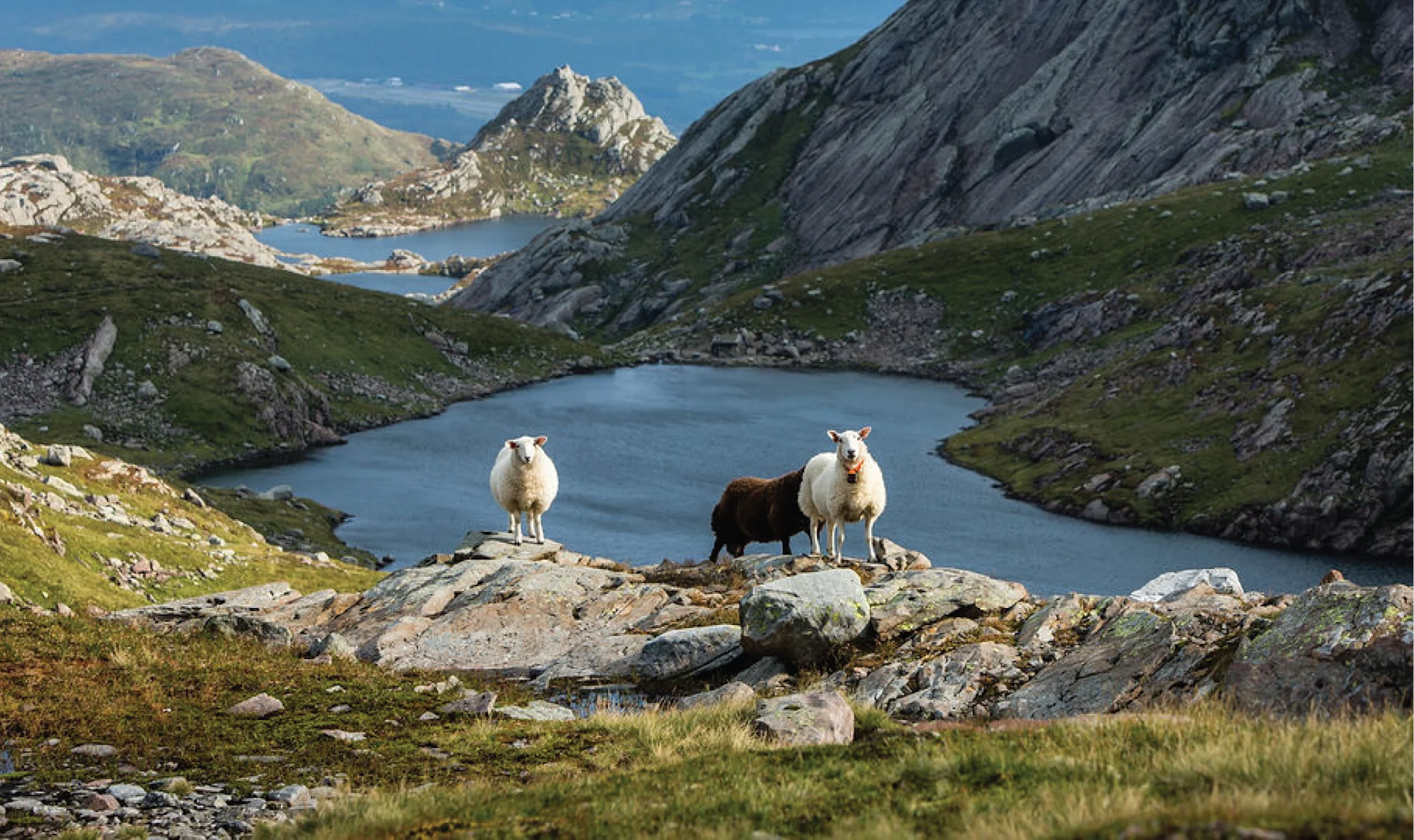
Åmot is set in the Sunnfjord Region, surrounded by jagged mountains, waterfalls, and green valleys dotted with traditional farming or fishing cabins. Sheep and goats roam the idyllic, storybook atmosphere. With no cruise ships permitted in the narrow fjord, the area remains free of most tourism. Though remote in feeling, Åmot is easily reached, just ten minutes from a small airport with direct flights from Oslo.
The Proprietors
Åmot Estate is owned by Steinar Sørli and Yngve Brakstad. Built in 1885 by Steinar’s great-grandfather Søren, the estate has stayed in the Sørli family for five generations—first as a private home, later restored in 2004 for exclusive buyouts. The long familial history and ties to the local community are evident throughout. Over the years, the estate has quietly served as a cultural gathering place, most notably hosting opera festivals in the 1990s in the barn.
The Scene & Design
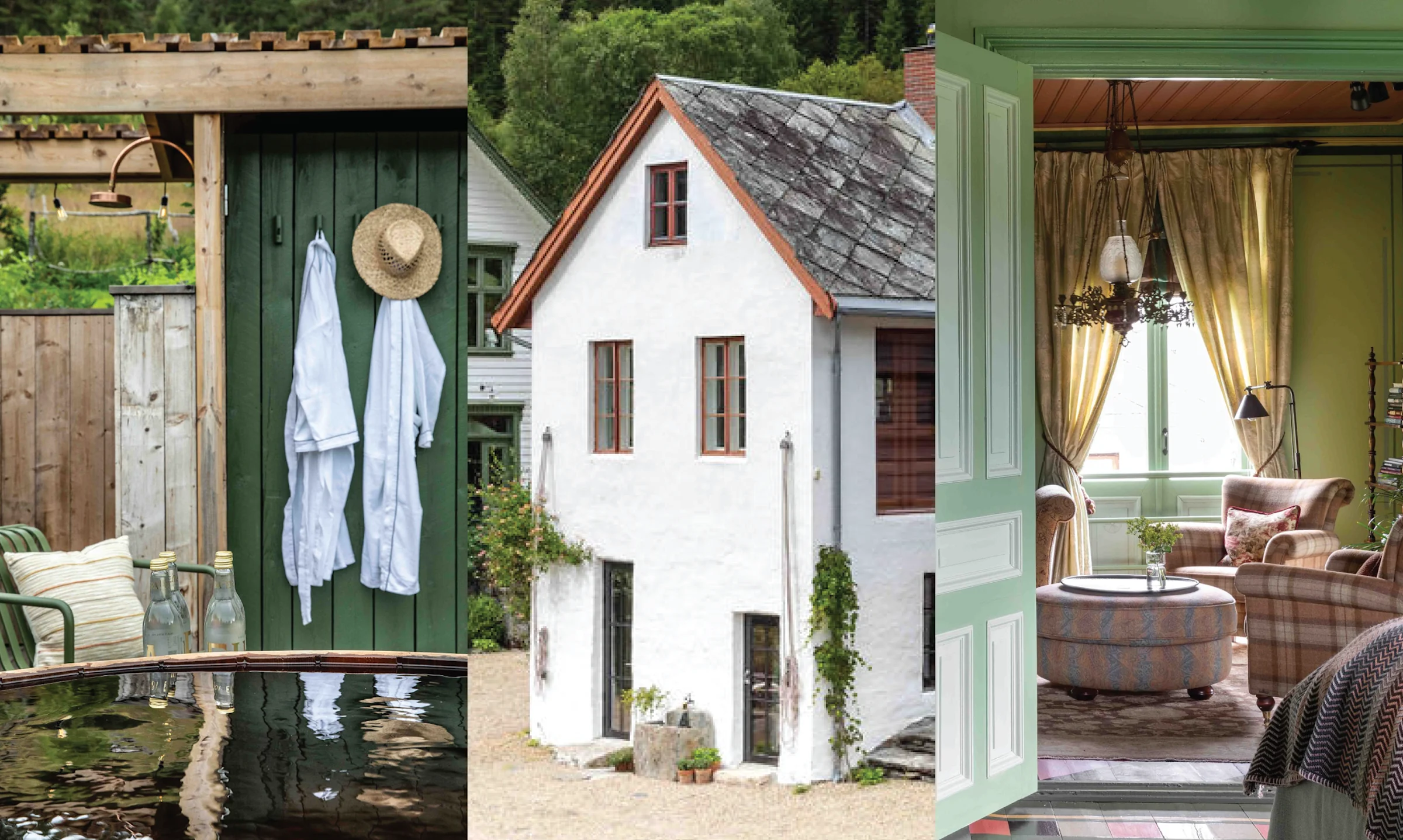
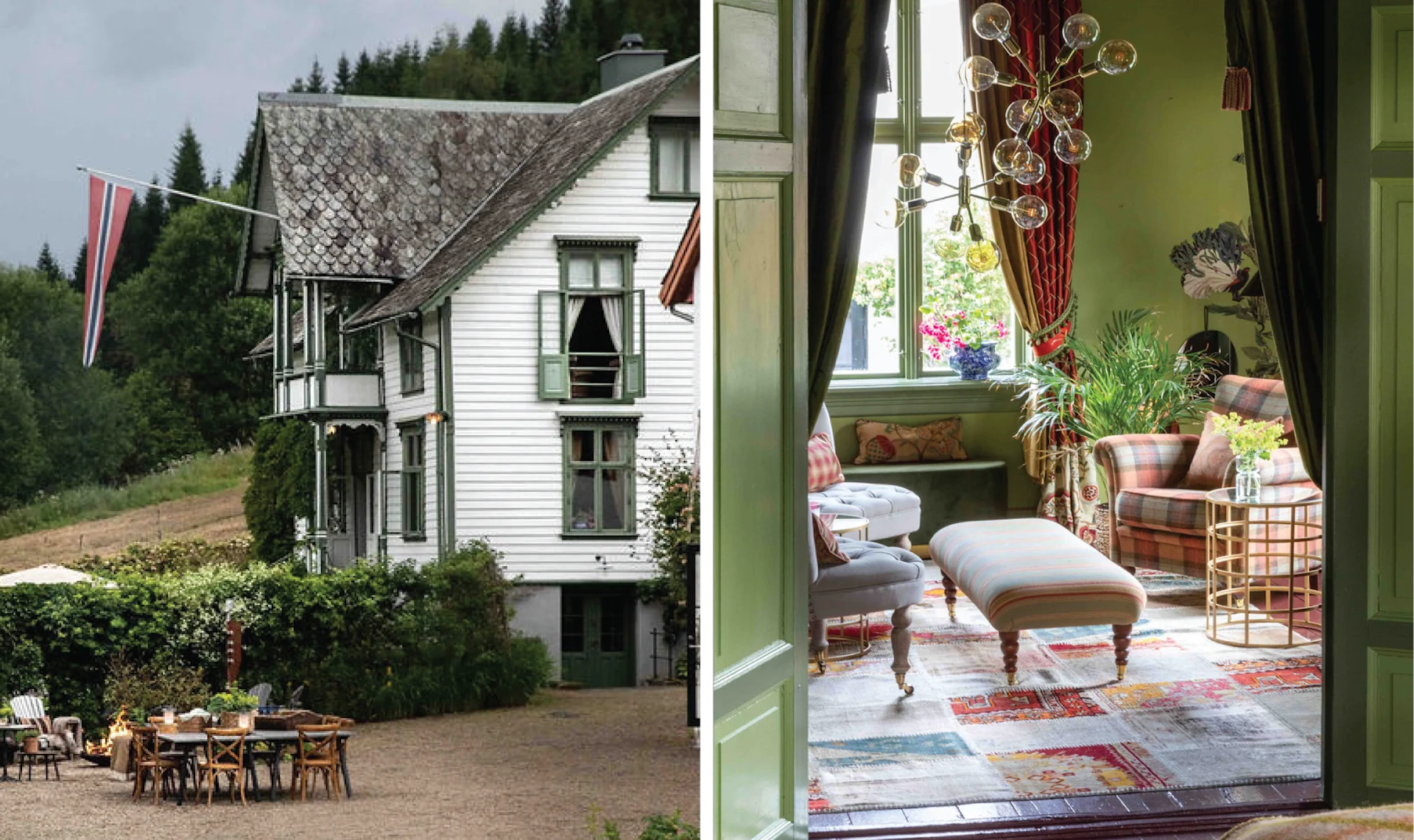
The estate’s original structures have been preserved with care and adapted with intention. The exteriors remain largely unchanged, their 19th-century form maintained under the eye of architect and proprietor Yngve Brakstad. Inside, updates meet the needs of modern guests without erasing the building’s character. It is not shiny or new—nor should it be.
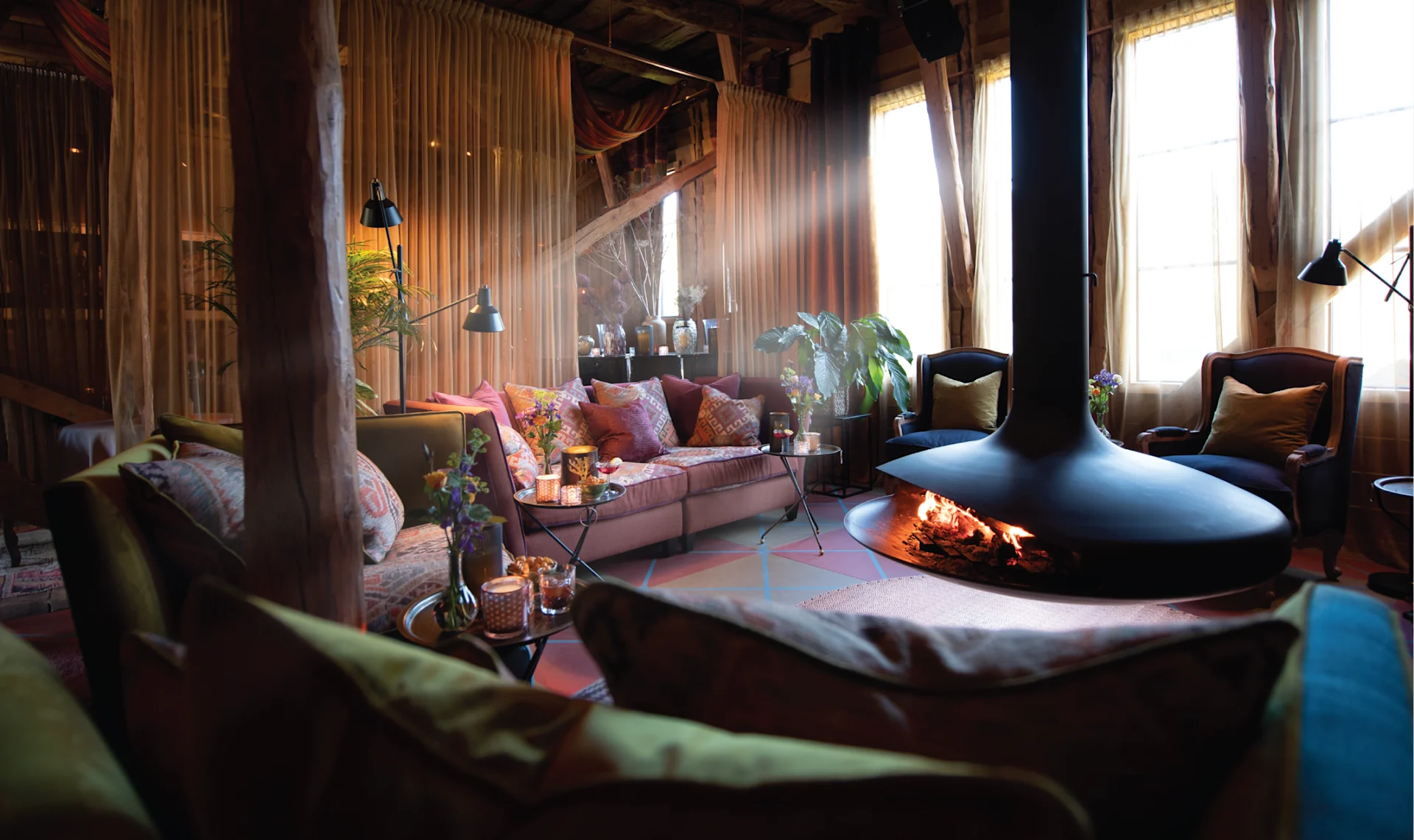
Throughout the interiors, family photographs, antiques, and timeworn objects embrace the estate’s history. The Barn, once used for hay, now serves as the heart of daily life, housing an open kitchen with an AGA stove, a breakfast room, bar, library, and a dining room where evenings often conclude around the piano. The Smokehouse, largely untouched, retains its original hearth, now used during massage treatments.
The Crowd
Åmot suits those seeking quiet, privacy, and a genuine connection to nature. It’s ideal for families, especially multigenerational stays, with its storybook atmosphere and activities like foraging, treasure hunts, biking, and hiking. The estate is available only for buyouts, which may feel expansive for two but is ideal for a group of friends, sleeping up to 14 and perfect for milestone gatherings.
In the spirit of gathering, Music is central to the experience at Åmot, with daily after-dinner performances. During this stay: classical Hungarian piano music, a folk singer, and a 16-person choir that closed with a Backstreet Boys number, all performed around the long table in the barn.
The Rooms
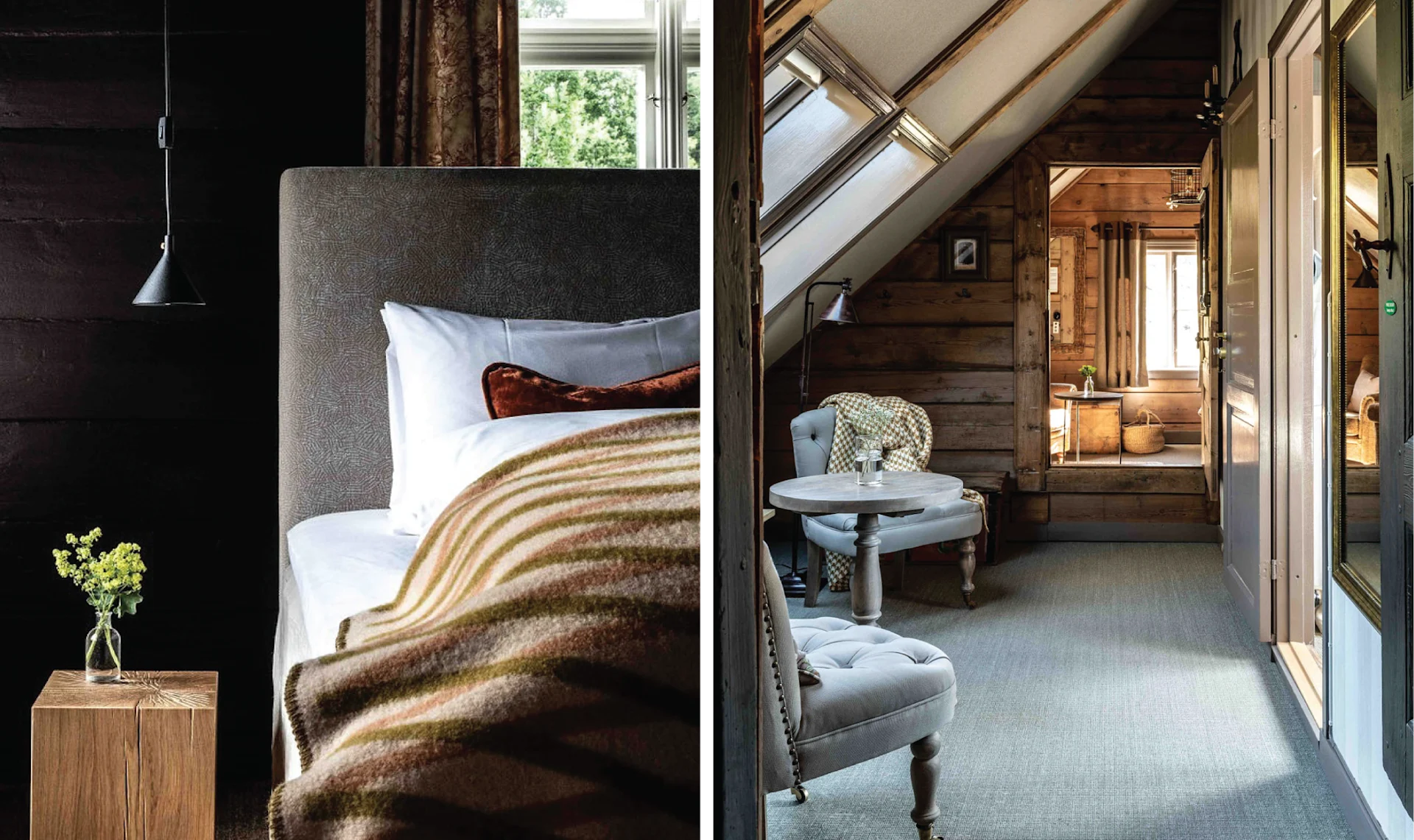
Guest accommodations are divided between The Villa and The Cottage, with a total of seven bedrooms and six bathrooms that sleep up to 14 guests. In The Villa, each of the three suites spans an entire floor. The Garden Suite, once the estate’s kitchen, includes a king bed, original fireplace, and a freestanding tub. The Rollaug Suite—formerly the farm owner’s quarters—features a sitting room, kitchen, and two bedrooms. At the top, Oline’s Suite offers a bedroom with sweeping views and a pair of cozy salons. The Cottage, located across from The Barn, adds four more bedrooms across two floors, ideal for families or friends traveling together.
The Service
The service at Åmot goes beyond what most 5-star properties offer; needs are not just met but anticipated long before you even think to ask. A fellow guest remarked that arriving on the property felt like walking into a hug; for me, it was the rare, quiet comfort of being fully cared for.
The staff’s attention to detail is unmatched. They are not only excellent at their jobs but also genuinely kind and eager to help. It’s clear everyone involved truly cares about and connects with the property. There’s a personal touch woven into everything—from thoughtful departure gifts (for me, cured salmon I couldn’t stop raving about) to the way they learn and cater to each guest’s preferences. Leaving was unexpectedly hard.
The Food & Drink
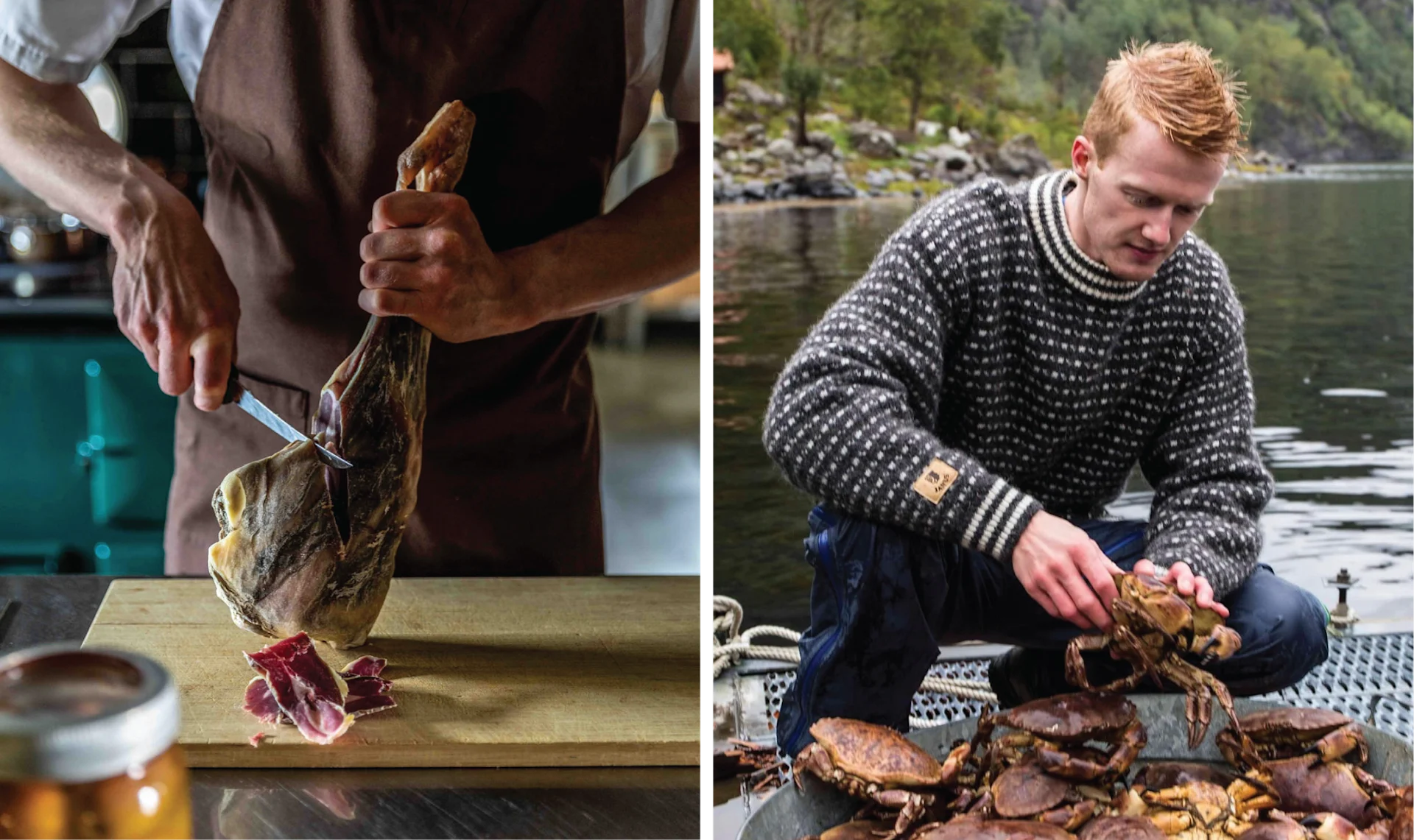
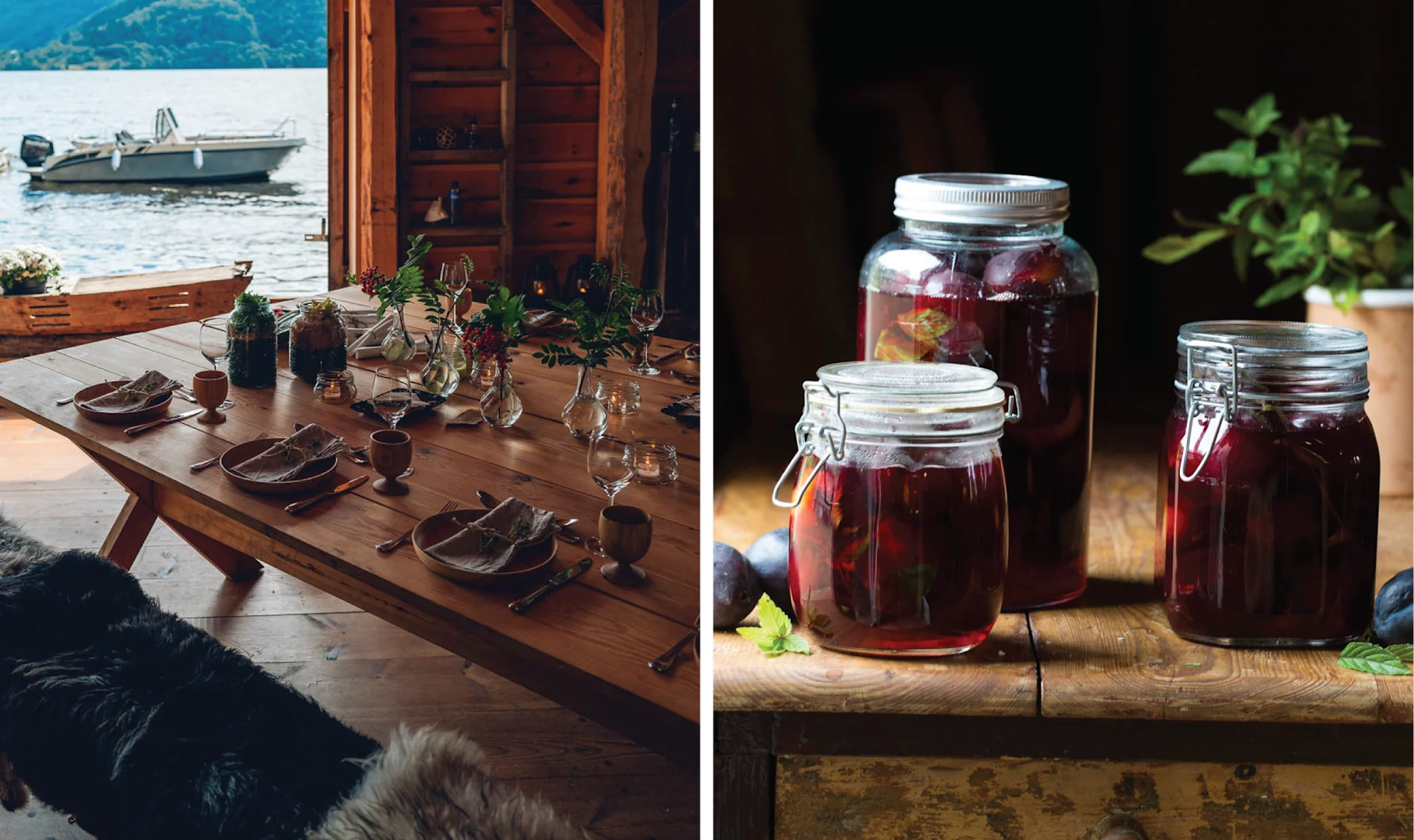
Every meal at Åmot is prepared by Thomas, the head chef, using locally sourced ingredients (Thomas will gladly take you along foraging). The wines and spirit pairings, selected by the on-site sommelier, are chosen not only for their taste, but also for the story behind each producer. During my stay, the only packaged food I had was a chocolate bar on a hike — everything else was homemade, from potato chips to strawberry jam. My favorite dish was the daily post-sauna flatbread, served with cream cheese and salmon, like all of the meals: light, fresh, beautiful, and simply prepared to perfection.
Wellness
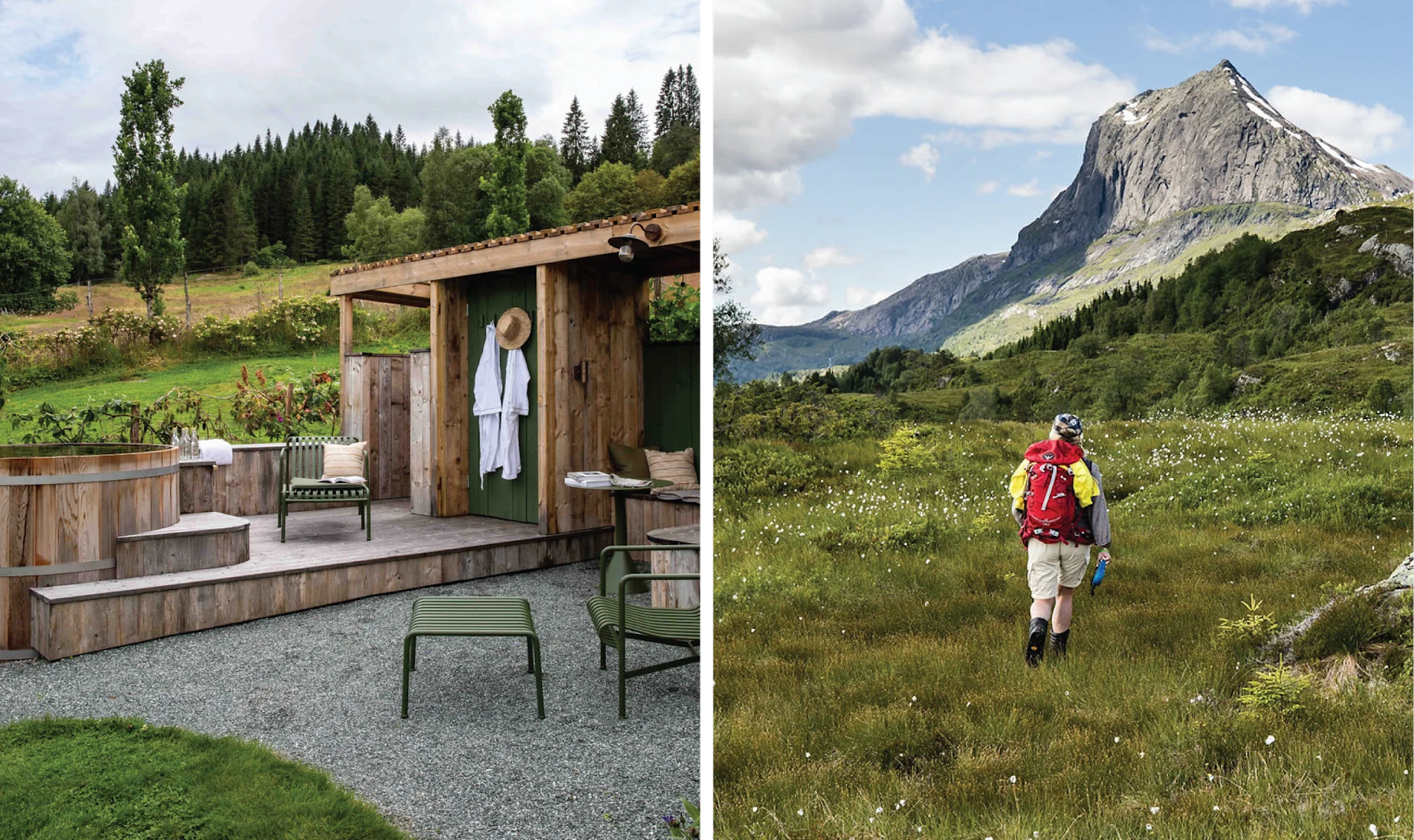
The focus at Åmot is on well-being over traditional wellness, centered on harmony with the surroundings. The crisp, fresh air alone feels restorative. Days end with a riverside sauna and a cold plunge, a quintessential Norwegian ritual, while massage treatments can be arranged in the old smokehouse, warmed by its original hearth.
The landscape necessitates active exploration as much as restoration. A typical first day might include a fjord boat ride to a centuries-old farmhouse, followed by a waterfall hike and a boathouse lunch of local fish, salad, wine, and homemade currant cake. Activities range from hiking, e-biking, and fishing to glacier treks, helicopter tours, and kayaking. Although not a “wellness” destination per se, Åmot is designed to remind us of the beauty and well-being found in nature’s simplicity, when cared for and respected.
Beyond
There is no town nearby, but once here, Åmot sweeps you up, and you never want to leave. The ultimate modern luxury is peaceful solitude, especially in the spectacular beauty of Norway’s fjord country. If it’s nightlife you’re after, look elsewhere, but isolation here doesn’t mean inactivity. Everything you need — from recreation to restoration to remarkable dining — is at hand.
Drawbacks
The estate is only available for buyouts, which may feel too large for smaller groups or couples. While the property’s charm lies in its age, travelers seeking a brand-new hotel might not appreciate its historical character.