Once the name for the entire shoreline of Namibia, infamous for its rough waters, erratic weather and winds, famous shipwrecks, and ever-shifting shores, today the term Skeleton Coast marks the northern stretch of desert from the Kunene to the Ugab Rivers. A national park by the same name, which was founded in 1971, preserves over 16,000 kilometers of the land. Within the bounds of either, you might find piles of bones, or luck out and see the occasional springbok roaming, or ocean shark coast by, while riding by on a quad bike.
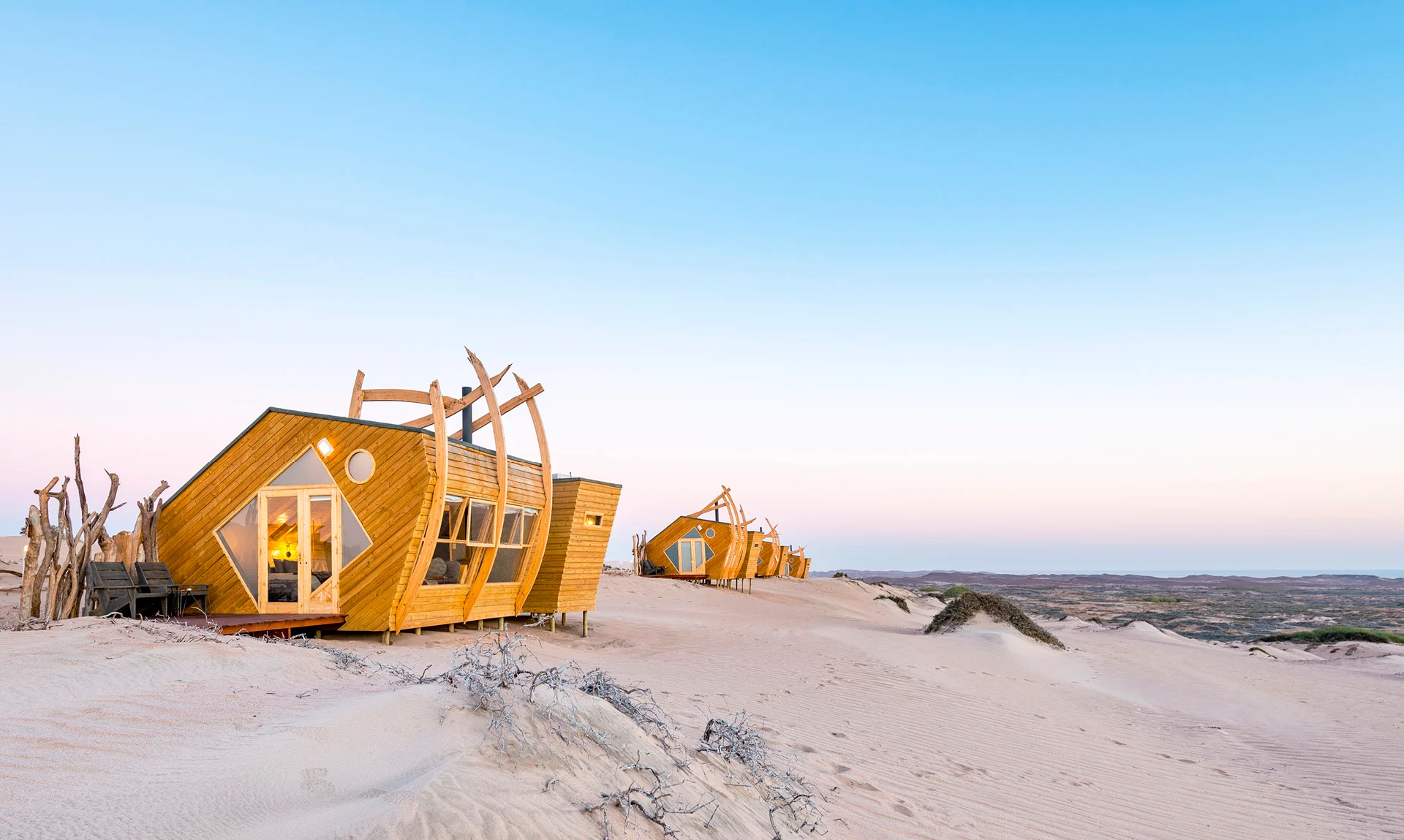
While it need not be intimidating, the intense and at times unforgiving desert region and its giant, undulating dunes are best navigated with the help of local know-how—and a luxurious place to lay one’s head between adventures. Built between the Hoanib and Hoarusib Rivers in a solitary stretch of sand, the Shipwreck Lodge’s ten self-described “shipwreck-shaped cabins” are a peaceful place for taking in the sweeping landscapes, seal colonies, and flora and fauna while seated next to a wood-burning stove, or for venturing out into the vastness by four-wheel drive with an expert.
Where
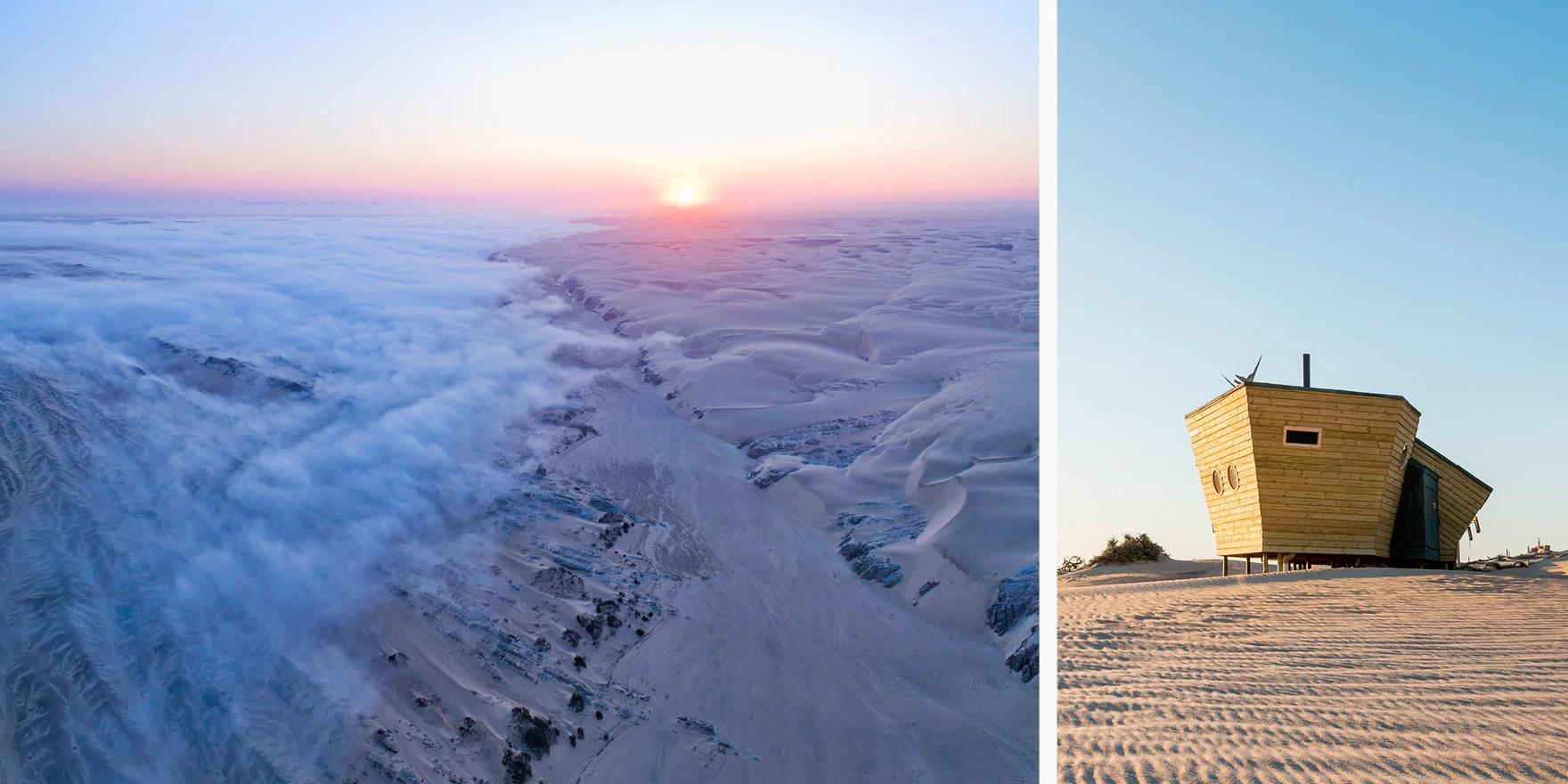
In Namibia’s northwestern corner, the remote and desolate Skeleton Coast may be better known for its wild and storied shoreline than anything. It’s at the edge of these wild Atlantic waters that ships have wrecked (due to the rough unpredictable sea and characteristic thick fog) and whale bones (left behind from the days of whaling) are eerily clustered. At the region’s national park by the same name, a thirsty, sandy landscape home to a few sparse desert-adapted animals like lions and oryx, travelers can opt to journey under a mobile safari tent or stay at safari-style camps. There is only one hotel, but luckily, it is a good one: the Shipwreck Lodge, a collection of ten wooden cabins, overlooks the dunes and distant ocean and acts as an expert jumping off point for both.
Who
The hotel is owned by three partners: Trip Travel, Journeys Namibia, and Natural Selection, which has a number of properties in southern Africa including Hoanib Valley Camp, a five hour drive away. For those who have time, it’s not a bad idea to book dual stays at the two properties to see more of the surrounding region.
The design
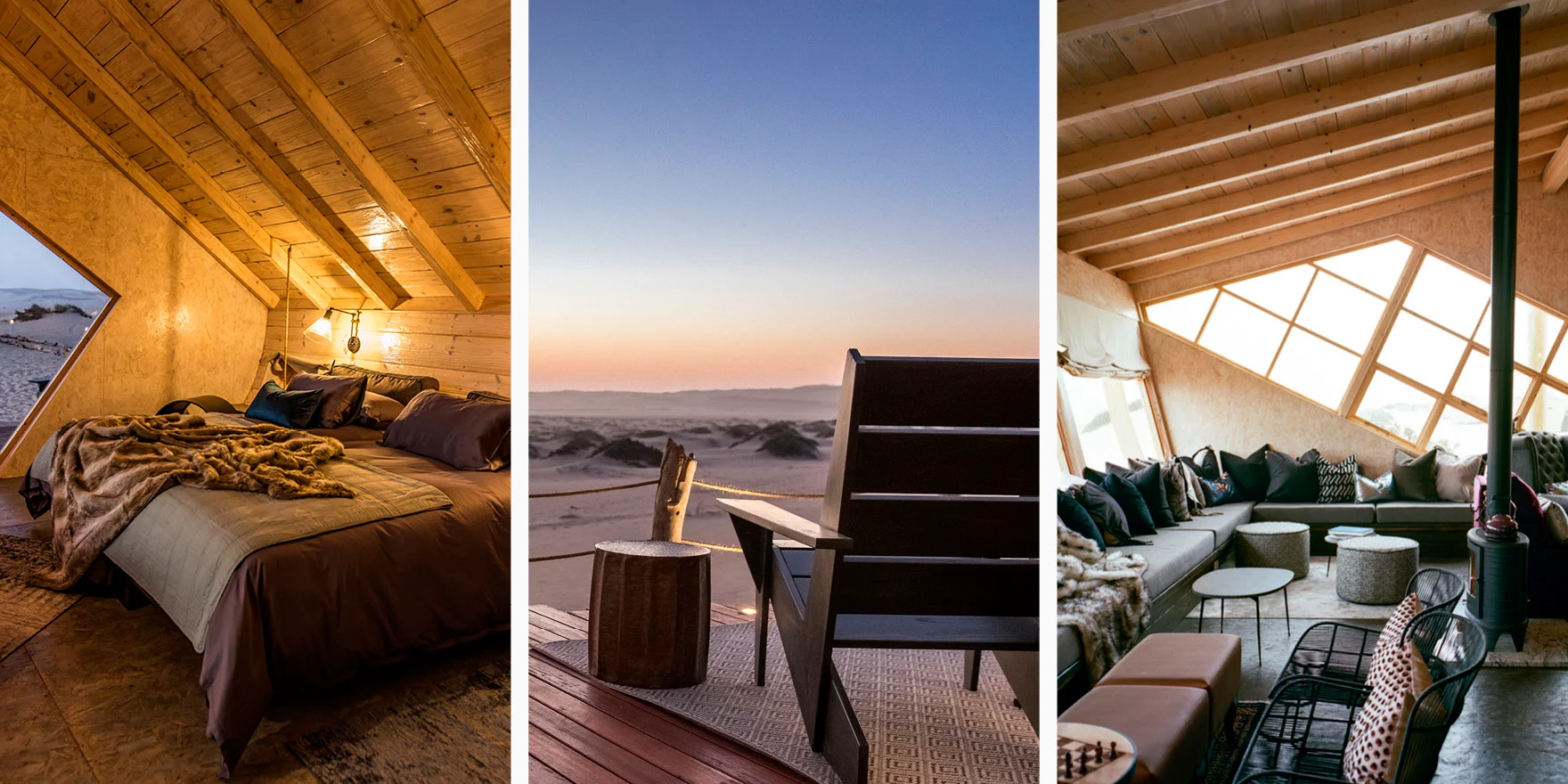
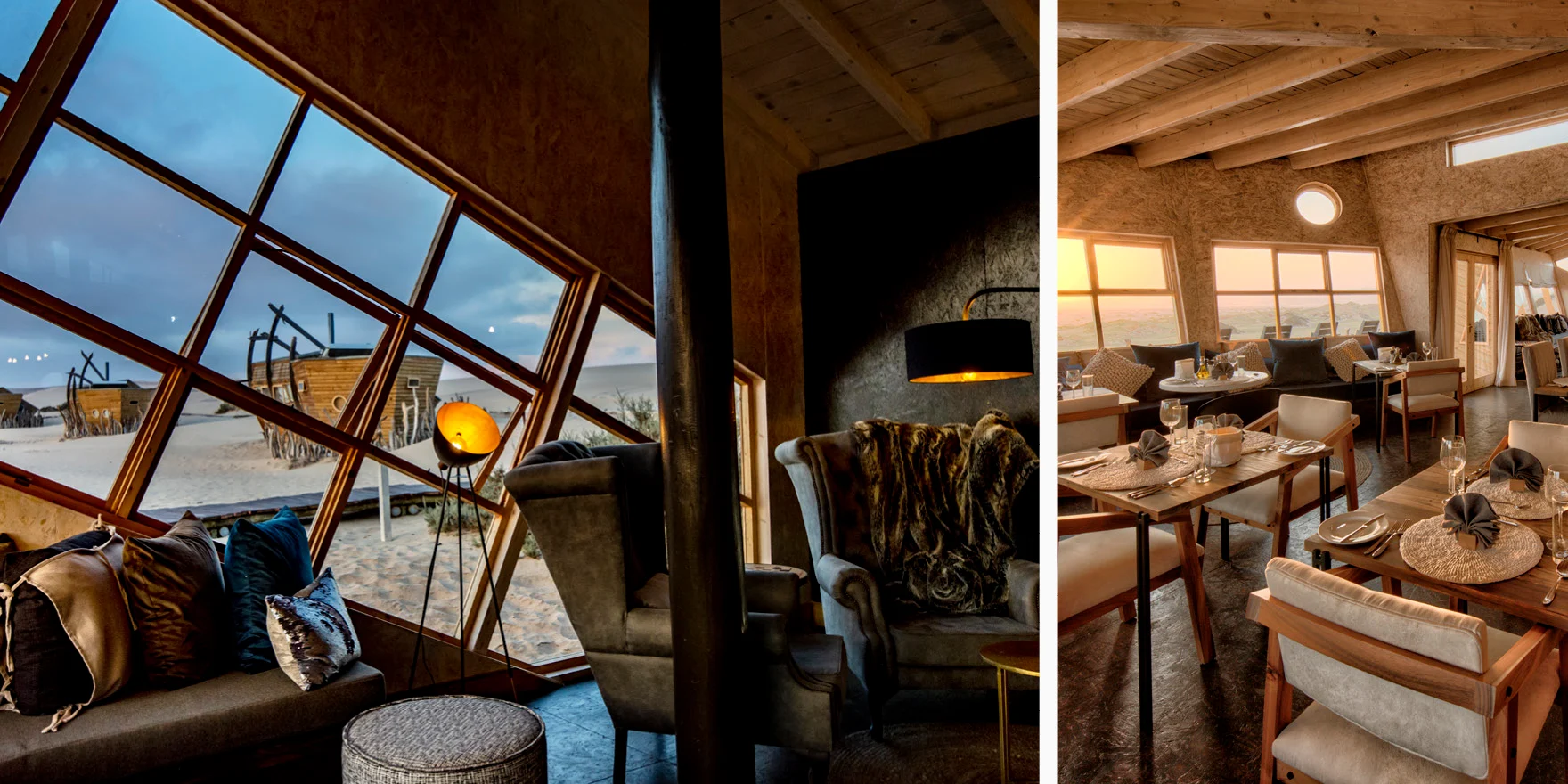
The Shipwreck’s wooden chalets, which look like tiny old-fashioned boats strewn along a dune, were designed by local architect Nina Maritz. The interiors are dotted with nautical inspired objects like ropes, fishing net screens, and portal windows that peer out into the park. Furry rugs, cozy blankets, and wood-burning furnaces provide a cosy feel, ideal for waiting out a sandstorm (a legitimate possibility). In the main area, the communal lounge has chairs and couches with silver and magenta throws and cushions, a place to sit and sink into a good read or local guide. On warm days, an ocean-facing wooden deck may be soaked with sun, or otherwise is an ideal perch from which to watch the prevailing fog roll in.
The Route
While the lodge is undeniably in the middle of nowhere, the closest airstrip in Mowe Bay is as close as 27 miles away. The drive from Mowe Bay to the lodge—which winds along the coastline past the signature skeletons, hill-like cascading dunes, and fallen ships—is the first adventure. Depending on flight time of guests, the hotel-provided guides may sometimes pack a lunch picnic to enjoy beachside.
The Surroundings
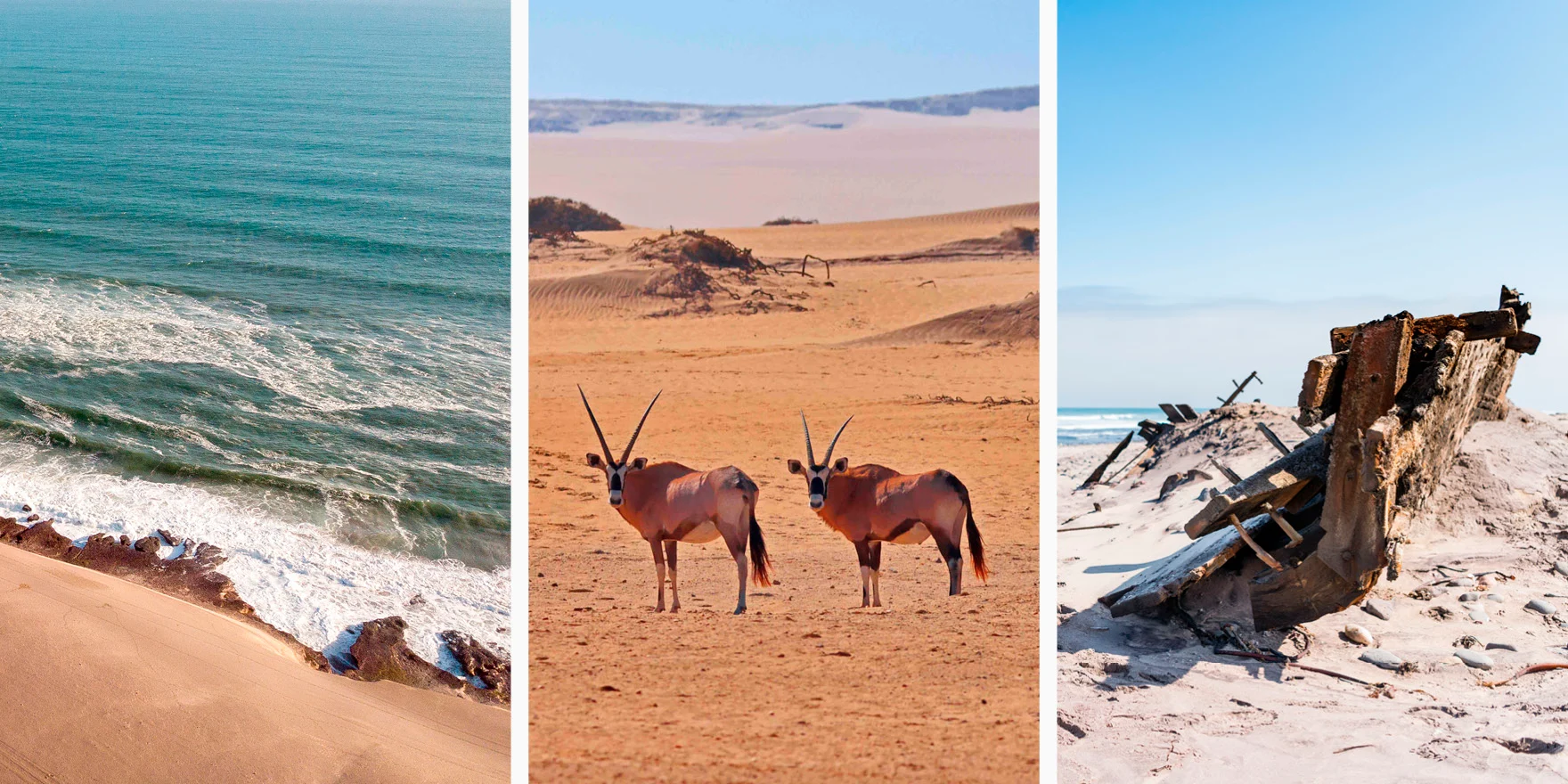
This landscape is somewhat haunting from afar–unending empty stretches of sand, dunes streaked with black magnetite (an iron-oxide mineral), driftwood scattered along the beach. But up close it’s filled with pockets of life. Along the shoreline, pawprints from animals like jackals, hyenas, or elephants (or occasionally the animals themselves) are a lucky and stunning sighting. There are also smaller, but equally striking, things to observe like beetles and native birds.
A Day Beyond the Hotel
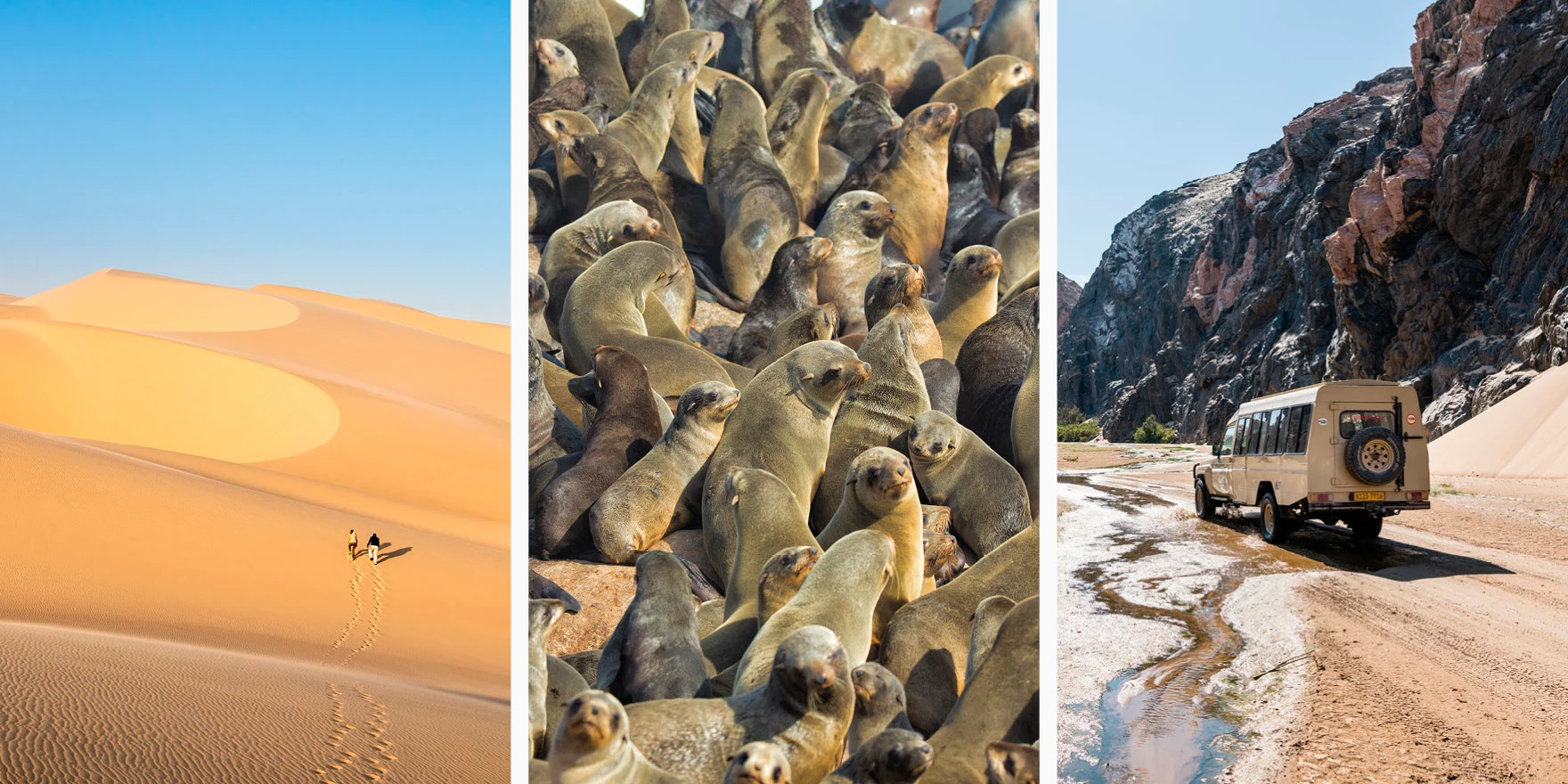
For all the emptiness here, there is still so much to do. One of the biggest draws to the area is its geology, especially when viewed from 4-wheeler rides through the roaring dunes (which create a roaring sound due to the air build up between grains of sand) or weaving through rusty, old ship parts like at the spooky Suiderkus and Karimona shipwrecks. A favorite destination in the region is to Mowe Bay, exploring the cape seal fur colony. Other daytime visits could include a drive to the clay castles, or to thousand-year-old ‘walls’ of sand, or if the weather allows, taking a dip in the icy Atlantic Ocean, followed by a sundowner (evening drink) as the sun sinks below the horizon. On Walvis Bay and Swakopmund, catamaran excursions are available.
Keep in Mind
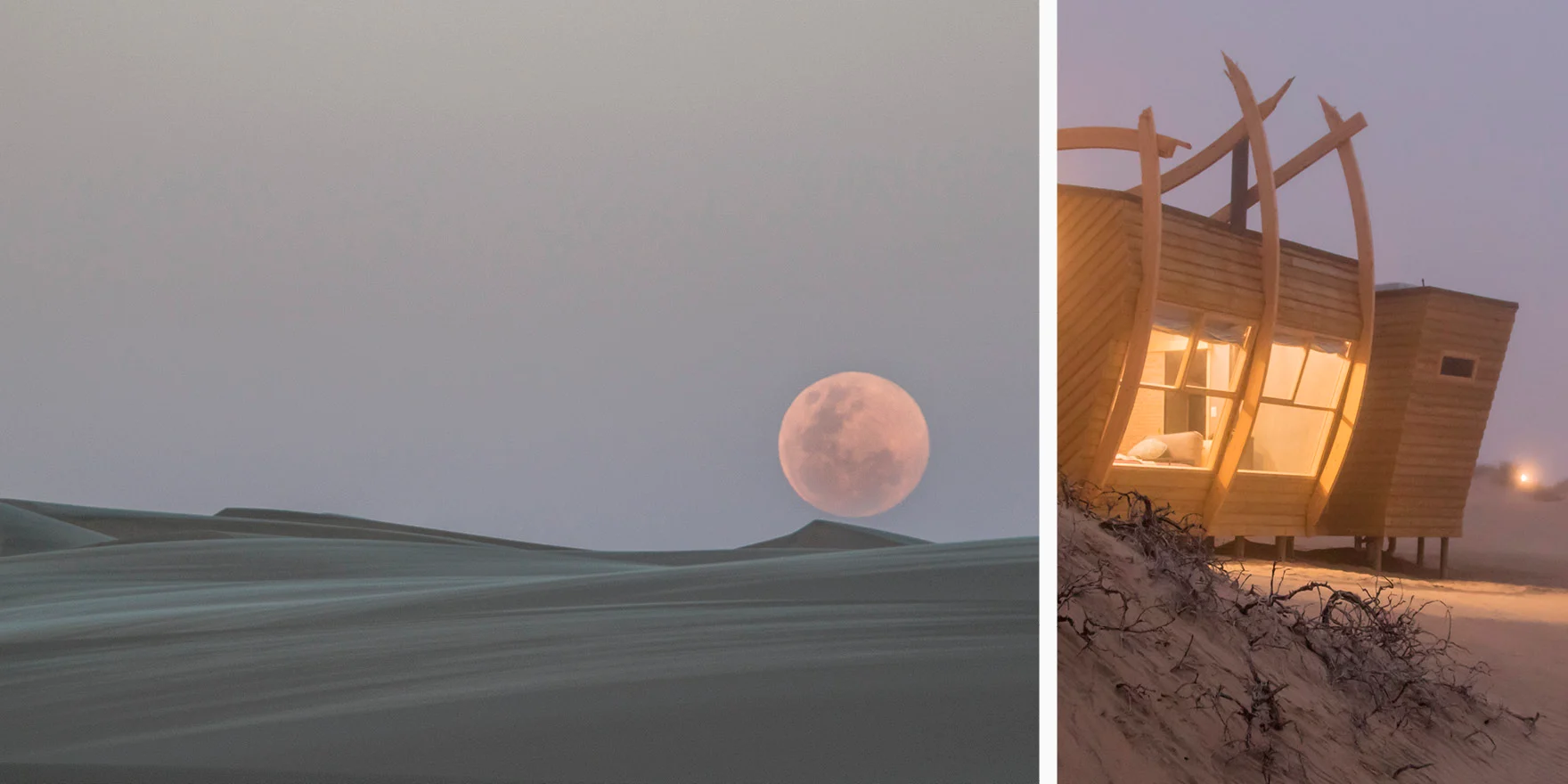
The temperature here is fairly cool year-round but it can also dramatically change from warm and sunny to foggy and cold, so pack accordingly. The mornings are generally the best time to do activities (especially wildlife and birding) as the fog often sets in in the afternoon. The hotel is open year-round, but bear in mind that this is the wild Skeleton Coast, where the only predictable thing is that everything is pretty unpredictable.