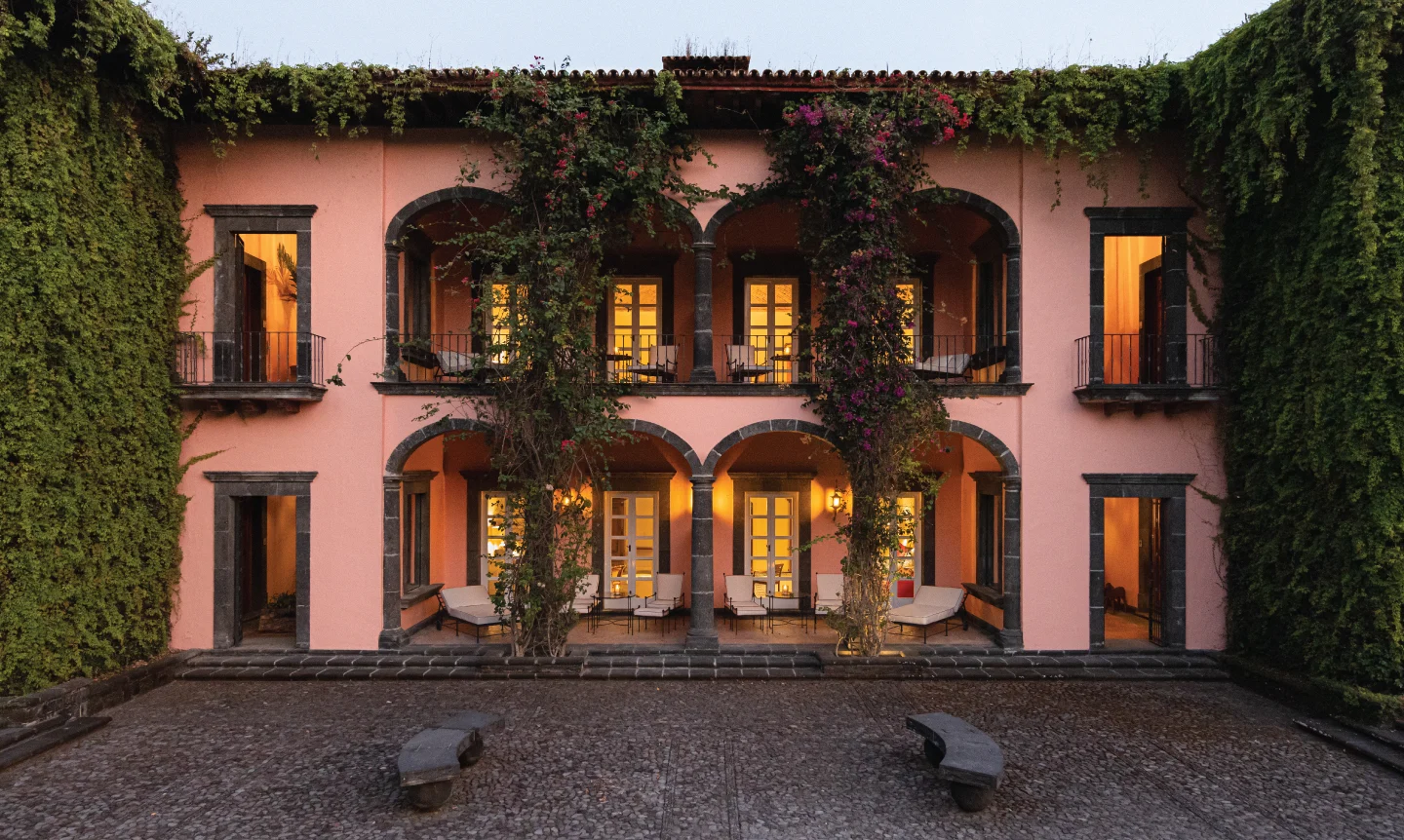
Minutes before crossing the timeworn entryway of Hacienda de San Antonio, a restored nineteenth-century estate in the remote mountains of the western Mexican state of Colima, cell phone connectivity begins to wane.
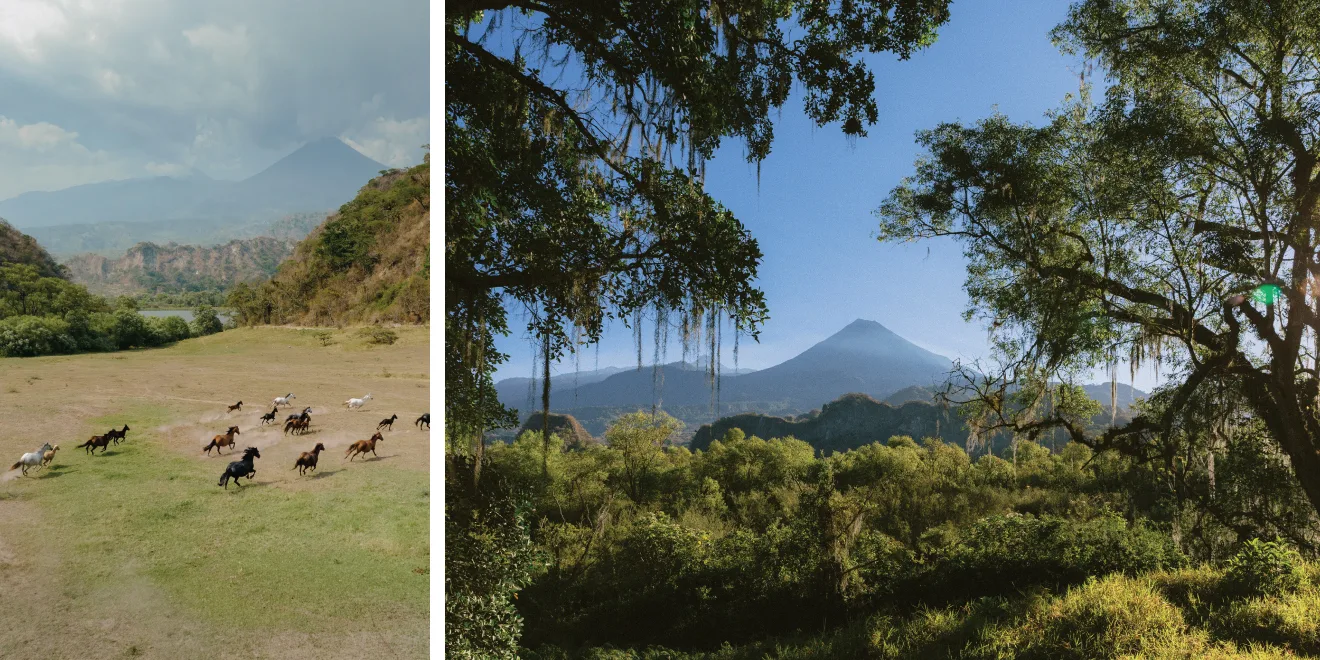
The last bar of service wavers, oscillating between there and not there, the 5G equivalent of a gymnast struggling to swing from Olympic rings. Eventually, any network connection drops out for good, leaving you to take in the endless flora and shades of green (so many, in fact, that you will soon lose count) of this sprawling heritage resort and its centerpiece: a 5,000-acre working ranch, Rancho Jabalí.
Here, days unfold as though time is both infinite and unimportant. You will admire floors made of antique blue tiles and shelves filled with toddler-sized ceramic Michoacán pineapples. You will fall asleep in a plush bed in a room that is the color of just-churned butter, lulled by the murmur of fountains run by an underground network of ancient aqueduct channels. Come morning, you will drop a match in the fireplace and sip a cappuccino made from coffee grown and roasted right here on the Ranch with milk proffered that morning by cows roaming the land.
You will become the type of person who has a favorite tree. A fuchsia bougainvillea spilling onto the grasses between the manicured garden and a wilder grove, perhaps. Maybe an olive tree weeping over the courtyard. In the weeks that follow, after you return home, you will think of those trees fondly — and pay little mind to whether your phone has service at all.
The Check In
Hacienda de San Antonio is remote. The nearest town is Comala, a historic area known for its white-facade buildings. The closest major city is Colima. Two international airports, Manzanillo and Guadalajara, are between two and three hours by car, regardless if you book a rental and brave weak GPS connectivity or schedule a driver through the concierge. For those fortunate enough, a grass airstrip is available for any arrivals by private charter in a single or twin-engine plane.
The primary entryway to the Hacienda has, more or less, remained intact since the late 1800s. An arched aqueduct constructed from black volcanic stone was added in 1904 as a means to power the estate. Today, the channels provide two services: gentle aural pacification and water for the property's many fountains. (A favorite was a Moorish one in the garden inspired by the Alhambra.) To the left of the main check-in lobby sits the Chapel of Saint Anthony, originally built in 1913 under the orders of Doña Clotilde Vogel, the wife of the estate’s then-owner. Doña hoped the saint would protect the coffee farm from volcanic forces. So far, the land has been spared.
The Look
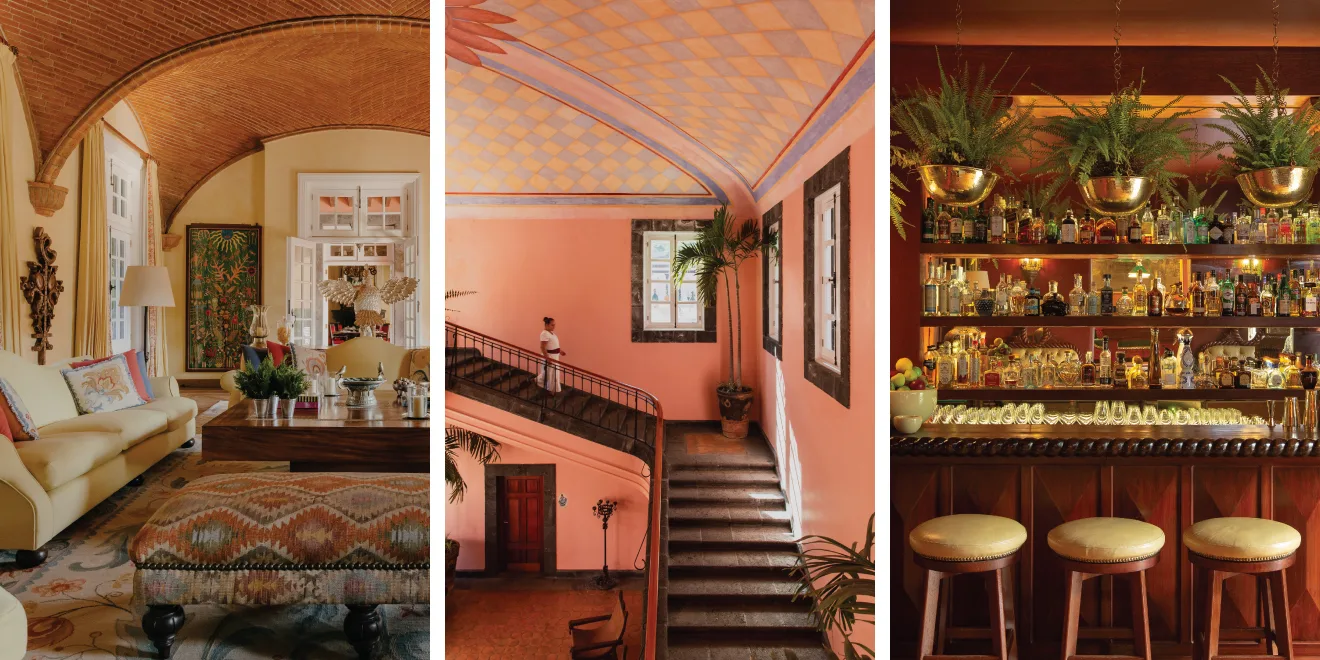
After acquiring the hacienda from his father-in-law in the 1980s, Sir James Goldsmith hired the French designer Robert Couturier to assist with restoration, renovation and additions like a second floor and a grand staircase. The property’s current owner is Goldsmith’s daughter, Alix Maraccini, who worked with the designer Armand Aubery to fill the interiors with hand-woven Oaxacan rugs, antique wooden rocking horses and other traditional Mexican decor.
Still, it’s the outdoors that make Hacienda De San Antonio. The central courtyard is the type of place a fairytale character might awake after one hundred years of slumber. So lush are the lip-stick red flowers, reedy grasses and blooming bushes that Rancho Jabalí’s director said he couldn’t possibly guess the approximate number of flora species on display, though he added that the fiery ornamental ginger and flamboyant Tabachin tree were two of his favorites.
Food and Drink
Off of the courtyard are two bars: One is decked out in inviting yellows and offers self-serve plantain chips and cognac, complete with an ever-burning fire to combat the evening chill. The other is a swanky billiards parlor with red walls that match the Hacienda’s brick facade, which features a menu of mezcal cocktails that come served with fresh lavender garnishes and other treats plucked from the courtyard.
Nearby, the plush, high-backed chairs and hand painted muralled walls of the elegant dining room create an environment that feels formal and exceedingly comfortable at once. Outside, an even more relaxed dining area overlooks the Star Garden, so named because of a celestial series of fountains trickling with water from the Rio Zarco brought in via the aqueducts.
Here, meals have a ranch-to-table focus. Vegetables are grown on site, typically paired with freshly-made cheeses, grilled rib eye or a fish filet, Veracruzana-style. For breakfast, you’d be a fool to skip the memelas — thick masa disks pan-fried and topped with savory black bean paste, fried eggs, and chorizo cooked to the point of shattered-glass crispness — and daily verde juice made from fresh cactus, celery and apple. More optional is the opportunity to have your meal served to you on a floating bamboo platform on one of the property’s lakes.
Down the street from the central Hacienda sits the property’s beating heart: Rancho Jabalí, a sprawling biodynamic farm encompassing a coffee roastery, cheese-manufacturing facility, horseback riding trails, a livestock farm and waterfall-laden lagoons. My advice: Peek into the roastery and learn how beans go from cherry to roasted Arabica, then gorge yourself on the many varieties of dairy produced from the ranch’s over 400 cows.
The Rooms
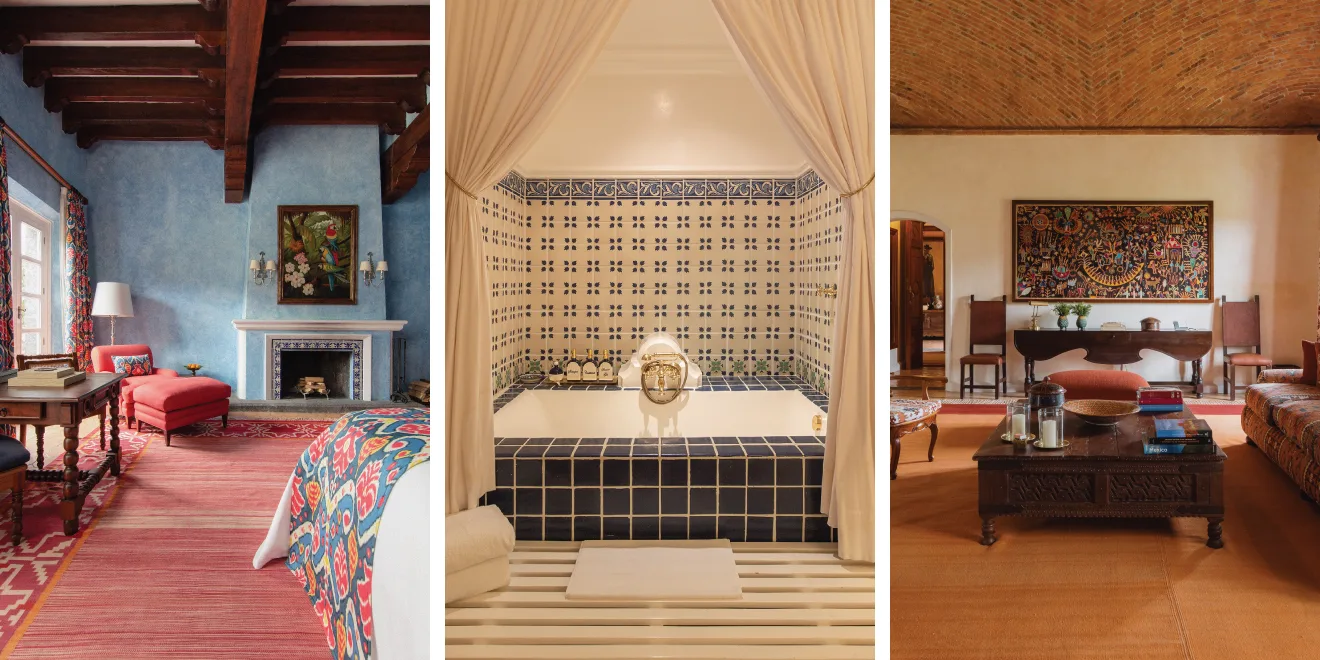
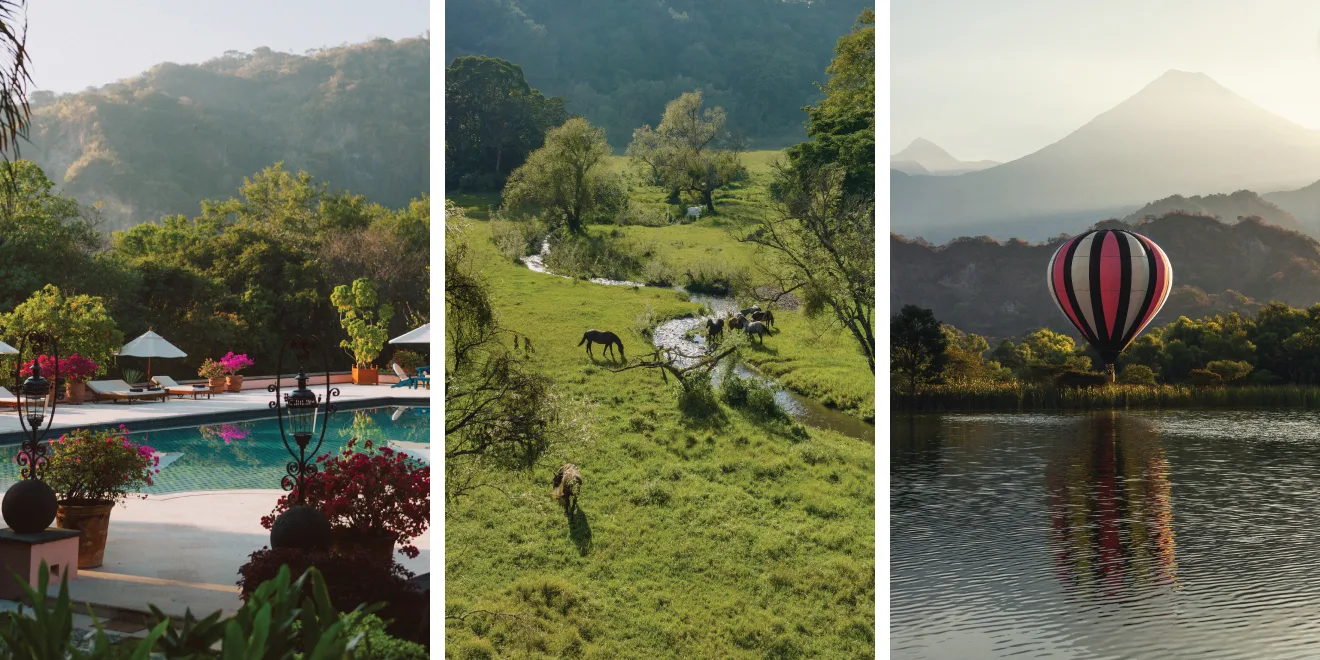
Each of the 25 rooms and suites at Hacienda De San Antonio offer their own view of this oasis-like estate. My two terraces, for example, faced the Volcán de Colima, or "Volcán de Fuego," head-on, as though the fiery mountain might amble over for some room-service breakfast. Inside, a large bed and roomy armchairs beckon you for a nap like a pair of old lovers. You may need some rest between the daily activities, everything from jaunts to the Ranch and morning hikes to quad tours of the ancient grounds and hot air balloon rides.
Artisanal soap (made from the ranch’s own yogurt, honey and essential oils) and a lavish, wide tub sits in the tiled bathroom. I chose to sink into a bath with one of the pudgy double chocolate cookies from the minibar. Opening a tiny window overlooking the central courtyard, I could hear birds chirping as I tried not to drop any crumbs. The songbirds were likely a choir of Lilac-crowned Parrots, San Blas Jays, Orange-breasted Buntings and Ruddy-breasted Seedeaters that call Hacienda De San Antonio, a nature reserve and birdwatching mecca, home.
The Check Out
Within hours of arrival, the sweeping beauty of the property means you may quickly find yourself checked out in all the ways that really matter. I, for one, could barely even remember the impetus for telling my husband, just days before our stay, that “I’ve never been so stressed in my life.” It’s as though the activities here — from the outdoor tennis court and rambling pool to several miles of trails behind the gardens looping through avocado groves, thickets of Guadua Angustifolia bamboo and an oversized turf-covered bunny a lá Alice in Wonderland — are designed to plunge you even deeper into a state of languid delight.
From there, you can arrange to ride horses at Rancho Jabalí or learn the ways of local culinary arts with a private class. Perhaps you will visit the organic farm from which most of your meals materialize or paddleboard across one of the lagoons. Take a hike or go on an evening bike ride on a nearby peak or stay grounded by enjoying any number of in-room spa offerings. Should you get through all of that with time to spare, your favorite tree will always be waiting for you to lounge under with a book — and, in my case, a few more of those soft-centered chocolate-chunk cookies.