As kids, many of us dreamed of waking up one day in an empty toy store, and, as if by magic, having a full run of the shop to ourselves.
ÀNI, a private resort on the southernmost shores of the island nation of Sri Lanka, just off the southern tip of India, operates as a type of wish-fulfillment for that childhood fantasy. Though, this time the spoils are very real and for very fortunate grown-ups.
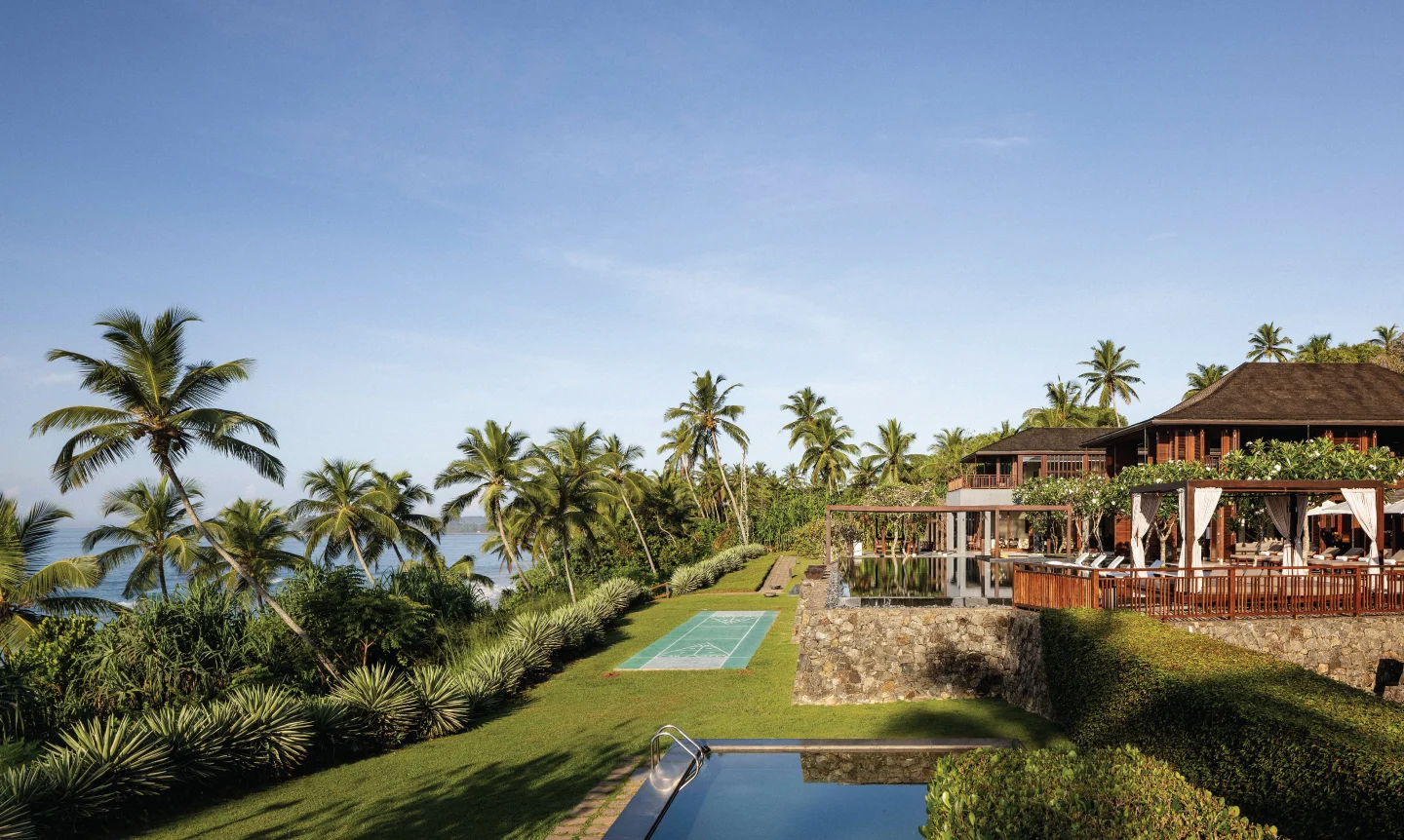
It’s a deceptively simple premise: Guests who meet the minimum booking of six suites are guaranteed to have ÀNI’s five-acre oceanfront property to themselves. This means that, no matter if you’re a pair of hushed honeymooners or rowdy 30-person family reunion, the sprawling compound’s 15 modernist villas, two infinity pools with sweeping ocean views and staff of 30 — on-call masseuses, a state-of-the-art kitchen overseen by a top chef, fleet of tuk-tuk drivers, neighborhood guides to nearby villages, babysitters at the ready, you name it — are “all yours,” as ÀNI likes to say.
In many ways, the property is a bellwether for a new era of what one might call "seclusivity," where the exclusive private-yacht experience is married with the crowds-free pleasures of a secluded destination. But the uniquely Sri Lankan combination of sleepy natural splendor (looking out over the tranquil expanse of Indian Ocean, the next landfall is Antarctica) and sleepless service punctuated by random acts of kindness (a quill of dried inner bark from a native Ceylon cinnamon tree might pop up as a gift in your room) means that this all-encompassing escape feels surprisingly unfussy and familiar.
The Check In
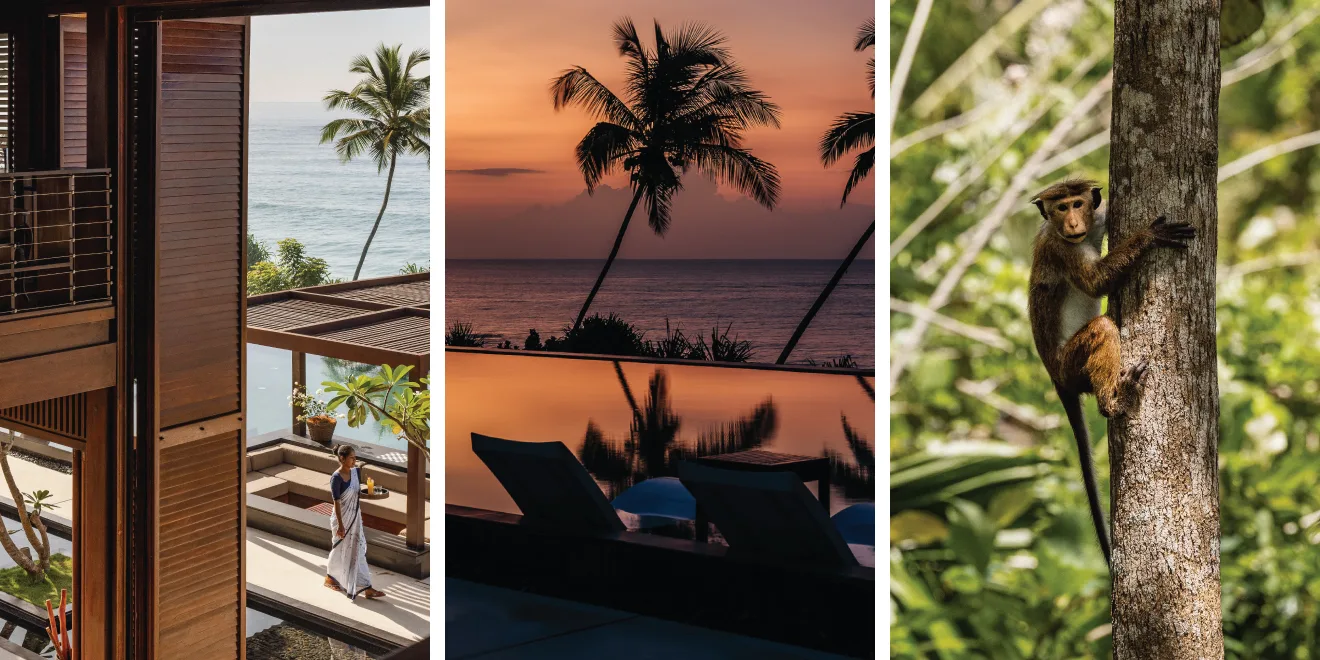
The name ÀNI is a play on andjani, a Swahili word roughly translating to the “road” or “path ahead.” More realistically speaking, however, one needs to plan ahead. For visitors touching down in Sri Lanka after a particularly long journey, we recommend a jet-lag pit stop with a night at The Wallawwa, a restored Dutch colonial mansion with 200-year-old tropical gardens, just 15 minutes from Colombo Airport. Rest assured: With its ancient jackfruit trees and handsome mid-century rooms, this dazzling Teardrop-Hotel property, as one British journalist remarked during a recent stay, is “arguably the world’s most glamorous airport hotel.” From there, cruise over to the island’s southern shores via a quick 35-minute sea-plane flight to Mawella Lagoon or a longer, but no less scenic, few-hour drive through the rice paddies and cinnamon plantations along the country’s perimeter. Upon arrival, ÀNI’s traditional front desk “check-in” process is quick: A glass of freshly-pressed coconut water, a wet compress to counter the South Asian heat and, well, that's it. Everything else is taken care of.
The Look
With a level of white-glove perks that few, if any, other resorts in Sri Lanka can touch, the property is more like a vision for an utopian island village than a by-the-numbers vacation getaway. A series of manicured sloped pathways connect the property’s various shingled villas, with smaller pathways branching off to a fitness center, outdoor tennis court, wellness spa and vast grass lawns. The compound’s central hub, a two-story open-air pavilion, is all Burma teak, antique Sri Lankan sculpture and vaulted ceilings. The sharp, clean lines act as a frame for the menagerie of mischief endemic to Sri Lanka’s south coast. Look up and you may find the Sri Lanka White-Eye, a small native passerine bird, whistling on the ruffled edges of a fan palm. Tufted gray langurs routinely dart across the grounds, just out of the corner of your eye. A few steps from the pool’s submerged chessboard, a staircase leads to an empty stretch of gold-sand beach save for the occasional monk tending to a seaside Buddhist temple, curious street dogs and nesting sea turtles.
The Rooms
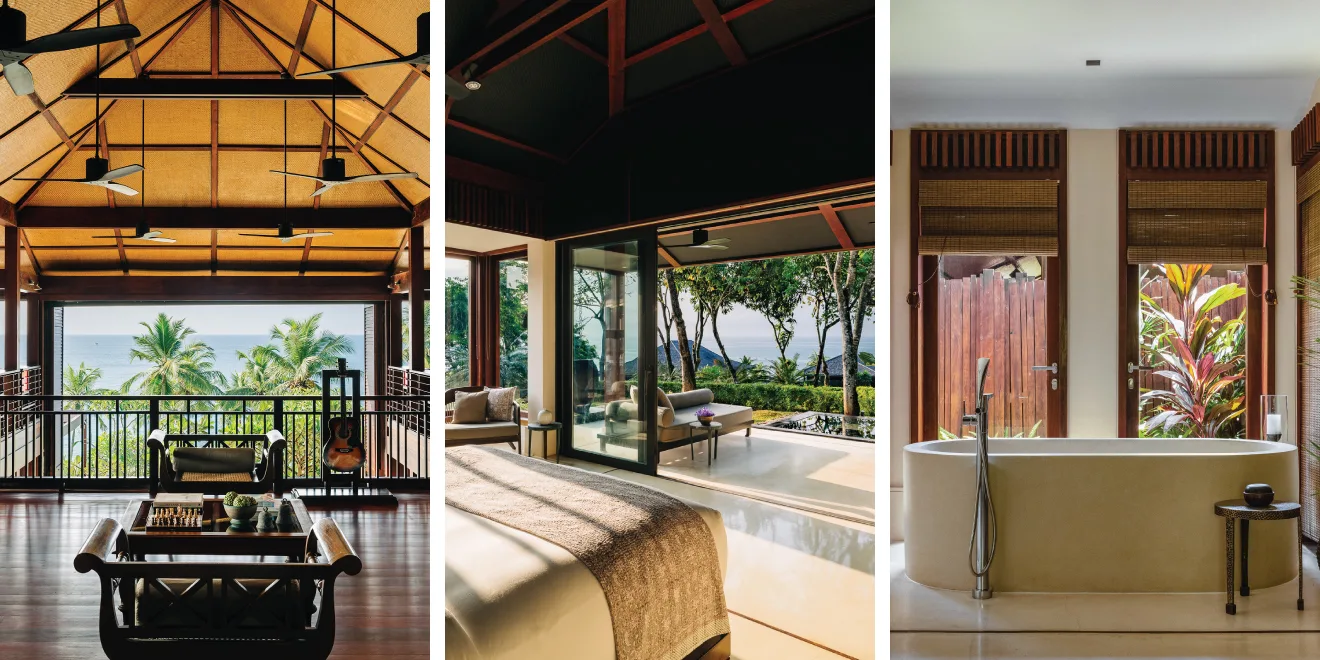
With interiors made of materials like rough-cut stone, granite and terrazzo and an earthy palette of browns and beiges, the property’s villas are both tranquil and stately, as if a Tropical Modernist was commissioned to design a Malibu beach house. Like the rest of the property, everything is designed around outdoor living. The room’s anchor, a central king-size bed, faces floor-to-ceiling glass doors that reveal a private plunge pool. (And, more often than not, a peacock or two admiring their plumage in the reflective water.) The bathroom’s circular bathtub is large enough to fit a Sri Lankan blue whale. Still, the biggest luxuries are the most thoughtful, such as a teak basket for daily laundry service and an outdoor “rain” shower with a small rock garden as your bath mat.
Food and Drink
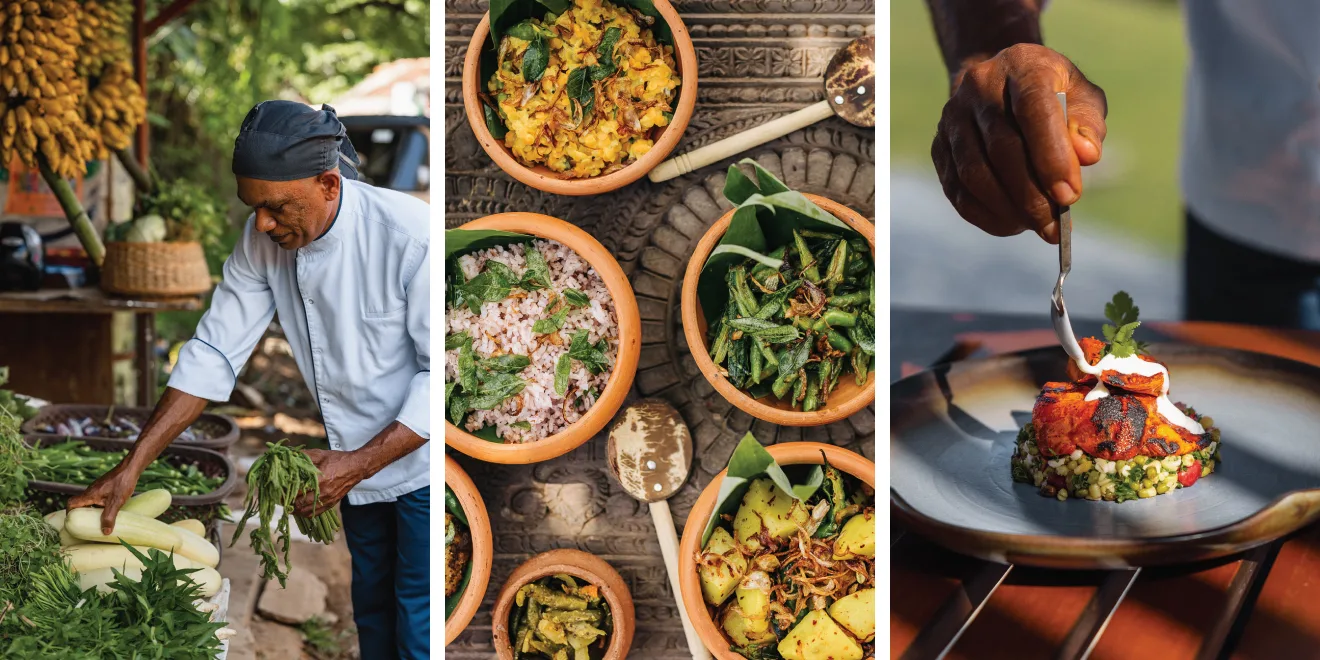
A teaching kitchen for outdoor cooking classes. An alfresco lobby bar. A troop of satellite bartenders who dispense fresh ice cubes into neglected cocktails left out in the sun. Afternoon tea service on one of the cliffside lawns. Barefoot dinners in the shallows of the pool. A tuk-tuk tour of the nearby farmer’s markets.
In the hands of Cyril Human, ÀNI’s long-time chef, the experience of dining is as varied as the dishes on the menu. Of course, there are meals tailored to an "international" palette, such as sushi made with seafood sourced from the island’s famous fishermen or imported Australian steaks. But it’s the selection of traditional Sri Lankan fare — breakfast hoppers, bowl-like crepes of spongy fermented rice flour served with eggs; coconut and turmeric curries; prawns as large as a sausages, grilled “deviled style” — that best showcase ÀNI’s refined palette.
The Check Out
Beyond rest and relaxation, there is an extraordinary amount of riches to be found on Sri Lanka’s south shores. For night owls, on-site guides can organize a 3 a.m. walk to the beach to spy on turtle hatchlings making their way to the surf. Early birds can visit local tea plantations (grab a box of rare Ceylon white tea) or nearby historic ayurvedic houses, which serve mindful meals made of lentils, leafy greens and curry leaves. Things get even spicier at the Wewurukannala Buddhist temple, home to the island’s largest Buddhist statue: a seated Buddha standing 160 feet tall. Before ascending to the statue’s peak, however, visitors first must navigate a “Tunnel of Hell” filled with depictions of bodies tossed in boiling cauldrons, disembowelment by animal-like demons and other scenes of Buddhist doom and gloom illustrated with campy aplomb.
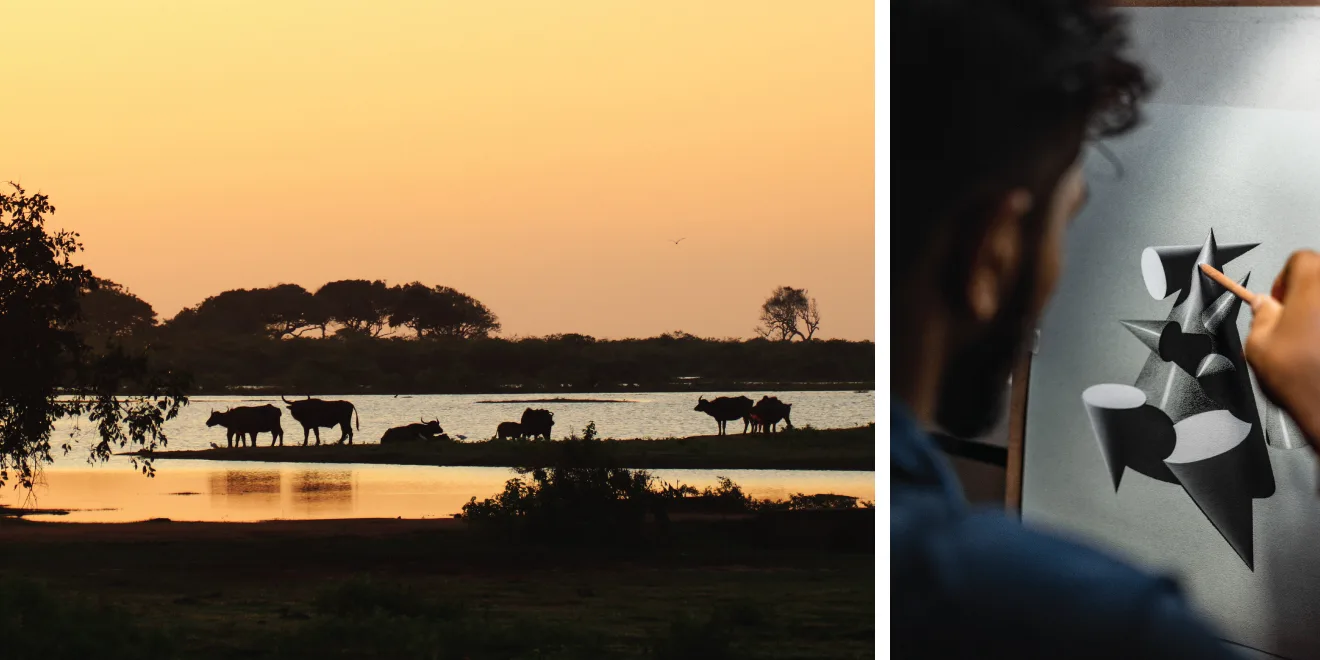
About an hour away by car, the historic town of Galle is home to antique shops selling minimalist coconut-wood totems in the shape of elephant behinds (stray from the obvious tourist-trap spots, if you can) and some of the country’s finest architecture, including Galle Fort Hotel, an 18th-century Dutch mansion turned craft-cocktail hangout, and the Jetwing Lighthouse, one of the last major projects to have been designed by the celebrated Sri Lankan architect Geoffrey Bawa. Further east, a game-drive tour of the leopards, elephants and hornbills that live in Yala National Park is worth a private helicopter trip (or several-hour drive) across the southeastern countryside to get there. Another worthy visit? The ÀNI Art Academy, a non-profit art school launched by Tim Reynolds, ÀNI’s founder. Serving students from across the island, the project is a showcase for Sri Lanka’s increasingly bright future.