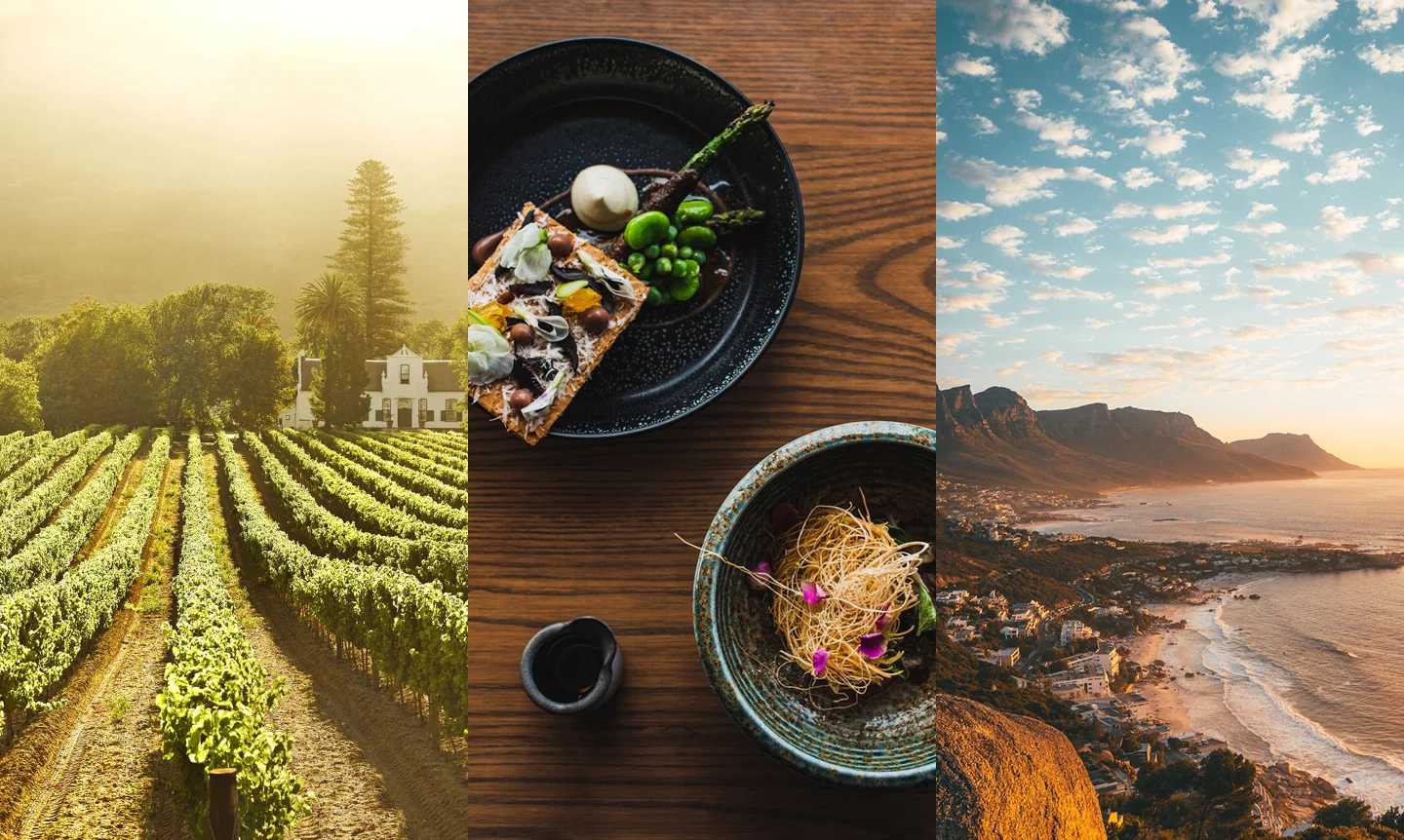
Change has been slowly but steadily at work within Cape Town’s culinary scene for more than a decade. The comfortably sized, easy-to-navigate city, sandwiched between the mountains and the sea, has always been the advantageous home to pristine ingredients like west coast oysters and mussels, game meats such as springbok and kudu, and sweet local crayfish—and its restaurants have long served flavors and dishes from South Africa’s melting pot, like Afrikaans koeksister (a sweet fried doughnut) and delicately spiced Cape Malay curry. After the city’s first breakout global “bests”—La Colombe, The Test Kitchen—young chefs began passionately flooding Cape Town’s kitchens with more techniques and trends they encountered overseas, while South Africa’s wines also saw a transformation by a new generation of winemakers who were breaking away from the traditional winelands like Franschhoek and Stellenbosch and making wine in more challenging terroir.
For a region so dependent on tourism, Cape Town was never going to escape the pandemic unscathed. Subject to some of the strictest lockdowns in the world (the city once again battened the hatches for two weeks in June to dodge the Delta variant), nearly 100 restaurants have closed their doors over the past 15 months. However, an estimated 70 new ones have sprung up, which sums up the energy of Cape Town overall, not to mention its resilience—this is, of course, the city that almost ran out of water a couple of years ago. New chefs are taking short leases for pop-up dining experiences and opening hole in the wall takeaways, and classic restaurants are being reimagined, too. Here are the spots, stalwarts and newcomers, that have re-emerged as the places to eat and drink across the city.
TO EAT
Chef’s Warehouse Beau Constantia
In a sleek dining room overlooking the Constantia wine valley, this is laid-back, refined dining at its best from one of Cape Town’s most influential chefs, Liam Tomlinson, in partnership with co-owner and head chef, Ivor Jones. The glass cube that houses the restaurant in a verdant suburb just outside the city is a welcome dash of modernity in an area where most restaurants are housed in 100-year-old Cape Dutch buildings. The menu changes weekly and features nine plates to share, from local-line fish sashimi to venison, all with ingredients grown on the on-site farm—about which the staff know every last detail—ideally washed down with a glass of the estate’s Pas de Nom MCC, South Africa’s answer to Champagne. Finish with the standout honey and lavender crème.
1043 Constantia Main Rd, Constantia
Pot Luck Club
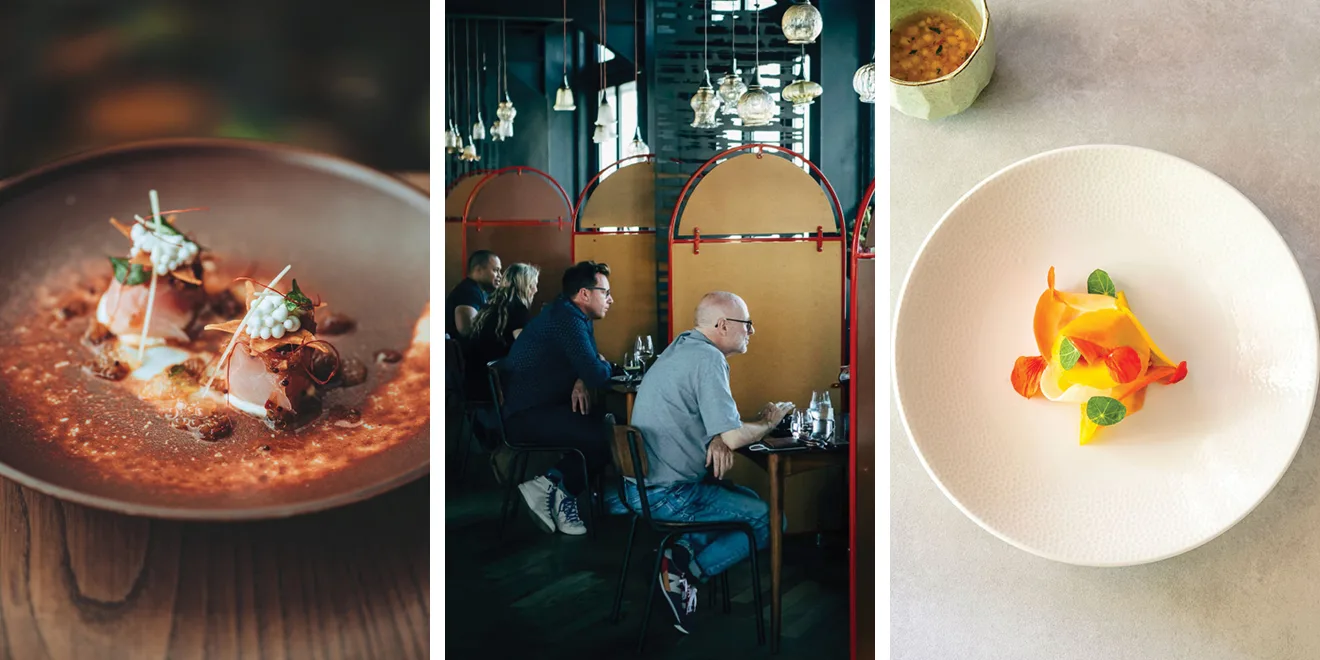
Luke Dale Roberts is one of the city’s culinary luminaries, owner of the path-breaking The Test Kitchen. A decade ago he opened this second restaurant in Woodstock, an edgy neighborhood 10 minutes from the center of town, which became its crowning glory—quite literally, as it sits atop a silo at The Old Biscuit Mill, a mixed-use development housing quirky boutiques and a weekly neighborhood food market. Pot Luck Club is reached by a glass elevator, which pops open into an urban loft-style space: wooden floors, charcoal walls and bright African fabrics arranged by Robert’s designer-wife, Sandalene. The menu is modern sharing plates and the dining room view shows a different but no less essential side of Cape Town, the striking industrial side of the harbour.
The Old Biscuit Mill, 373-375 Albert Rd, Woodstock