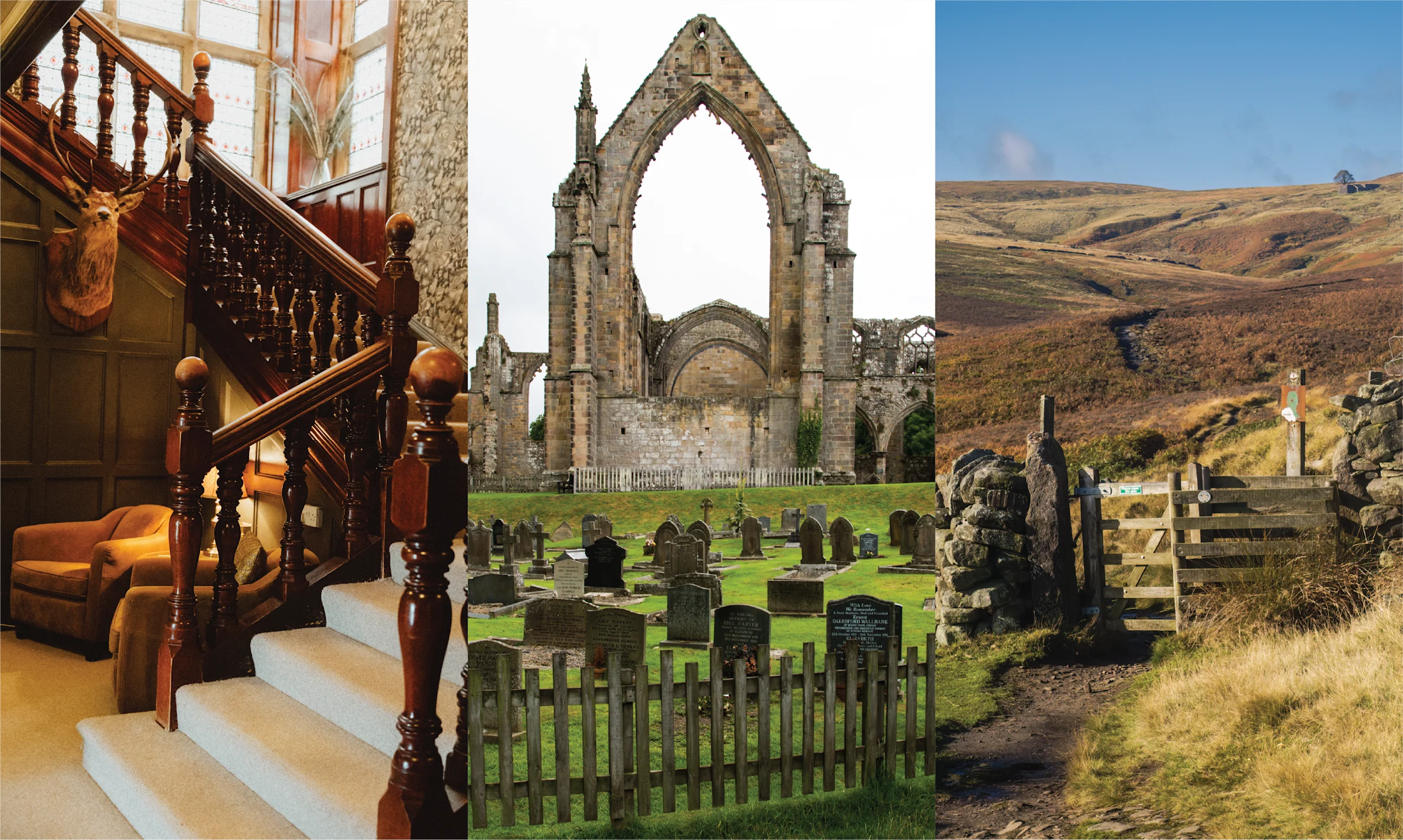
It’s a landscape of millstone grit and blanket bog, of soot-black industrial villages and moorland scoured by wind. Emily Brontë never tried to make Yorkshire inviting. She called it “wuthering”: battered by the elements and difficult to endure. And yet, nearly two centuries later, one of the year’s biggest film releases returns to this same inhospitable ground.
Wuthering Heights has been read, taught, and adapted for generations. Its brutal romanticism and emotional honesty continue to resonate, transcending the period in which it was written. On the page, the novel can feel unruly; on screen, its intensity is often tempered for easier viewing. But what neither medium quite captures is how inseparable the novel is from the place that produced it. To fully understand Wuthering Heights, reading or watching alone isn’t enough. Yorkshire—Brontë’s Yorkshire—must be experienced on its own terms.
Brontë wandered these moors for most of her short life. “I’ll walk where my own nature would be leading,” she wrote. “It vexes me to choose another guide.” She wasn’t being poetic. She found meaning in its wildness, its claustrophobia, its dimly lit rooms, and its haunting quietude.
Emerald Fennell’s rendition is the latest attempt to translate the novel’s force. Films come and go—what stays is the terrain, and what it evokes in those who spend time within it.
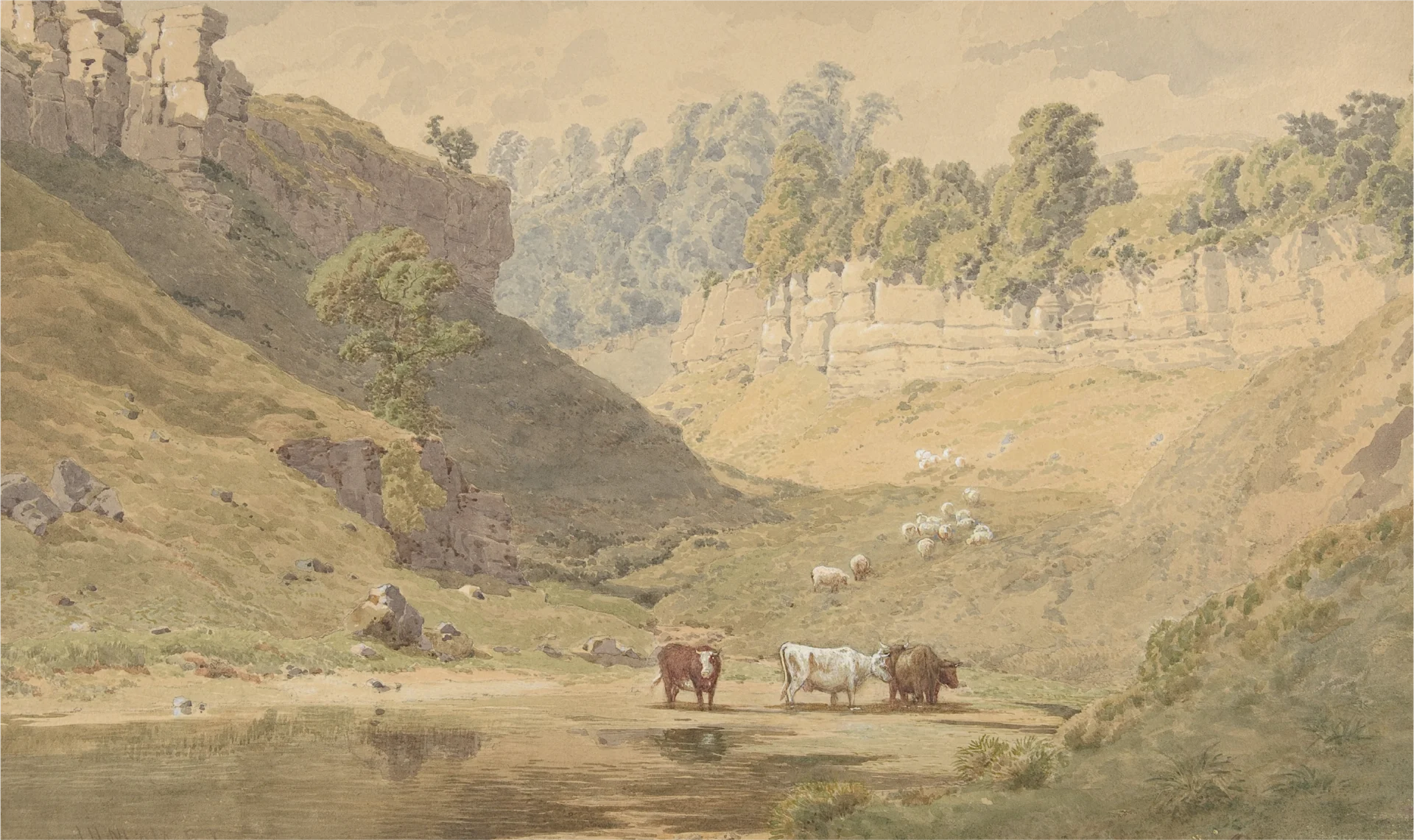
Confinement: The Village
The village of Haworth, in the shadow of the moors, was built on a slope so steep that Main Street is infamous for its climb. The houses shoulder together, divided by narrow alleyways—snickets, as locals call them—which lead to courtyards that the sun never reaches. It is confinement you can feel in your body.
Despite being born in nearby Thornton, Brontë spent most of her life here and rarely left before she died at the age of 30. She wrote at the dining table that still sits in the Brontë Parsonage Museum. Wuthering Heights bears the imprint of places like Haworth: lives pressed inward and choices narrowed by walls, by marriage, by class.
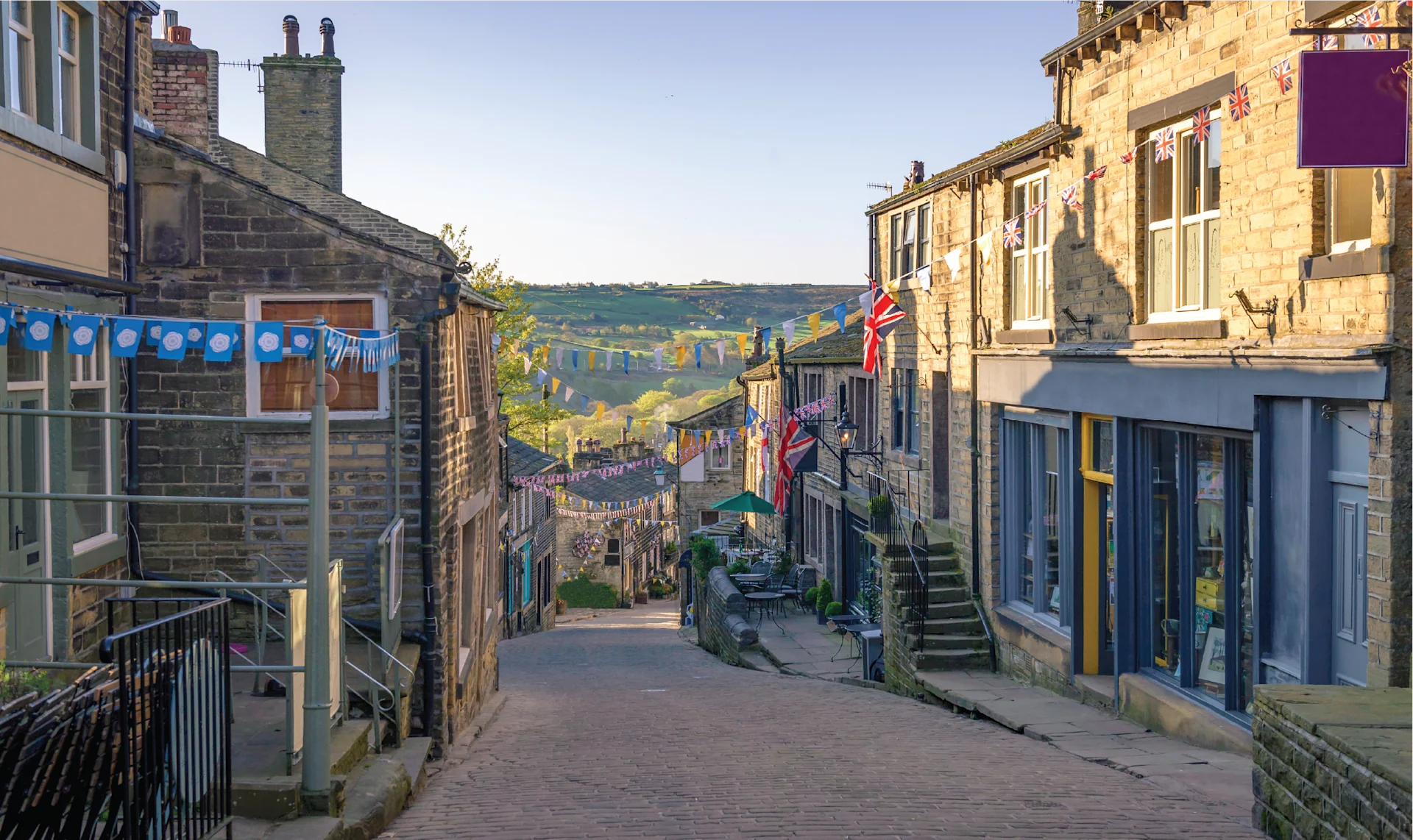
Haworth has long been a place people both escape from and to. The Brontës published under male pseudonyms, partly to be taken seriously and partly to disappear. Kate Bush’s “Wuthering Heights” single brought the novel to a new audience, and when the goth movement emerged from nearby Leeds in the early 1980s, Haworth became a place of pilgrimage. Stranger shops appeared among the tearooms: Cabinet of Curiosities, with its crystals and tarot decks and apothecary bottles, occupies the old druggist’s where Branwell Brontë bought his laudanum. The Black Bull, where Branwell drank, still serves pints and pies under low ceilings burnished by age and smoke. It’s a type of inward-looking refuge that persists, carried into the present by places like The Hawthorn—more polished but still tight, firelit, and enclosed.
And yet, even at its most claustrophobic, the village never fully closes in. The moors are visible from almost every point, rising above the rooftops.