What
Paris oozes art. Yet while it feels like there are always more museums to visit each time in the city, its contemporary art scene has often been written off as the dusty cousin of more happening locales like Berlin, London, and Mexico City. Recently that reputation is changing. From a spate of blue-chip gallery openings during the pandemic, to the parade of art-world luminaries exhibiting, performing, and socializing at Foire Internationale d’Art Contemporain (FIAC)—France’s premier art fair in late October—a new energy is coursing through the French capital. If one project best captures this mood, it’s Paris’ stunning new temple for contemporary art: the Bourse de Commerce, built from a rotating selection of François Pinault’s all-star collection of more than 10,000 artworks by 587 artists.
Where
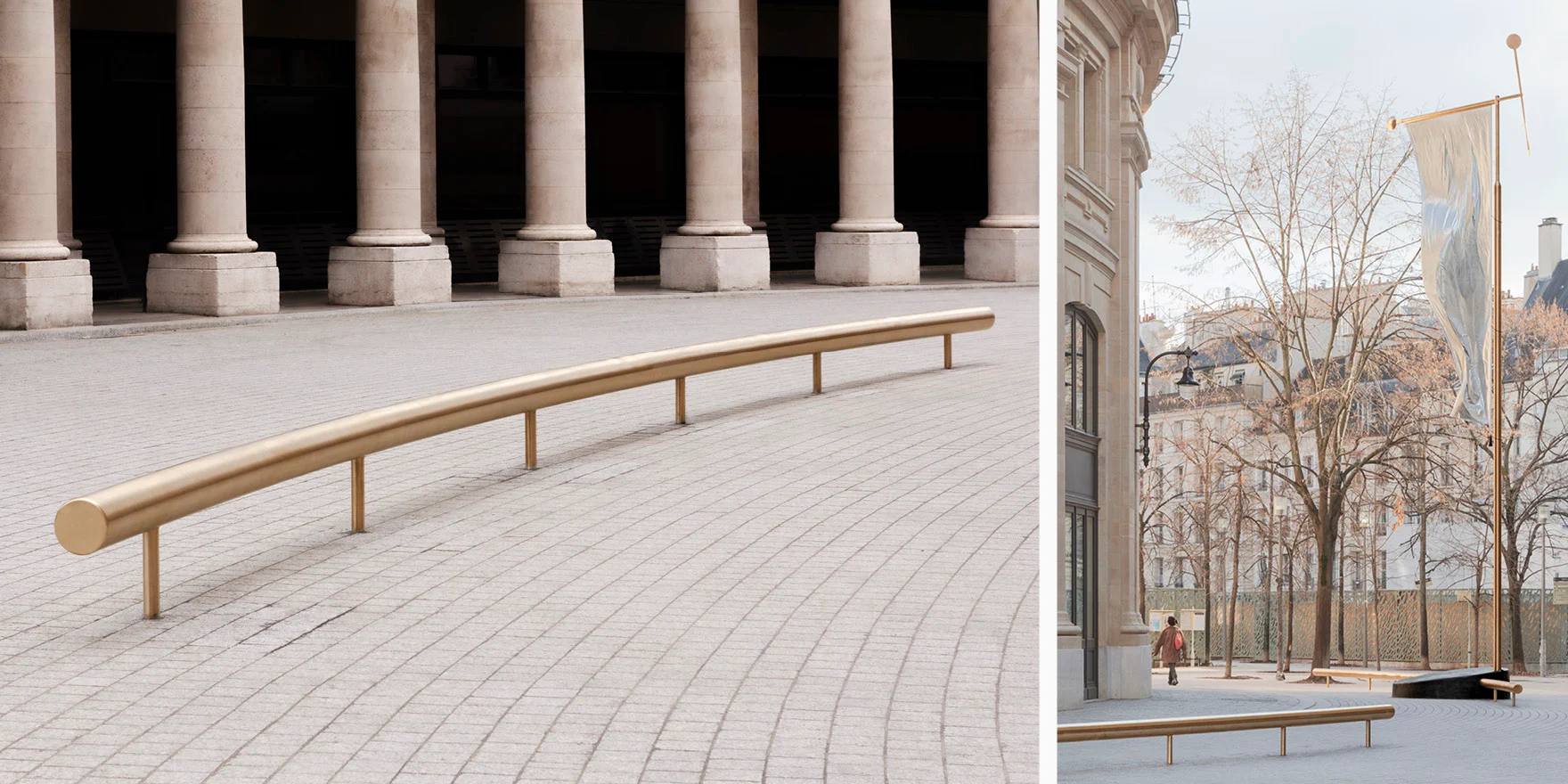
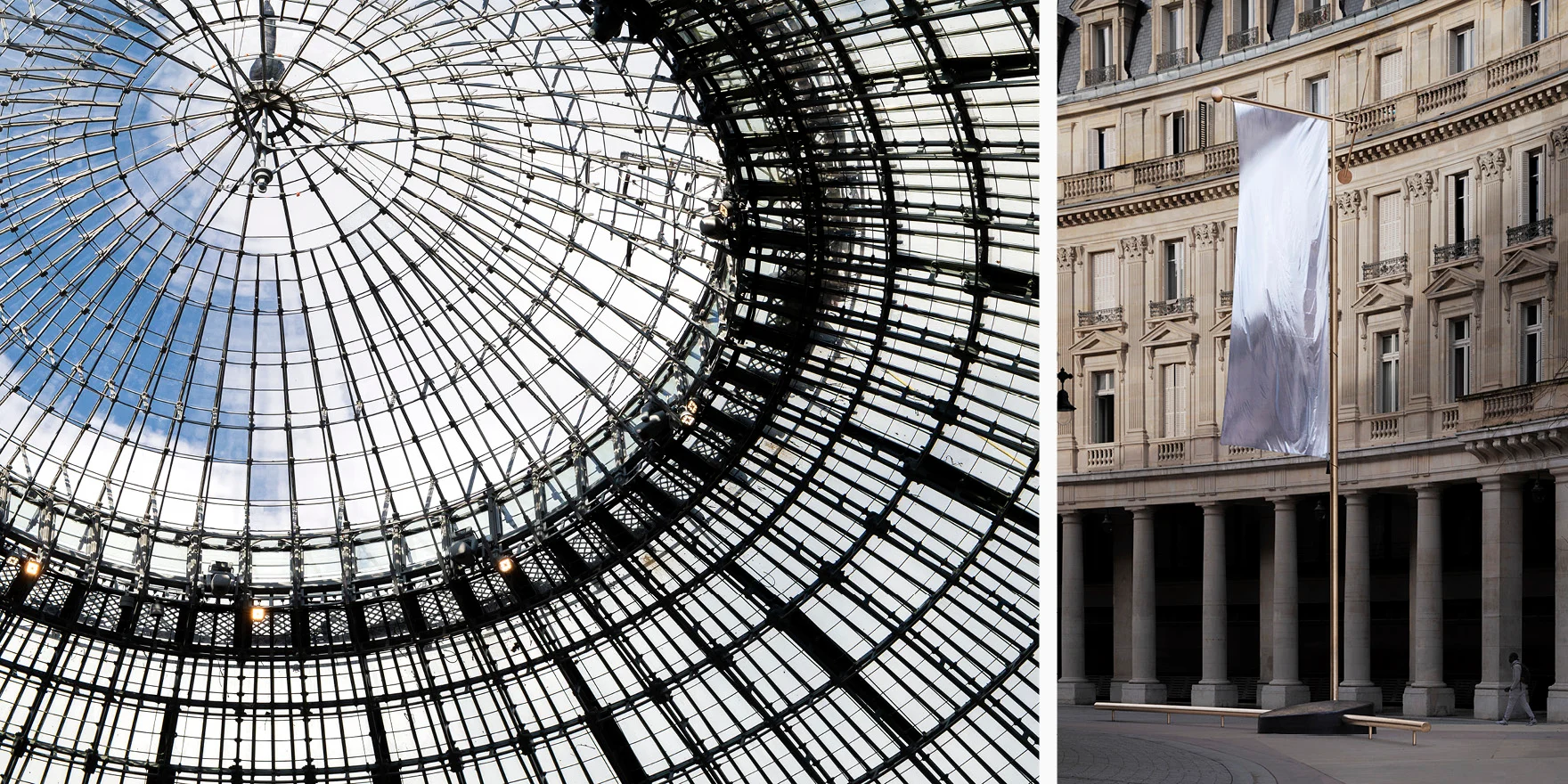
Situated steps from the Louvre in what was once a queen’s mansion, former grain exchange designed in the 1760s, and later a commodities exchange, the original design of the circular building with an interior courtyard and later dome was said to reference Roman architecture. The current tenants, the first to renovate the building since 1889, had four pandemic-related delays, but few cultural and architectural projects have generated as much buzz in Paris as this. Months after its May 2021 opening, tickets are still hard to come by.
The path of the city’s newest museum to this in-demand moment was far from smooth. France is a country that looks with skepticism on the private pursuits of its richest citizens, and as countless state-run museums in Paris attest, art institutions in France are looked upon as a public good, not a philanthropic whim. So, when Pinault first sought to construct a new home for his burgeoning collection in 2005 in a former auto plant on l’île Seguin, a small island just west of Paris in the middle of the Seine, bureaucratic pushback fizzled his plans. Instead, Pinault decamped to Venice, hiring Pritzker Prize winning architect Tadao Ando to convert two palazzos—Punta della Dogana and Palazzo Grassi—into temporary homes for his collection. Finally, a decade and city administration later, Pinault had a second opportunity to realize his vision in Paris with a fifty-year lease at the Bourse de Commerce. Naturally, he called up Ando, building on the creative relationship the Kering founder and Japanese designer had nurtured during those previous projects.
The Building
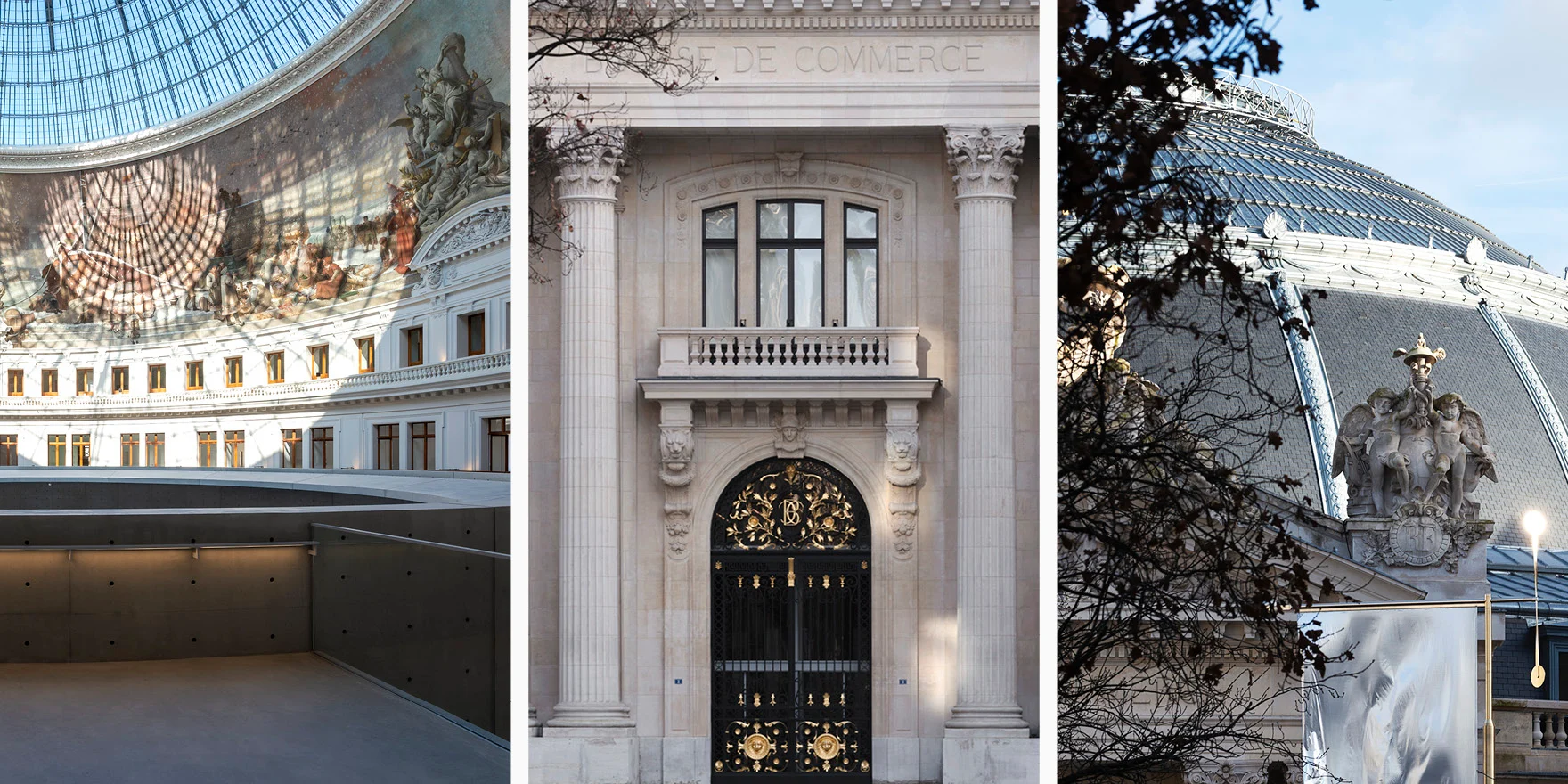
While the Bourse’s circular shape and detailed facade still exude fin-de-siècle glamour, its location adjacent to Les Halles would seem cursed. Decades-long wrangling over how to redevelop Paris’ former market halls left a notorious open gash at the heart of the city. Now, with the seemingly endless construction on the underground shopping and transportation hub finally wrapped up, the Bourse de Commerce’s transformation into a contemporary art museum provides a dignified anchor for the re-envisioned first arrondissement.
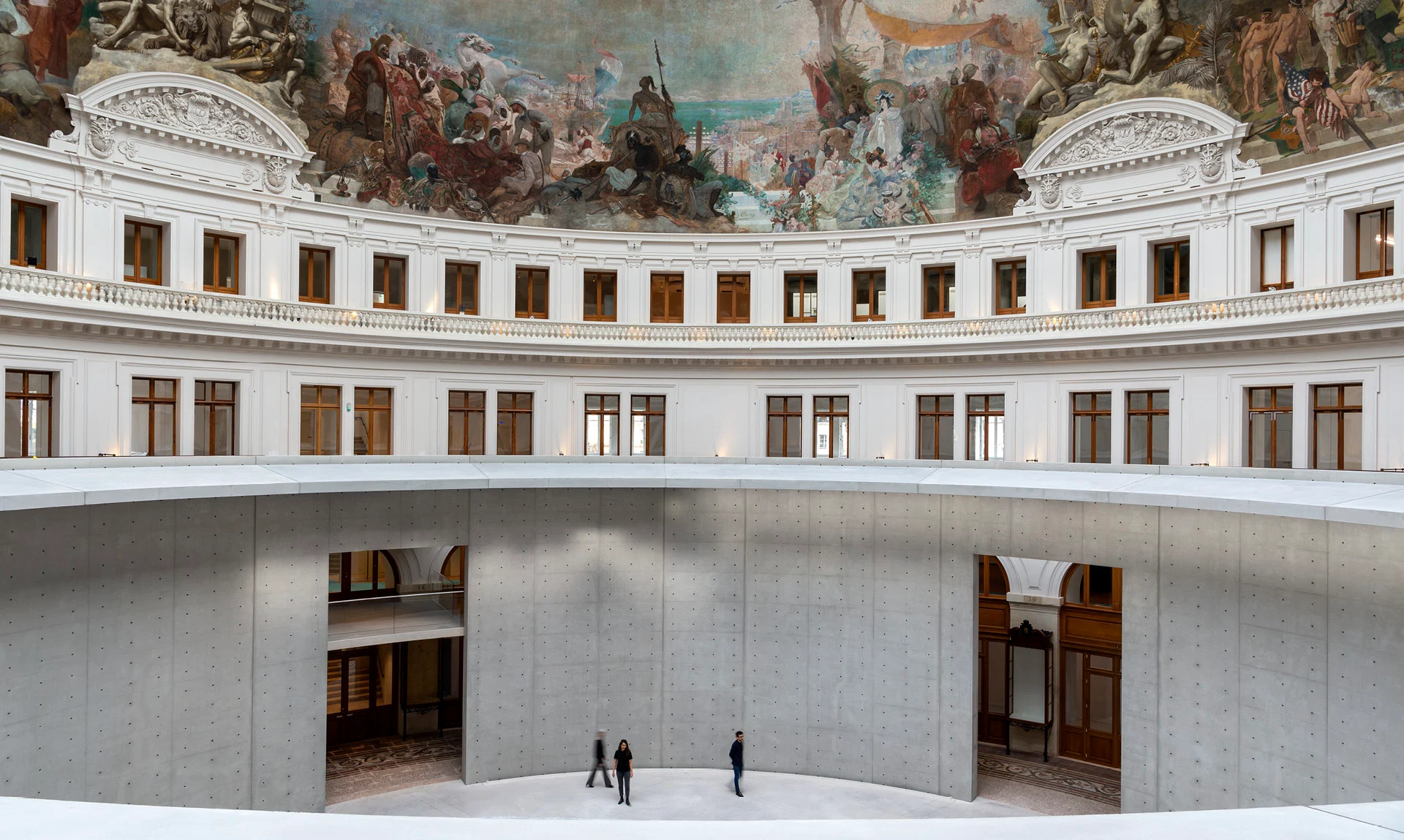
Tadao Ando’s architectural redesign itself is a sleek play of material contrasts that inject his brand of concrete minimalism within the heart of the 19th century shrine of trade and gilded opulence. According to the architect, his additions “create an intense and more subtle dialogue between new and old” befitting of the collection’s cutting-edge acquisitions. Under the glass domed cupola, Ando chose to “slot another structure into its interior'' in the form of a spare three-tiered concrete cylinder, a move “inspired by the concept of Russian dolls.” In the context of a bustling, money-soaked institution in Paris, the effect risks coming off a bit akin to bland hospitality design rather than the zen-like Japanese simplicity Ando is known for.
The Art
The collection at last opened its doors on May 22nd, 2021, with the aptly titled group exhibition Ouverture featuring both well-known and lesser-known artists. If, as the museum’s directors insist, this opening show indeed contains the “eyes of the collector”, then it is an achievement that Pinault generally eschewed the tired Koon’s and Murakami’s of the corporate art-world set and instead provided a platform for a diverse mix of mainly local artists to grapple (across three expansive floors) with histories of racism and empire. According to Le Monde, around 90 percent of the oeuvres in the show are seeing the public light of day for the first time since their acquisition.

The moment you enter the rotunda, Ando’s design meets the collection’s forward-looking curation in full relief. For the first exhibit, Urs Fischer recreated statue-size wax sculptures—first exhibited at the 2011 Venice Biennale—that slowly melt away by the end of the show. The central figure in Fischer’s cast is a giant replica of Giambologna’s “The Rape of the Sabine Women,” recalling the pilliging of ancient Roman soldiers. This exploitative history is mirrored in the original 1889 fresco encircling Ando’s concrete atrium called Triumphal France which glorifies the nation's colonial economic might. The museum’s current exhibits showcase a deep representation of Black artists, from the well-known such as David Hammons and Kerry James Marshall to emerging names in the Francophone diaspora. Martin Bethnod, the museum’s director, says that the exhibits intend to lean into “political, social, gender-based, racial or post-colonial” narratives in their programming, a fitting choice given that France’s colonial legacy literally looms over their heads.
If the maiden group exhibit is any indication, the museum is on track to be an arresting and central new place in Paris for engaging with the best of contemporary artists and concepts. In a recent interview, Francois Pinault explained, “I wanted a museum that would transcend fashion and be timeless”. It is exactly the timeliness of the museum’s fresh curatorial take that makes, and will hopefully continue to make, the collection a must-see.