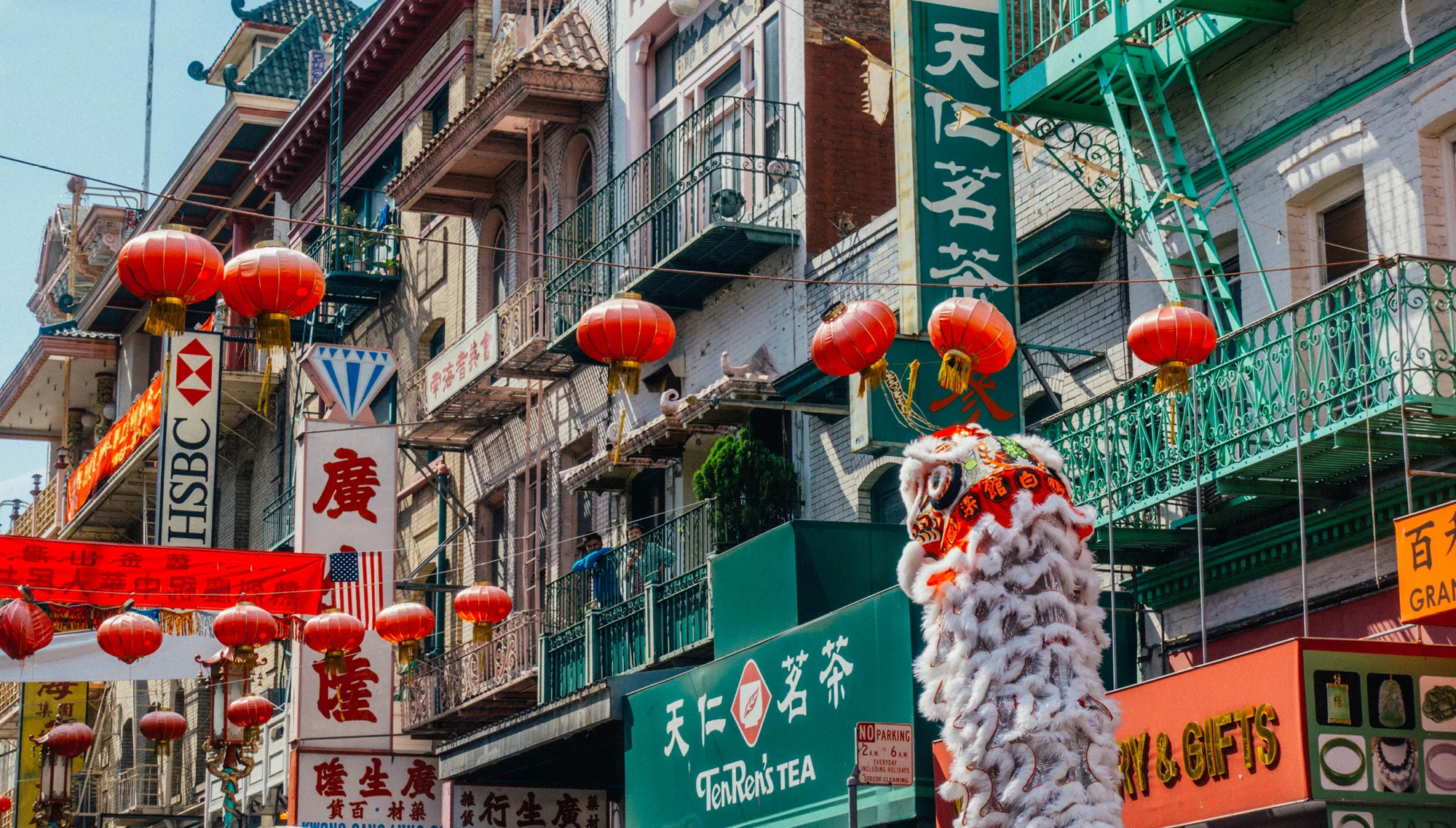
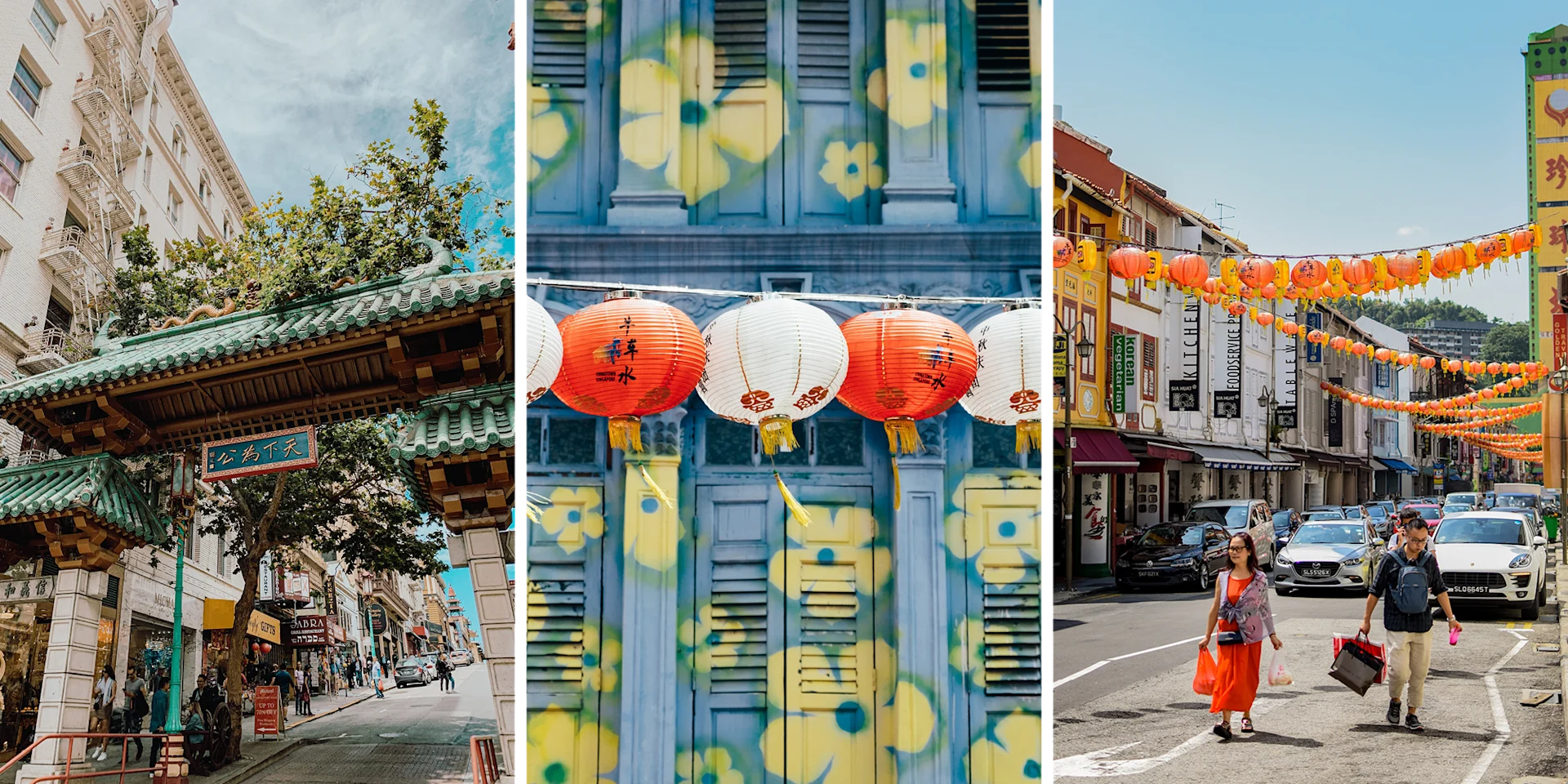
Wandering through a series of Chinatown shops setting up for the day is like walking into the dressing room of a movie star. Your pulse can’t help but quicken, from the bright lights cast upon the shops as the shuttered doors are thrust open; the prismatic colors of fresh seafood spread audibly atop frosted gems of crushed ice; and the musical clamor of carts wheeling onto sidewalks and displays of goods mounding to thrilling proportions. You can smell the sweet, hot bakery buns and the aroma of fattened ducks releasing their juices. A walk through any block or corner explodes with energy and infuses you with part of it as you shop for treasures, sit for a taste, or simply just stroll by.
Generations ago, Chinese immigrants traveled to other parts of the world like the United States, the United Kingdom, and Singapore for the hope of better economic opportunity. Many worked as laborers on railroad sites, farms, or in laundries, faced discrimination, and settled in ghettos in these foreign cities. As there developed needs among the working class for fortifying meals and the comforts of home, members of the communities went into business cooking Chinese foods and organizing familiar touchstones of their lives in China.
At first, cooks who might have preferred to prepare their regional foods—such as from China’s Guangdong or Fujian provinces—instead began catering to local palates by inventing foreign-style Chinese menus. In the case of the US, dishes like Chop Suey and General Tso’s chicken were born. But Chinatowns have evolved and continued to transform in the last century. They have not only become the pulsing hearts of many cities, but the populations who live in, work in, and visit them continue to grow ever more diverse and enthusiastic. A younger cohort of Chinese restaurateurs, who are proud to maintain closer ties to their specific cultural identities, have opened more regionally focused Chinese restaurants than ever before.
Amidst this thriving energy, however, global coronavirus scare has recently brought unnecessary consequences to many business owners. Local and global news stories have cited declining sales in the Chinatowns of cities such as Vancouver, New York City, Chicago, Houston, Boston, Singapore, San Francisco, Sydney, London, and more. PRIOR spoke to chefs and food experts with close ties to their Chinatowns in some of these locales, their memories, favorite dishes, and melodic depictions yet another reminder of why these special places are now, as ever, deserving of all of our celebration and patronage.
Cecilia Chiang, San Francisco
Known as the Grand Dame of Chinese cooking in America, founded the Mandarin Restaurant in San Francisco in the early 1960s. She was born in Shanghai and grew up in Beijing.
What was Chinatown like when you first moved to San Francisco in the late 1950s?
Chop Suey was the only dish in most Chinatown restaurants at that time. When I came here, I felt that this was not Chinese food at all, and it was just ridiculous. Every restaurant you go to Chinatown served the same four dishes, plus one soup. White rice and tea were free. Three dollars! I thought it was just a joke. For a country as large as China, the cuisine from each province has special characters, which is distinctively different from one another. That’s why later, I started the Mandarin.
The Mandarin was the first high-end Chinese restaurant in the U.S. that introduced Sichuan, Hunan, Northern Chinese cuisines to North Americans. Why did you decide to do something different?