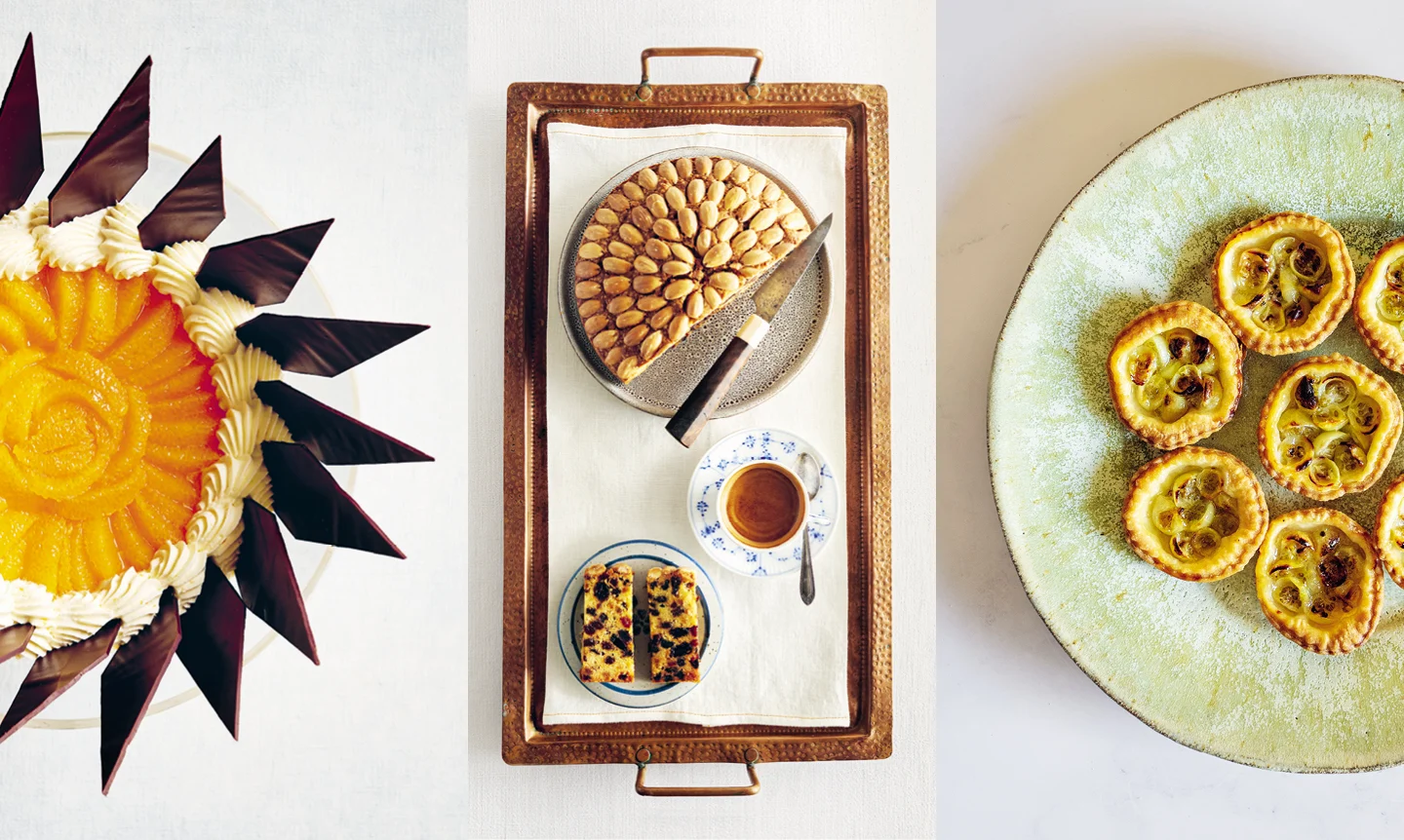
At age sixteen, JR Ryall entered the kitchen at Ballymaloe House, the historic, family-run country inn in County Cork, Ireland, and he never really left. Under the direction of Myrtle Allen, the legendary Irish chef who started the Ballymaloe restaurant the Yeats Room in 1964, and lived at the House until her death at age 94— the pastry chef learned to perfect the art of the Irish dessert: elegant, uncomplicated, and homemade in style, just as you’d want it. The restaurant eventually spawned the Ballymaloe Cookery School, now run by renowned chef Darina Allen, a pioneer of Ireland’s Slow Food movement. Here, on 300 acres of farmland, is where Ryall’s team prepares a daily vintage-style dessert trolley with a cornucopia of sweet treats that incorporate local ingredients. Pastries, puddings, biscuits, and meringues are among the 140 recipes included in Ryall’s upcoming cookbook Ballymaloe Desserts(Phaidon) which showcases the House’s time-perfected recipes alongside tales from its storied chefs and guests. Here, Ryall shares some of his favorites.
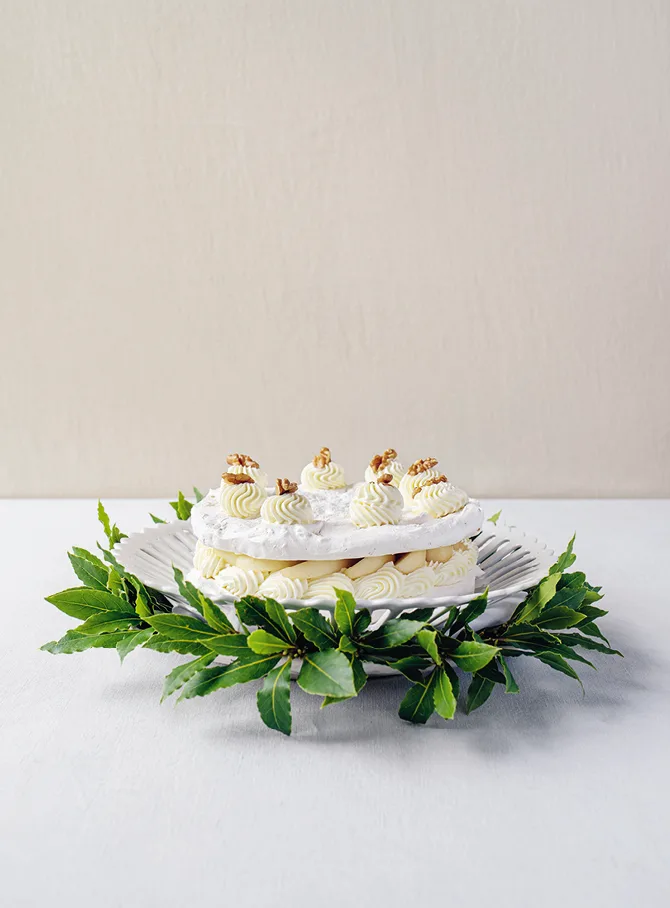
Walnut Meringue Gateau with Pear
This is one of my favorite desserts, and it's just come into season this week. It's a Ballymaloe classic. We've been making it since the 1970s, but I love that the flavors are just as relevant and contemporary today as they were when [chef] Mrs. [Myrtle] Allen started assembling it then. And at Ballymaloe, we grow over 11 different varieties of pear, so throughout the next couple of months, the flavor of the gateau changes depending on which pears we use. The pears we harvest first ripen first, and the later you harvest a pear, the longer it will store for. The later varieties, we put them in cold storage, and then we can use those in January and February. So it's a lovely dessert that stays in the trolley through the next maybe four or five months into the winter.
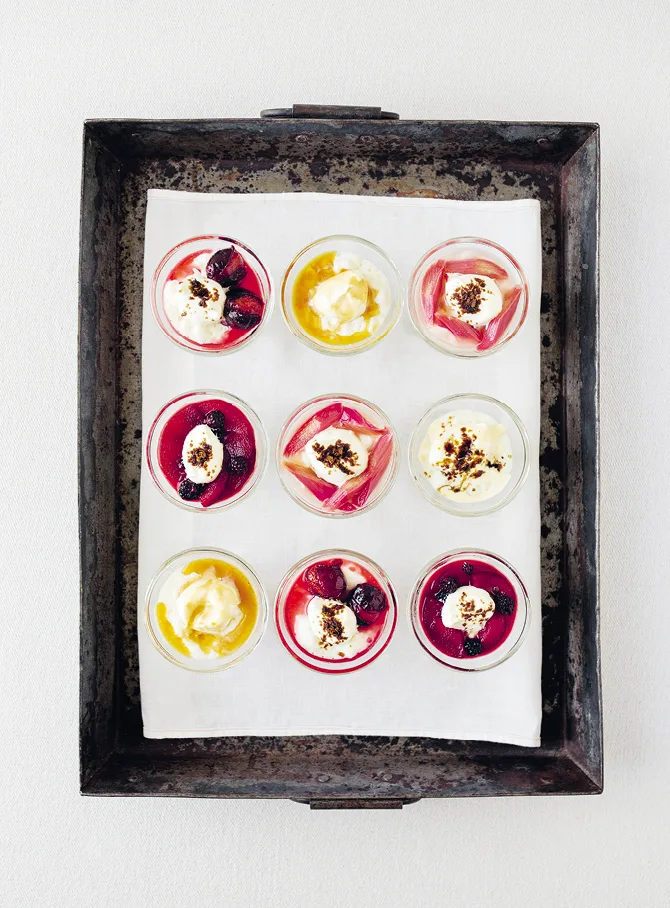
Carrageen Moss Pudding
If I had to pick a favorite dessert— and I hate that question— this is probably it. And it's also a Ballymaloe specialty. It's the only dessert that we have on the dessert trolley every night for every day of the year. All of the other five desserts change every day. And essentially it's a seaweed-set milk, which sounds peculiar, and you certainly don't think of Ireland when you're considering cultures that use seaweeds in their cuisine. But for centuries, there's been a tradition in Ireland of using seaweed to set milk. Often it had been used as a health food; people would wean babies from breast milk onto carrageen-infused milk, and carrageen would be given to ill animals to help fortify their immune system. But at Ballymaloe, we serve it as a delicate dessert, and people are really intrigued by it. We serve it with whatever fruit is in season, and usually top with it a little compote and some whipped cream and brown sugar.
When I first started working at Ballymaloe at age 16, usually during the first two weeks of July, Mrs. Allen would come into the kitchen, she'd see if anyone was free, and we'd jump in the back of her car, go to the local strand— where the ocean meets the land— and we'd harvest the carrageen from the rocks carefully at the low tide line, particularly if it was a spring tide, which is the lowest tide you'll get. That was her preference. We'd spend about 20 minutes collecting the seaweed, and then we'd bring it back to Ballymaloe, lay it out on the lawn. The sun would dry it, and then the rain would wash it. And that process would repeat a few times where the sun would naturally dry it, the rain would wash it, and it would go from being a purple-brown, iridescent seaweed to being completely blonde in color. And then we'd bring it into the kitchen and have enough for the year, and every day we'd make a little batch of carrageen moss pudding. If anyone was ever ill locally, the 90-year-old Mrs. Allen would ask us to make a larger batch, and she would drive to their house with a little bowl of the carrageen moss pudding to wish them that they'd get better. We still all do that. Many of us who are sick eat carrageen moss pudding. And it's the one dessert that I say is truly Irish. Even the name, "carrag" is the Irish word for rock, and "een" means little, so the name means little rock pudding. The seaweed grows in the little rocks around our shore. From start to finish, it's just a very authentic dish. And I haven't encountered it anywhere else, so it's pretty special.
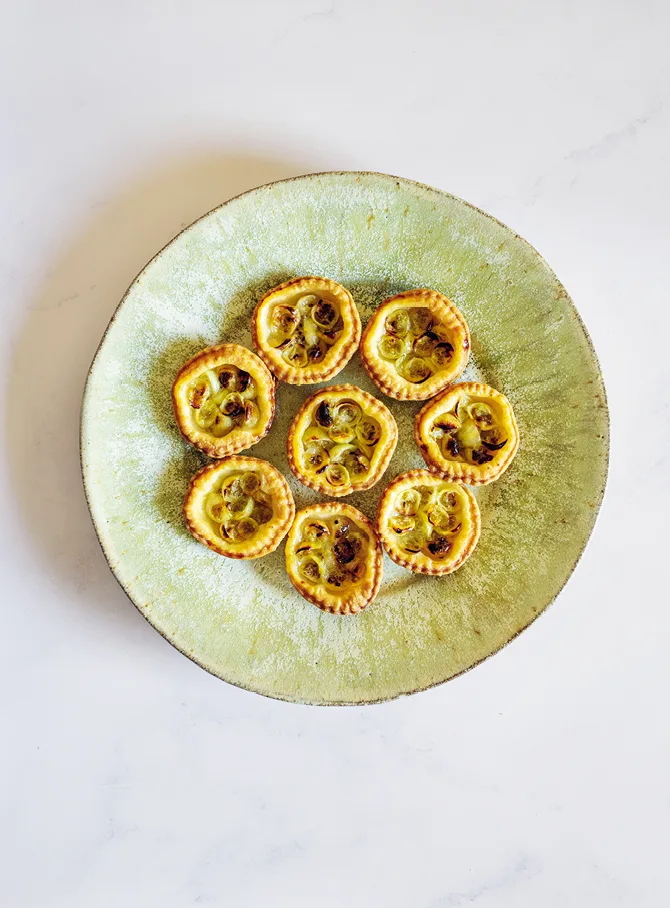
Gooseberry and Elderflower Compote
In Ireland, gooseberries are often a joke. If there's two people doing something romantic and they say, "Do you want to come?" You're like, "What, you want me to be the gooseberry with you two?" It's like the third wheel. Or maybe it's just in my kitchen that we call it a gooseberry. They're not a commercial crop. You never see them at scale and supermarkets, so you either have a gooseberry bush and you like them, or you don't have a bush and you don't even know what to do with them. But there's a gentleman called Mr. Monroe, and every summer he literally appears in the kitchen one day, never announces he's coming, walks in with boxes of gooseberries segregated into different varieties. He's usually got three or four different varieties with him, like Invicta, Careless, Sulphur. And he's so pedantic. They'll be weighed out, 1.73 kilos down to the ground. When he comes in with the gooseberries, that's the start of summer for me. And then we run out and get some elderflower from the hedges and make this compote, and it takes everyone by surprise who's joked about gooseberries how delicious they really can be. It's like a gateway into the world of the gooseberry. And Mr. Monroe, he's just a real character.
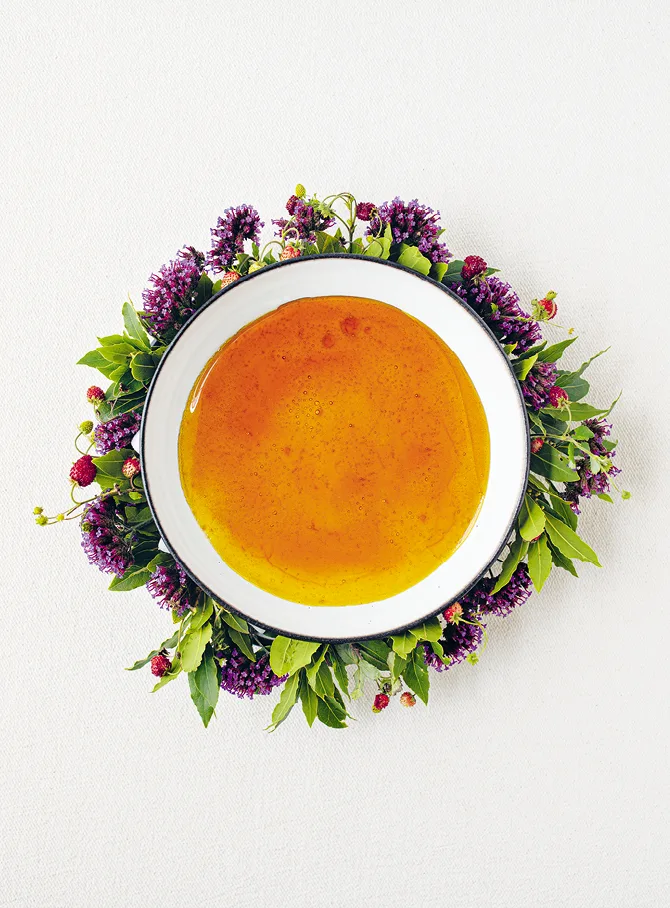
Mrs. Baker’s Crème Brulée
Well, this actually has a really cute story. Lots of the recipes that have ended up in Ballymaloe have been brought by people, and the Bavarian apple cake, another recipe, is a very good example, where the Barrett family brought it literally on a boat from the port of Hamburg. They set sail for South America and got washed up in Ireland in the storm and ended up living on the farm of Ballymaloe. Mrs. Barrett produced this recipe, and Mrs. Allen made it ever since, and now I still make it.
This crème brulée sings a similar tune, or so the story goes anyway. One night Mrs. Baker checked in to stay in Ballymaloe House, and she literally left the recipe behind her with Mrs. Allen. She told Ms. Allen she cooked it for the Countess of Ross, who was quite a grand figure back at the time. Mrs. Allen was suspicious of Mrs. Baker, thinking that the recipe may actually have come from Constance Spry, one of the great cookery writers of the earlier part of the last century, because their recipes are remarkably similar. But it's an unusual crème brulée in that it's a set custard topped with a complete sheet of caramel, so not blow torched in the normal way. We think that was Mrs. Baker's addition to it, so we still do it that way, and I haven’t seen crème brulée like that anywhere else. We often make it larger than you might encounter in a restaurant, and then we smash it and share it between several people. So I call it Mrs. Baker's Crème Brulée in the book, as a nod to her. I never met her though. And one other one's for her: the Irish Apple Cake.
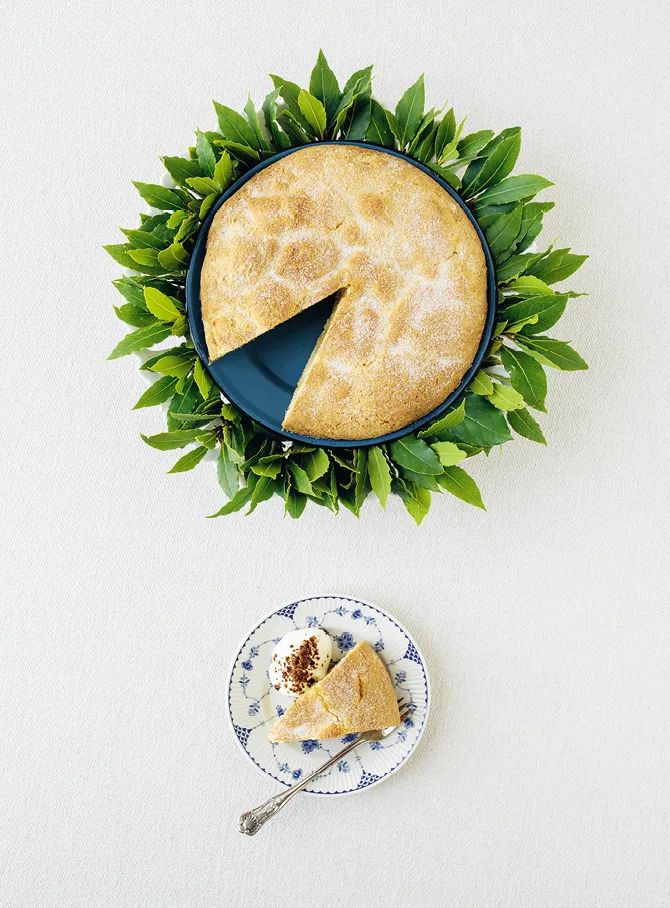
Irish Apple Cake
We do this one a lot on the trolley because sometimes you have a dessert that's so homemade in its style that if you just had that without the decoration, people literally would look at it and say, "Oh, well, I can do that at home." Often, that's the point of what we cook. It's really not-even-elevated home food. Sometimes it's just proper home food, the way you'd want it. But I'll put leaves around it just to make it go one step further, to do the thing someone wouldn't do at home, so it suddenly brings a bit of interest to it.