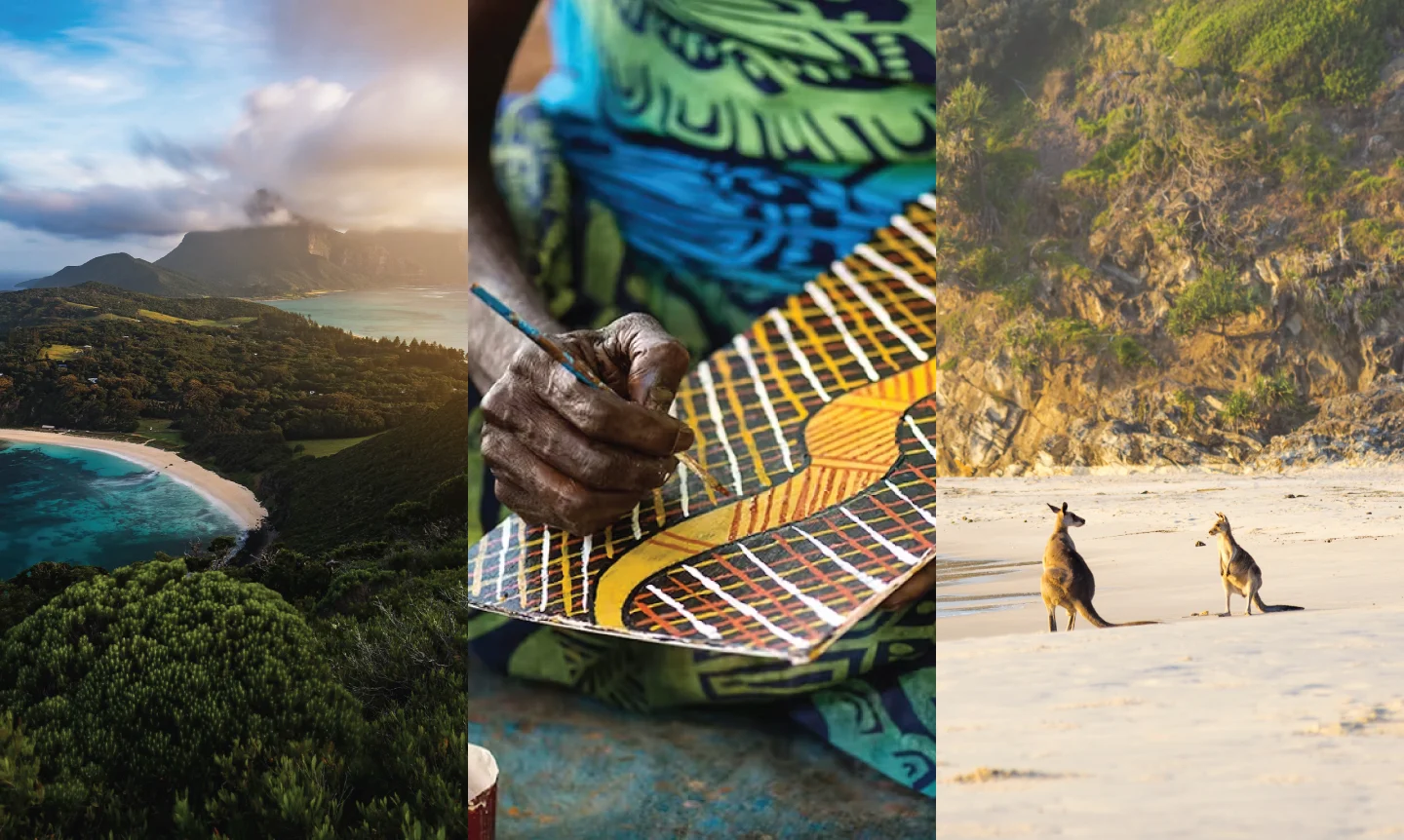
Australia is the world’s only island continent and most know that along the immense coast of the North-Eastern state of Queensland lies the Great Barrier Reef, perhaps the most vivid set of jewels owned by Mother Earth. However many are less familiar with Australia’s other more discreet and frequently more dramatic set of island adornments. There is, of course, South Australia’s aptly named Kangaroo Island and Western Australia’s bizarre Rottnest, home of the comically cheerful-looking marsupials known as quokkas however the country reveals countless lesser-known formations that are often a surprise even to Australians. For the explorer who knows where to look there are frosty, rocky outcrops off the coast of Tasmania, swept by wild tradewinds and alive with covetable seafood. There are the other islands in Queensland including two of the most astonishingly underrated, one mere minutes from the city limits of newly bustling Brisbane and then the planet’s largest sand island, which is in the midst of a long overdue rebrand. And then there are Australia's cultural crown, the archipelagoes to the nation’s north that are integral to the soul and endurance of the oldest living culture. Here are Australia’s best kept secrets in the sea.
K’gari, Queensland
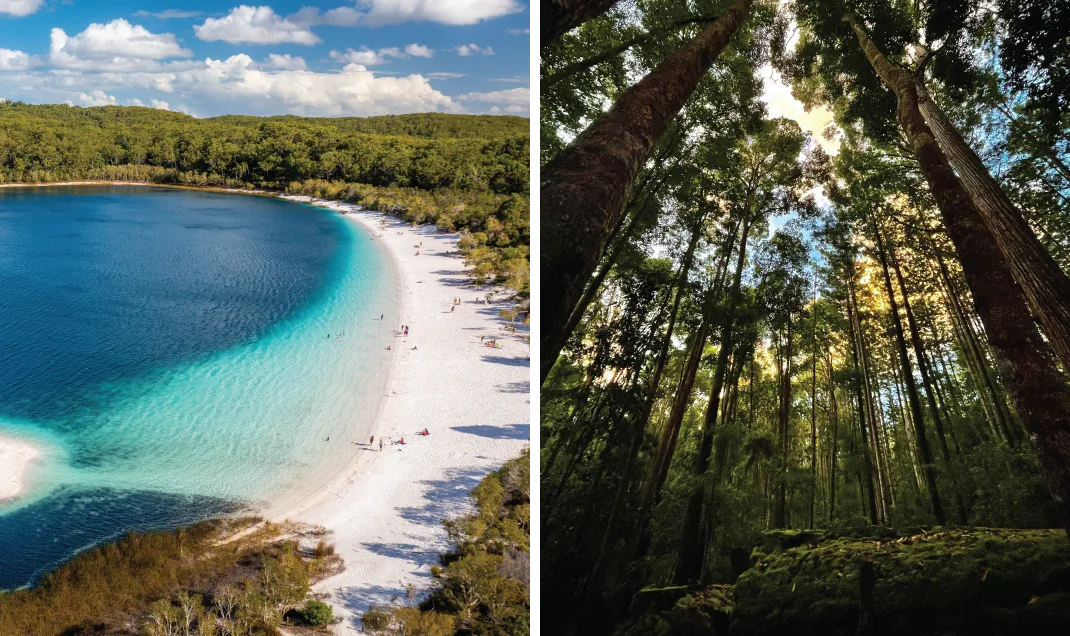
Almost since the very first settlement of the continent, this UNESCO World Heritage site - the largest sand island in the world - has been named Fraser Island. To its Traditional Owners, the Butchulla people, it was always simply ‘paradise’. That’s the Western translation of K’gari’ (pronounced ‘Gari’), which is how the island is now named, after an official break from a dark past in 2023. This particular oddity can be found by a 30-minute ferry journey from Hervey Bay, on Queensland’s southern coast, and is known for its improbably long stretch of beach, primordial rainforests and then inland lakes that are by turns crystalline (McKenzie) and Tea Tree tinged (Wabby). At times it feels like Australia’s most danger tinged island, sharks make the coast impossible to swim in, the Mad Max-like car racing along the beach with the ever-present risk of the racing tide and as the home of dune-coloured dog descendents, the wild and wily dingo. However it only takes a little bit of good sense and a sense of adventure that make it an easily accessible adventure worth embarking on.
Satellite Island, Tasmania
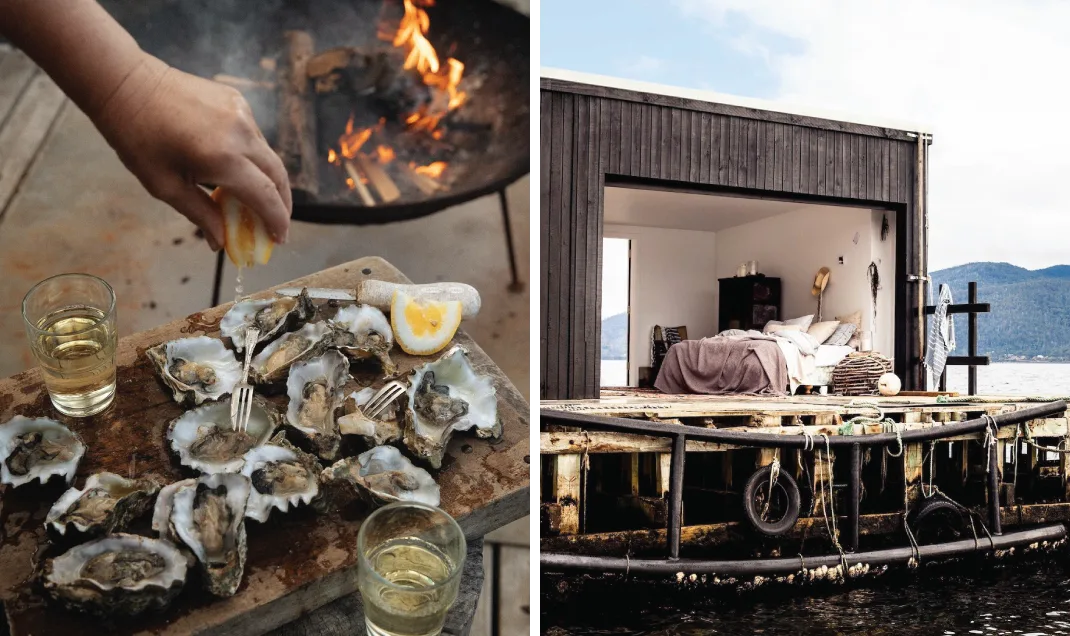
To be sure this is a private island but it deserves to be known by the public well beyond its rocky, abalone festooned and kelp forested shore. An island off an island, off an island and then off an island again, this sheer-cliffed, eucalyptus-scented island, is a short ferry ride or helicopter journey from Tasmania’s southern coast but feels like the end of the earth (in a good way). The family retreat by owners Kate and Will Alstergren, in theory the Satellite Island operation is a simple wooden home, a tent, a shed with a tin roof amongst blue gums and pasture and a jetty with a small fishing boat sitting on its rocky shores. However that would be an understatement worthy of the most down-to-earth Aussie. Instead here is a masterstroke in Australian hospitality and style with a confident simplicity that belies a deep sophistication. It is Instagram famous for a reason, notably because it has perhaps the most unique bedroom in the country, a plush spread that sits at the end of the jetty jutting into the Southern Ocean. One of Australia’s true chef talents, the Tasmania-based chef Analiese Gregory creates the food here on request and she regularly dives for abalone and sea urchins and brings her catch, and other seafood such as local oysters, scallops and lobsters to cook for guests over an open fire. It may be photo ready at all times but don’t be mistaken the romance is real.
Tiwi Islands, NT
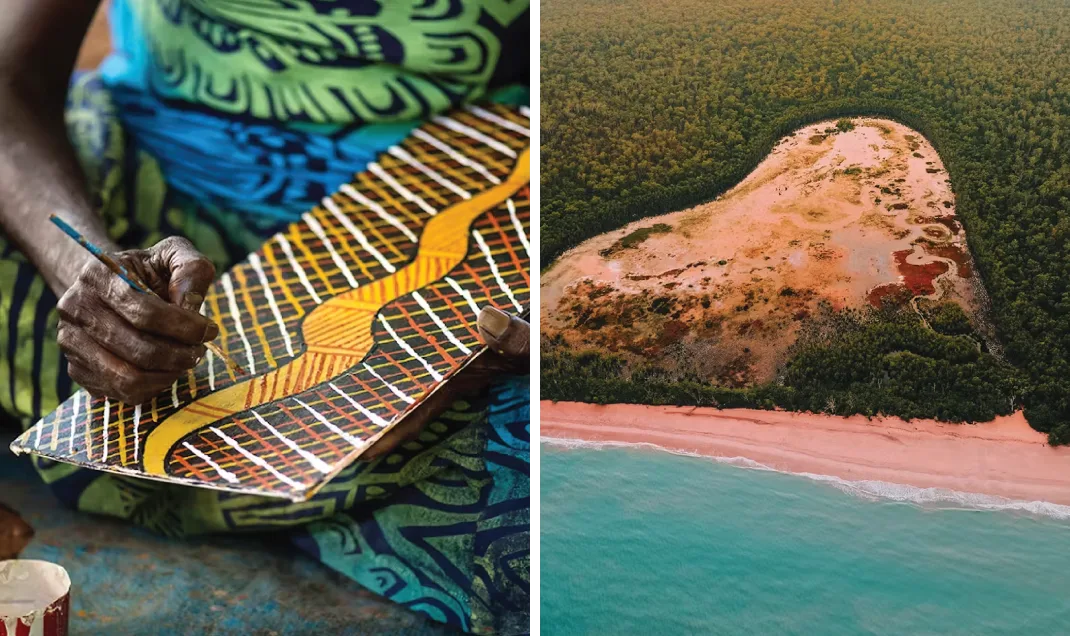
The First Nations Tiwi are Australia’s Saltwater People, living on these red-cliffed, forested islands in the Timor Sea for millennia. The two largest inhabited are Bathhurst and Melville with the latter being the second largest island after Tasmania. Tiwi people make up 90% of the population and as such it is one of the rare regions where Aboriginal culture dominates. The island is neither Crown Land or public but instead private holding of the people and as such demands a permit to visit and enforcing a respect for the local ways and customs. In something entirely unique, social media is banned, so arriving here is to be offered the opportunity to disconnect and be truly present. Explore the islands’ arts scene at the Tiwi By Design arts center (exquisite Batik-like fabrics screen printed with marine life or the pattern of pandanus trees are a covetable keepsake), experience some of the best fishing in Australia with the locals and have the rarest opportunity to connect with the oldest living culture on earth.
King Island, Tasmania
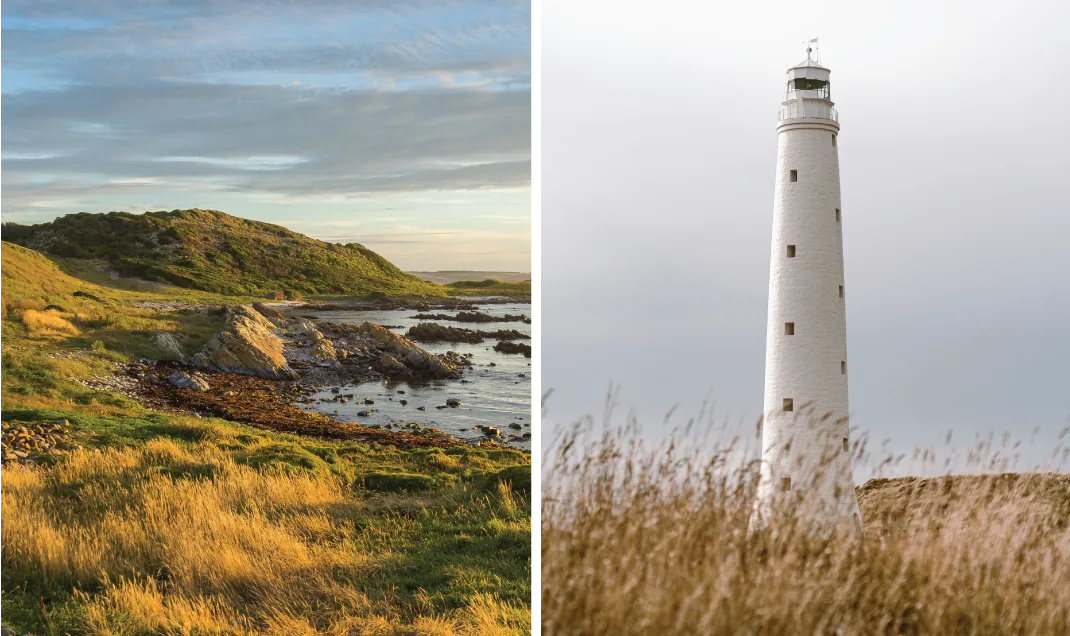
If a guaranteed wildlife encounter is high on your Australian agenda, King Island has you covered. There are around 700,000 wallabies on this 40 mile by 17 mile football-shaped island in the middle of the Bass Strait, north west of Tasmania’s mainland, meaning they outnumber the human population by about 600 to one. The wild and windswept King - whose golden grasses and towering cliff-faces are pounded by the famous Roaring Forties tradewinds - is home to plenty of other curiosities, including an eerie calcified forest, a deserted beach marked only by a shipwrecked paddle steamer and one of only three ‘perched lakes’ - a freshwater lake that sits higher than the water table - in the world. The oceanfront Kittawa Lodge, whose interiors reflect the rust-red of the local lichen and sage green of marine flora, positions you directly in the landscape.
North Stradbroke Island, Queensland
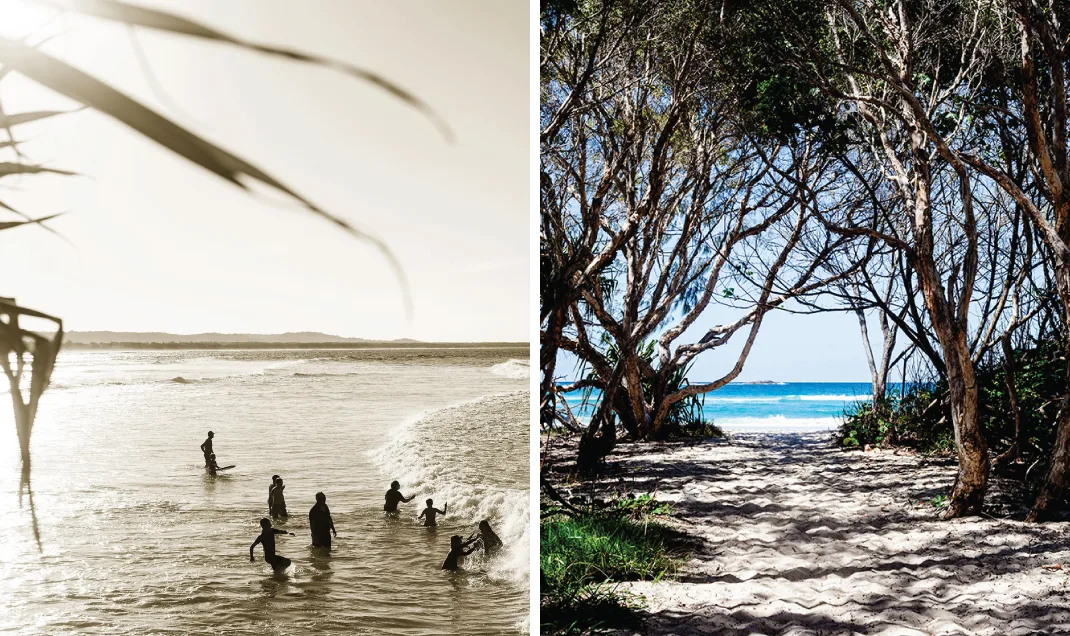
It’s called “Straddie” to most locals, or "Minjerribah” to its Traditional Owners, and it’s known for its unhurried yet elevated vibe. There are classic weatherboard pubs sitting right on the water, ideal for a cold sunset beer, while Cylinder Beach, on the east side of the island facing the Coral Sea boasts sparkling celadon green water capped by a spectacular surf break. And although Australians downplay the possibility of this happening anywhere, on Straddie you have a good chance of seeing kangaroos bouncing along the beach. Here, you’re on Quandamooka Country, and you can see the work of this proud First Nation up close at Salt Water Murris Quandamooka Art Gallery. It has long been the retreat of a cohort of Brisbane based architects and arty types who eschew the glitz of the Gold Coast and the tony times of the posh enclave Noosa to the north. Come here for an Australian beach holiday of an-era almost gone.
Lord Howe Island, NSW
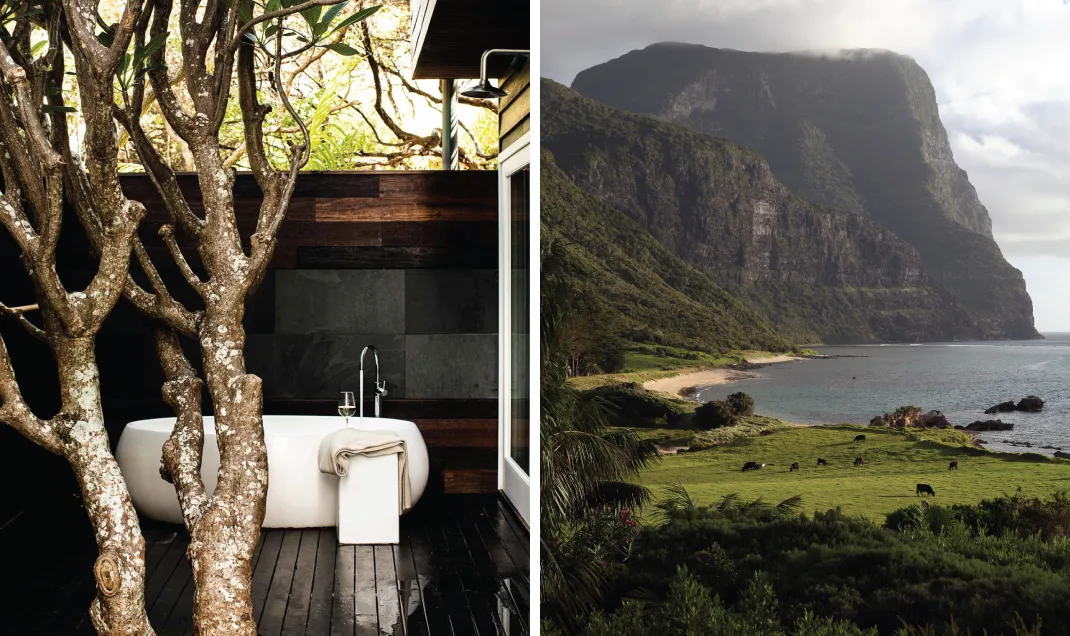
It’s not a stretch to call this isolated green dot, around halfway between the Australian state of New South Wales and New Zealand, ‘Jurassic Park-sur-mer’. Ancient and captivating, there are different landscapes around every jungly turn; from rainforests to jagged cliffs to coral reefs. Birdwatchers are spoiled here, with 130 species calling the island home including the endemic Lord Howe Island woodhen and providence petrel. Capella Lodge, a beach house hotel between two towering volcanic peaks and the world’s southernmost reef, is perhaps Australia’s most singular luxury stay.
Lady Elliot Island, Queensland
‘What did you see down there today?’ is the phrase heard most often on this low-key and low-fi island on the very southernmost tip of the Great Barrier Reef included here because it feels part of the chain but also somehow different. The answer to that question might include manta rays, humpback whales, sea turtles or dolphins. However even more pertinently even novice snorkelers will find much to marvel at beneath the waves here; unlike many islands on the reef sadly, a city of coral architecture still thrives right in the shallows just an awkward waddle from the island’s shore. Accommodation on the eco resort is comfortable but basic, but it hardly matters. You’re here to spend time beneath the water, not on top of it.