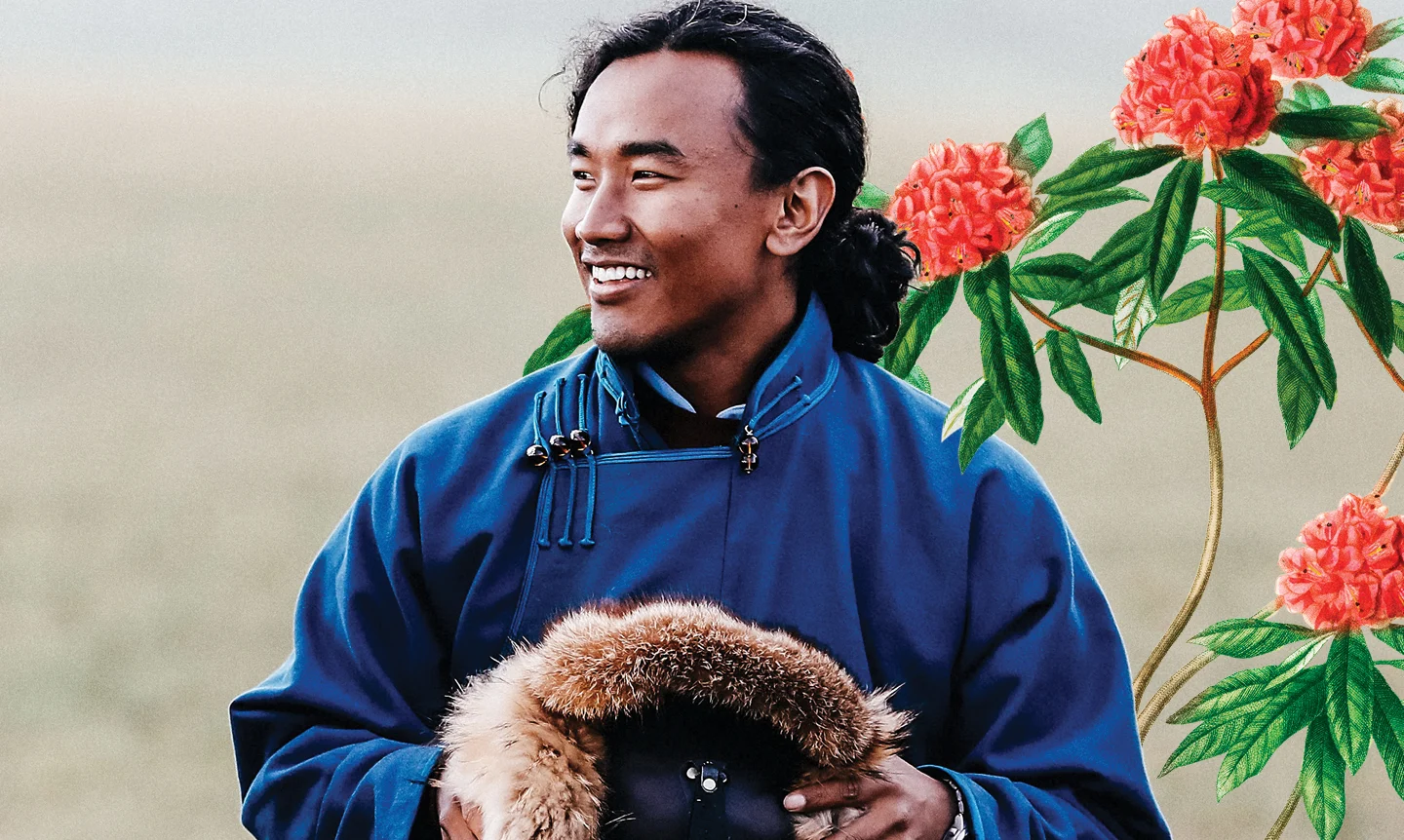
There is an old home movie of Ang Tshering Lama as a child, playing in deep Himalayan snow in the winter of 1991. It is shot in the Phaplu Valley in the Solukhumbu, a remote region of Eastern Nepal. Before an air strip opened at Lukla, Phaplu was a former stop on the old Everest trail. All the big mountaineers would stay here, including Italy’s Count Guido Monzino, and Sir Edmund Hillary, who, after he successfully summited Everest in 1953, used to return to Phaplu often with his family. Both Monzino and Hillary would stay in the Lamas’ family home.
In the family film, it looks like a Himalayan dream: the peaks behind, the family throwing snowballs at each other in a light winter flurry. But it was not a paradise that would last. During the Maoist insurgency — a civil war that ravaged Nepal for 10 years, from 1996 to 2006 — Ang’s parents were forced to flee their homeland for America, where they became political refugees. At first, Ang stayed behind with an aunt in Kathmandu. But when the Maoists began to expand their reign of terror — with the insurgents murdering and mutilating teachers, and taking children from their families — he went to America too, not returning to Nepal until 2014.
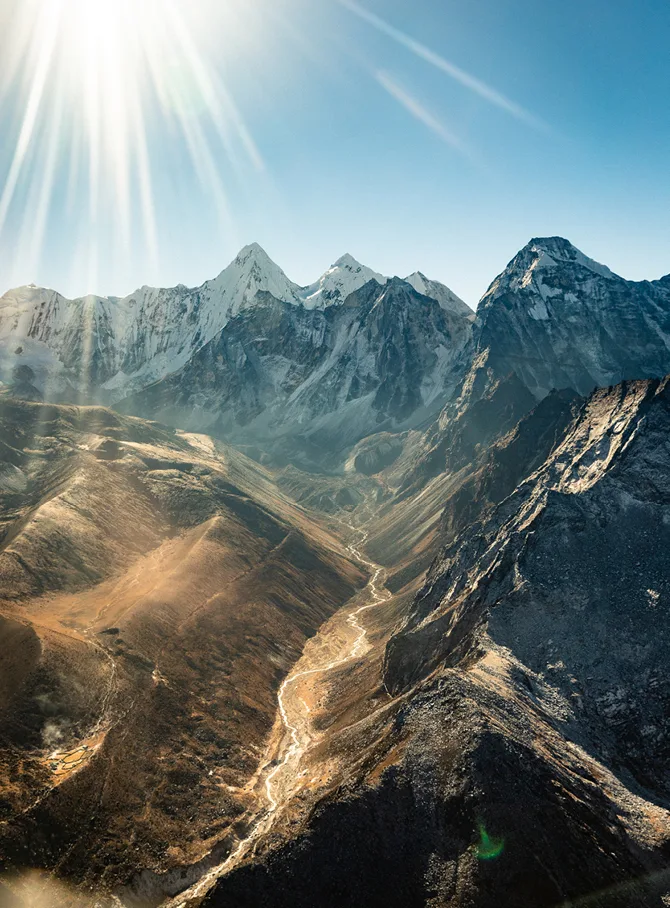
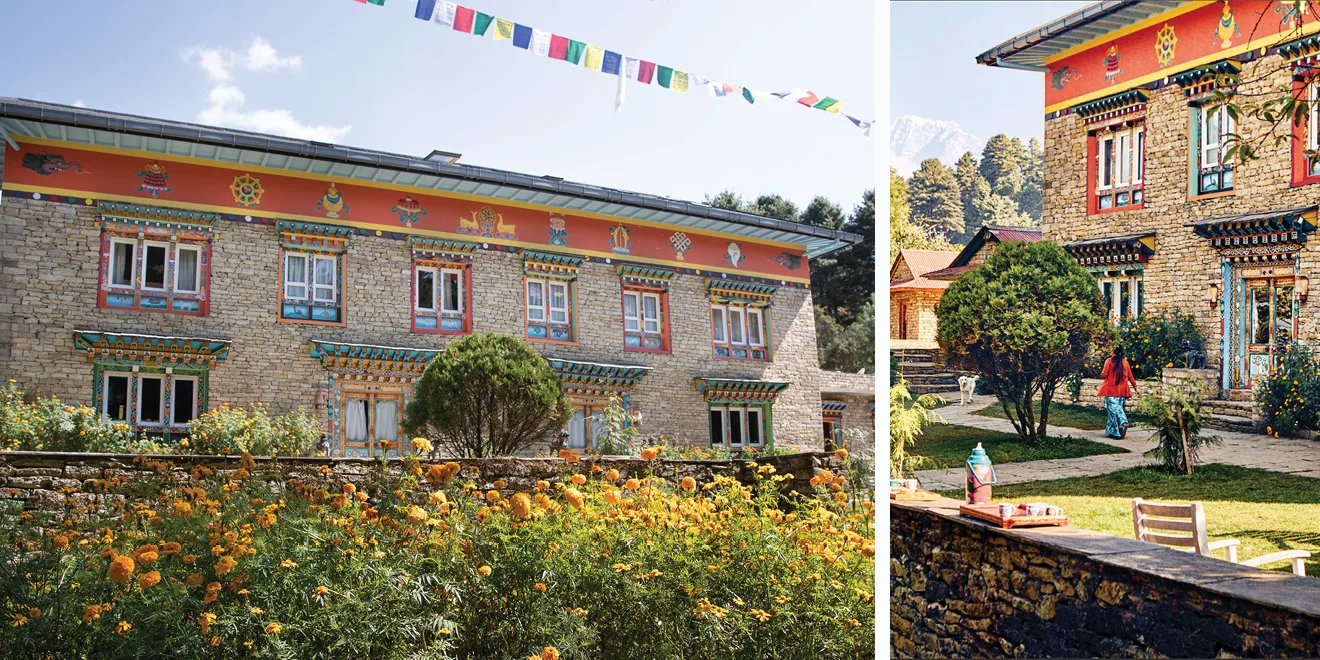
Ang’s motivation for coming back? A passion for the Himalayan valleys and Sherpa culture of his childhood. Since the early eighteenth century, his family had been a vital part of the social, economic and religious structures that still thread daily life. For generations, Ang’s forebears had functioned as important landowners (why the Maoists targeted them) and community leaders. In 1923, his family founded the nearby Buddhist monastery of Chiwong, which overlooks Phaplu from its cliffside perch among mist-wrapped pines. Prior to his flight to America, Ang’s father had been the town mayor. The U.S. had given the family new opportunities, but Ang, rather than give up on his past, wanted to make a go of it in what still felt like his spiritual and cultural home. He borrowed money, invested heavily and, in 2018, re-opened “The Happy House” — the backdrop to the home movie, so-named by Sir Edmund Hillary after the memories it held.
Ang hired painters to restore the interiors, which are colored like the inside of a monastery: a Wheel of Life here, a pop-eyed demon there. He added Tibetan antiques, a striking library of Buddhist literature, and Mongolian cashmere blankets to attract a new kind of traveler who might visit Nepal to experience its nuanced culture slowly, and sympathetically, rather than join the traffic-jams of summit-seekers on Everest. He built up a team of brilliant Sherpa mountaineers, with the intention of using the Happy House as a base for expeditions into other valleys nearby, as well as the glacier-streaked backcountry — nothing too formidable, staying under 6,000 meters, so as to give the Sheraps “safe” work without the Everest risk factors.
Then, just as the community began to benefit from the footfall of travelers, the pandemic struck. Nepal locked down its international airport. Without tourists, Ang had to put off his loan repayments. He leveraged the compassion of a few past guests and international NGOs to help the community. For Nepal, these have been some of the darkest days this remote region has experienced since the Maoist times. Here’s why Ang cares — and will keep on fighting.
Sophy Roberts: What does being Sherpa mean to you?
Ang Tshering Lama: In Nepal, Sherpa is a minority ethnic group. We make up around 0.6% of the country’s population. When I moved to America and I introduced myself as a Sherpa from Nepal, most people would confuse me with being a mountain guide. Not their fault as that’s what has happened to the Sherpa identity; it has become an international brand associated with Everest (rightly so for all the amazing accomplishments Sherpa mountaineers have had in the Himalayas) but it’s a very narrow interpretation. In the last few years I’ve had the opportunity to explore and study Sherpa history and our fragile culture which our ancestors maintained with great care until recent years. Now most Sherpas (including myself) cannot even properly speak the language, so frankly speaking I feel a bit of shame in this regard. But then again, having the privilege of being born a Sherpa, I feel an urgent responsibility towards reviving that past pride — to engage in cultural preservation. I want the world to recognize us for our true identity.
What do you think the rest of the world has to learn from the Sherpa way of life?
Each culture has something wonderful to share with the other and that is one of the most important gifts travel provides. The traditional Sherpa way of life has always been in high Himalayan grounds, where people learned to live with very little but lead a content and happy life. This is part of a core belief and teaching of the Buddha, that “Happiness comes not from receiving, but from giving.” All Sherpas have a prayer flag hung outside their homes. The flag is hung once every year, to pass on well wishes and prayers to all those who come across it, with each blessing carried on the wind as the flag flutters. This sense of compassion is something that always seems to affect visitors who come to the Solukhumbu for the first time.