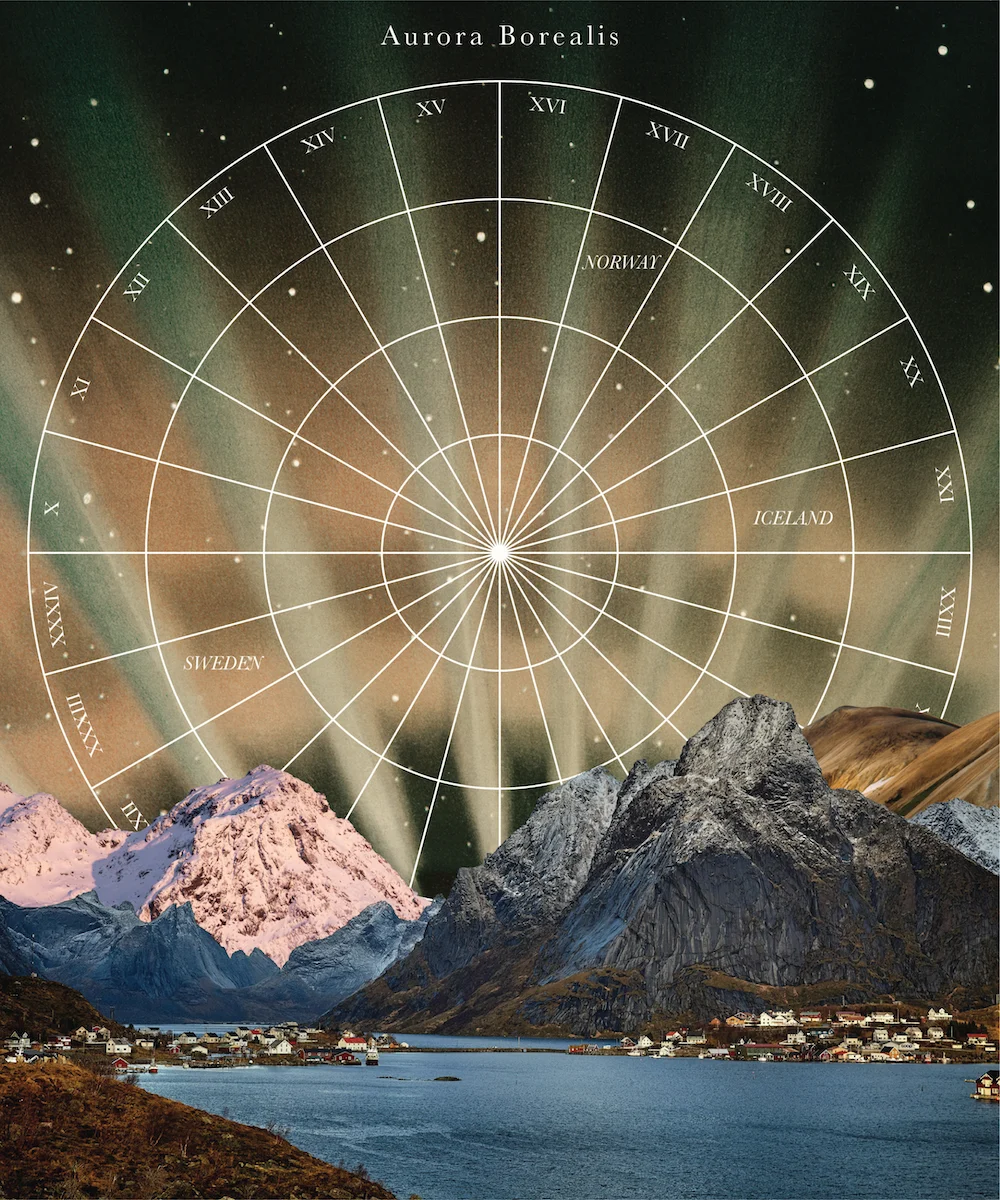
This year, the northern lights have become a spectacle of rare intensity, captivating the imaginations of both seasoned sky watchers and curious novices. But why? We unpack why the Aurora Borealis is sparkling across your social media with missives from New York to Scandinavia.
The Sun is approaching the peak of Solar Cycle 25, unleashing an abundance of solar flares and coronal mass ejections. This heightened solar activity has resulted in more frequent and vivid geomagnetic storms, making the auroras more accessible and vivid than in recent memory. So if you missed it in person this year then you’re actually in luck. The next few years is going to have the same intensity so if you want to find this mercurial light and don’t know quite how to tackle it PRIOR has got you covered.
For those hoping to witness this natural wonder in its full glory, the Arctic Circle offers some of the best viewing. Northern Norway, with its fjords and serene landscapes, especially around Tromsø and the Lofoten Islands, provides an ideal setting for aurora viewing. Iceland, with its otherworldly terrain and expansive skies, is another prime destination, where the lights dance above Reykjavik and the secluded countryside. Swedish Lapland and Finnish Lapland are also renowned for their auroral displays. To truly appreciate the northern lights, one must seek out these remote locations during the winter months, far from the interference of city lights, and embrace the crisp, clear nights that reveal the full majesty of this natural phenomenon.
Norway
February, March & April
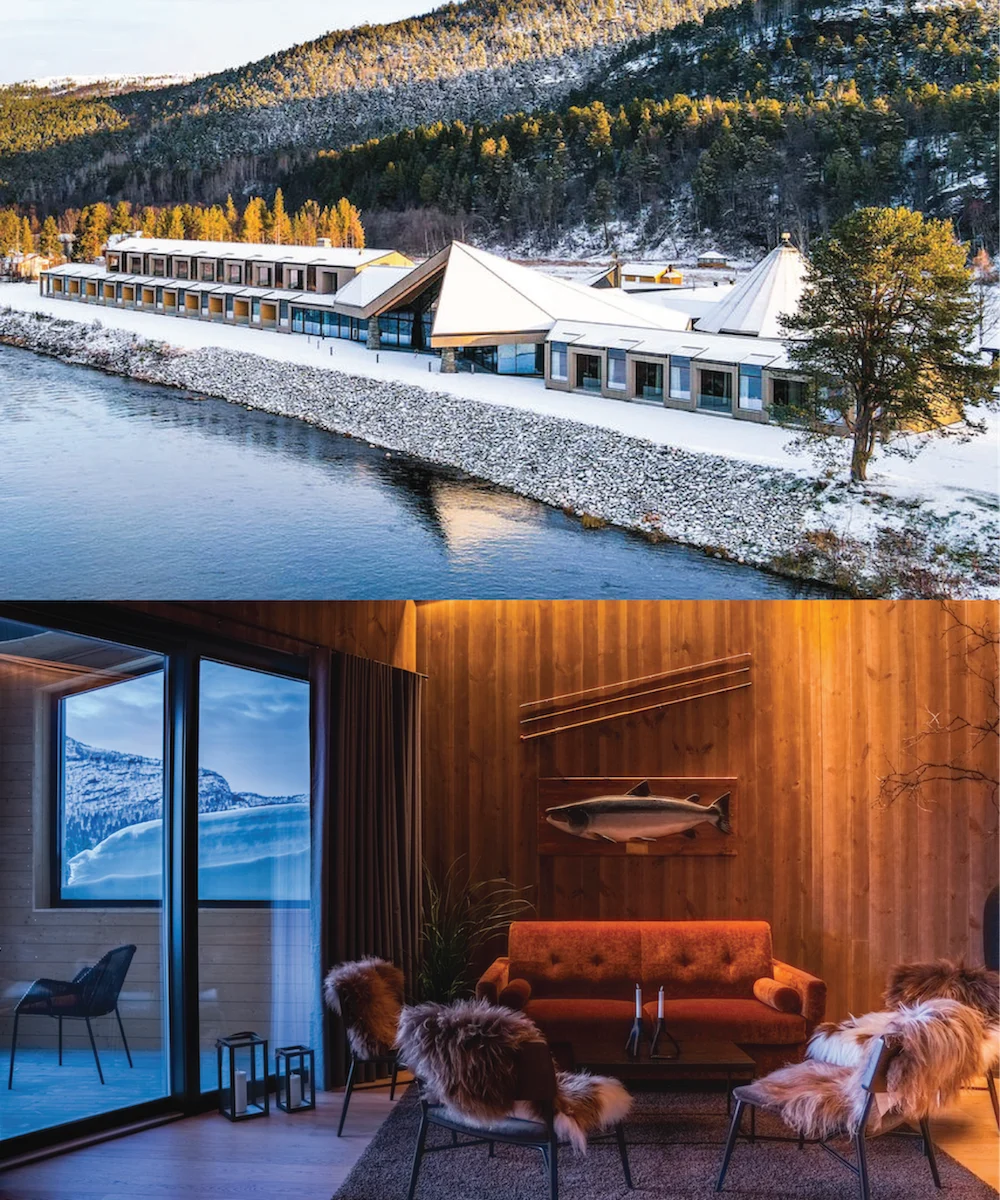
To observe the Northern Lights, you really want to be above the Arctic Circle to improve your chances of catching such an elusive phenomenon and both Alta and Lofoten make for the optimal location to spot the northern lights, especially during March.
Alta, located where the sea meets Finnmarksvidda, has been a historical meeting place for indigenous groups mastering the arctic environment since the Stone Age. With some PRIOR favorite accommodations available in isolated high Arctic locations, away from urban lights, Alta offers ideal conditions for viewing the Aurora Borealis. Stay at Sorrisniva Arctic Wilderness Lodge or spend a night at The Igloo Hotel, a hotel built out of water from Alta River and from harvested ice from Sierravann.
Hanging on the edge of the Arctic Circle is the Norwegian archipelago of Lofoten, ideal for adventurers seeking hiking, climbing, skiing, and arctic surfing. Known for its majestic fjords, snow-capped mountains, and fish-dense seas, Lofoten offers a rustic yet modern experience with properties like Hattvika Lodge, which features fully restored traditional fishermen cabins from the 1880s with heated tile floors and spacious beds. This remote district, with only 1,000 residents, attracts creative and discerning travelers, including artists and artisans, and is celebrated for its design-forward properties, culinary excellence, and focus on sustainability and hyperlocal Scandinavian produce. Holmen Lofoten, a family-run property (and a favorite of PRIOR), is a destination in its own right: a complex of original fishermen’s cabins and modern additions, with a restaurant that embodies sustainable indulgence and Scandinavian slow living.
Set to open later this year, the new Six Senses property, Hotel Svart, located in the Holandsfjorden fjord, will boast panoramic views of the ancient Svartisen glacier and the northern lights.
Iceland
December, January & February
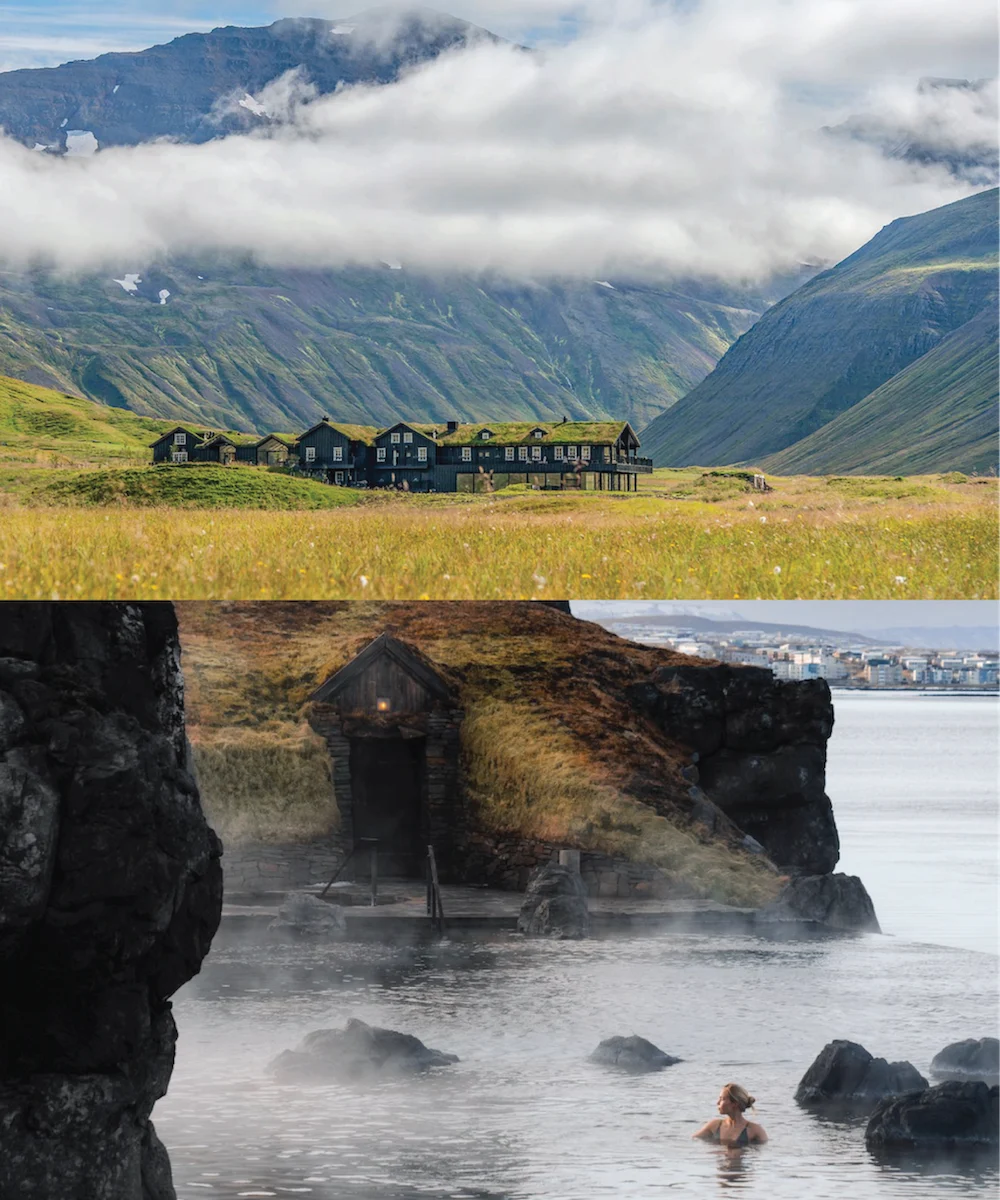
Starting in September, Iceland is illuminated by the aurora borealis. Experience the Northern Lights on "Super Jeep" tours through Þórsmörk, snowmobile adventures across Langjökull Glacier, and journeys through a man-made ice tunnel. At the newly opened Sky Lagoon, guests can relax in oceanside geothermal springs while watching the mesmerizing solar winds over the North Atlantic. Or check out the sheep farm turned exclusive lodge, Deplar Farm, a nordic oasis surrounded by snow-coated mountains on northern Iceland’s Troll Peninsula. The remote location shields guests from artificial light pollution and offers optimal viewing conditions.