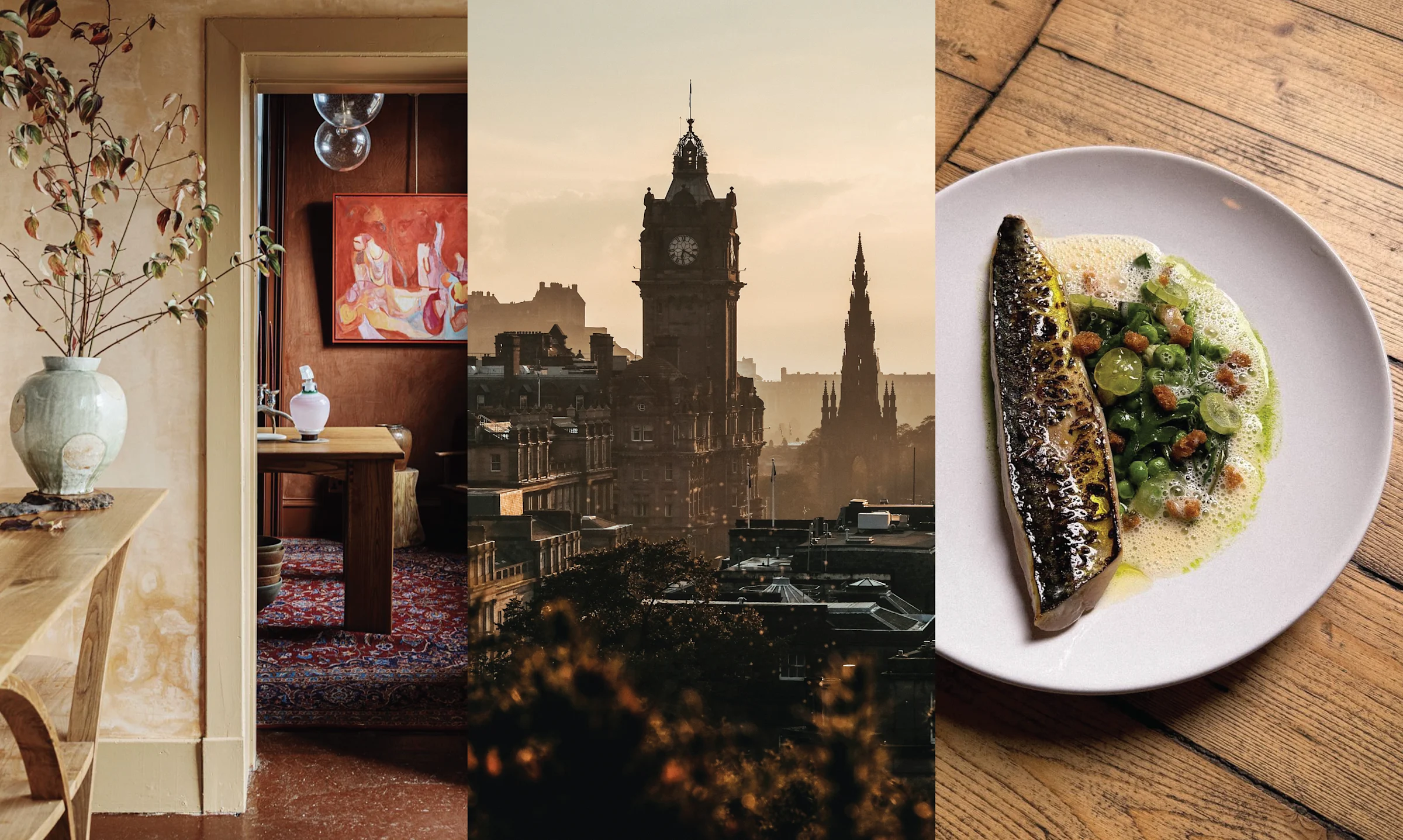
With its imposing castles, cozy pubs, and village-like neighborhoods, Edinburgh has long been one of Europe’s most enchanting yet approachable cities. Its UNESCO-listed Old and New Towns unfold against a rugged backdrop of steep crags and deep valleys, with sandy beaches and traditional fishing villages just a hop and skip away.
And yet for too long, some travelers have treated the Scottish capital as a mere waystation, lingering just long enough to stroll the Royal Mile and browse the shops on Princes Street before decamping to grand Highland estates or Scotland’s storied links (the oldest style of golf course, invented right here in Scotland).
No longer. Spurred by a spate of buzzy new hotel openings, a sizzling fine dining scene, and shops and galleries showcasing the very best in contemporary Scottish craft, Edinburgh is back in the spotlight in a big way — its rich history, layered beauty, and boundless creativity warranting a closer look. Here’s what not to miss.
Stays
Of clock towers and townhouses.
Edinburgh’s most characterful stays are housed within its 4,500-some heritage-listed buildings — some tucked on higgledy-piggledy streets or on vast private estates (see: Penicuik, soon to debut a 16-room hotel), others dominating the city’s ancient skyline.
Take Balmoral, the city’s original grande dame, set inside a neo-Renaissance landmark crowned by a 190-foot clock tower (famously set three minutes fast to ensure passersby never miss their train at the adjacent Edinburgh Waverley station). Its Baronial façade hints at the grandeur within — sweeping staircases, crystal chandeliers, and filigree crown moldings set against a moody palette of bog greens and heather greys, with tartan and paisley accents adding a distinctly Scottish touch. Of the hotel’s five bars and restaurants, the standout is the Palm Court, where afternoon tea takes place beneath a glass-domed ceiling, with hand-painted de Gournay silk wallpaper, a Venetian chandelier, and live harp entertainment adding to the regality.
Just around the corner on the east side of St. Andrew Square, Gleneagles Townhouse, located within the 19th-century British Linen Bank headquarters, has established itself as a more discreet but no less decadent Edinburgh address. As the younger sibling of the century-old Gleneagles resort in rural Perthshire, an hour’s drive from the capital, it brings a taste of country-house living to the Scottish capital. The 33 rooms are steeped in a neo-Victorian air — canopy crown headboards, ornamental gold detailing, and clawfoot bathtubs — while a spa, occupying the former bank vault, features cryotherapy and sauna facilities along with 40 (yes, 40) complimentary weekly fitness classes. The pièce de résistance is the all-day Spence restaurant, where guests mix with members of the on-site social club in a soaring colonnaded space with a cupola ceiling and blush-pink banquettes.
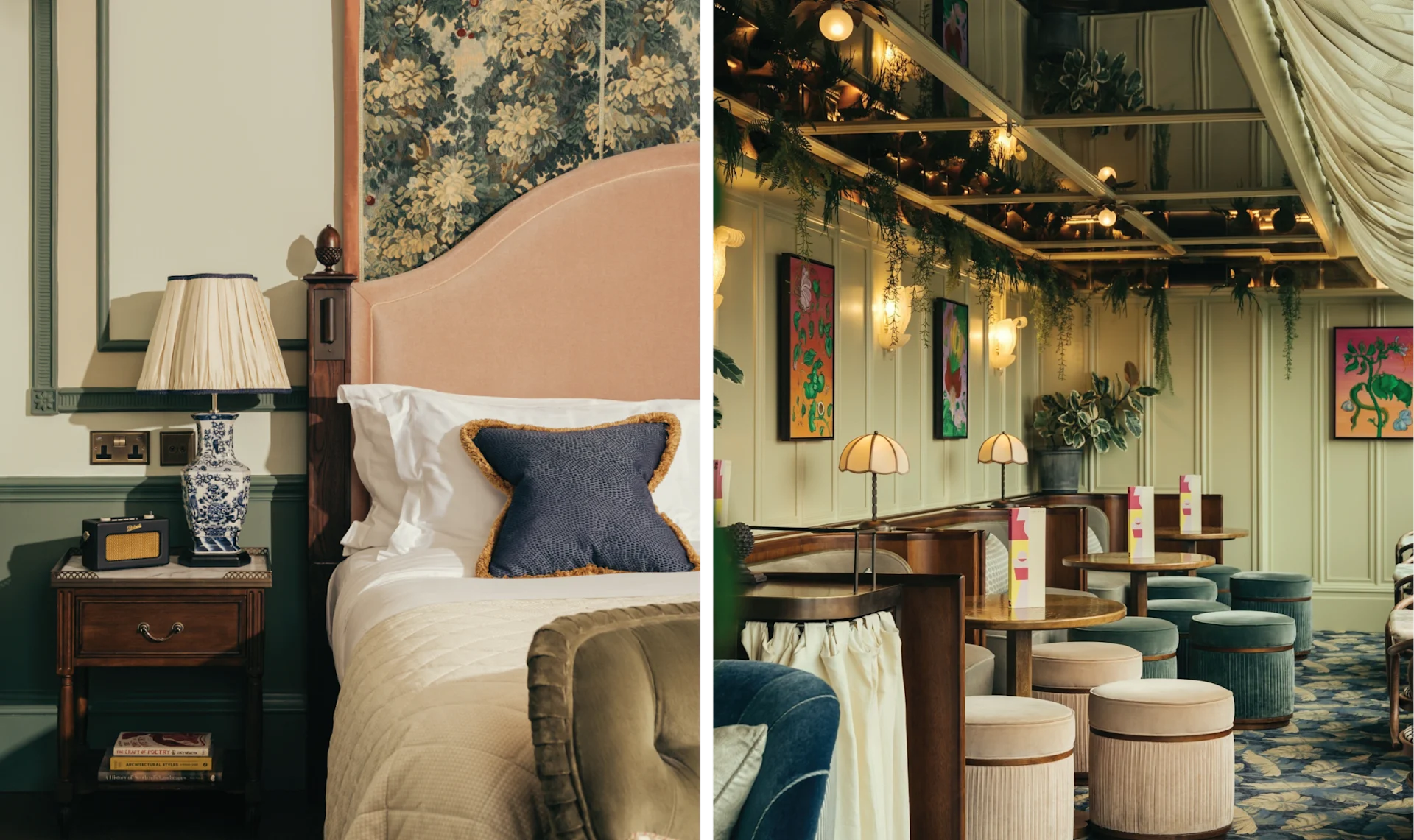
Another recent entry to the city’s rapidly evolving hospitality scene: 100 Princes Street, a hotel and members’ club situated inside a stately Georgian townhouse in New Town. Red Carnation Hotels has taken the 19th-century building — the former HQ of the Royal Overseas League — and given it a suitably clubby, whimsical revamp, collaborating with acclaimed Scottish textile designer Araminta Birse-Stewart (the designer behind the King Charles-favorite textile brand Araminta Campbell) on the 30 tartan-filled suites, some offering dead-on views of the Edinburgh Castle. Porthole-style windows and oil paintings depicting tall ships and stormy seas pay homage to the building’s former tenants and their far-reaching maritime mission. U.K.-based decorative painters Croxford and Saunders were brought in to create a sweeping five-story mural along the staircase, illustrating the overseas adventures of Scottish botanists. Off-property, guests can create a personalized scent with perfumer Imogen Russon-Taylor of Kingdom Scotland, or enjoy a behind-the-scenes tour of Birse-Stewart’s atelier.