In northern Spain, life ebbs and flows with the tides. The Atlantic shapes daily rhythms, from morning runs along misty boardwalks to ferries carrying workers to their offices. Lunch at local restaurants might begin with a heap of fried anchovies or a slab of scorpionfish pâté, followed by sepia a la plancha or a rich Basque tuna stew called marmitako. When the sun is out, locals squeeze in post-work surf sessions before meeting friends for seafood-filled pintxo crawls. As night falls, the rhythmic waves lulls whole towns to sleep, a reminder that the ocean is never far away.
If you visit Spain’s green, mountainous north, this dreamy sea-bound life can be yours, too, even if only for a week or two. And the best way to tap into it is to follow your stomach through seafood. With every order of cockles or percebes (gooseneck barnacles), you’re joining centuries-old tradition: The daily catch is hauled in at dawn, sold at market by noon, and on your plate by lunch. But eating well is only part of the thrill. In the regions of Galicia, Asturias, and the Basque Country, Spain’s seafood powerhouses, you can also stop into oyster farms, tinned fish factories, and live auctions, meeting locals in the process and gaining a new appreciation for products like canned tuna that you’ve been eating all your life.
When the seafood is this good, less is more. Don’t expect bold spices or heavy sauces, which are seen as distractions from the catch’s natural sweetness. What arrives at the table is often not a “dish” at all, but the ingredient itself, simply cooked and served. By the time you head home after visiting any of these regions (or all of them), you’ll be a convert to that philosophy, too—maybe even skipping the squeeze of lemon.

Galicia
Galicia is a land of lighthouses, mossy churches, and wind-whipped headlands, and its ports produce more than three-quarters of Spain’s canned seafood. Much of this is thanks to the jagged coastline: Measured by total miles, it stretches longer than mainland Portugal, with fjord-like inlets and rocky tide pools teeming with shellfish; perfect terrain for both fishing and gathering crustaceans.
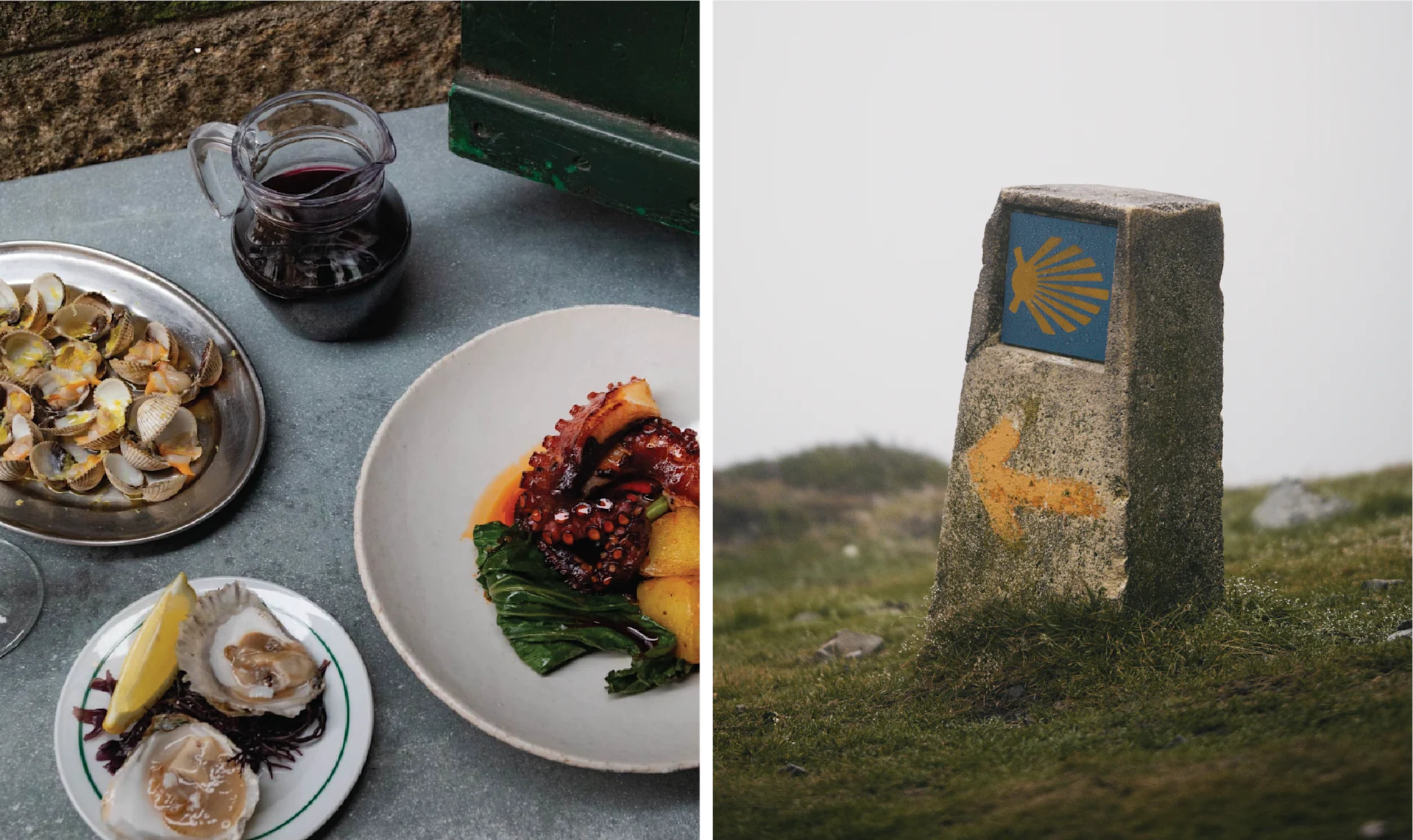
Even Galicia’s most famous attraction, the Camino de Santiago, carries a maritime thread. Pilgrims finishing in Santiago de Compostela receive a scallop shell as a trophy, a nod to both St. James and the medieval practice of using shells as makeshift eating utensils.
Santiago is the perfect place to get your bearings on local seafood. At the Mercado de Abastos, fishmongers hawk the morning’s catch, while bars across town serve hefty slabs of empanada gallega (double-crusted pie filled with tuna and melty peppers and onions) alongside slatey local albariño. The empanada is so deeply woven into regional culture that it’s carved right into the 14th-century Pórtico de la Gloria.
If there’s one marine creature synonymous with Galicia, it’s octopus, and locals prepare it so expertly that pulpo a la gallega has become a tapas bar staple across Spain. Tender slices of octopus are heaped over a bed of boiled potatoes, then finished with olive oil, crunchy salt, and a puff of smoky pimentón. For a textbook-perfect rendition, head to Mesón do Pulpo, a no-frills haunt with sturdy wooden chairs and paper tablecloths, where you’ll rub elbows with uniform-clad workers and newspaper-reading señores.
When you’re ready for a touch of modern finesse, book a table at A Tafona, Lucía Freitas’ fine dining restaurant, where produce from her garden stars alongside briny razor clams and Cambados oysters, all served on tables crafted from the reclaimed wood of bateas (traditional fishing boats). Another essential Santiago stop is Abastos 2.0, whose menu changes daily depending on what’s fresh at the mercado next door.
But there’s only so much sea you can sample in landlocked Santiago. To catch a whiff of salty air, drive an hour southwest to Meaño and the surrounding villages, and post up at a furancho, a casual countryside tavern serving homemade wine and simple seafood plates. A few that are blissfully off the tourist track include Furancho de Juan, Casa Enrique, and Eira de Arriba. For dinner, continue on to O Grove, home to Marisquería D’Berto, famous for ultra-juicy fried lobster and meaty, briny percebes that all but beg for a glass of slatey albariño. Nearby in Cambados, you can spring for a tour and tasting at Conservas La Brújula, one of Spain’s most lauded canneries.