This article originally ran within Soup for the Soul — a collection of stories exploring the literal and allegorical magic of soup.
For many, Korean cuisine is often synonymous with bold, vibrant flavors — the funkified heat of gochujang (red chili paste), the saltiness of fermented seafood, the charred and blistered savory of bbqs, the stinking rose of garlic in all its forms. In contrast, many might overlook a quieter, subtler facet of the cuisine: a collection of soups reflecting not just Korea’s culinary landscape, but its emotional one. Among these lesser-known dishes is bugeo-guk, a light soup made with dried pollack and little else. For many Koreans, this simple yet restorative broth is not just a meal. It’s a form of medicine.
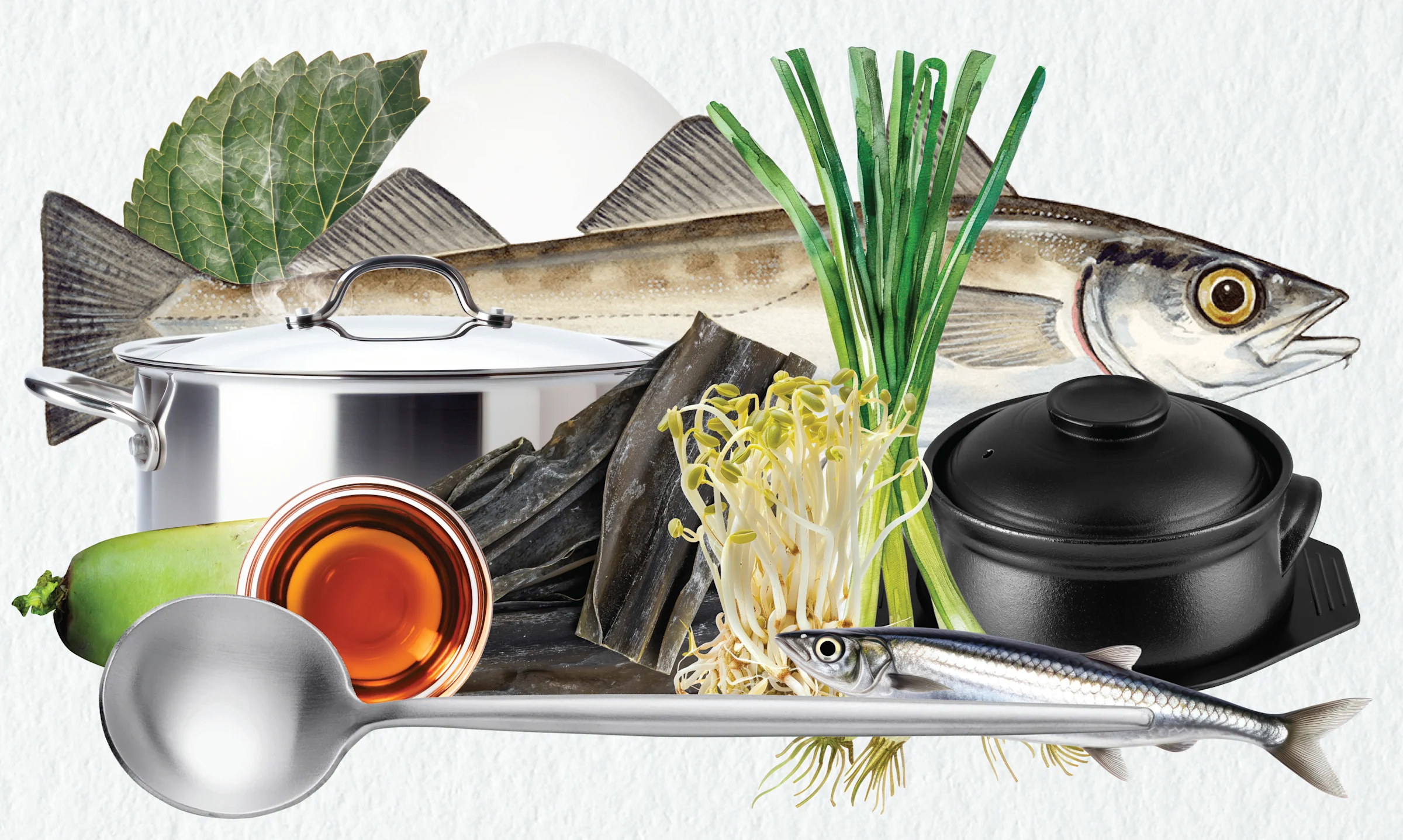
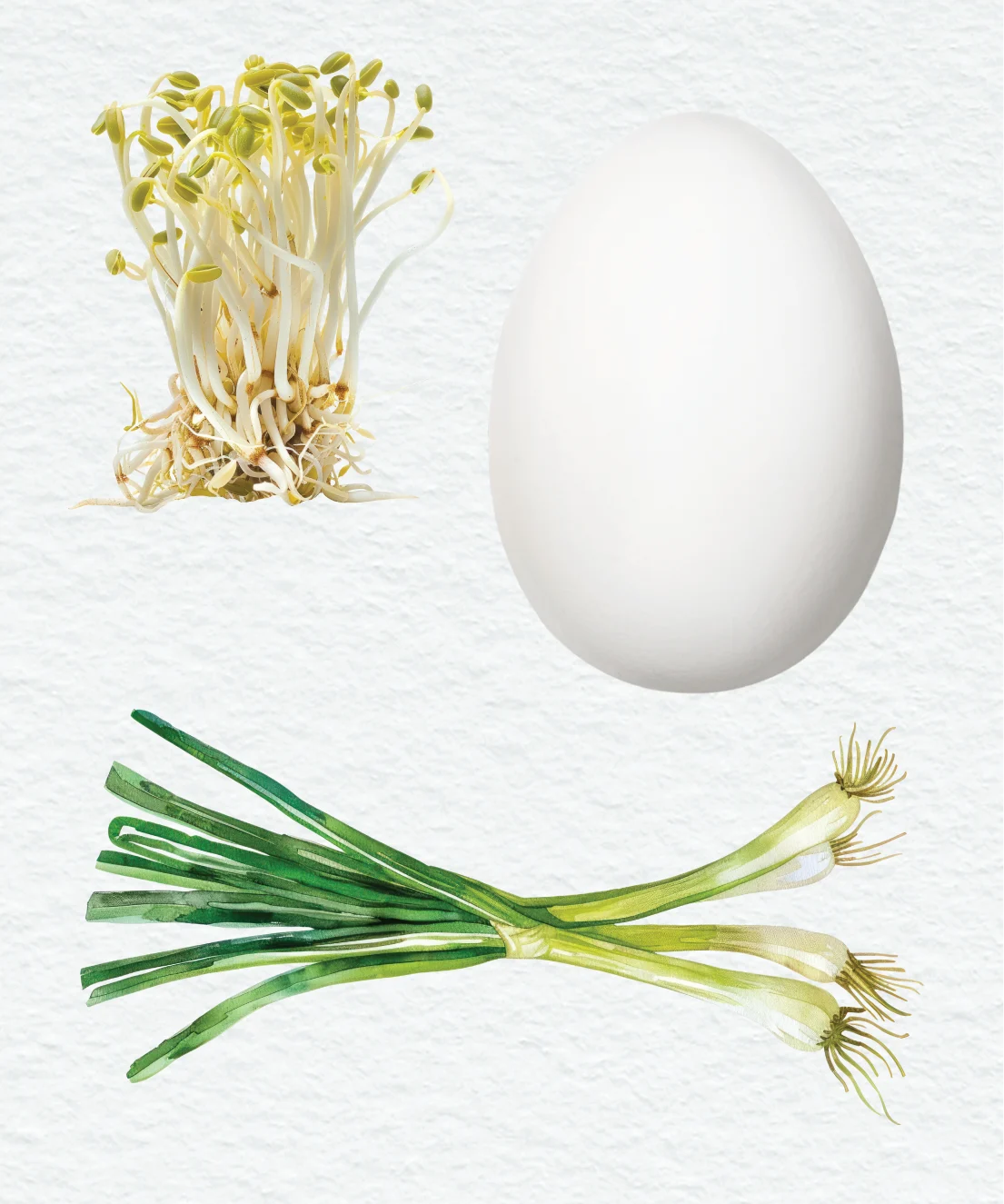
Unlike the richer, more complex stews that often dominate Korean kitchens, like kimchi-jjigae or doenjang-jjigae, bugeo-guk is a clear and straightforward soup. With a broth flavored primarily by the fish, its beauty lies in its simplicity, outfitted with just a few ingredients: in addition to the rehydrated dried pollack, a handful of gangly yellow soybean sprouts (kong-namul), an egg whisked in à la minute, perhaps a smattering of scallions and radish. Spices and soy sauce are often eschewed. The objective is clear: to taste the fish, and the fish alone with its uniquely salty, umami flavor. “Sometimes you don’t have to add any salt at all,” says Hooni Kim, chef and owner of midtown New York restaurant Danji — awarded the first Michelin Star for Korean cuisine in the world — and Korean specialty grocer Little Banchan Shop offering ready-to-eat meals and pantry staples.
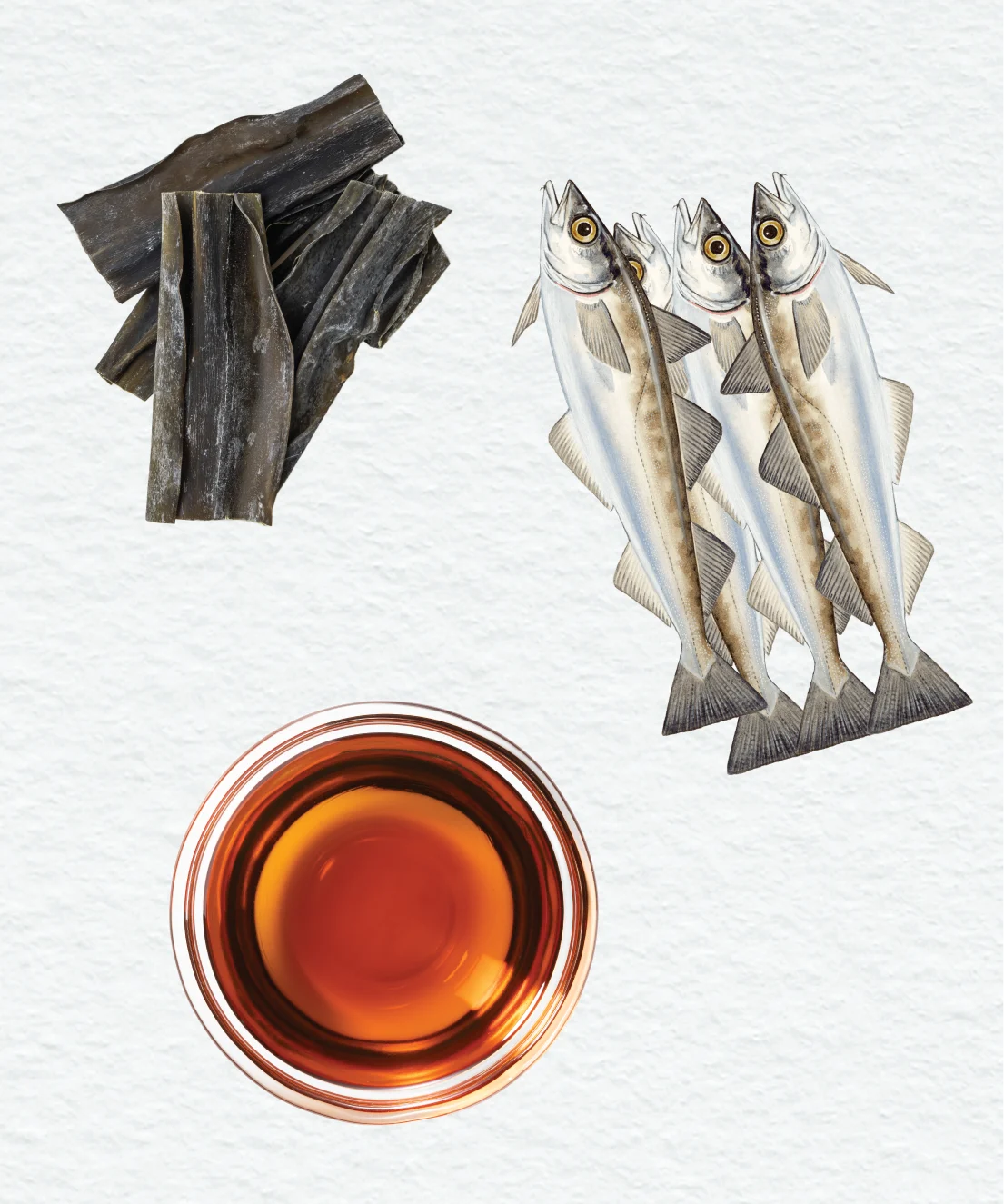
Despite technically being a seafood, there is very little of the typical and overt fishiness one might expect, thanks to the mild nature of Alaskan pollock. It can best be described by the Korean term “siwonhada,” which can be defined as refreshing, cooling, or alleviating, alluding not only to the taste of something but also the comforting relief or catharsis it provides to the body. And so befittingly, this soup delivers a distinct blend of emotional and physical clarity after the chaos of life's more intense flavors.
Bugeo-guk’s place in Korean culture is intertwined with its medicinal properties. While today’s generation of Koreans may look to budae-jjigae (“army stew” laden with all manner of processed ingredients: cheese, Spam, hot dog) following a night of heavy drinking, bugeo-guk is the more well-known and classic remedy for hangovers amongst older generations. Pollack is rich in amino acids, which are said to aid in liver function and alcohol metabolism; bean sprouts, its most common accoutrement, can help lower blood alcohol levels and inhibit its absorption, thus doubly helping to recover from a hangover. The soup’s subtlety and overall lack of grease also makes it especially suitable for those with sensitive stomachs, offering a gentle reprieve without overwhelming the mind and body with pungent flavors. Hooni Kim recalls staying at Seoul’s Lotte Hotel, located across from a famous local bugeo-guk restaurant a number of years ago. “It was strategically situated because all the big companies were nearby in the same neighborhood, and the restaurant opened at 7:45am so everyone could sober up.” Korea has long been known for its drinking culture, with extensive imbibing an integral part of workplace socialization, and he observed that the biggest lines formed before 9am. The early opening times didn’t just benefit late-night revelers, but proved convenient to jetlagged travelers, too. “When you wake up hungry at 3am you don’t want to wait for the hotel buffet, which serves up the same thing you can find in the U.S.,” says Kim. Getting bugeo-guk was “the ultimate breakfast, whether you drank or not.”
The soup’s restorative qualities extend beyond the purely scientific. David Yun, chef and co-owner of Kisa, recounts the first time he had the dish, which he calls one of the soul foods of Korean cooking. “It was the first time I blacked out as a teenager growing up in Atlanta, and my parents were mad. But after all the yelling, my mom still took the time to make that soup for me” — a gesture that, in Yun’s eyes, encapsulated the dish’s emotional significance.
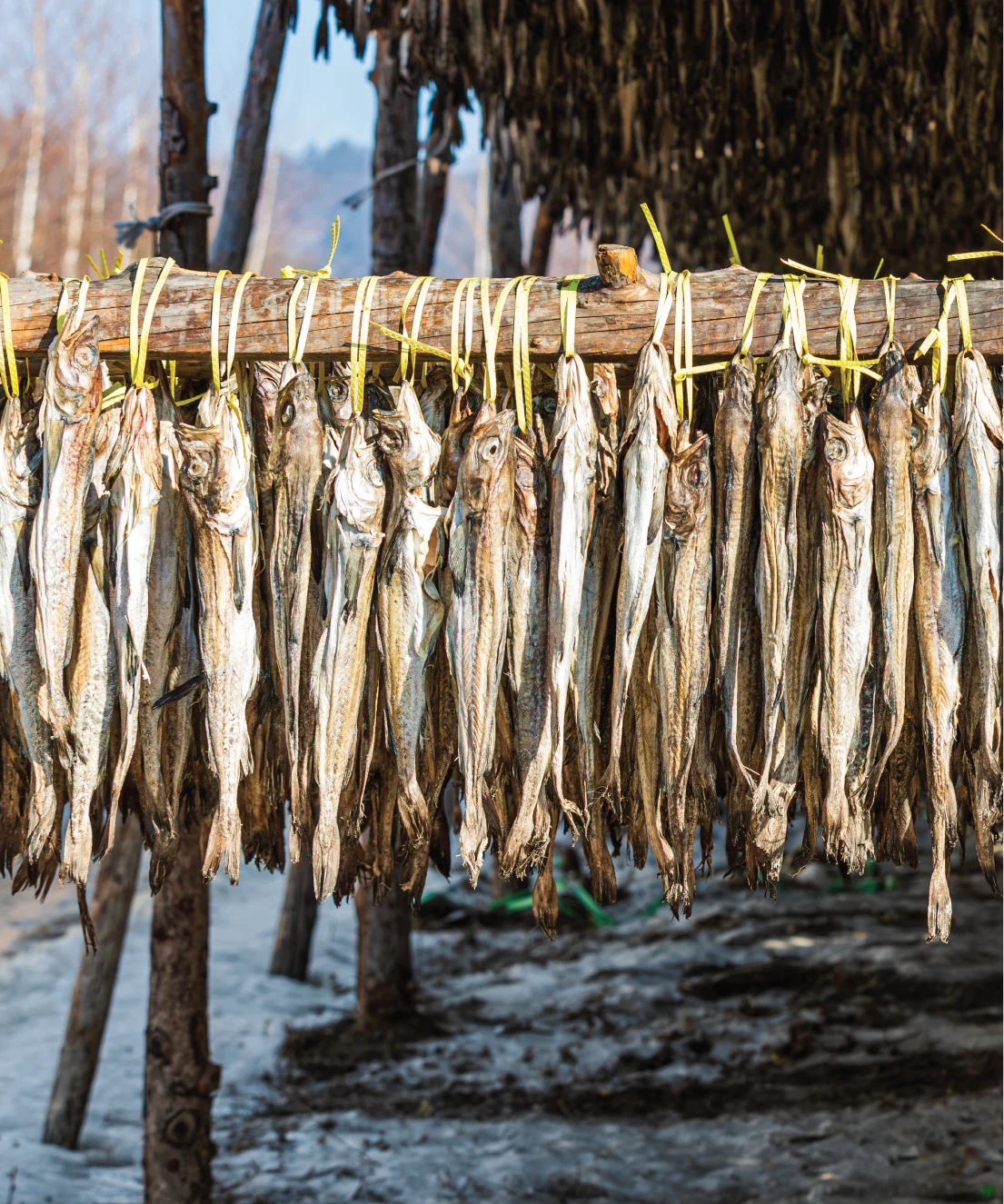
Historically, bugeo-guk was not as accessible as it is today. Preparing the dried pollack involved catching, drying, and painstakingly shredding the fish or beating it into flakes (a process that, according to Yun, may have provided an outlet for frustrated wives to vent their feelings about the drunk husbands for whom they had been making it). Older generations may recall the multi-step processes with reverence, as the dish was once expensive and even considered luxurious. This may explain why they tend to appreciate it more than younger people, according to Kim, who occasionally sells it at Little Banchan Shop. “It’s a tough sell. But the people who know it truly appreciate it.”
Outside of Korea, you can find bugeo-guk at old-school eateries like Cho Dang Gol in Midtown Manhattan, or San Soo Kap San in Queens. And if you can’t, fortunately it's easy enough to make yourself. Today bugeo is readily available at Asian grocery stores like H Mart, often pre-cut and boneless. You may also come across hwang-tae, a specialty version made through a natural freeze-drying process that produces a more complex flavor and deep yellow color. When cooking with it at home, either will do. To make it, you simply soak the fish, squeeze out the liquid, and use it to create the broth. If fish is of lesser quality or has an unpleasantly fishy smell, some people stir fry it in sesame oil instead. The secret to a successful bugeo-guk is to not overpower the natural flavor of the fish. Adding too much salt to the broth risks masking the pollack’s essence, which is meant to be the soup’s main flavor. Ideally, the fish should always be a little saltier than the broth, says Kim. To achieve that balance, he likes to season the fish with a little bit of soy or salt after it's been rehydrated and squeezed.
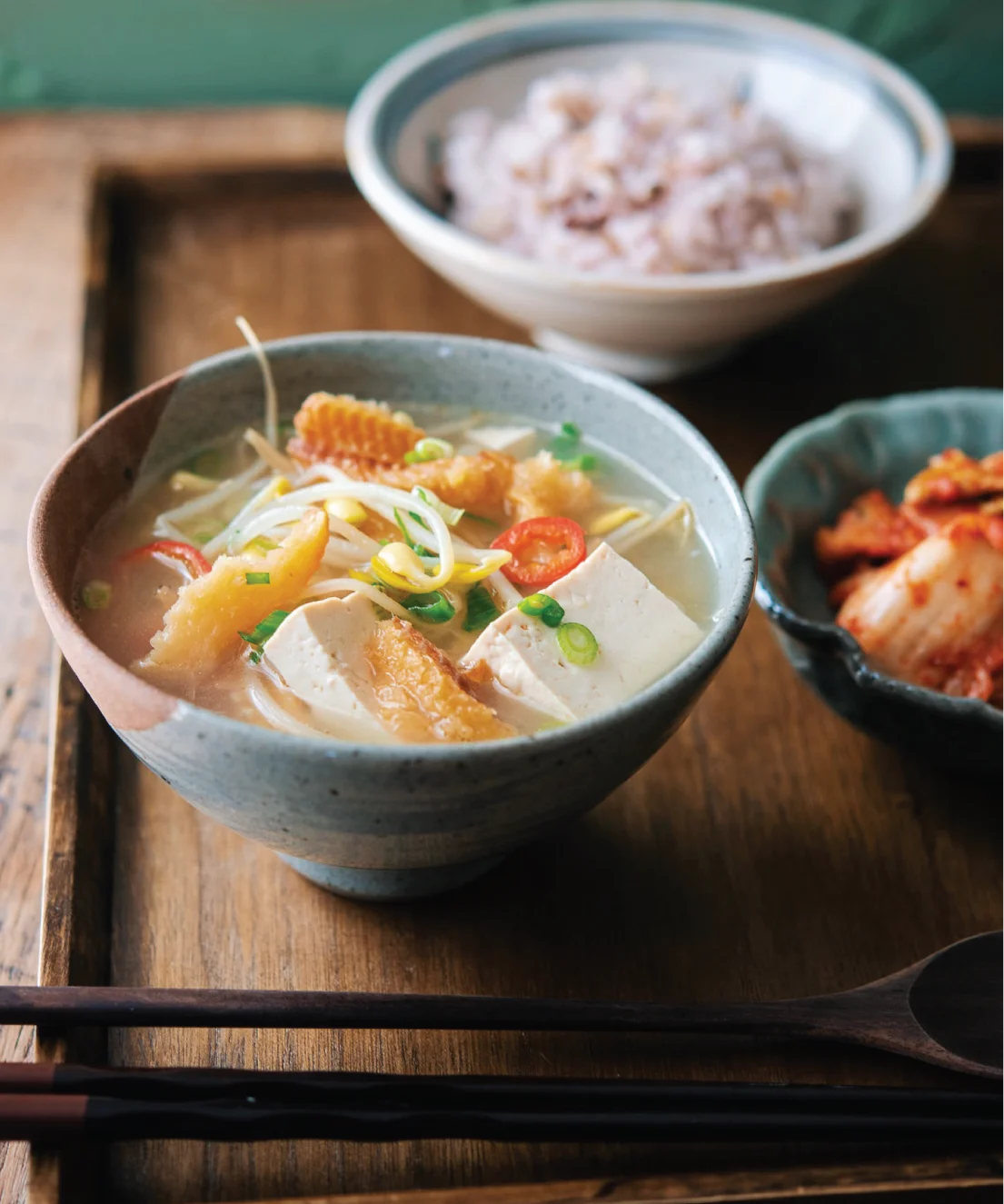
Though bugeo-guk is originally bare-boned in origin, people have applied their own spins through the generations. Jeffrey Kim, co-founder and chef of Nudibranch remembers his mom adding sujebi, or hand-torn noodles. Yun’s mother incorporated pickled baby shrimp and used the water left over from rinsing rice (sal-temul). My own mother boiled the beansprouts first in dashi broth, and poured over the mixture directly onto the fish. Some people add sesame oil, others perilla. It’s common to add Korean radishes, less so to add potatoes or spicy peppers. But why not? The possibilities are endless. The accessibility of bugeo and the ease of making the dish has altered its place in the cultural imagination, becoming a foundational canvas for personal and familial expression. As a nurturing meal, whether made for an early morning recovery or otherwise, one truth remains; as Alice Jun of Hana Makgeolli, puts it, “If someone makes you bugeo-guk, you know you are loved.”