Living between New York and Marseille, France, my boyfriend and I have adjusted to the vivid differences of life in two cities. But there are some similarities, too, a certain tightness of daily rhythms from tracing and retracing the same streets, over and over again. That familiar tension between leisure and socializing felt when we regularly return to a beach in Marseille to see as many of the same faces, just as we do at Lucien, my local tight knit restaurant in Manhattan.
For these reasons, it is good to escape both cities regularly, so as to enjoy the lazy anonymity of a real holiday. To this end, we take a long weekend away whenever we have an opportunity, exploring the Hexagon, as mainland France is called, and finding places to read. The end of summer was spent slouching villa-to-villa across Provence’s interior, from the tiny hill town of Bonnieux, once the host of medieval cardinals on diplomatic missions between rivaling popes from the Vatican and Avignon, to Goult, where a Times reporter, after telling us she had been secretly vacationing in the quaint village for decades, informed us that geotagged images must be kept off Instagram at all costs. In December, we took a direct train to Briançon, France’s highest city, wandering its ancient streets dusted with Alpine snow and eating tartiflette, a casserole made of potatoes and bacon topped with cheese, paired with glasses of sharp, mineral-y Rousette wine.
After exploring the hills of Luberon, we were hungry for a little more refinement than the raucous beaches in Marseille. Luckily, the south of France spoils you with choices. There is, of course, the constellation of beautiful villages in Nice, on the Côte d’Azur, such as Saint-Paul de Vence, the home of Colombe d’Or, a legendary country inn once frequented by Chagall, Matisse and Picasso. (Artworks by those famous guests still decorate the hotel’s dining room.) Cannes is only an hour’s drive outside Marseille; but, outside of festival time, the city is quiet and empty of young people, all dust and shuttered villas.
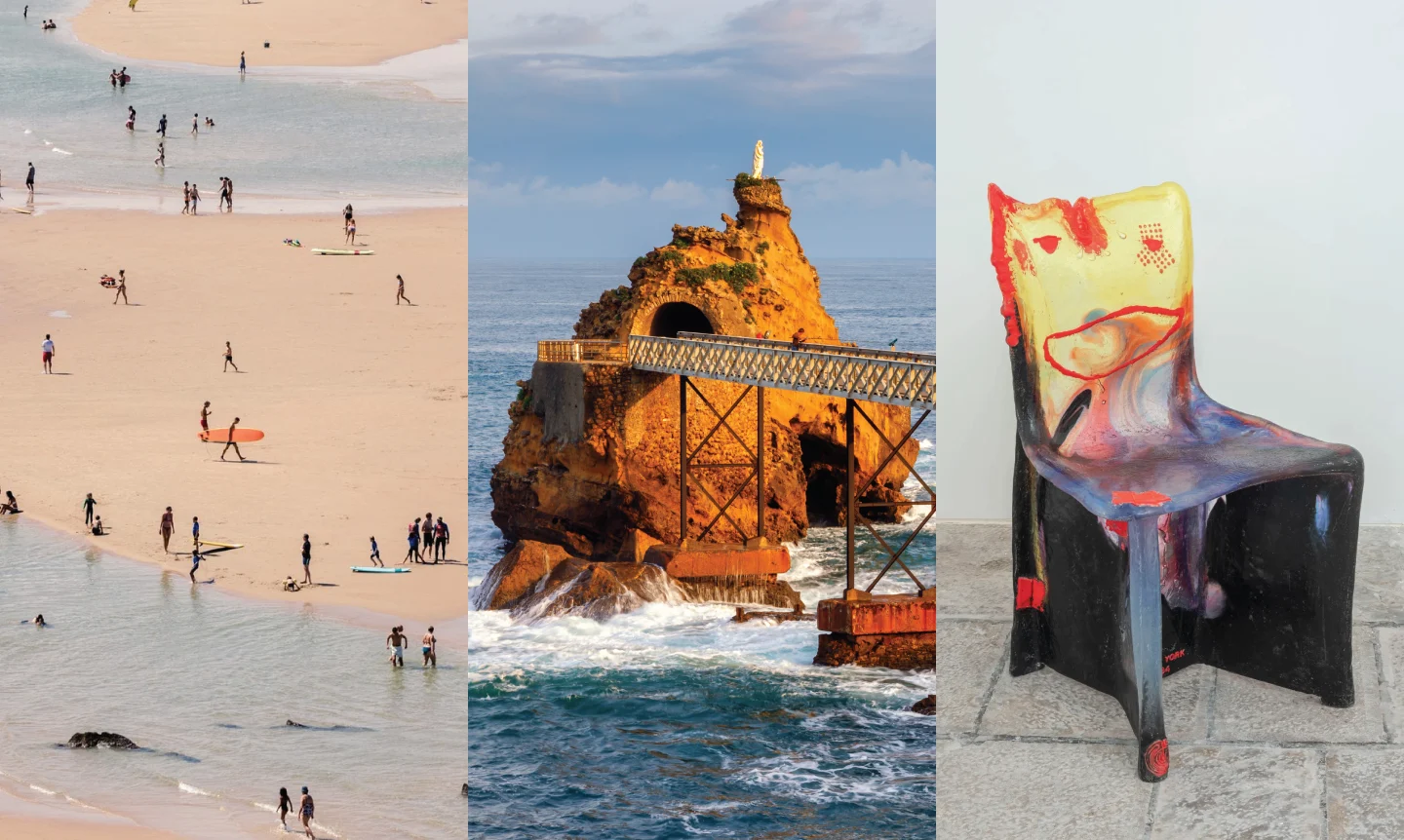
We wanted a different sea, one wilder and with the drama of the Atlantic’s waves. The Mediterranean, for all its charms, has no tide. It was our friend, Felix Reeves, the head chef at the excellent La Mercerie in Marseille, who initially mentioned that something exciting was in the air over in Biarritz, a resort town by the Bay of Biscay, on the country’s southwest corner. Already home to the best surfing in France and long stretches of beach with actual sand (in Marseille, we swim from the rocks), the city now hosts an explosion of new restaurants, each featuring menus that incorporate the region’s French and Basque culinary traditions and all the cold-water fish cuisine one could long for. Impossible as it may be to believe, one can eventually tire of grilled squid and octopus salads.
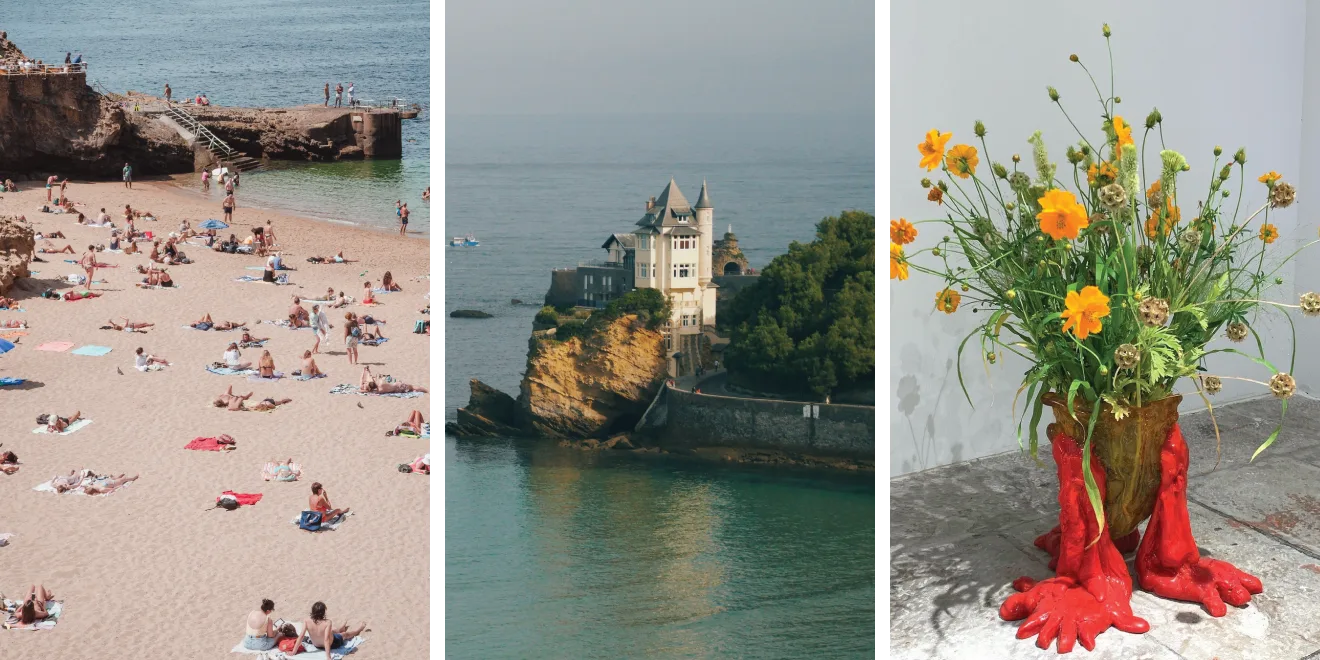
The combination of such strong culinary cultures feels entirely different from the haute-cuisine fussiness that typically dominates the favorite holiday spots of pensioners. Of course, Biarritz has always had a suggestion of glamor to it, an afterglow of Old-World elegance from its heritage of casinos, Coco Chanel and secretive millionaires. These days, however, the laid-back seaside tourist town is the site of a burgeoning, imported art scene. Merely mentioning that we were even considering a visit to Biarritz caused nearly every New Yorker I know to remind me of the fact that Lucy Chadwick, the former senior director of Gavin Brown’s Enterprise in New York, moved there to set up her latest venture, Galerie Champ Lacombe. Since its opening two years ago, the gallery has hosted shows by the likes of the Berlin painter Tim Breuer and the Italian architect and artist Gaetano Pesce, quickly becoming the most-exciting contemporary art space in town and a gravitational center for a dynamic cultural scene currently unfolding on the shores the Bay of Biscay.
San Sebastián, the nearby heart of Spain's Basque Country, lured my friend, Cy Schnabel, to set up Villa Magdalena, a gallery located in the garage of a 1920s farmhouse belonging to his mother, Olatz López Garmendia, the best bedding designer in the world (in my opinion), and his father, the painter Julian Schnabel, who previously had used the space as a satellite studio. And the arrival of Cedric Fauq, who previously held stints at Nottingham Contemporary and Palais de Tokyo, as the new head curator at Museum of Contemporary Art in Bordeaux further signals the Southwest of France as an emerging frontier for cuisine and culture, one far quieter and calmer than Cannes, the city Biarritz lost the film festival to in 1939.
It’s always fun to beat the crowd to any new scene, so we were determined to get there before everyone knew about it. But I may have been overly-ambitious when I chose the 6 a.m. train to Biarritz from Marseille. (By rail, the trip from Marseille is a grueling nine hours and I wanted to arrive in daylight.) We were late, of course. Our getaway kicked off with me trailing after my boyfriend as he ran full-speed ahead, carrying all the bags. But my mood soon lifted as I watched flashes of light hitting the salt marshes of the Camargue, a river delta by the Mediterranean, where flamingos fish for meals in equally-pink waters; and, later, as we made our arrival crawling along the northern feet of the mountains splitting France and Spain.
Biarritz is a beautiful city in yellow brick, full of decorative towers, Mansard-roofed hotels and latticed stone balconies. Bordered by a wide stretch of the Atlantic, the sun falls in fiery gold each evening. To the south, the first peaks of the Pyrenees are clearly visible. It’s a place of as many different identities as views. Once a tiny fishing village in the English-ruled kingdom of Aquitaine, Biarritz went on to become the most important whaling port in all of Basque Country, where mariners ventured as far as Labrador and Newfoundland in pursuit of morue (cod), a staple part of its swine-and-brine cuisine. (The other, of course, being Serrano ham).