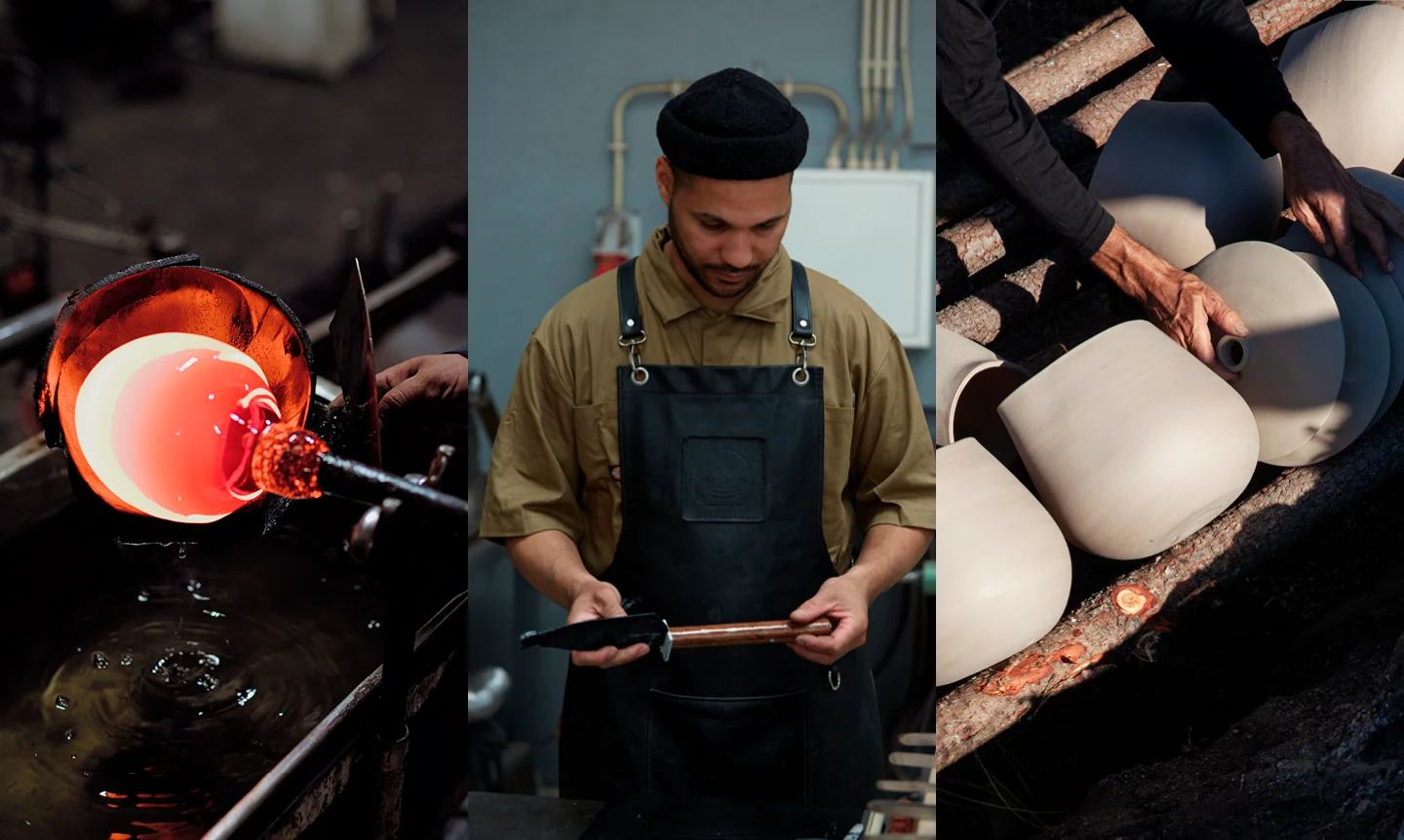
With its mild weather and low-cost of living, Portugal has long marketed itself as a creative haven at the edge of Europe. Today the country, flooded with outside investments, is not just in the throes of an economic revival, but a creative one, too. Bladesmiths in Barreiro, glassmakers in the Marinha Grande, avant-garde theater troops in Lisbon: There is something thrilling in the air over in the Iberian Peninsula. The more Portugal is overrun with tourists and remote-working foreigners, it seems, the more the country’s creative class, expats and natives alike, is preserving its rich arts-and-crafts heritage. “I had all this history from Portugal in me,” said Maria Ana Vasco Costa, a Lisbon-based ceramicist, whose monumental, minimalist works are like if Donald Judd used hand-painted, monochromatic tiles as his medium. “I just needed to own it.”
Sky-high property prices and an influx of deep-pocketed international investors (it is said that over half of all the country’s currency currently in circulation is from abroad) has only brought fresh urgency to preserving the centuries-old Portugues artistic spirit. “Most of the time we are working with regional techniques, which are going to disappear, or for companies that are very old," said Noé Duchaufour-Lawrance, a French furniture designer and sculptor based in Lisbon. Azulejos, a "500-year tradition whose historical and cultural dimensions are lost in translation,” are now being picked up by "new generations eager to work on these types of older crafts,” he said.
Perhaps the country, humbled from years of economic uncertainty, is gainining a new sense of creative pride through foreign eyes. Or as the glassmaker Martinho Pita put it: "Now, Portugal is in a time of opportunity."
Here, Prior caught up with seven Portuguese creatives who are reclaiming their country’s craft heritage.
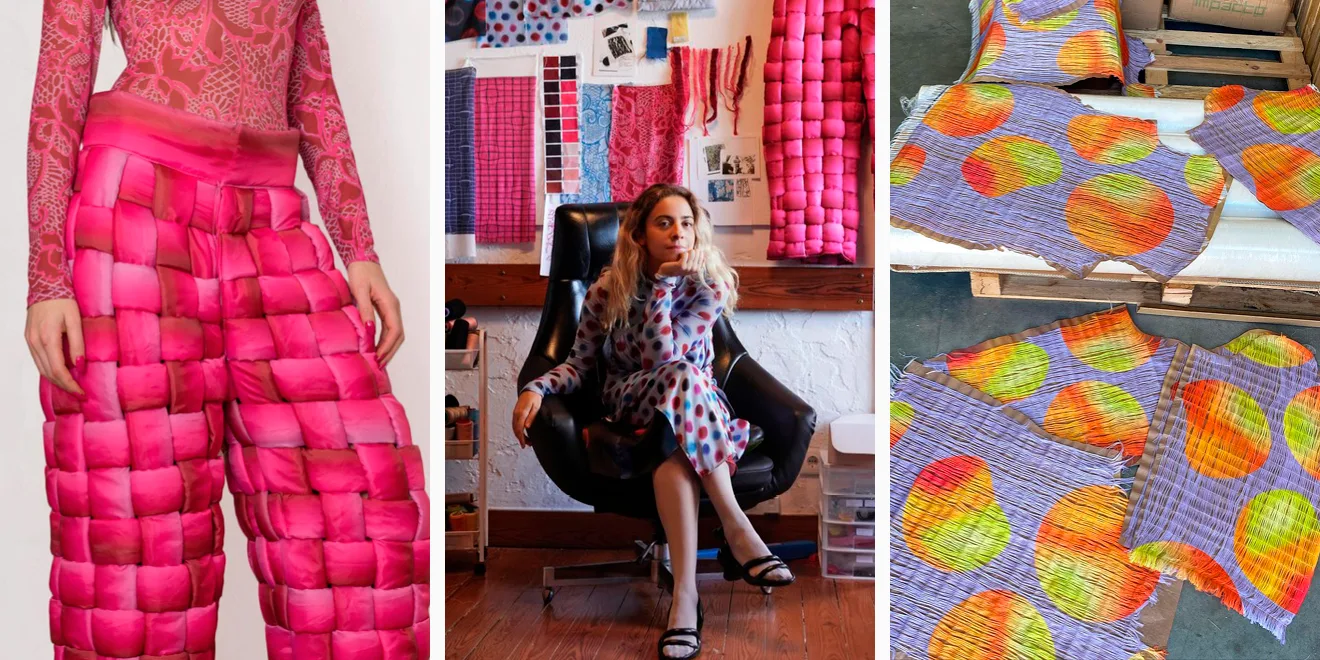
Constança Entrudo, 28, Lisbon
Material Girl
A Lisbon-native and Central Saint Martins graduate, the fashion designer Constança Entrudo pairs experimental silhouettes with unexpected materials, whether that be heat-fused jacquard and deconstructed mohair. Cutting-edge techniques are often paired with comically oversize polka-dot prints and silhouettes that play wildly with proportion. “I just have fun with it,” Entrudo said. “I'm more of a material maker than a fashion designer.” She recently did a collaboration with Softrock, an indie furniture company that makes furniture and foam pillows in the shape of natural stones. Now, she is switching gears and working on the interiors for a new, yet-to-be-named restaurant in Lisbon. She’s still wrapping her head around the project, but so far she’s thinking “fabrics, thread curtains, and sea-inspired furniture and ceramics,” she said. When it comes to her “naked dress,” which features a trompe l'oeil image of a nude female body, she's more transparent. “We made the fabric, and I posted it on Instagram,” she said. “It wasn't even finished, it was just wrapped around my body.” Before long, requests for the dress piled in from Cardi B and SZA.
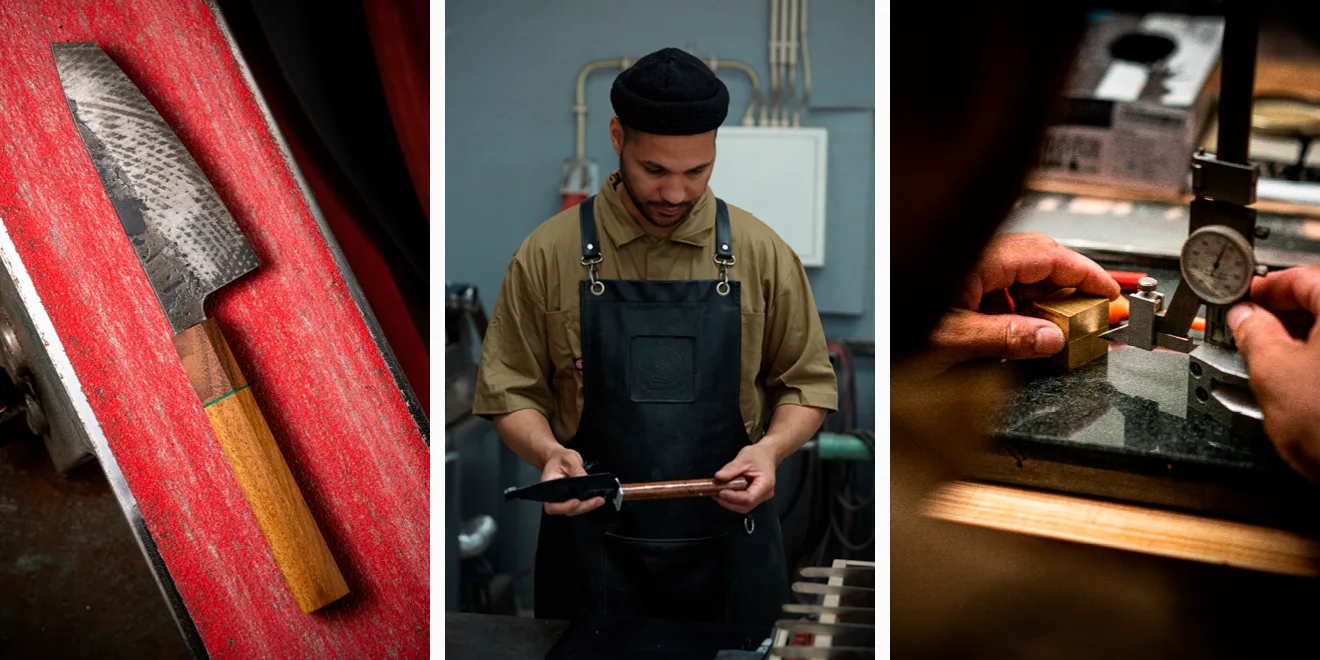
Paulo Piedade, 41, Barreiro
Blade Stunner
A decade after working in Portugal’s art-world scenes with creative co-conspirators like the street artist, Vhils, Paulo Piedade was in search of something even edgier. “I started doing knives,” Piedade said. “Stuff that I really like to do.” After a friend suggested he make knives that look like sculptures, he started Afiôd, a collection of artisinal blades that combine viking ruggedness with the graceful lines of Japanese woodwork. Piedade forges his cutlery out of steel, and a friend, Ricardo Leal, works in wood. He admits to being a sharpening perfectionist. “It takes a lot of time,” he said. Collaborations continue at his workspace, Afiôd, which he shares with the visual artist Fidel Évora, who creates the studio’s graphics, and his brother, the woodworker Ricardo Piedade. Beyond office space, his family shares a multigenerational love of the kitchen. “Cooking is a gesture of serving others,” Piedade said. Growing up, his father worked as a cook on cargo ships in the Netherlands for months at a time, he said, and when he returned home, Piedade would watch as he sharpened his knives. "Small knivese can be surprisingly versatile,” he said.
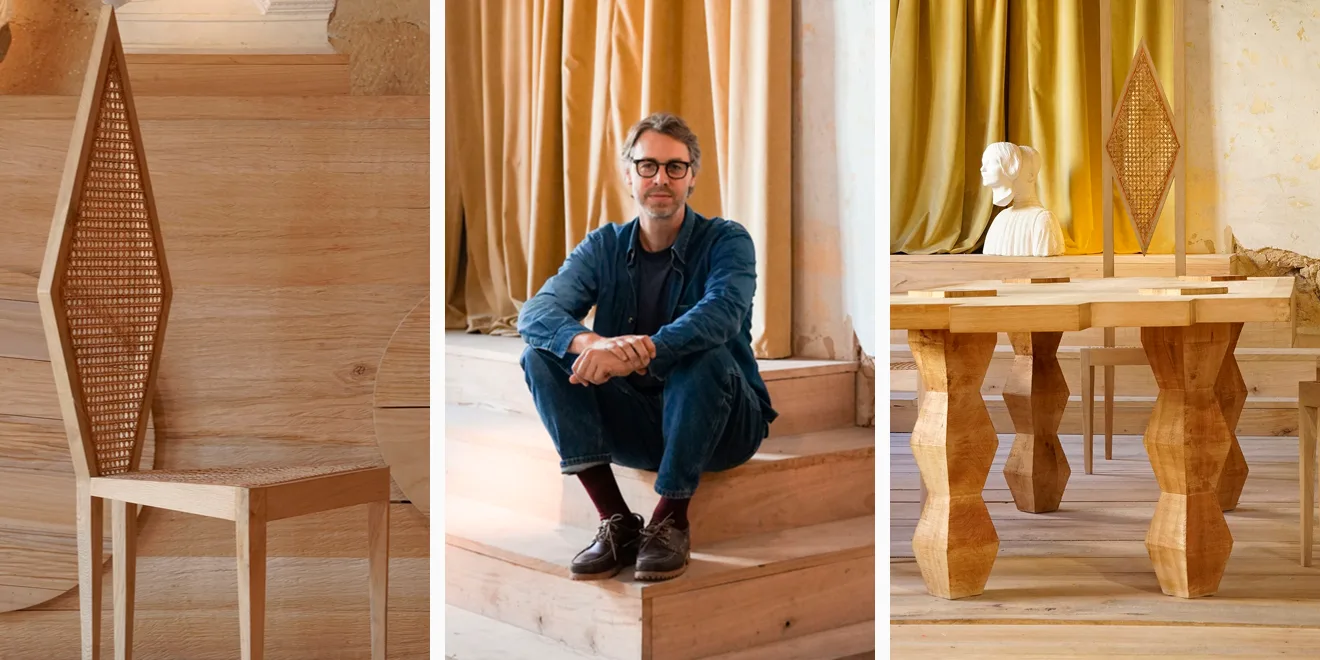
Julien Labrousse, 45, Lisbon
Magic Maker
Julien Labrousee is a multi-hyphenate French architect whose imagination spans music, illustration and woodworking. He is just at home creating theatrical music venues in Paris, such as the Elysée Montmartre and Le Trianon, as he is dreaming up “bioclimatic construction” projects in Portugal’s Arrábida’s National Park. “I do a bit of everything. Things that are not so easy to make and not based on revenue,” Labrousse said. “I love to hold each project like a piece of my life.” His wildest work to date is perhaps the Palácio do Grilo, an 18th-century palace located in Lisbon’s Beato neighborhood. The venue hosts immersive theater experiences, where diners eat and drink while an in-house troop of performance artists performs on stage. When casting his dinner shows, Labrousse said he focuses on someone's character. “It’s teamwork,” he said of the company’s creative process. “I’m looking for people who are a bit like magic.”
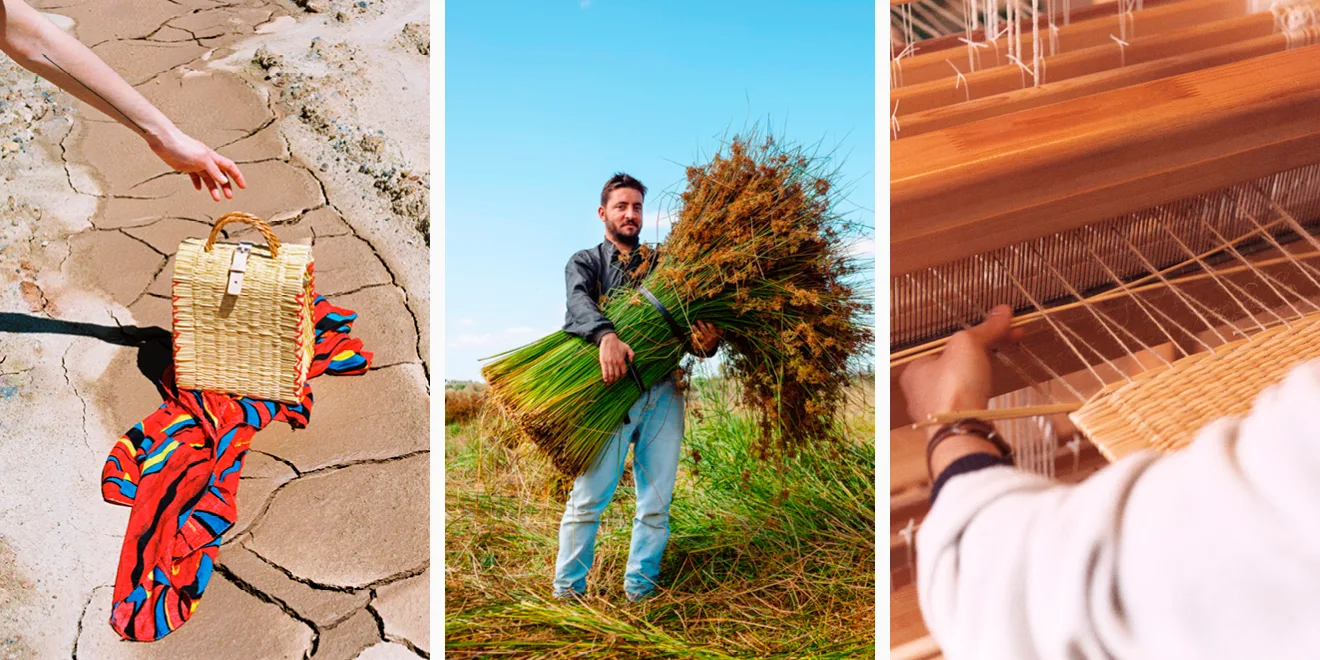
Nuno Henriques, 38, Castanheira
Dream Weaver
Nuno Henriques named his vibrant basketry line, Toino Abel, after his grandfather, whose passing was the impetus for him to leave Berlin and return to the Portugal countryside. “He was the person that I loved the most,” Henriques said. His basketwork combines weaving and cross-stitching techniques at unexpected scales and colors. Henriques is now an evangelist for the survival of his craft. He offers classes to artisans visiting Castanheira, and his team of four basket makers creates each piece by hand using pre-industrial techniques, like weaving vegetable fibers on foot-pedal looms. “It’s a Portuguese craft, but it feels older than that,” he said. “It’s primary.” It's familial, too. His great-aunt taught him his unique, regional method of basketmaking, which dates back five centuries to the Middle Ages. “She was 75 and I was 29,” he said. “I came to this village to live next to the local artisans. It was the most radical thing I did in my life.”