¡Yes, Yucatán!
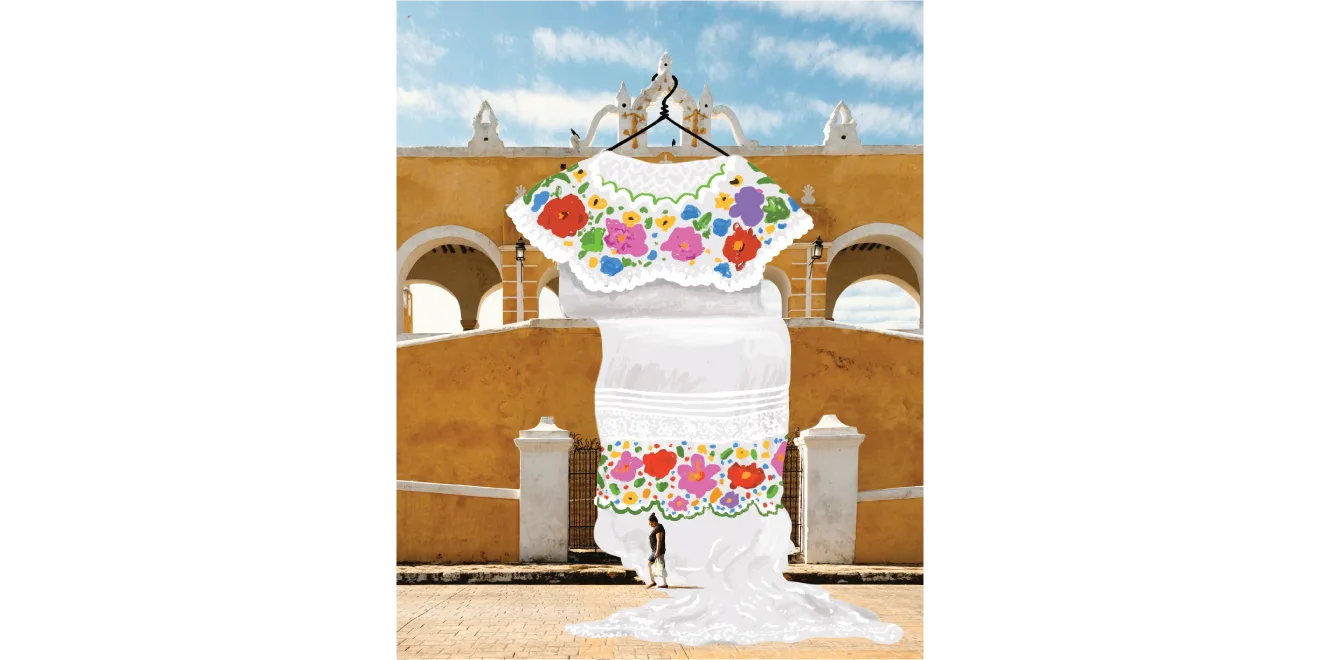
Worlds away from Mexico's tourism meccas like Cancun, Puerta Vallarta and San Miguel de Allende, the Yucatán capital of Mérida is a different state of mind.
One of the country’s largest historic centers outside Mexico City, Mérida’s burgeoning artisan neighborhoods now draw new generations of sophisticated Bohemians. Grand haciendas stand in the place of towering hotels and sacred cenote swimming holes are in lieu of splashy poolside loungers.
Life moves at a different rhythm, too, thanks to promenades flanked by mansions the color of pastel de niños, which seem designed for languid evening strolls, leafy plazas setting the stage for local dance performances and all-day horas felices in breezy, open-air bars.
Simply put: There seems to be a new, free-spirited in the air on this limestone peninsula east of the Isthmus of Tehuantepec.
Yucatán’s “forsaken, decaying ruins, remnants of an illustrious past are awakening from a centuries-old siesta,” says Susana Ordovás, author of the forthcoming book Inside Yucatán: Hidden Mérida and Beyond, published in April by Vendome Press.
Ordovás is also the host of our new-year trip to the Mexico's limestone peninsula. Join PRIOR x Cabana Caravan — from January 17 - 21, 2024 — to explore the Yucatán’s Threads of Richness, with exclusive access to sprawling haciendas and the studios of local artisans like Casa Brown, the home of the late American painter James Brown in Mérida, and private mezcal cocktails at the home of designer Bruce Bananto. Reserve your space on the almost-sold-out trip here.
This week, we're launching our new Mérida guide, a one-stop-shop for intel on the flamingo-dotted beaches, grand cathedrals set against ancient Mayan history and open-fire restaurants serving Yucatecan specialties like poc chuc, pork marinated in citrus then charcoal grilled.
Enjoy a preview below.
Hacienda Service
Mosaic-tiled stays as colorful and vibrant as the flamingos flying overhead.
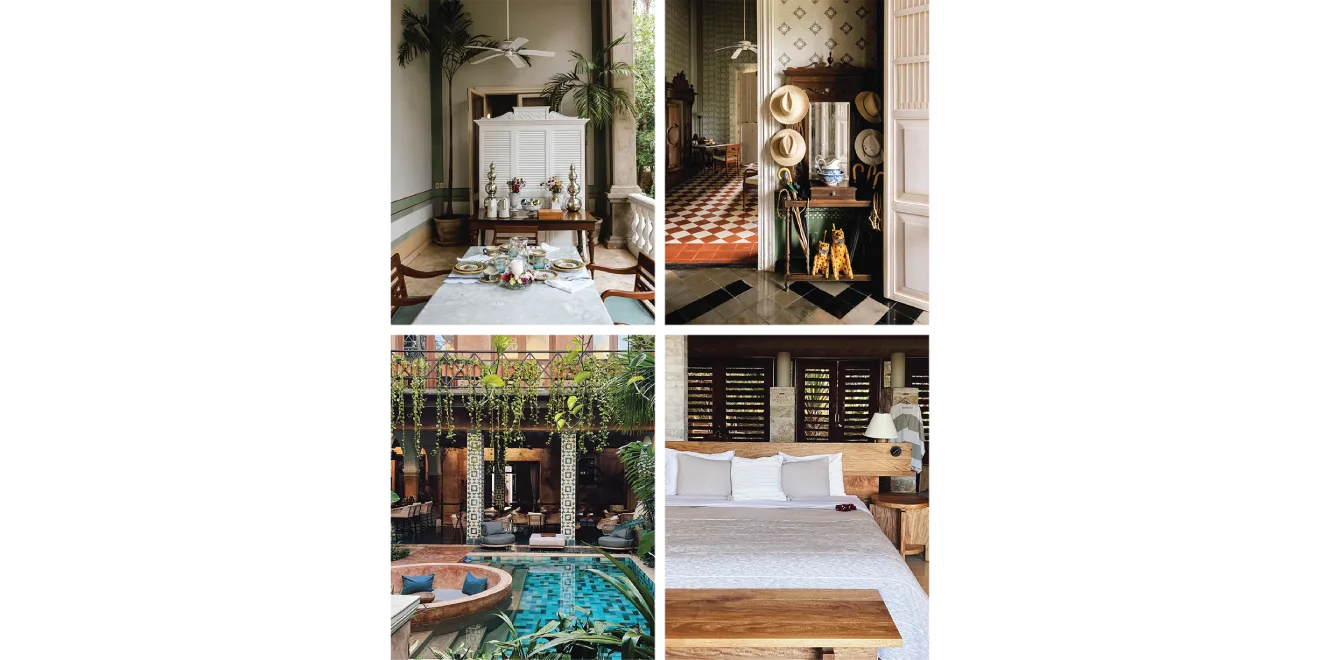
Yellow checkerboard tiling, arched terraces, private gardens overflowing with palms: Hacienda San Antonio Millet is a holdover from the gilded age of the henequen industry in Yucatán. The property’s elegance comes from its owners: Eduardo and Cándida Fernández de Calderón, avid devotees of Mexican folk art, who revived the 16th-century hacienda three decades ago, with hand-stenciled wallpaper, muraled walls, furniture miniatures made of animal horn, and colorful pottery made by traditional Michoacan artisans.
Cigno
A social air runs through the open courtyards at Cigno, an intimate, adults-only hotel in the heart of Mérida. At check-in, guests— most of which are young couples or small groups of friends— are greeted with a glass of limonada and a tour of the 19th-century hacienda’s blue-tiled walls echoing the property’’s original mosaic “pasta tiles” adorned in colorful designs. Mid-century modern interiors (cane chairs, warm woods, globe pendant lighting in the library) give way to breezy open-air lounges with tasseled hammocks and vines crawling up the walls. A circular pool adjacent to the terraced restaurant and bar is inspired by Yucatán’s iconic cenotes, complete with a sunken lounge cut into it. A basement-level speakeasy stays open after-hours; the bar sits in the former cistern of the hacienda, which was discovered by accident during the restoration process after a flood collapsed the floor.
Club de Patos
Club de Patos, a former duck-hunting lodge, is a modernist retreat slash nature reserve slash bird-watcher’s paradise. (The hotel’s duck logo, found throughout the property, is a playful nod to its past.) About 45 minutes from Mérida, on the sleepy coast of Sisal, the nine-room hotel and adjacent beach club are nested in nature; over 70 species of birds call the area home, and you can hear them sing as you make your way up winding paths from the beach lined with indigenous plants. (The hotel also offers several excursions to see them up-close in their habitats.) With large cut-rock bricks, cast cement, and a ceramic screen facade, the property achieves its own unique kind of coastal brutalism, with a splash of 1970s glamor in the form of sculptural steel-wire chairs and faded pink-patterned floor tiles.
Simmer Time
A cooking inferno where tortillerias offer a cornucopia of heritage flavors and pork belly is prepared por fuego.
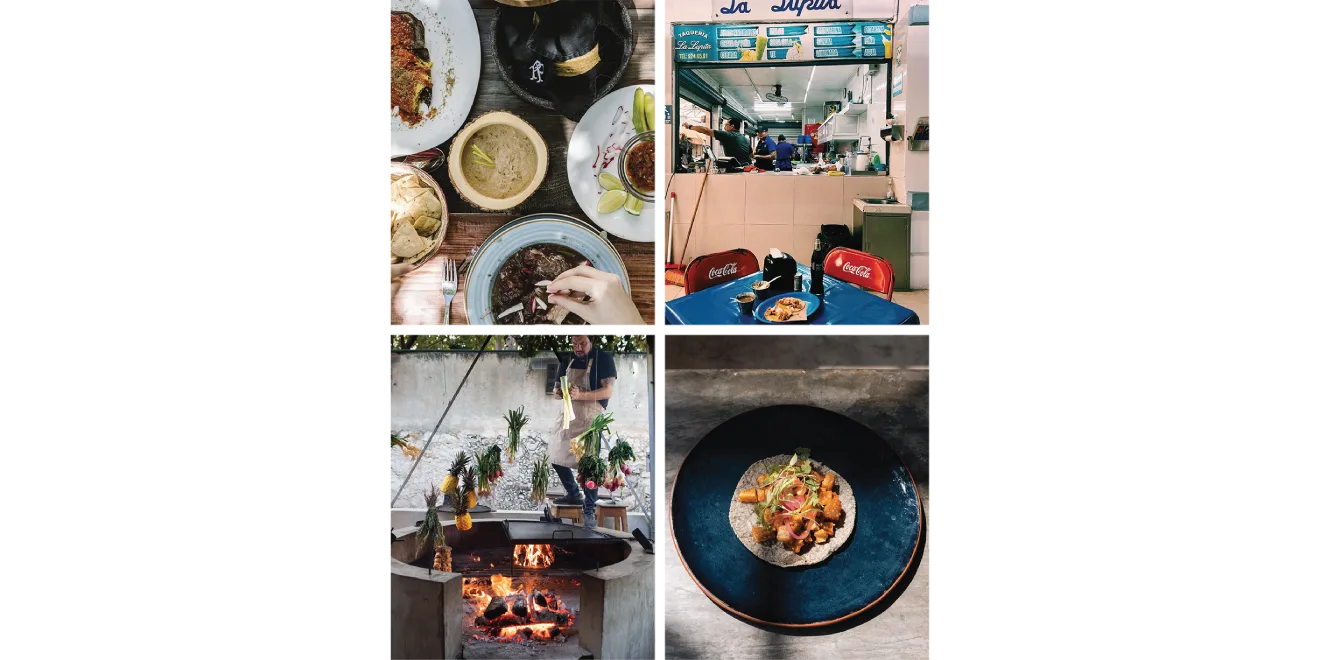
Ánima
To enter the open-fire eatery Ánima, you must walk through a red-lit corridor with hand-drawn folk-art depictions of barking coyotes and scorched bodies tattooing the walls. The entrance sets the tone for the dramatic dining experience, where everything is prepared by the feel of the flame and not by the precise knob turn of a gas stove. Under chef Ted Habiger, lechuga and brocolí are prepared al grill, and head-to-toe pork belly spills out from the smoker above the grill. House cocktails include the Margaret, with tequila, sour orange, honey syrup, and yellow chartreuse, or the bright green Musa, made of Sotol, melon liqueur, and Orgeat.
Pueblo Pibil
East of Mérida in the town of Tixkokob, near Hacienda San Antonio Millet, Pueblo Pibil is the brainchild of Maestro Pibil, the most recognized chef in Yucatán. Dishes like longaniza de valladolid, charcoal-roasted sausage strip served with tart tomato sauce, are prepared according to Mayan heritage, including cooking ingredients underground for 15 hours in a fire lit with chukum wood (a tree is a semi-hardwood thorny tree found throughout the Yucatán Peninsula) and oak leaves.
Taqueria La Lupita
Don’t be fooled by this casual spot among the handicraft and food stalls in Mercado de Santiago, a covered market in Mérida’s centro with a pale blue Art Deco exterior: Taqueria La Lupita is undoubtedly Mérida’s most beloved taco stand, especially after it was featured on the “Acid” episode of chef Samin Nosrat’s series Salt Fat Acid Heat several years ago. Try tacos, tortas, salbutes on puffed tortillas and panuchos, lechón al horno (baked piglet) or pavo asado (roasted turkey) with refried tortillas smothered with black beans. The stand closes by 1:30pm, so make it a breakfast or early lunch stop.
Ceremonial Sites
Yucatec spectacles of architecture and folklore showcase the high points of Mayan art and architecture.
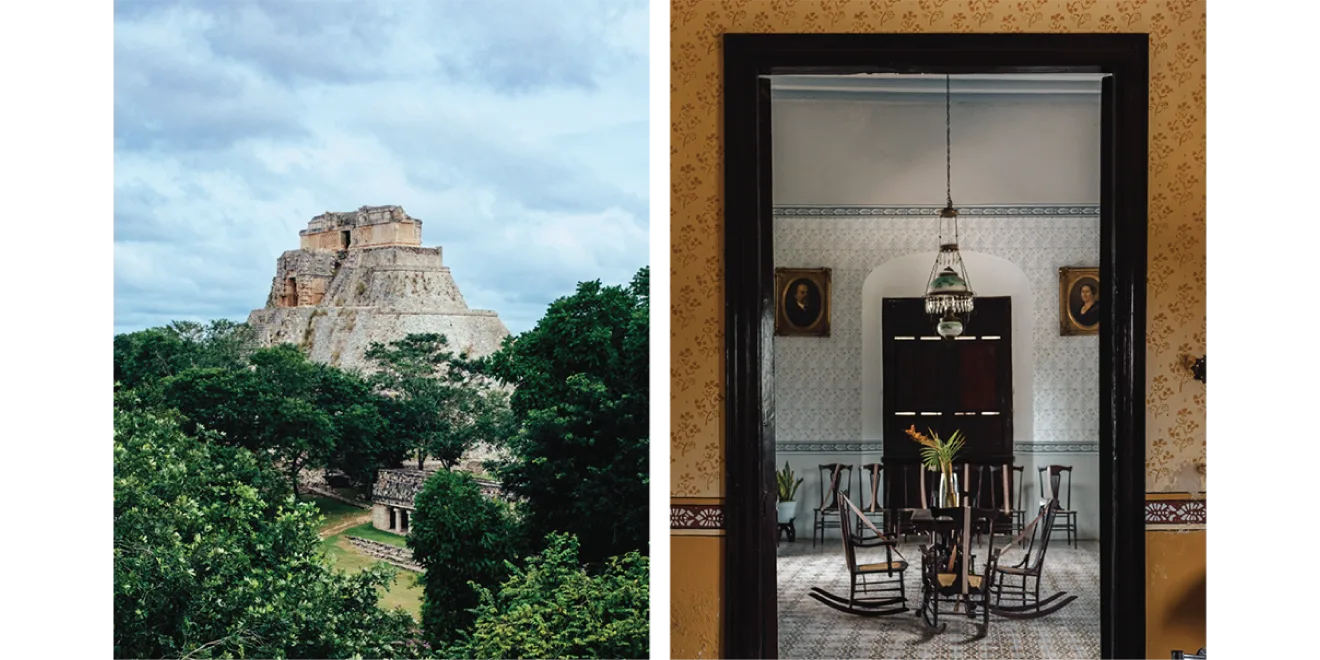
Uxmal
The pre-hispanic town of Uxmal, once one of the most important cities of the Mayan Empire, is smaller than Chichen Itza, but significantly less crowded. The ruins here are classic examples of the architectural style in the region during the classical period, built with well-cut stones set into a core of concrete. The Governor’s Palace, a long, low structure built atop an imposing platform, features terraced walls adorned with snakes, sculptural heads, and jagged teeth-like carvings well-known in Yucatec Maya folklore.
Hacienda Yaxcopoil
Dating back to the 17th century, Hacienda Yaxcopoil is one of the few in the region that has been restored and maintained to its original condition. First serving as a cattle ranch, then as a henequen plantation, the landmark is a relic of Yucatán’s bygone splendor, with tiled terraces, lush gardens and a Moorish double arch at the entrance of the compound. (The name Yaxcopoil means “the place of the green alamo trees” in the Yucatec Maya language.) Inside, there is a museum of ancient artifacts discovered at the pre-Columbian ruins that surround the property.
Museo Shopping
Hammocks worthy of a museum, and a museum with some of the best handicrafts in town.
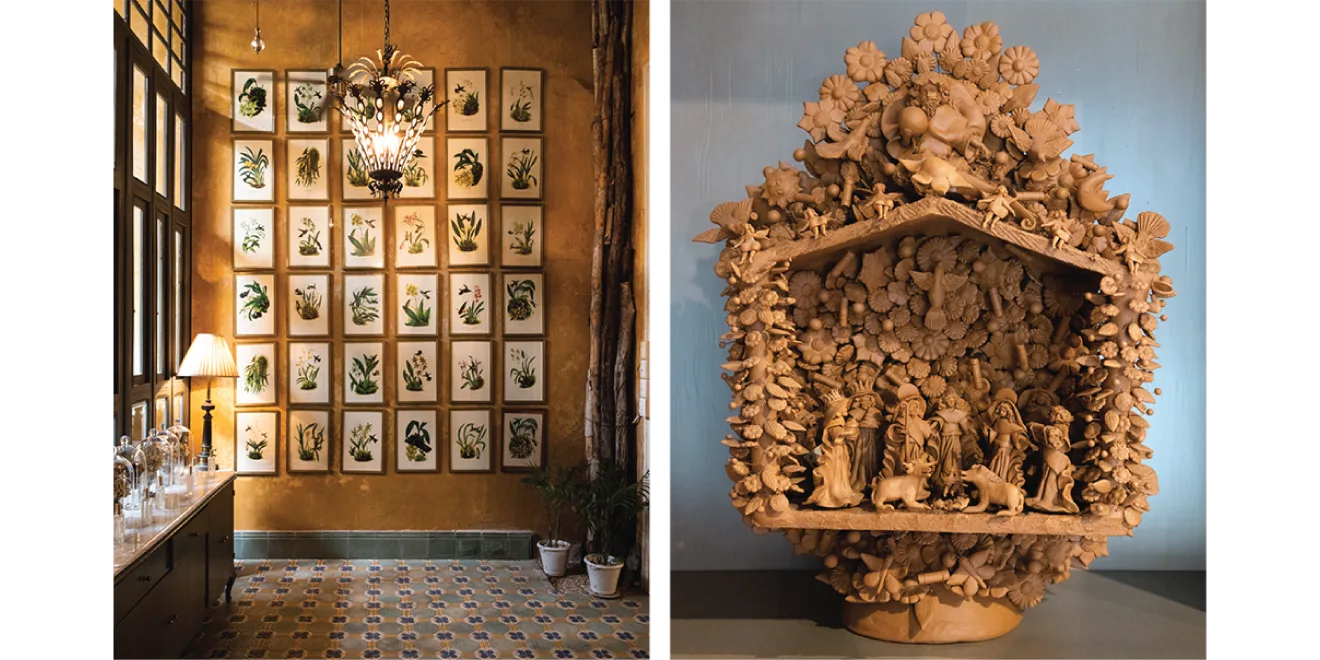
Coqui Coqui
Calle 55 is now home to a string of stylish boutiques, all thanks to Coqui Coqui, a design emporium “inspired by the colors and folklore” of the region. Think artisan-crafted hammocks to “hang on your wall as a statement of appreciation and decoration for your home,” local ceramics and table linens. The shop’s picturesque backyard is where makers craft many of the items on display, including fur huaraches and woven textile kimonos.
Casa Montejo
On the south side of the Plaza Grande stands one of the oldest buildings in Mérida: Casa Montejo, once the 16th-century residence of conquistador Francisco de Montejo, is now a house museum with an excellent gift shop stocked with handmade, rarified Mexican folk crafts, like painted jaguar sculptures, carved wooden saints and sugar skulls aplenty. The shop is run in association with Fomento Cultural Banamex A.C., a nonprofit supporting talented makers from around the state.
More Ways to Mérida:
Join PRIOR x Cabana Caravan, from January 17 - 21, 2024, to explore the Yucatán’s Threads of Richness, from sprawling haciendas to the studios of local artisans. Reserve your space on the almost-sold-out trip here.