Pantelleria
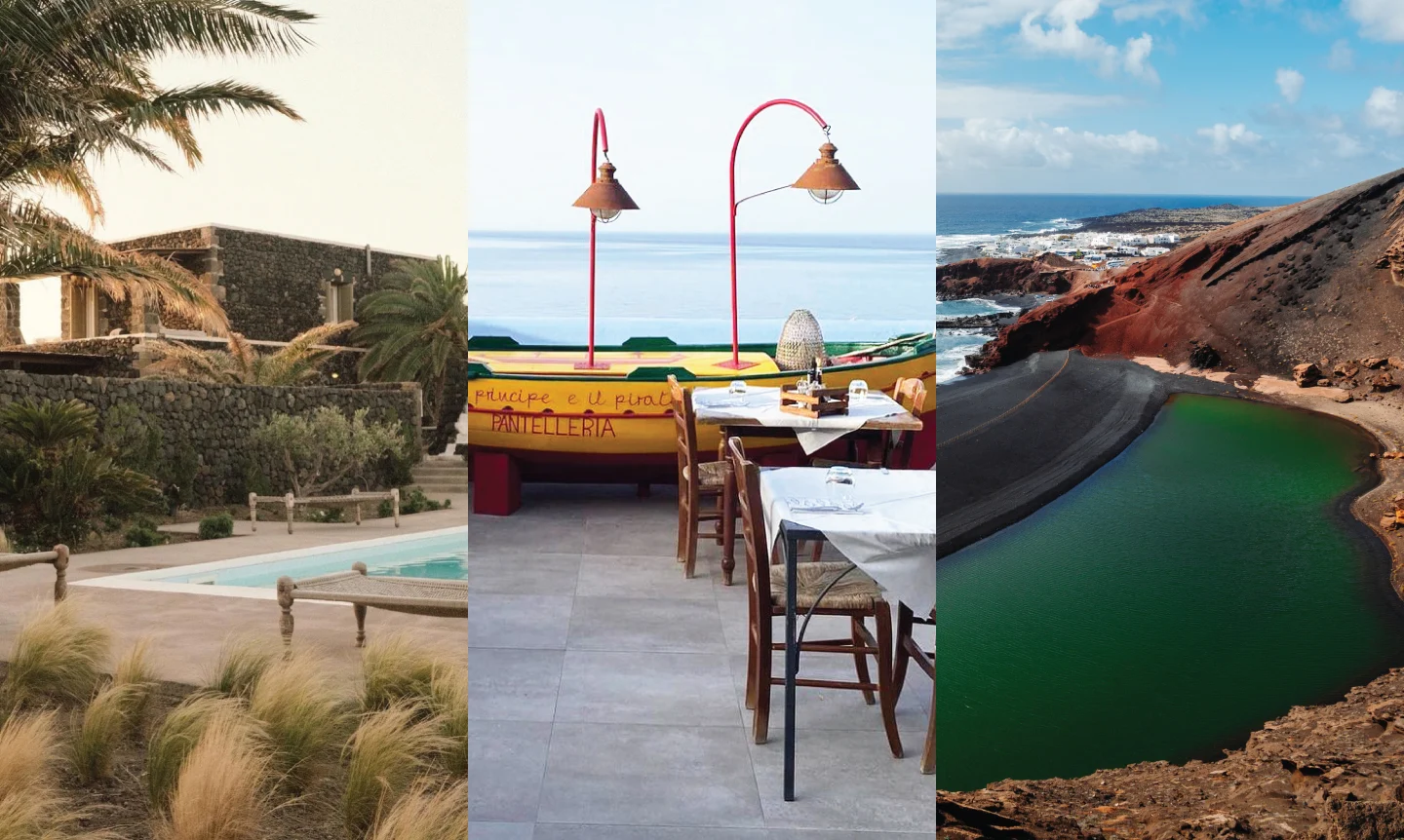
The Italian island of Pantelleria is technically closer to Africa than the boot, and its cultural identity is as diverse as its otherworldly landscape. Situated between Tunisia and Sicily, the “black pearl” of the Mediterranean is treasured by in-the-know Italians and stylish celebrities for its secluded appeal. (Giorgio Armani, Julia Roberts, and Madonna are among the names who frequently decamp to the volcanic island.) Pantelleria has a long colonial history, from the Roman Empire to the Byzantines; African influences, a holdover from the island’s era under the Arab Caliphate, can be seen in its ancient dammusi homes, traditional stone buildings that have sat on the island for over a millennium; its Pantesco language, an Arabic-inflected dialect of Sicilian; or its distinct cuisine, which incorporates classic North African dishes using local flavors. (Think caper-centric couscous and antipasti alike.) Most of the island’s Pantescan food is plant-centric, harvested from the island’s mineral-rich soil. Driving along the Pantellerian coast, you’ll encounter rugged cliffs studded with the dammusi’s domed roofs, while further inland thermal springs burst from seabeds, forming strings of natural steam baths. Vast vineyards spread across the island, making for a unique viticulture that yields some of Italy’s finest sweet wines. It’s the ultimate embodiment of an island escape.
Hotels
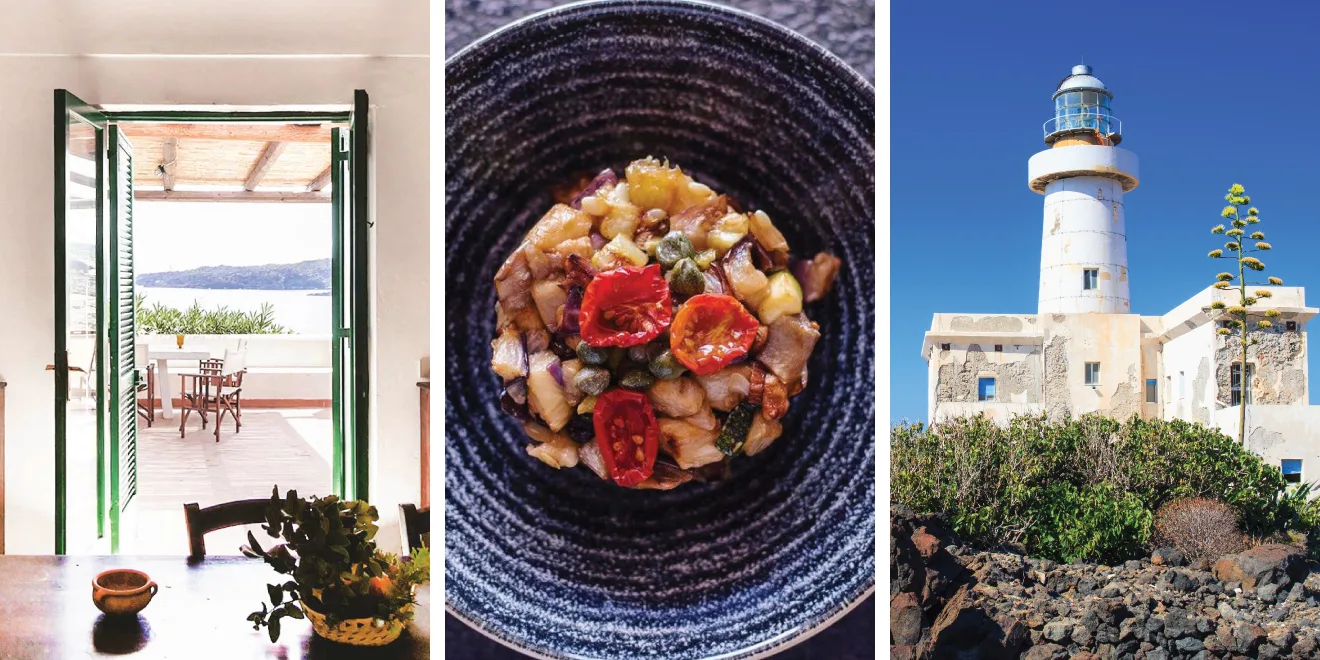
Pantelleria’s signature dammusi are designed to align with their environment, with each element serving a specific purpose: the thick stone walls provide insulation against heat in the summer and cold in the winter, while the domed roofs are used to collect rainwater to combat the island’s dry climate. For an authentic experience, stay in a traditional dammusi by renting your own at Tenuta Borgia, an olive oil and grape farm with a collection of seven private, luxuriously restored dammusi located in the heart of Pantelleria Island National Park. The largest is the Dammuso Grande, a sunlit villa among sloping green hills where Luca Guadagnino shot his La Piscine-inspired drama A Bigger Splash. At Parco dei Sesi, a guesthouse and organic farm run by Margot Pantesca and her husband Massimiliano, 13 high-end dammusi seamlessly integrate into the landscape, with an on-site pool and rooftop serving aperitivo. The family-run Le Case del Principe is home to seven cliffside dammusi with panoramic terraces overlooking the sea, and a private staircase on the property to access it. Simple, breezy Mediterranean style is the reigning ethos of Club Levante, a sustainability-minded villa with a bougainvillea-lined infinity pool that floats above the sea. For a more traditional luxury accommodation, Sikelia marries modern comforts with Pantescan style; each of its 20 whitewashed suites feature an outdoor terrace, and a fine dining restaurant brings some of the island’s most well-heeled visitors to its palm-filled courtyard.
Where to Eat
Upon arrival, head to Emporio del Gusto to stock up on local ingredients for your dammuso. Here, you’ll be introduced to the typical flavors of the island with locally-produced capers, pates, preserved vegetables, jams, and wines. For lunch by the sea, spend the day at Lido Shurhuq, where you can alternate between dining on aperitivo and shellfish and swimming in a crystal-clear cove. After a swim at Lago di Venere, the turquoise lake beloved by island visitors, head to lunch at the nearby local favorite Trattoria da Pina. If you find yourself in the main town of Scauri, stop in for lunch at U Friscu Cafe, a casual café-restaurant frequented by locals. For dinner, Il Principe E Il Pirata is where you go to see and be seen, but that doesn’t mean it’s particularly pretentious; on the contrary, Il Principe E Il Pirata is a traditional seaside trattoria where celebrities rub elbows with locals as they dig into simple dishes like ravioli with ricotta and mint or the catch of the day with olives and capers. Another favorite is La Nicchia; located on a working caper farm that dates back to 1949, it serves a caper-centric menu in its shaded garden. Up in the mountains, Rifugio Firiciakki serves both local and national dishes, while Trattoria Pantesca Runcune, housed in a former dammuso with a wraparound terrace, is where to find North African-inspired meat and couscous dishes. Between June through September, pick up wine, olive oil, and pesto from the sweeping vineyards at Coste Ghirlanda. The recently opened Isca Pantelleria, a modern fish trattoria, specializes in fish frollation, a sustainable technique for preserving raw materials and enhancing flavor. For casual aperitivo served on the roof of a dammuso, head to fisherman’s bar Kaya Kaya or Sesiventi.
Pantelleria’s mineral-rich volcanic soil has yielded an unusual viticulture that manages to produce some of Italy’s finest sweet wines. The most recognized local wines are made from Zibibbo, commonly known as Muscat of Alexandria, famously producing Passito di Pantelleria and Moscato di Pantelleria. The best known winery on the island is Donnafugata, known for their Ben Ryé, a Passito di Pantelleria, while Tanca Nica is a smaller and newer producer known for their Soki Soki and Terra Forte (zibibbo produced from various types of soil).
Around the Island
Take the hiking path in the village of Sibà to ascend to the highest point of Pantelleria, Montagna Grande. (You can also drive up, but what’s the fun in that?) Along the hike, you’ll come across many of the island’s volcanic peculiarities: fumaroles, lava flows, and geysers surrounded by lush, untamed vegetation. Ines Lommatzsch, a local permaculture farmer, herb forager, and expert in the wild plants of Pantelleria, hosts olfactive tours every Thursday with Soleone, as well as distillation workshops and retreats throughout the year. At Lago di Venere, or the Lake of Venus, a warm, mineral-rich thermal spring is formed inside the caldera of an extinct volcano. For the open-air spa experience, lather on its thermal mud and feel your skin reap the benefits. Swim in the rocky natural pools of Laghetto delle Ondine or the tiny neighboring coves of Cala Levante and Cala Tramontana, whose calm waters have provided shelter for ships during storms since ancient times. Down a steep, unpaved road, Balata dei Turchi is a scenic bay formed by a lava flow with towering cliffs; nearby, find the natural hot springs of Terme di Nikà, with its turquoise waters surrounded by high rock. For artists looking for inspiration during the winter months, consider booking a one-month artist’s residency with Terranera, a twice-yearly off-season offering from A’nica art gallery in Milan.
Lanzarote
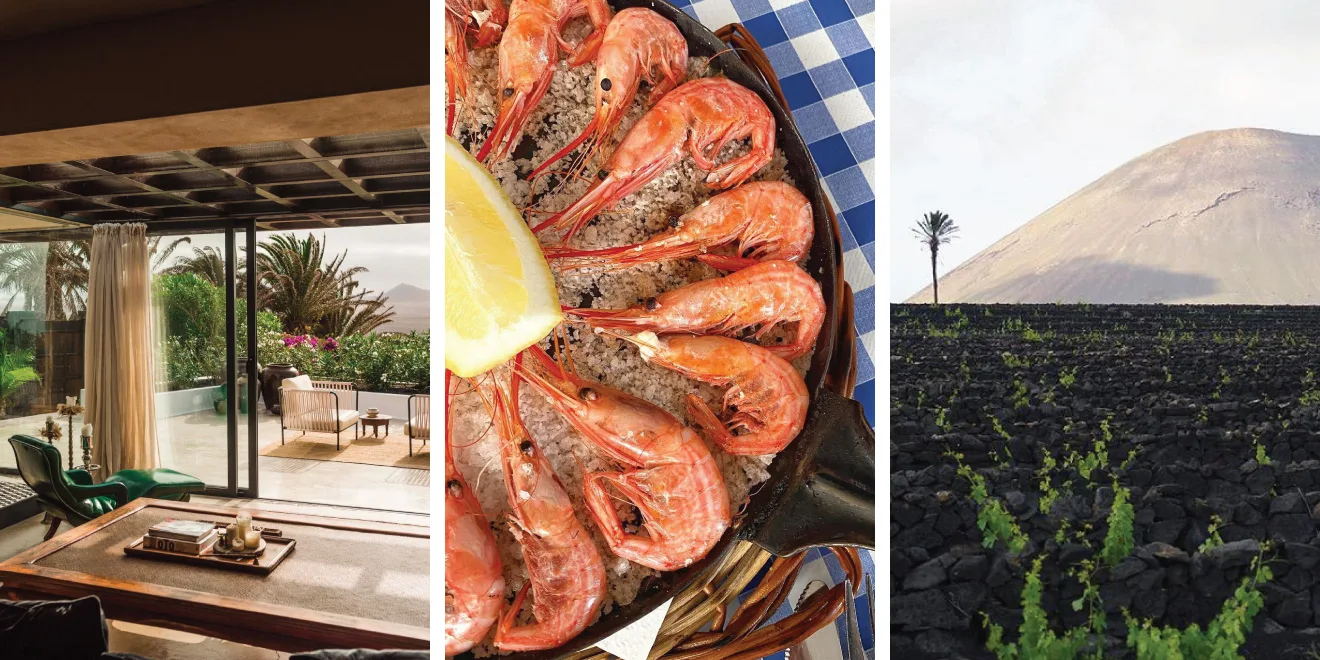
Unlike its more developed Canary Islands neighbors, Tenerife and Gran Canaria, the bohemian hamlet of Lanzarote has captured the imagination of creatives the world over. Famous for Timanfaya National Park, formed by the volcanic eruptions that occurred between 1730-1736, the island is also home to the rich artistic legacy of local architect César Manrique. Lanzarote’s lunar landscape is dotted with whitewashed villas and mineral-rich volcanic vineyards; César Manrique’s colorful cast iron wind toys mark its long and winding roads, while towering volcanoes give way to sparkling natural pools whose turquoise waters beckon you to take a dip.
Where to Stay
Winding your way through a labyrinth of volcanic craters, Lanzarote’s most serene stay is Buenavista, made up of five independent suites that sit on 24 acres of land in the island’s idiosyncratic wine region, La Geria. In the suites, wrap-around windows and skylights peer out to infinite vineyards surrounded by volcanoes. If you prefer to stay more central, head to the historic town of Teguise, where you’ll find the new Casa de Las Flores, set in a 250-year old guest house where guests luxuriate in a six-course breakfast and sun-filled suites. For a seaside stay, Casa Sua is located near the island’s beloved Famara beach. Its two-bedroom apartments and one loft studio, along with a shared terrace and pool, come with optimal views for taking in the illustrious Famara sunset. Venturing all the way north, towards the quiet town of Haría, home to the late artist César Manrique, La Casa de los Naranjos is a 200-year old whitewashed manor-home with bright green accents, hidden behind a row of tall orange trees. Crystal chandeliers hang over stand alone clawfoot tubs that look out onto the hills. The aesthetic is bright, feminine, and full of charm, a swishy take on a country retreat.
Where to Eat
After you land and are in search of a casual quick bite, head to La Ermita Tapas Bar for traditional Spanish tapas and pinchos, like garbanzos con chorizo, queso asado and jamón ibérico. While walk-ins are fine for lunch, it’s best to make a reservation for dinner as it’s a popular spot among locals. Book a reservation for lunch at Bodega Uga, a bucolic restaurant near La Geria, where in lieu of a menu, the server will have you select from a daily rotation of meat and seafood dishes. Nearby, find regional grilled meats and buttery ceviche on the shaded terrace of Bodega Santiago. In the historic town of Teguise, try the papas arrugadas at Cantina Teguise, or head to Restaurante El Barquillo (El Sótano) for seafood paella topped with the freshest heaps of octopus, prawns, and clams available on the island.