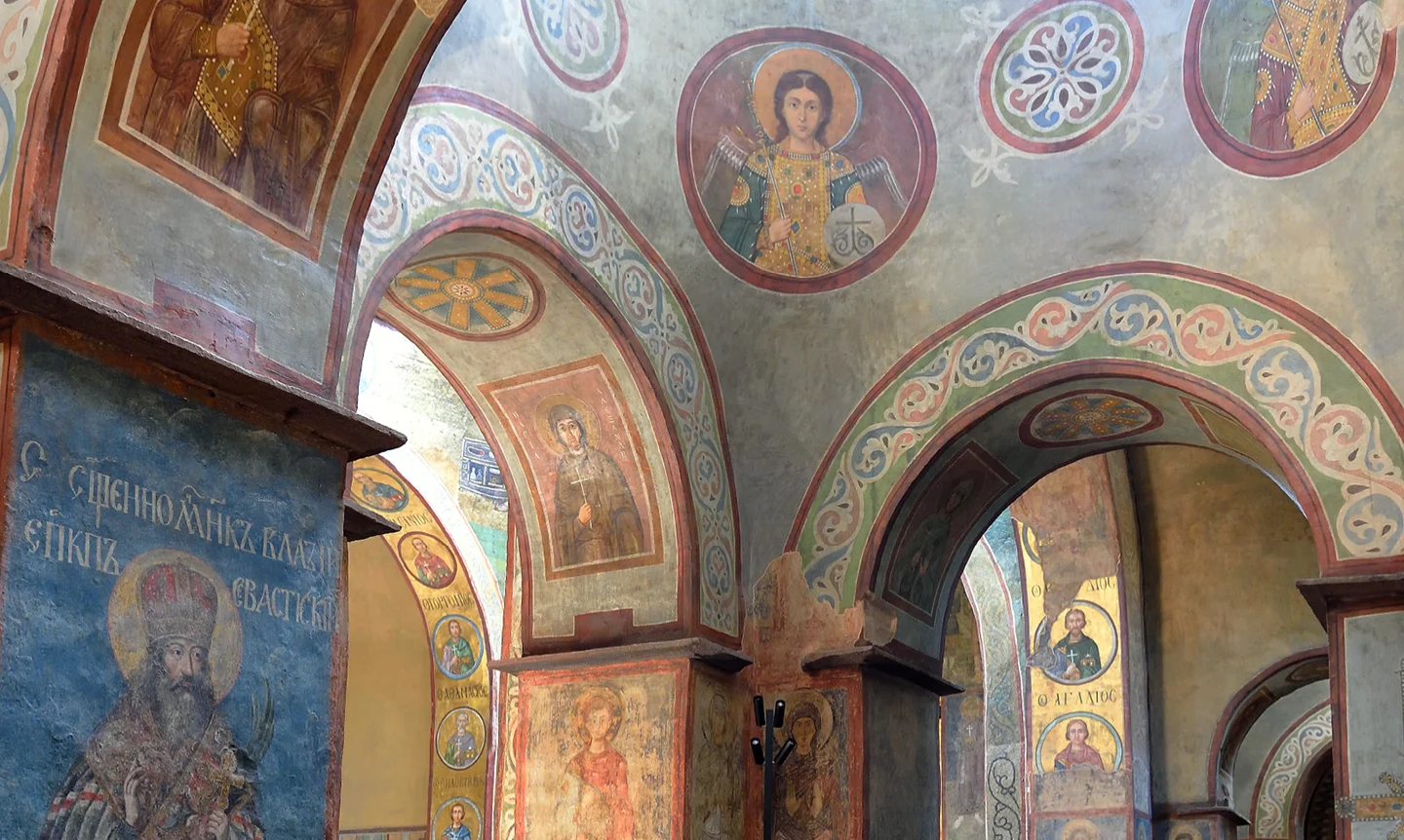
While it is undeniable that physical sites are inextricably linked to the identity of a country, the traditions and cultural heritage will always endure. UNESCO recognizes not only physical sites, but also aspects of intangible cultural heritage, which have a deep relevance in a nation like Ukraine that has carried its colorful and wide-spanning folk arts, and polyphonic songs across centuries. So much of Ukrainian craft contains a long-understood symbology that’s been passed down from generation to generation. This is something that is unshakeable; the necessary stories that this handwork tells will always remain.
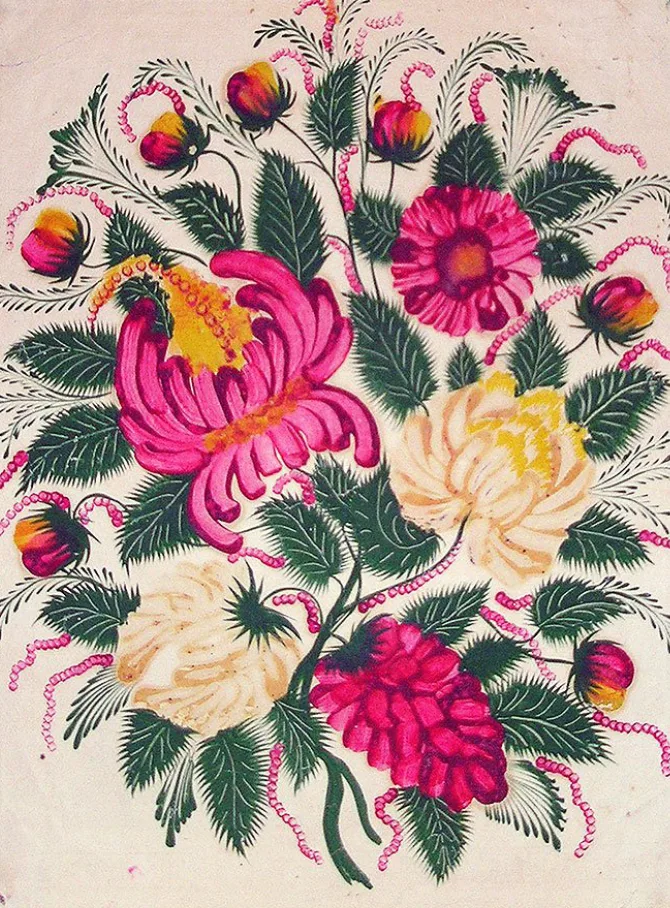
Petrykivka Decorative Painting
For centuries, in the village of Petrykivka, along the Chaplynka river in east-central Ukraine, whitewashed walls and hearths, ceiling beams and even mundane domestic appliances in local homes have served as the backdrop for enchanting paintings—bursts of vibrant flowers, roses, poppies, tulips, sunflowers, fanciful birds with extraordinary plumage, ripe local fruit, like strawberries and cherries, and even the occasional human, dressed as vividly as the rooster’s tail feathers. A craft largely upheld by the women in the region (it’s taught in schools, too), every element of these works contains symbolic meaning, all related to providing protection from sadness or danger, calling forth peace, happiness, beauty and rebirth. Original practitioners of this art used natural paints made from juices or plants, but many of today’s painters now work with watercolors or gouache — and on paper or canvas. This folk art has found its way to many parts of Ukraine, with contemporary artists still incorporating and expanding on the tradition.
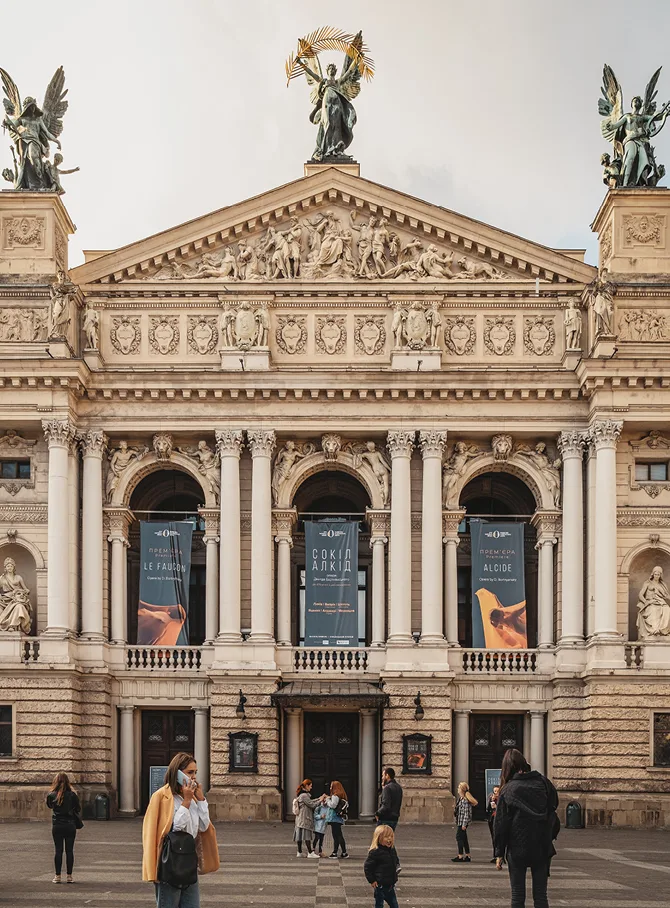
Historic Center of Lviv
The city of Lviv, near Ukraine’s western border with Poland, has existed since the Middle Ages and its architecture and city framework bear witness to many centuries of moved borders, conquests, religious ties and arrivals of various ethnic communities. At its center, is a hill upon which stands the remains of the 5th-century Vysokyi Zamok (High Castle), but what surrounds tells much more of the story of this place, a mosque, a synagogue and churches of various denominations. Buildings in the city center have been remarkably well preserved, the Gothic, Renaissance, Mannerist and Baroque periods all represented. Also present are a number Hutsul-style facades that reflect Ukraine’s folk designs.
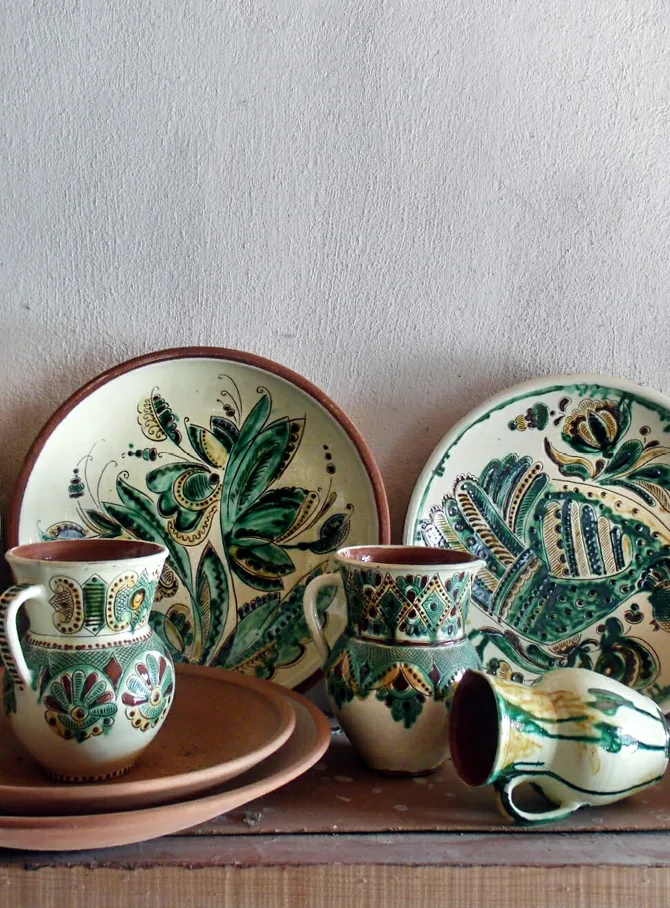
Kosiv Painted Ceramics
The Carpathian mountain range in southwestern Ukraine is home to a culturally distinct group of people, the Hutsuls. Here, the Hutsul city of Kosiv, is renowned for its pottery, made from local dark grey clay. The unmistakable green, yellow and brown decorated ceramics come in many shapes, but it’s the 18th-century technique of engraving pictures and shapes in the clay and then painting the vessels with metal oxides before firing them in a kiln that makes this local art so unique. Much as with the Petrykivka paintings, the Hutsul designs portrayed on these have cultural resonance relating to history, religion and morals of the Hutsul people, as well as their natural surroundings, seen in plant shapes. Even the color palette has meaning, yellow referencing the sun, green the mountains, and brown the earth.
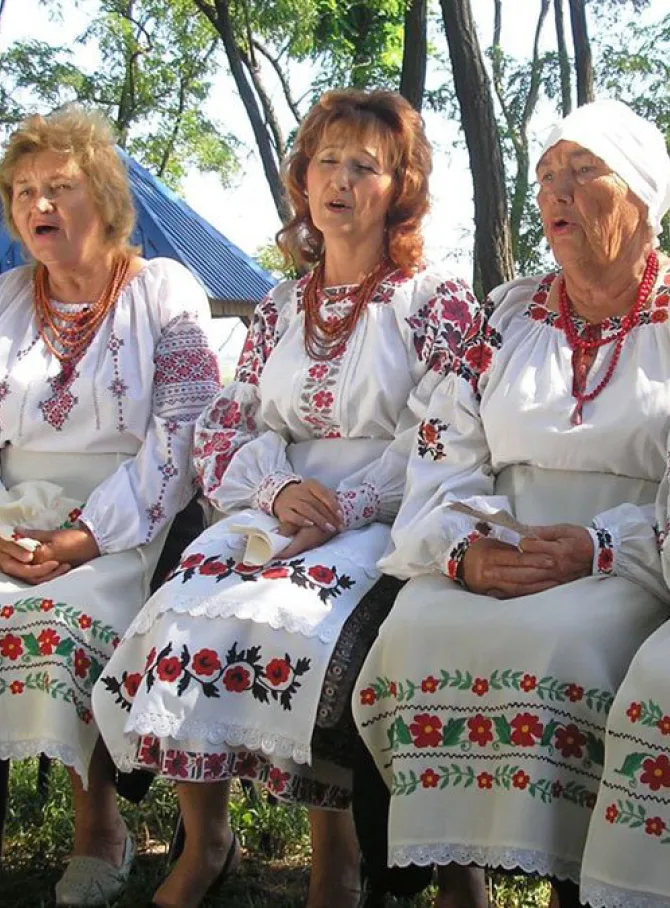
Cossack’s Songs
The history of the Cossacks, an untethered and renegade people who have long fought to defend their freedoms, has been carried down through many generations, over hundreds of years through a polyphonic style of folk singing native to Ukraine’s Dnipropetrovsk region. Many of the songs are ballads of war and longing for home, of comradeship and loves lost. Today’s singers tend to be older in years, which means that this tradition is endangered, but to hear this blending of voices is truly moving.
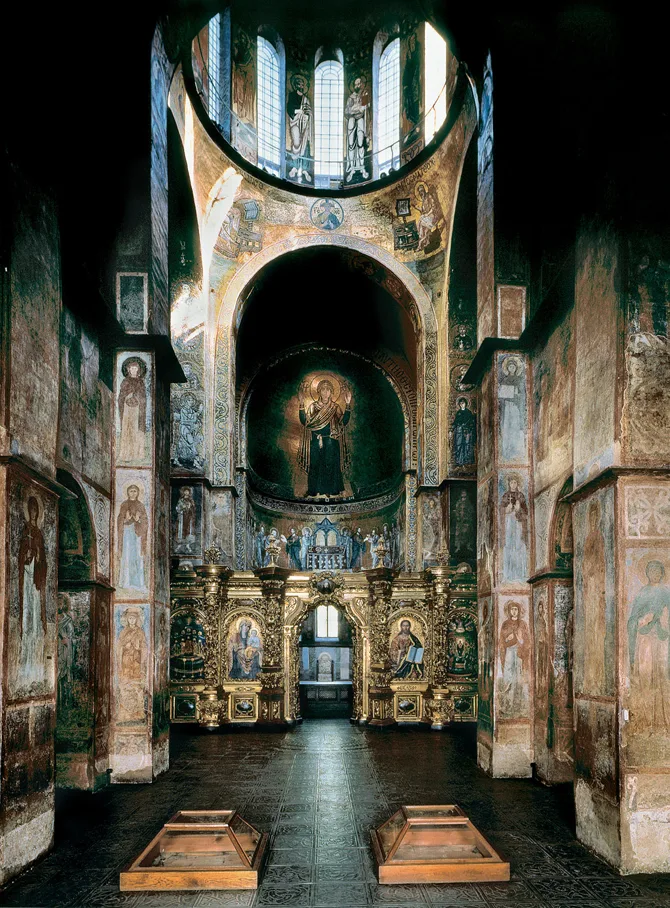
Kyiv’s Saint-Sophia Cathedral and the Kyiv-Pechersk Lavra Monastery
The golden-domed Byzantine Saint-Sophia Cathedral and its 11th century mosaics and frescoes within have been given remarkable care for nearly 1000 years. Constructed under the reign of the Great Prince of Kyiv, Yaroslav the Wise, it was meant to outdo Constantinople’s cathedral with its opulence and detail and it remains an undeniable architectural and artistic feat that emerged as a blueprint for other churches and cathedrals in Eastern Europe. In the 17th and 18th centuries, a number of monastery buildings were constructed around Saint-Sophia, somehow seamlessly combining Baroque and Byzantine styles. A ways down the Dnieper River, another monastery, the equally-gilded Kyiv-Pechersk Lavra, was conceived by St. Anthony and St. Theodosy in the 11th century and was built over eight centuries. Their work in medicine, art and education was significant and this place is uniquely important to Orthodox faith. Beneath the extensive monastery buildings is a network of caves where relics from the two saints are buried.
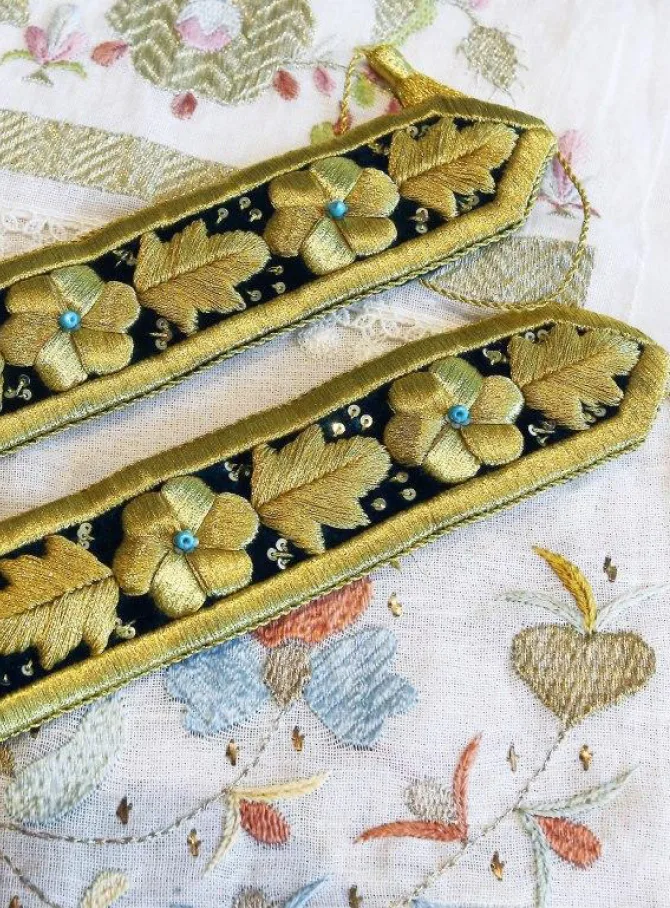
Örnek, a Crimean Tatar Ornament
Ancient Örnek designs from the Crimean Peninsula speak a language all their own. These shapes, some organic and others geometric, can be applied across media – from weavings to ceramics to jewelry to glasswork, but the iconography remains no matter the form. There are said to be 35 distinct symbols used in Örnek and their meaning is understood differently depending on the pattern or colors uses. It is an ever-evolving language, one that’s been passed down through families, with certain designs tied to rituals throughout one’s life.
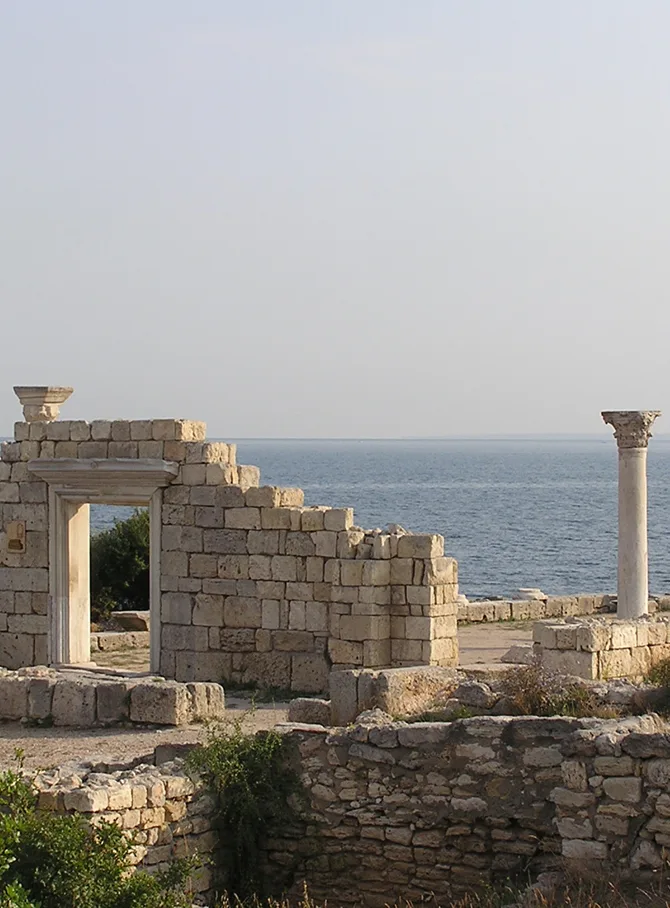
Ancient City of Tauric Chersonese
A colonial settlement established by the Dorian Greeks in the 5th century BCE, the remains of Tauric Chersonese preside over the Black Sea in southwest Crimea. The archeological site, which is made up of a grid of 400 agricultural subplots (chora) points to the way that this ancient place, an important trade city, functioned. The chora were largely used for vineyards, something that was maintained once the Romans took over and even extended into the Byzantine era, making Tauric Chersonese the largest exporter of wine on the Black Sea for a very long time. While the buildings are largely gone, the footprint of this place has endured incredibly well.